Some dinners justify every minute they take, and this
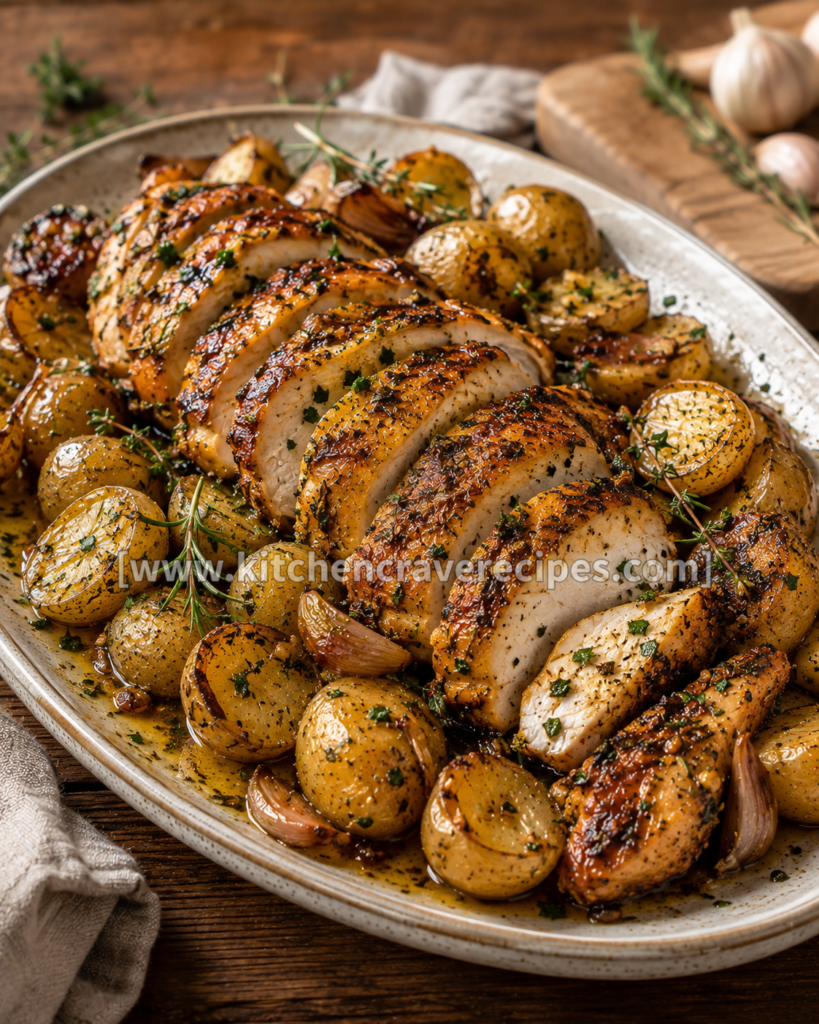
garlic herb roasted chicken and potatoes is at the top of that list. Bone-in chicken breasts roasted uncovered at high heat until the skin turns a deep amber-gold and the herb crust caramelizes into something almost lacquered — surrounded by chunked baby potatoes that have absorbed every drop of garlic-herb pan drippings as they roast. The photo captures it exactly: a white ceramic roasting dish packed with golden chicken and tender, herb-coated potato pieces, the chicken already sliced to reveal juicy, perfectly cooked meat underneath. Everything cooks in one pan, which means the flavors layer together and the cleanup stays manageable. This is the kind of recipe that works equally well for a quiet Tuesday dinner and a Sunday table with guests — straightforward to make, impossible to be unimpressed by when it comes out of the oven.
Recipe Quick Info
| Detail |
Info |
| Prep Time |
15 minutes |
| Cook Time |
1 hour 15 minutes |
| Total Time |
1 hour 30 minutes |
| Servings |
4 |
| Cuisine |
American |
| Course |
Main Course |
| Cooking Method |
Roasting |
| Calories |
~480 kcal per serving |
| Difficulty |
Easy |
Why You'll Love This Recipe
- One pan, zero fuss — the chicken and potatoes roast together in a single dish, meaning the potatoes baste themselves in the drippings and you wash one pan at the end.
- That herb-garlic crust is genuinely special — dried herbs and minced garlic pressed onto the chicken skin caramelize in the high-heat oven into a deeply aromatic, slightly crispy coating that perfumes the entire dish.
- Juicy chicken every single time — bone-in chicken breasts retain far more moisture during roasting than boneless, and the skin acts as a natural barrier that keeps the meat tender even as the exterior crisps.
- The potatoes are the best part — cubed baby potatoes roasted in chicken drippings develop crispy edges and an interior so creamy and flavorful they could stand alone as a side dish.
- Scales up effortlessly — double the quantity, use a larger pan, keep the same temperature and technique, and feed eight people with minimal extra effort.
- Completely customizable — swap the herbs, add lemon, throw in vegetables — this recipe handles every variation without losing its core character.
- Reliable doneness cues — an instant-read thermometer and the visible color of the skin tell you exactly when this dish is ready, no guessing required.
Ingredients
For the Chicken
- 2 large bone-in, skin-on chicken breasts (about 2½ lbs total)
- 3 tablespoons olive oil, divided
- 4 cloves garlic, minced (about 1½ tablespoons)
- 1 teaspoon dried thyme
- 1 teaspoon dried rosemary, crushed between fingers
- 1 teaspoon dried oregano
- 1 teaspoon kosher salt
- ½ teaspoon freshly ground black pepper
- ½ teaspoon smoked paprika
For the Potatoes
- 1½ lbs baby potatoes (Yukon Gold or mixed), halved or quartered into roughly 1½-inch pieces
- 1½ tablespoons olive oil
- ½ teaspoon kosher salt
- ¼ teaspoon black pepper
- ½ teaspoon dried thyme
- ½ teaspoon garlic powder
Optional Add-Ins
- ½ lemon, sliced into rounds (place under and around the chicken for citrus brightness)
- 1 medium yellow onion, quartered (adds sweetness as it roasts in the pan)
- 6–8 whole garlic cloves, unpeeled (roast alongside for spreadable, sweet garlic)
- Fresh rosemary or thyme sprigs (placed over the chicken for the last 20 minutes)
Substitution Table
| Original Ingredient |
Substitution |
Notes |
| Bone-in chicken breasts |
Bone-in chicken thighs |
More forgiving; cook to 165°F same temp, slightly shorter time |
| Baby potatoes |
Russet potatoes, cubed |
Starchier; cut into 1-inch pieces for similar cook time |
| Dried thyme |
Fresh thyme (3× the amount) |
Brighter, more aromatic — add for the last 30 minutes only |
| Dried rosemary |
Fresh rosemary (3× the amount) |
Stronger than dried; use sparingly to avoid overpowering |
| Olive oil |
Avocado oil |
Higher smoke point; no flavor difference at roasting temps |
| Smoked paprika |
Sweet paprika |
Loses smokiness; adds the same warm color without the depth |
Kitchen Tools Needed
- Oven — preheated to 425°F; roasting requires genuine high heat for caramelization and browning on uncovered surfaces
- Large ceramic or metal roasting dish (9×13 inch or larger) — as shown in the photo; must be large enough for chicken and potatoes in a single layer without crowding
- Roasting rack (optional but beneficial) — elevates the chicken slightly above the potatoes, promoting more even hot-air circulation around the skin
- Instant-read meat thermometer — non-negotiable for confirming safe internal temperature in bone-in chicken
- Sharp chef's knife and cutting board — for halving or quartering the baby potatoes into uniform pieces
- Small mixing bowl — for combining the herb-garlic rub before applying to the chicken
- Pastry brush or hands — for spreading the herb oil evenly over the skin and under it where possible
- Aluminum foil — for tenting the chicken during the rest period after roasting
- Oven mitts — the roasting dish gets extremely hot at 425°F
How to Roast Garlic Herb Chicken and Potatoes Perfectly Every Time
Step 1: Preheat the Oven and Prep the Rub
Position your oven rack in the center slot and preheat to 425°F — allow at least 15 full minutes for the oven to reach true temperature. While it heats, combine 2 tablespoons of olive oil, minced garlic, dried thyme, rosemary, oregano, smoked paprika, salt, and pepper in a small bowl and stir into a thick, fragrant paste. Roasting at 425°F is the specific temperature that drives the Maillard reaction on the chicken skin — lower heat produces pale, soft skin rather than the deeply browned, herb-crusted exterior shown in the photo.
Step 2: Season the Potatoes
In the roasting dish, toss the halved baby potatoes with 1½ tablespoons of olive oil, salt, pepper, dried thyme, and garlic powder until every surface is coated. Spread them in an even layer across the bottom of the dish. The potatoes go in raw with the chicken — they'll absorb the drippings as everything roasts together, which is what gives them that uniquely savory, herb-infused flavor that plain roasted potatoes simply can't replicate.
Step 3: Prepare and Place the Chicken
Pat the chicken breasts completely dry with paper towels — surface moisture steams rather than browns in the oven, which prevents the herb crust from setting properly. Using your fingers, gently loosen the skin from the breast meat without tearing it, and spread a portion of the herb rub directly onto the meat underneath. Apply the remaining rub generously over the entire outside surface of the skin, pressing firmly so it adheres.
Place the seasoned chicken breasts skin-side up directly on top of the potatoes in the roasting dish. The chicken sits elevated on the potato bed, which keeps the skin fully exposed to hot oven air while the potatoes beneath absorb the drippings.
Embedded Tip: Getting the herb rub under the skin is the most impactful thing you can do for flavor. Seasoning only the exterior means the seasoning sits on top of the fat layer in the skin — putting it directly on the meat means every bite of chicken, not just the surface, carries that garlic and herb character.
Step 4: Roast Uncovered to Build Color
Slide the roasting dish into the preheated 425°F oven, uncovered. Roast for 50–55 minutes without opening the oven door — every time the door opens, the temperature drops by 25–50°F, which disrupts the continuous dry heat that browns the skin. At the 50-minute mark, the skin should be a deep golden-brown with darker caramelized patches of herb visible at the thickest points. The potatoes around the chicken should have begun to take on color at their edges.
Embedded Tip: Resist the urge to cover the pan or add liquid. Roasting is a dry-heat method — covering the dish traps steam and effectively converts the cooking method to braising, which produces pale skin and a completely different (softer, steamed) texture in the potatoes.
Step 5: Check Internal Temperature and Finish
Insert an instant-read thermometer into the thickest part of the largest chicken breast, keeping the tip away from the bone. The chicken is fully cooked and safe to eat when it reads 165°F internally. According to the
USDA poultry safety guidelines, 165°F is the minimum safe internal temperature for all poultry. If the chicken needs more time, return to the oven and check again at 5-minute intervals. If the skin is deeply browned but the internal temperature hasn't yet reached 165°F, tent the dish loosely with foil to prevent the surface from over-darkening while the center finishes cooking.
Step 6: Rest, Slice, and Serve
Remove the dish from the oven when the chicken reads 165°F. Tent the entire dish loosely with foil and rest for 8–10 minutes — this crucial step allows the juices to redistribute back through the meat so they don't pour out when sliced. After resting, slice the chicken across the grain as shown in the photo, fanning the pieces back over the potatoes. Spoon any pooled pan drippings over the top before serving directly from the roasting dish.
Pro Tips for Perfect Garlic Herb Roasted Chicken and Potatoes
1. Always use bone-in, skin-on chicken for this recipe.
The bone conducts heat toward the center of the meat, promoting even cooking, while the skin bastes the breast with rendered fat throughout roasting. Boneless, skinless breasts dry out at 425°F before developing the same exterior color — they require a different temperature and time profile entirely.
2. Roasting-method Pro Tip — start with a hot pan.
Place the empty roasting dish in the oven during the preheat phase. Sliding the potato-filled dish into an already-hot pan creates immediate contact heat on the potato bottoms, jump-starting caramelization from the first minute of roasting. Cold pan to cold oven results in noticeably softer, less-colored potatoes.
3. Cut potatoes to a consistent size.
Uniform pieces roast evenly — some will still be underdone while others are overdone if you mix 1-inch and 2-inch chunks in the same pan. Halving or quartering baby potatoes into roughly 1½-inch pieces takes an extra 2 minutes of knife work and produces a significantly better result.
4. Don't add liquid to the roasting dish.
The potatoes release a small amount of moisture as they cook, and the chicken skin releases fat — these two things naturally season the bottom of the pan. Adding broth or water turns the environment to steam-roasting, which softens the skin and prevents any caramelization on the potato surfaces.
5. Use a thermometer rather than guessing by time.
Bone-in chicken breast thickness varies considerably between packages. A large breast from a premium brand may need 65 minutes; a standard one may be done at 50. The thermometer tells you exactly when to pull it — and prevents the overcooking that makes chicken dry regardless of how good the recipe is.
Common Mistakes to Avoid
1. Opening the oven door repeatedly while roasting. (Method-specific mistake)
Each time the oven door opens, the internal temperature drops, which stalls the browning process and extends the actual cook time. Set a timer for 50 minutes and trust the oven — check once, adjust if needed, and close the door firmly. Consistent dry radiant heat is what roasting relies on.
2. Crowding the roasting dish.
Chicken and potatoes packed tightly together trap steam between them, which shifts the cooking environment from dry roasting to steaming. Use a 9×13 inch or larger dish and leave visible gaps between potato pieces so hot air can circulate to all surfaces.
3. Skipping the pat-dry step on the chicken.
Even a thin film of moisture on the skin creates steam under the herb rub, preventing it from adhering cleanly and inhibiting the surface browning that makes this dish visually distinctive. Pat thoroughly with paper towels before applying any oil or seasoning.
4. Cutting the chicken immediately after roasting.
Slicing too soon after the oven lets the accumulated juices pour directly onto the cutting board rather than staying in the meat. The 8–10 minute rest is not optional — it's what separates juicy chicken from dry chicken.
5. Using pre-minced jarred garlic.
Jarred pre-minced garlic has a noticeably more muted, sometimes slightly fermented flavor compared to freshly minced cloves. In a recipe where garlic is front and center, this difference is clearly detectable in the finished dish. Fresh cloves take 60 seconds to mince and are worth it here.
6. Not seasoning under the skin.
Seasoning only the exterior of bone-in chicken means a full half-inch of skin insulates the meat from the herbs and salt applied to the surface. Reaching under the skin to season the meat directly is the single step that most visibly elevates the flavor of this dish.
7. Using potatoes that are too large.
Whole baby potatoes or large chunks won't cook through in the same time as the chicken. They'll still be firm when the chicken hits 165°F, which means either undercooked potatoes or overcooked chicken. Cut everything to 1½ inches or smaller to ensure both finish together.
Variations
Healthier Version
Use skinless bone-in chicken breasts to reduce the saturated fat content — they won't achieve the same crispy skin, but the herb rub still forms a flavorful, slightly browned crust on the surface of the meat. Reduce olive oil to 1½ tablespoons total across both the chicken and potatoes, and add a full cup of halved cherry tomatoes to the pan for extra vitamins and natural juiciness.
Vegetarian Version
Replace the chicken with two large portobello mushroom caps and 1 block of extra-firm tofu, pressed and cubed. Apply the same herb-garlic rub to both. Roast at 425°F for 30–35 minutes until the mushrooms are deeply caramelized and the tofu edges are golden. Note that the cook time is significantly shorter without the chicken — the potatoes may need a 10-minute head start in the oven before adding the mushrooms and tofu.
Spicy Version
Add 1 teaspoon of crushed red pepper flakes and ½ teaspoon of cayenne pepper to the herb rub. Stir 1 teaspoon of harissa paste into the olive oil before mixing with the dry herbs — harissa adds a North African chile-spice depth that pairs surprisingly well with the garlic and rosemary already in the dish. The heat level is moderate and builds gradually rather than hitting all at once.
Gluten-Free Version
Every ingredient in this recipe is naturally gluten-free — no substitutions are required. Confirm that your smoked paprika and dried herbs are processed in a certified gluten-free facility if serving someone with celiac disease, as cross-contamination during processing is the primary concern with spice blends.
Low-Carb / Keto Version
Replace the baby potatoes with cauliflower florets, radish halves, or turnip chunks — all of which roast well at 425°F in approximately the same time as the potatoes and absorb pan drippings in the same way. Turnips develop a mild, slightly sweet flavor when roasted that makes them the most convincing potato substitute in this context. Keep the olive oil quantity the same since fat is not a concern in a keto context.
What to Serve With This Recipe
- Simple green salad with lemon vinaigrette — bright, acidic, and refreshing against the richness of the herb-roasted chicken.
- Steamed or roasted asparagus — cooks quickly and pairs naturally with the garlic-herb flavor profile already in the dish.
- Crusty sourdough bread — for mopping up the herb-garlic pan drippings, which are too good to leave in the dish.
- Roasted cherry tomatoes — add to the pan in the last 15 minutes of roasting; they collapse into a concentrated, jammy tomato sauce around the potatoes.
- Creamy tzatziki or garlic yogurt sauce — the cool, tangy dip contrasts beautifully with the warm, crispy chicken skin and herb crust.
- Honey-glazed carrots — their natural sweetness complements the savory garlic-herb base without competing with the main flavors. For another great weeknight side, try Easy 30-Minute Sticky Honey Garlic Glazed Chicken.
- Steamed green beans with butter — simple and quick; their clean flavor doesn't distract from the star of the plate.
- A light white wine or sparkling water with lemon — for serving at dinner; the acidity and bubbles cut through the richness of the chicken and roasted potatoes. Looking for another impressive one-pan dinner? Check out Easy 30-Minute Sticky Honey Garlic Glazed Chicken.
Storage Instructions
Refrigerator
Allow the chicken and potatoes to cool completely before storing — sealing warm food in an airtight container traps steam and softens the chicken skin. Store the chicken and potatoes together or separately in airtight containers for up to 4 days. The flavor of the garlic herb rub intensifies overnight, making leftovers genuinely excellent the next day.
Freezer
Cooked chicken freezes well; the potatoes become somewhat softer after freezing and thawing, though they're still flavorful. Store cooled chicken pieces in a freezer-safe zip-top bag with a spoonful of pan drippings over the surface to prevent drying. Freeze for up to 3 months. Thaw overnight in the refrigerator before reheating.
Shelf Life Summary
| Storage Method |
Duration |
| Room temperature |
Up to 2 hours (discard after) |
| Refrigerator (airtight) |
Up to 4 days |
| Freezer (chicken) |
Up to 3 months |
| Freezer (potatoes) |
Up to 1 month (texture degrades faster) |
Reheating Instructions
Oven (Best Method — Restores the Skin)
Preheat oven to 350°F. Place the chicken and potatoes in an oven-safe dish, add a tablespoon of chicken broth or water to the bottom, and cover loosely with foil. Reheat for 15–20 minutes until the chicken reaches 165°F internally. Remove the foil in the last 5 minutes to re-crisp the skin surface.
Microwave (Fastest Option)
Place chicken and potatoes on a microwave-safe plate and cover loosely with a damp paper towel. Microwave on 70% power in 60-second intervals until heated through. Expect softer skin — the microwave reintroduces moisture and the skin will not recrisp without dry oven heat.
Stovetop (Good for Potatoes Specifically)
Heat a non-stick skillet over medium heat with a drizzle of olive oil. Add the potatoes in a single layer and cook for 4–5 minutes, stirring occasionally, until heated through and the edges begin to crisp. Reheat the chicken separately in the oven for the best skin texture. Per the
USDA food safety guidelines, all reheated poultry should reach an internal temperature of 165°F.
Nutrition Facts
Per serving (approximately half a large chicken breast with potatoes, based on 4 servings)
| Nutrient |
Amount |
| Calories |
~480 kcal |
| Total Fat |
20g |
| Saturated Fat |
4g |
| Cholesterol |
110mg |
| Sodium |
620mg |
| Total Carbohydrates |
32g |
| Dietary Fiber |
3g |
| Sugars |
2g |
| Protein |
40g |
| Iron |
2mg |
Nutrition Disclaimer: These values are estimates based on standard nutritional databases and will vary depending on the exact size and cut of the chicken, the variety of potatoes used, specific brand ingredients, and any optional add-ins included. This information is for general reference only and should not replace guidance from a registered dietitian or qualified healthcare provider.
Frequently Asked Questions
1. Can I use boneless, skinless chicken breasts instead of bone-in?
You can, but the result changes meaningfully. Boneless, skinless breasts dry out faster at 425°F and won't develop the same herb crust. If using boneless breasts, reduce the oven temperature to 400°F and begin checking internal temperature at the 25-minute mark — they cook significantly faster than bone-in cuts.
2. My potatoes were still firm when the chicken was done — what happened?
Almost always caused by pieces that were cut too large. Potatoes larger than 1½ inches need more time than bone-in chicken breasts to cook through. Quarter larger pieces rather than halving them, and confirm they're spread in a single layer so hot air reaches every surface.
3. Can I roast a whole chicken instead of breasts for this recipe?
Yes — a whole 4–5 lb chicken works beautifully with the same herb rub. Increase roasting time to 1 hour 15 minutes to 1 hour 30 minutes at 425°F and confirm the thickest part of the thigh reads 165°F. Place the potatoes around the outside of the bird rather than underneath it.
4. Do the potatoes need to be parboiled before roasting?
No — and parboiling can actually make them too soft, causing them to break down rather than hold their shape as they absorb the pan drippings. Raw potato pieces cut to 1½ inches cook through completely during the 50–55 minute roasting time alongside the chicken.
5. Why is the skin pale and soft instead of crispy and golden?
Three most common causes: the chicken wasn't patted dry before seasoning, the oven temperature wasn't fully preheated to 425°F, or the dish was covered during roasting. All three prevent the dry radiant heat that creates the browned, caramelized skin shown in the photo. Check all three before troubleshooting further.
6. Can I prepare this recipe the night before and refrigerate before roasting?
Yes — season the chicken with the herb rub and refrigerate uncovered on a plate in the refrigerator overnight. Dry-brining uncovered allows the salt to penetrate deeper into the meat and dries the skin surface further, which actually produces even crispier skin the next day. Season and add the potatoes to the pan immediately before roasting.
7. What's the difference between roasting and baking for this dish?
In practical home cooking, roasting typically implies higher temperatures (400°F and above) and uncovered cooking, which promotes browning and caramelization. Baking tends to reference lower, gentler heat, often covered. This recipe specifically requires the high-heat, uncovered roasting approach — covering the dish or reducing the temperature changes both the texture of the potatoes and the quality of the chicken skin.
8. Can I add other vegetables to the pan?
Yes — sturdy vegetables that can tolerate 50+ minutes at 425°F work best: carrots, fennel, parsnips, Brussels sprouts, or red onion quarters. Avoid delicate vegetables like zucchini or cherry tomatoes until the last 15 minutes, or they'll overcook and turn mushy. Make sure the pan is large enough that no new additions crowd the existing chicken and potatoes.
9. How do I know if my oven is actually running at 425°F?
Many home ovens run 25–50°F above or below their indicated temperature. An inexpensive oven thermometer placed on the center rack gives an accurate reading. If your chicken skin consistently fails to brown well at 425°F, the oven is likely running cool — increase the indicated temperature by 25°F to compensate.
10. Is this recipe suitable for meal prep?
It's an excellent meal prep option. The cooked chicken slices well cold and works in salads, wraps, or grain bowls throughout the week. The potatoes reheat quickly in a skillet with a drizzle of olive oil and regain a reasonable degree of crispiness. Portion both into individual containers and refrigerate for up to 4 days.
11. Can I make garlic herb roasted chicken and potatoes in a cast-iron skillet?
A large cast-iron skillet (12-inch or larger) works very well — it conducts and retains heat exceptionally, which promotes even browning on the potato bottoms. The limitation is size: a 12-inch skillet fits two large chicken breasts and 1 lb of potatoes comfortably, so for four full servings you may need to use two skillets simultaneously.
Expert Chef Tips
1. Temper the chicken before roasting.
Pull the chicken breasts from the refrigerator 20–30 minutes before they go into the oven. Cold chicken straight from the fridge takes longer to cook through, which means the exterior over-browns before the center reaches 165°F. Room-temperature chicken roasts more evenly from edge to center.
2. Baste with pan drippings at the halfway point — once only.
At the 25-minute mark, open the oven briefly and spoon the accumulated pan drippings over the chicken skin. This single baste adds flavor and encourages a deeper, more even color across the whole surface. Don't baste more than once — repeated opening disrupts the oven temperature too significantly.
3. Position the chicken skin-side up and never flip it.
Unlike sautéing, roasting chicken doesn't benefit from flipping. The skin needs continuous exposure to the overhead oven heat to dry out and crisp properly — flipping mid-roast exposes the crisping skin to the liquid at the bottom of the pan, which re-softens it immediately.
4. Use a shallow roasting dish, not a deep pot.
A deep vessel traps steam around the sides of the chicken and potatoes. A shallow roasting dish — 2 to 3 inches deep — allows maximum exposure to circulating hot air on all sides, which is what produces the caramelized edges visible in the photo.
5. Deglaze the pan after serving for a quick pan sauce.
Once the chicken and potatoes are plated, set the roasting dish directly over a burner on medium heat. Add ½ cup of chicken broth and scrape up the browned, herb-flecked fond from the bottom. Reduce for 2 minutes, stir in a tablespoon of cold butter off heat, and you have a restaurant-quality pan sauce from what would otherwise be left in the dish.
Recipe Summary
This
garlic herb roasted chicken and potatoes comes together in three core moves: apply a herb-garlic rub generously under and over the chicken skin, nestle the seasoned potatoes beneath the chicken in a single roasting dish, and roast uncovered at 425°F for 50–55 minutes until the skin is deeply golden and the internal temperature hits 165°F. The potatoes absorb the drippings as they roast, meaning both components season each other throughout the process. Rest for 8–10 minutes before slicing — this is what keeps the meat juicy when you cut it.
Conclusion
Dinners that look impressive without demanding technical skill are the recipes that earn a permanent place in anyone's rotation. This
garlic herb roasted chicken and potatoes delivers every time — crispy herb-crusted skin, juicy meat, and potatoes that taste like they were cooked in a professional kitchen. The one pan, the straightforward technique, and the reliable results make it the kind of recipe you come back to week after week. Roast it once and you'll understand immediately why it belongs in your regular lineup.