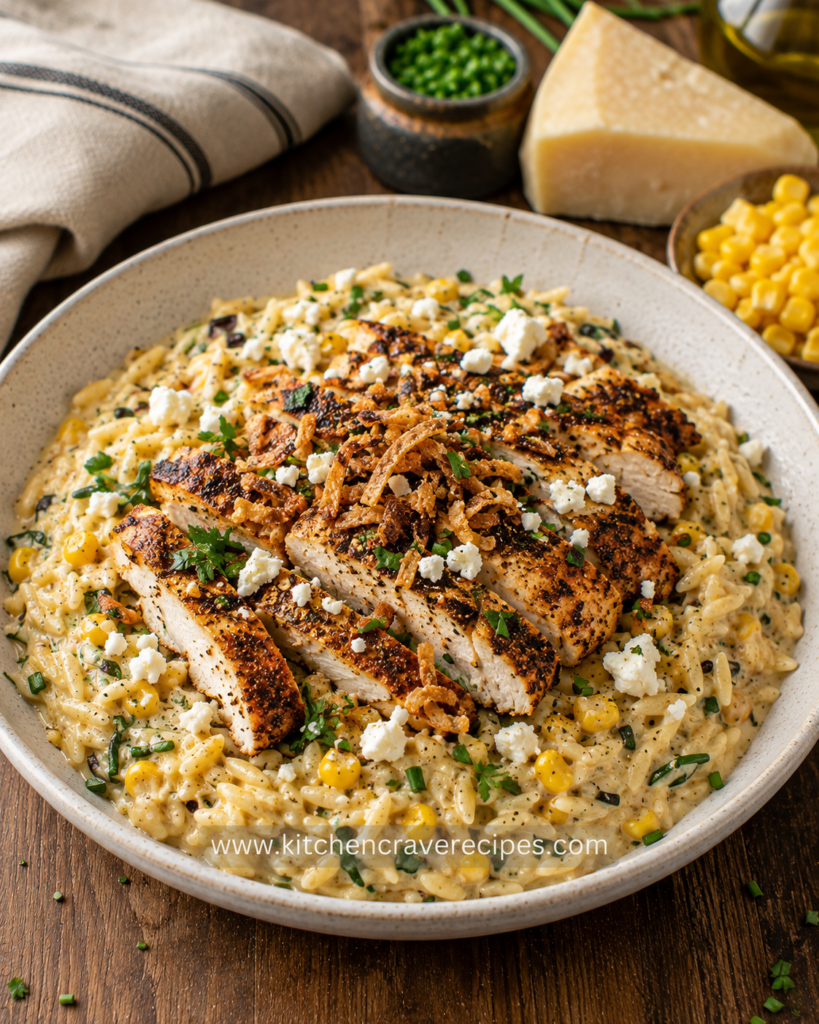
Some dinner recipes earn a permanent spot in your weekly rotation after the very first bite. This Cajun chicken creamy corn orzo is exactly that kind of dish — a spiced, seared chicken breast fanned out over a luscious, golden orzo cooked risotto-style with sweet corn kernels, finished with crumbled feta and crispy fried onions on top. The photo shows it all: bold blackened crust on the chicken, a creamy corn-studded orzo base, fresh chives and parsley scattered throughout, and those bright white feta crumbles pulling everything together visually and in flavor.
What makes this recipe genuinely different from a standard pasta bowl is the technique. The orzo absorbs seasoned broth as it cooks, concentrating flavor the way risotto does — without any of the constant stirring. Every component earns its place in this bowl, and the whole thing comes together in about 30 minutes from a single large skillet.
Recipe Quick Info Table
| Detail |
Info |
| Prep Time |
10 minutes |
| Cook Time |
20 minutes |
| Total Time |
30 minutes |
| Servings |
4 |
| Cuisine |
American / Cajun-Inspired |
| Course |
Main Course |
| Calories |
~490 per serving |
| Difficulty |
Easy–Medium |
Why You'll Love This Cajun Chicken Creamy Corn Orzo
- One skillet, 30 minutes, minimal cleanup. The chicken sears and the orzo cooks in the same pan — no extra pots, no juggling burners simultaneously.
- High-protein without feeling heavy. Each serving delivers around 42 grams of protein from the chicken breast, keeping you full without the heaviness of a cream-heavy pasta dish.
- The orzo cooks risotto-style for maximum flavor. Broth absorbs directly into the orzo, creating a creamy, deeply seasoned base without a drop of heavy cream.
- Feta and crispy fried onions make this special. The salty tang of crumbled feta and the crunch of fried onion straws on top transform a weeknight dinner into something that genuinely impresses.
- Customizable heat level. The Cajun seasoning is easy to dial up or tone down — the recipe works for spice lovers and mild-palate households alike.
- Sweet corn balances the bold spice. Corn kernels stirred through the orzo add natural sweetness that plays directly against the smoky, peppery Cajun crust on the chicken.
- Great for meal prep. The orzo reheats beautifully with a splash of broth, making it one of the most practical high-protein meals you can batch-cook for the week.
Ingredients
Cajun Chicken
- 2 large boneless, skinless chicken breasts (about 1 ½ lbs total)
- 2 teaspoons smoked paprika
- 1 teaspoon garlic powder
- 1 teaspoon onion powder
- ½ teaspoon dried oregano
- ½ teaspoon dried thyme
- ½ teaspoon cayenne pepper (adjust to taste)
- ½ teaspoon fine black pepper
- ½ teaspoon kosher salt
- 1 tablespoon olive oil (for searing)
Creamy Corn Orzo
- 1 ½ cups dry orzo pasta
- 2 tablespoons unsalted butter
- 4 cloves garlic, minced
- 1 ½ cups sweet corn kernels (fresh, canned/drained, or thawed frozen)
- 2 ½ cups low-sodium chicken broth
- ½ cup whole milk
- 2 oz cream cheese, softened and cubed
- ½ teaspoon kosher salt
- ¼ teaspoon black pepper
Toppings (as shown in photo)
- ⅓ cup crumbled feta cheese
- ¼ cup crispy fried onions (store-bought or homemade)
- 2 tablespoons fresh chives, thinly sliced
- 2 tablespoons fresh flat-leaf parsley, roughly chopped
Optional Add-Ins (keep separate)
- ½ teaspoon red pepper flakes (for extra heat in the orzo)
- 1 tablespoon lemon juice (stirred in at the end for brightness)
- ¼ cup freshly grated Parmesan (for extra richness)
Ingredient Substitutions
| Original Ingredient |
Substitution |
Notes |
| Chicken breast |
Boneless chicken thighs |
Thighs are fattier and stay juicier with high-heat searing |
| Orzo pasta |
Ditalini or acini de pepe |
Small pasta shapes work; adjust broth by ¼ cup and check earlier |
| Cream cheese |
Mascarpone or Boursin (plain) |
Boursin adds herby notes; reduce added salt slightly |
| Whole milk |
Half-and-half |
Richer, slightly thicker sauce |
| Fresh corn |
Canned corn (drained) or frozen thawed |
All three work equally; fresh corn has the most sweetness |
| Feta cheese |
Goat cheese or ricotta salata |
Goat cheese gives creamier crumbles; ricotta salata is firmer and saltier |
| Crispy fried onions |
Toasted panko breadcrumbs |
Adds crunch without sweetness; toast in 1 tsp butter before using |
Kitchen Tools Needed
- Large (12-inch) oven-safe skillet or deep sauté pan
- Meat thermometer (instant-read)
- Cutting board and sharp chef's knife
- Tongs (for handling chicken)
- Wooden spoon or silicone spatula (for stirring orzo)
- Small bowl (for mixing Cajun spice blend)
- Measuring cups and spoons
- Ladle (optional, for adding broth gradually if preferred)
Step-by-Step Instructions
1. Mix the Cajun spice blend and season the chicken.
Combine the smoked paprika, garlic powder, onion powder, oregano, thyme, cayenne, black pepper, and salt in a small bowl. Pat the chicken breasts completely dry with paper towels — this is the single most important step for getting a proper crust. Press the spice blend firmly onto both sides of each breast, coating every surface evenly. Set aside while you preheat the pan.
2. Sear the chicken until fully cooked.
Heat 1 tablespoon of olive oil in a large skillet over medium-high heat until the oil shimmers. Add the chicken breasts and press down gently with tongs for the first 30 seconds to maximize contact with the pan. Sear undisturbed for 5–6 minutes per side until a deep, blackened crust forms. According to the
USDA's safe cooking guidelines, chicken must reach an internal temperature of 165°F — use an instant-read thermometer inserted into the thickest part to confirm.
Embedded Tip: Don't move the chicken during searing. Leaving it untouched lets the Maillard reaction develop the deep, crackling crust visible in the photo. If you lift it and it sticks, it isn't ready to flip yet.
3. Rest and slice the chicken.
Transfer the cooked chicken to a cutting board and tent loosely with foil. Let it rest for at least 5 minutes before slicing — this allows the juices to redistribute through the meat instead of running out onto the board. Slice on a slight diagonal into ½-inch strips for the fan-style presentation shown in the photo.
4. Build the orzo base in the same skillet.
Without cleaning the skillet, reduce the heat to medium. Add the butter and let it melt, scraping up any browned bits from the chicken — that fond is packed with flavor and will season the orzo naturally. Add the minced garlic and cook for 60 seconds, stirring constantly, until fragrant but not browned.
5. Toast the orzo and add corn.
Add the dry orzo to the skillet and stir it into the garlic butter. Cook for 90 seconds, stirring frequently, until the orzo smells nutty and a few pieces turn lightly golden at the edges. Add the corn kernels and stir to combine. Toasting the orzo before adding liquid gives the finished dish a deeper, nuttier flavor that sets it apart from simply boiling pasta.
Embedded Tip: If you're using fresh corn cut straight from the cob, add it here and let it cook for an extra 60 seconds before adding the broth — this brings out its natural sweetness and gives the orzo a slightly golden tint from the corn starches.
6. Cook the orzo risotto-style.
Pour in the chicken broth and whole milk. Stir well to combine, then bring the mixture to a gentle simmer. Cook uncovered, stirring every 2–3 minutes, for 10–12 minutes until the orzo is tender and most of the liquid has been absorbed into a creamy, thick sauce. The mixture should look loose rather than dry — it will continue thickening as it sits.
7. Finish the orzo with cream cheese.
Remove the skillet from heat. Add the cubed cream cheese and stir vigorously until fully melted and incorporated. The cream cheese creates the glossy, velvety texture you see in the photo without needing a cup of heavy cream. Taste and adjust salt and pepper as needed.
8. Assemble the bowl and add toppings.
Spoon the creamy corn orzo into wide, shallow bowls (or serve family-style from the skillet). Fan the sliced Cajun chicken over the orzo. Scatter crumbled feta, crispy fried onions, fresh chives, and parsley generously over the top — these toppings are not optional garnishes; they're part of the flavor architecture. Serve immediately.
Pro Tips for the Best Cajun Chicken Creamy Corn Orzo
- Pound thick chicken breasts to an even ½-inch thickness before seasoning. Even thickness means both sides cook through at the same rate, eliminating the dry-edge/raw-center problem that plagues thick breasts.
- Let the cream cheese come to room temperature before adding it to the hot orzo. Cold cream cheese seizes into lumps rather than melting smoothly — 15 minutes on the counter makes the difference.
- Use low-sodium chicken broth so you can control the final salt level yourself. The Cajun spice blend, feta, and crispy onions all bring saltiness — starting with a low-sodium base prevents the dish from going over the edge.
- Don't rinse the orzo before or after cooking. The surface starch is exactly what helps create that creamy, clingy sauce — rinsing it away defeats the risotto-style technique entirely.
- Serve in warm bowls. A cold bowl drops the temperature of the orzo fast — run warm water over your serving bowls for 30 seconds, dry them, and serve immediately for a restaurant-quality experience.
Common Mistakes to Avoid
1. Cooking chicken straight from the refrigerator.
A cold center means the outside overcooks before the inside reaches 165°F.
Fix: Pull the chicken out of the fridge 10–15 minutes before cooking so it comes closer to room temperature before it hits the hot pan.
2. Skipping the pat-dry step.
Surface moisture creates steam rather than a sear, which means no crust — just pale, steamed chicken with gray edges.
Fix: Press paper towels firmly over every surface of the breast and let it sit uncovered for 2 minutes after drying before seasoning.
3. Turning the heat too low when searing.
Medium-high heat is non-negotiable for Cajun-style blackening. Low heat produces dull, brownish chicken instead of a crackling dark crust.
Fix: The oil should shimmer and barely smoke before the chicken goes in — if it doesn't, wait another 30 seconds.
4. Stirring the orzo too frequently.
Unlike risotto rice, orzo can break down and turn gluey if stirred constantly over high heat.
Fix: Stir every 2–3 minutes on a steady simmer, not a rolling boil — this creates the creamy texture without the paste.
5. Adding cold cream cheese to boiling hot orzo.
Cold dairy added to a very hot pan can curdle or seize.
Fix: Remove the skillet from heat completely before stirring in the cream cheese. Off-heat incorporation gives you a silky, smooth finish every time.
6. Under-seasoning the orzo and blaming the recipe.
The orzo cooks in broth and milk — both fairly neutral.
Fix: Always taste after the cream cheese is fully incorporated and before serving. This is your last window to add salt, pepper, or a squeeze of lemon.
7. Adding the toppings too early.
Feta and crispy fried onions placed on a hot skillet before serving will melt and lose their texture.
Fix: Add all toppings at the very last moment, right before the bowls go to the table.
8. Using pre-shredded or processed feta.
Processed feta crumbles contain anti-caking agents and are drier, with less tang.
Fix: Buy a block of real feta in brine and crumble it yourself — the texture and flavor difference is immediately noticeable.
Variations
Lighter Version
Swap the cream cheese for 3 tablespoons of plain 2% Greek yogurt stirred in off-heat, and reduce the butter to 1 tablespoon. The orzo will be slightly less rich but still creamy and satisfying. Using Greek yogurt also adds a small protein boost and a gentle tang that works well alongside the feta. Check out our
Best High-Protein Marbled Banana Chocolate Bread (5-Ingredient Swap) for another lighter Cajun-inspired option.
Vegetarian Version
Replace the chicken breast with two large portobello mushroom caps seasoned with the full Cajun spice blend and seared in the same manner — 3–4 minutes per side over medium-high heat until deeply browned. Use vegetable broth instead of chicken broth in the orzo. The mushrooms develop a meaty, smoky character from the Cajun seasoning that holds up well against the sweet corn and feta.
Extra-Spicy Version
Double the cayenne in the spice blend to 1 full teaspoon, add ½ teaspoon of chipotle powder for a smoky heat layer, and stir ¼ teaspoon of red pepper flakes into the orzo with the garlic. This version is genuinely hot — it's suited for spice lovers who find standard Cajun seasoning mild. The corn and feta still provide enough sweetness and salt to balance the heat.
Gluten-Free Version
Substitute the orzo with a certified gluten-free orzo (available from brands like DeLallo or Jovial) or use short-grain white rice instead. With rice, increase the broth to 3 cups, extend the cook time to 18–20 minutes, and check for doneness at the 16-minute mark. The swap is seamless — all other components are naturally gluten-free. Confirm your Cajun seasoning blend is also certified gluten-free, as some store-bought blends contain flour as a carrier.
Lower-Carb Version
Replace half the orzo with finely riced cauliflower. Add the cauliflower rice at Step 6 alongside the reduced orzo portion (¾ cup dry) and cook as directed. The cauliflower absorbs the broth and cream cheese just like the orzo does, and the corn and feta keep the dish from tasting "diet." This version reduces the carbohydrate count by roughly 30% per serving without sacrificing the bowl's creamy character.
What to Serve With This Recipe
- Simple arugula salad with lemon vinaigrette — the peppery greens and bright acid cut the richness of the orzo cleanly.
- Warm crusty sourdough bread — perfect for scooping up any cream sauce left in the bowl.
- Roasted broccolini with garlic — a quick side that adds color and fiber without competing with the Cajun flavors.
- Sparkling water with lime — refreshing and palate-cleansing between bites of the spiced chicken.
- A cold glass of off-dry Riesling — the slight sweetness in the wine plays directly against the Cajun heat.
- Our Best High-Protein Marbled Banana Chocolate Bread (5-Ingredient Swap)— a natural flavor match that doubles the Cajun theme on the table.
- Sliced avocado with sea salt — adds creaminess and healthy fat as a cooling counterpoint to the spice.
Storage Instructions
Refrigerator: Store leftover orzo and chicken separately when possible — the chicken holds its texture better this way. Keep each in an airtight container for up to 4 days. If already combined, the dish stores well but the orzo will thicken considerably in the refrigerator as it absorbs remaining moisture.
Freezer: The creamy corn orzo freezes adequately but the cream cheese-based sauce can become slightly grainy after thawing. If you plan to freeze portions, freeze the orzo on its own and the sliced chicken separately, wrapped tightly in plastic then placed in a freezer bag. Freeze for up to 2 months. Thaw overnight in the refrigerator before reheating.
Toppings: Do not store the crispy fried onions, fresh herbs, or feta with the orzo — they should always be added fresh. Store them separately and apply just before serving reheated portions.
Shelf Life Summary
| Storage Method |
Duration |
| Refrigerator (airtight container) |
Up to 4 days |
| Freezer (orzo and chicken separate) |
Up to 2 months |
| Toppings (feta, herbs, onions) |
Refrigerate separately, up to 3 days |
Reheating Instructions
Stovetop (best method): Place the orzo in a skillet over medium-low heat with 2–3 tablespoons of chicken broth or water. Stir gently as it warms, adding broth gradually until the orzo loosens back to its original creamy consistency. This takes about 4–5 minutes and produces the closest result to freshly made.
Microwave (fastest): Place a single serving in a microwave-safe bowl and add 2 tablespoons of broth or water over the top. Cover loosely with a damp paper towel and microwave on 70% power in 60-second intervals, stirring between each, until heated through. The chicken reheats well at 50% power for 90 seconds.
Oven: Spread the orzo in an oven-safe dish, add 3 tablespoons of broth, cover tightly with foil, and reheat at 325°F for 12–15 minutes. This method works best for reheating a large batch. Place sliced chicken on top of the foil-covered dish for the last 5 minutes.
For safe poultry reheating temperature guidelines, the
USDA Food Safety and Inspection Service recommends reheating all cooked chicken to an internal temperature of 165°F before serving.
Nutrition Facts
(Per 1 serving, based on 4 servings — calculated with chicken breast, whole milk, cream cheese, and all listed toppings)
| Nutrient |
Amount |
| Calories |
~490 |
| Total Fat |
18g |
| Saturated Fat |
8g |
| Cholesterol |
115mg |
| Sodium |
680mg |
| Total Carbohydrates |
40g |
| Dietary Fiber |
3g |
| Total Sugars |
6g |
| Protein |
42g |
| Calcium |
140mg |
| Iron |
2.5mg |
Nutrition Disclaimer: These values are estimates based on standard nutrition databases and may vary depending on specific brands, chicken breast size, and any substitutions made. For precise dietary tracking, input your exact ingredients into a verified nutrition calculator. This information is provided for general reference only. The
USDA FoodData Central database is a reliable resource for verifying individual ingredient nutrition values.
Frequently Asked Questions
What makes this a high-protein meal compared to standard pasta dishes?
The combination of two large chicken breasts (approximately 35–38g protein on their own) plus the orzo and dairy ingredients brings each serving to around 42 grams of total protein. Standard pasta dishes rely mainly on carbohydrates — this recipe uses the orzo as a base rather than the main event, keeping the macros balanced.
Can I use Cajun seasoning from a bottle instead of mixing my own?
Absolutely. Use 2 tablespoons of your preferred store-bought Cajun blend in place of the individual spices. Taste it first — many commercial blends are heavily salted, so you may want to reduce or omit the added kosher salt in the spice rub to avoid overseasoning the chicken.
How do I prevent the orzo from sticking to the pan?
Keep the heat at a steady medium simmer and stir every 2–3 minutes. If you notice the orzo starting to catch on the bottom before the liquid is absorbed, add another ¼ cup of broth and reduce the heat slightly. A heavy-bottomed skillet distributes heat more evenly and makes sticking much less likely.
Can this Cajun chicken creamy corn orzo be made ahead for meal prep?
Yes — it's one of the better pasta dishes for meal prep because the orzo reheats well with a splash of broth. Cook and slice the chicken, make the orzo, then store them separately in airtight containers. Portion into meal prep containers for up to 4 days, adding fresh toppings when you're ready to eat each serving.
What kind of corn works best — fresh, frozen, or canned?
All three work. Fresh corn cut from the cob in summer delivers the sweetest flavor and a slight pop of texture. Frozen corn thawed and drained is the most consistent year-round option. Canned corn drained thoroughly works well too — just pat it dry to avoid adding excess liquid to the orzo. Any of the three will produce a great result.
Is this dish very spicy? Can I make it milder?
At the listed measurements, the heat level is moderate — a warmth rather than a burn. To make it milder, reduce the cayenne to ¼ teaspoon or omit it entirely and use sweet paprika in its place. The smoked paprika carries the primary Cajun-style flavor, so the dish still tastes fully seasoned even without the heat.
Why do I use cream cheese instead of heavy cream?
Cream cheese provides the same creamy richness as heavy cream but with more body and a subtle tang that balances the sweet corn and bold Cajun spices. It also reduces the overall fat content slightly and is less likely to break or separate over heat when added off-flame, making it a more reliable choice for a weeknight recipe.
Can I make this in a single skillet start to finish?
Yes — that's exactly how the recipe is designed. The chicken sears in the skillet, rests on a board while you build the orzo in the same pan, and the final bowl comes together in that single pan. The browned fond left behind after searing the chicken becomes the flavor base for the orzo sauce.
Does the feta need to be added hot or cold?
Cold, directly from the refrigerator. Crumbled feta added to a hot dish immediately begins to melt and lose its distinct crumbled texture — you want it to stay in recognizable white pieces on top, as shown in the photo. Add it at the very last moment, just before serving.
Can I use chicken thighs instead of chicken breast?
Boneless, skinless chicken thighs are an excellent substitute. They have a higher fat content, which makes them more forgiving if slightly overcooked, and the Cajun crust develops just as well on thighs as on breasts. Reduce sear time by about 1 minute per side since thighs are typically thinner — and confirm the 165°F internal temperature regardless.
What pasta shape can I substitute if I don't have orzo?
Small pasta shapes are the most natural substitutes — ditalini, acini de pepe, or small shells all work. Larger shapes like penne or rotini won't cook evenly in the same amount of liquid. If you use a different small shape, check for doneness 2 minutes earlier than the orzo timing suggests and add extra broth in ¼ cup increments if needed.
Expert Chef Tips
Score the chicken breast lightly before seasoning.
Make three shallow diagonal cuts (about ¼ inch deep) across each breast before applying the spice blend. This increases the surface area for the crust to form and allows the seasoning to penetrate slightly deeper into the meat — especially useful with thicker chicken breasts that otherwise have a plain interior even when the exterior is well-charred.
Toast whole spices before grinding for a homemade Cajun blend.
If you grind your own Cajun spice mix, dry-toast whole cumin seeds, black peppercorns, and dried thyme briefly in the skillet before grinding. This releases essential oils and produces a noticeably more complex, aromatic spice blend compared to simply combining pre-ground spices straight from the jar.
Add the corn before the broth to develop a little color.
Giving the corn 60–90 seconds in the hot garlic butter before the liquid goes in caramelizes its natural sugars slightly. The result is a deeper golden color in the orzo and a subtle roasted-corn undertone that you don't get when everything is added simultaneously.
Deglaze with a splash of white wine before adding broth.
A 2-tablespoon pour of dry white wine added to the hot skillet right after the garlic lifts the fond immediately and adds a layer of acidity that the cream cheese and feta then balance. It evaporates within 30 seconds, leaving only the flavor behind — no alcohol taste, no extra richness.
Finish with cold butter, not more cream.
If the orzo is thicker than you'd like right before serving, stir in one tablespoon of cold unsalted butter off-heat rather than adding more milk or broth. Cold butter emulsifies into the sauce instantly, adds gloss, and enriches the texture without making the dish soupy or loose.
Recipe Summary
This Cajun chicken creamy corn orzo with feta brings together deeply spiced, seared chicken breast, sweet corn, and risotto-style orzo in a single skillet — all in 30 minutes. The cream cheese-based sauce is velvety without being heavy, and the feta, crispy fried onions, and fresh herbs on top add the finishing texture and contrast that make every bowl feel complete. With approximately 42 grams of protein per serving, it's a high-protein weeknight dinner that tastes far more involved than it actually is.
Conclusion
Weeknight dinners don't often look this good or taste this layered, but this Cajun chicken creamy corn orzo proves that one skillet, 30 minutes, and a few well-chosen ingredients are all it takes. The Cajun crust on the chicken, the sweet corn woven through the creamy orzo, and the bold contrast of salty feta and crunchy onion straws — every element is there for a reason, and together they make a bowl that you'll want to make again before the week is out. Whether you're meal-prepping for busy days ahead or putting something genuinely impressive on the table tonight, this one always delivers.