The Skillet Pasta That Earns a Permanent Spot in Your Rotation
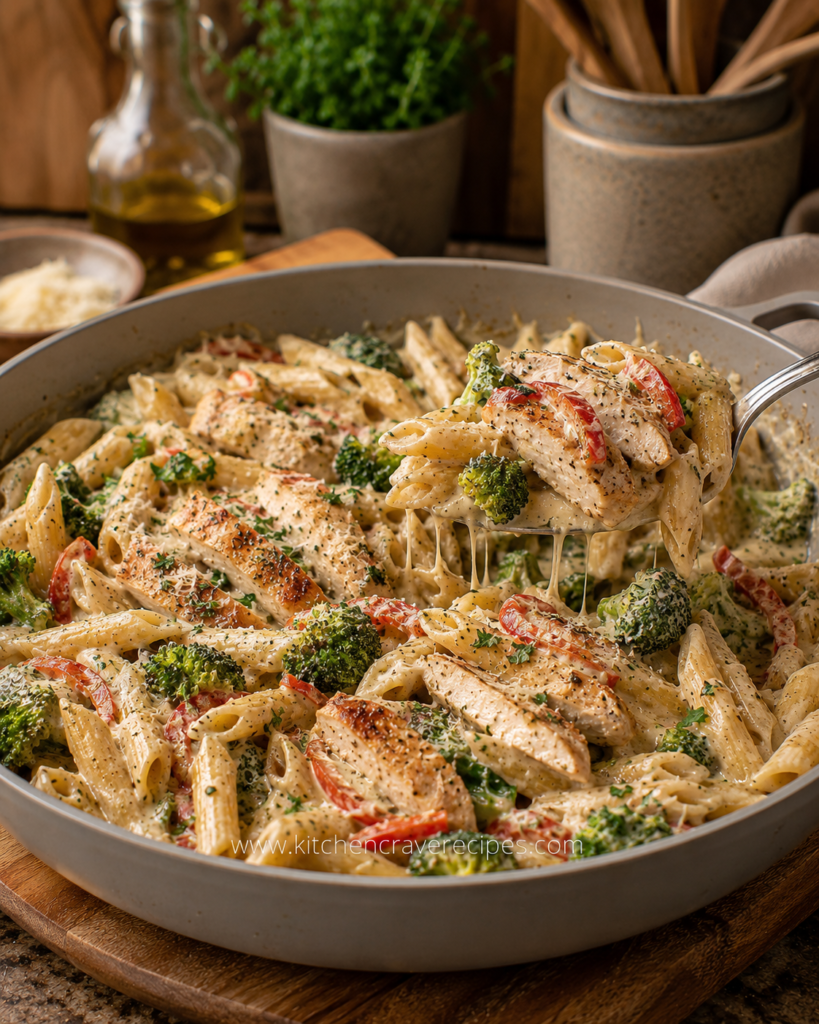
There's a specific kind of dinner that doesn't ask much of you and gives back everything — and this creamy garlic chicken broccoli penne is exactly that. Seared seasoned chicken breast strips, tender broccoli florets, bright cherry tomato halves, and ridged penne pasta all come together in a single large skillet, coated in a velvety Parmesan cream sauce with enough garlic to make the whole kitchen smell like something incredible is happening. The ridged penne catches the sauce in every groove, and a forkful with chicken, broccoli, and pasta in the same bite is genuinely satisfying in a way that light meals rarely are.
At roughly 48 grams of protein per serving, this skillet pasta earns its high-protein label honestly — from chicken breast and real Parmesan, not any supplements. Whether it's a Tuesday night dinner or a weekend meal-prep session, this dish delivers maximum comfort with minimal effort.
Recipe Quick Info
| |
|
| Prep Time |
10 minutes |
| Cook Time |
20 minutes |
| Total Time |
30 minutes |
| Servings |
4 |
| Cuisine |
Italian-American |
| Course |
Main Dish / Dinner |
| Calories |
~530 per serving |
| Difficulty |
Standard |
Why You'll Love This Recipe
- One skillet, start to finish. The chicken sears, the sauce builds, and the pasta finishes — all in the same pan, which means one less dish and more flavor from the fond left by the chicken.
- Ready in 30 minutes flat. From cold ingredients to table, this creamy garlic chicken broccoli penne takes exactly as long as it says — no hidden marinating or resting steps.
- 48 grams of protein per serving. Chicken breast and Parmesan carry the protein load without any processed additions, making this a genuinely macro-friendly dinner.
- Cherry tomatoes add brightness that cuts the richness. As visible in the finished dish, the roasted tomato pieces scattered throughout balance the cream sauce beautifully — don't skip them.
- The Parmesan cream sauce is foolproof. Four ingredients, one pan, eight minutes — it comes together smoothly every time with no risk of breaking if you follow the temperature instructions.
- Scales easily for meal prep. Double the recipe in a larger skillet and you have four days of lunches that reheat beautifully with a splash of cream.
- No heavy flour-based roux needed. The sauce thickens naturally from reduced cream and melted Parmesan, keeping it clean and glossy rather than gummy.
Ingredients
For the Chicken
- 1½ lbs boneless, skinless chicken breasts, sliced into ½-inch strips
- 1 tablespoon olive oil
- 1 teaspoon Italian seasoning
- ½ teaspoon smoked paprika
- ½ teaspoon garlic powder
- ½ teaspoon kosher salt
- ¼ teaspoon black pepper
For the Pasta and Vegetables
- 12 oz penne pasta (ridged/rigate style, as shown)
- 2 cups fresh broccoli florets, cut into bite-size pieces
- 1 cup cherry tomatoes, halved (as visible in the finished dish)
- 1 tablespoon kosher salt (for pasta water)
For the Parmesan Cream Sauce
- 2 tablespoons unsalted butter
- 5 cloves garlic, minced
- 1½ cups heavy cream
- 1 cup freshly grated Parmesan cheese, plus more for serving
- ½ teaspoon black pepper
- ¼ teaspoon ground nutmeg
- Salt to taste
- ½ cup reserved pasta cooking water (added as needed to loosen sauce)
For Garnish
- 2 tablespoons fresh flat-leaf parsley, finely chopped
- Extra freshly grated Parmesan
- Freshly cracked black pepper
Optional Add-Ins
- ½ teaspoon red pepper flakes (into the sauce for heat)
- 2 tablespoons sun-dried tomatoes, chopped (extra depth alongside the fresh cherry tomatoes)
- 1 tablespoon fresh lemon juice (stirred in at the end for brightness)
Ingredient Substitutions
| Original Ingredient |
Substitution |
Notes |
| Chicken breasts |
Chicken thighs, boneless |
Slightly more fat; richer flavor; same cook time |
| Heavy cream |
Half-and-half |
Sauce will be thinner; still creamy and cohesive |
| Parmesan (fresh block) |
Pecorino Romano |
Saltier — reduce added salt by ¼ teaspoon |
| Penne rigate |
Rigatoni or ziti |
Same ridged structure; sauce clings equally well |
| Fresh broccoli |
Broccolini, trimmed |
Slightly more tender; reduce blanching by 1 minute |
| Cherry tomatoes |
Grape tomatoes, halved |
Identical result; no timing change |
| Fresh parsley |
Fresh basil |
Sweeter herbal finish; equally appropriate |
Kitchen Tools Needed
- Large pot (for boiling pasta)
- Colander
- Large deep skillet (12-inch, gray nonstick or stainless — as shown in the photo — for even heat and easy tossing)
- Tongs
- Wooden spoon or silicone spatula
- Box grater (for Parmesan — do not use pre-shredded)
- Liquid measuring cup (for pasta water)
- Instant-read thermometer (for chicken doneness)
- Sharp chef's knife and cutting board
Step-by-Step Instructions
Step 1: Cook the Pasta and Blanch the Broccoli Together
Bring a large pot of water to a boil and add 1 tablespoon kosher salt. Add the penne and cook according to package directions until 1 minute shy of al dente. In the last 2 minutes of pasta cooking, add the broccoli florets directly to the pasta water — they'll blanch just enough to turn bright green and become tender-crisp without needing a separate pot. Before draining, scoop out ½ cup of the starchy pasta water and set it aside; this liquid is your insurance for a silky, cohesive sauce later. Drain both the pasta and broccoli together and set aside.
Step 2: Season and Sear the Chicken
Pat the chicken strips completely dry with paper towels. Toss them in a bowl with Italian seasoning, smoked paprika, garlic powder, salt, and pepper until evenly coated. Heat 1 tablespoon olive oil in a large 12-inch skillet over medium-high heat until shimmering. Add the chicken strips in a single layer — resist the urge to move them for the first 2–3 minutes so they develop a proper golden crust on one side. Flip and cook another 2–3 minutes until cooked through. Tip: Use an instant-read thermometer to confirm the internal temperature reaches 165°F — per the USDA guidelines for poultry, this is the minimum safe temperature for chicken. Transfer the cooked chicken to a plate and tent loosely with foil while you build the sauce.
Step 3: Sauté the Garlic and Build the Cream Sauce
In the same skillet (don't wipe it out — those browned bits from the chicken are flavor), reduce heat to medium. Add the butter and let it melt. Add the minced garlic and sauté for 60–90 seconds, stirring frequently, until fragrant and just barely golden at the edges. Pour in the heavy cream, increase heat to medium-high, and let the cream come to a gentle simmer. Stir in the nutmeg and black pepper. Let the sauce simmer, stirring occasionally, for 4–5 minutes until it reduces by about 15% and coats the back of a spoon.
Step 4: Add Parmesan and Melt Into the Sauce
Remove the skillet from the heat entirely before adding the Parmesan. Stir it in gradually — about ⅓ cup at a time — allowing each addition to melt fully before adding the next. This off-heat technique prevents the cheese proteins from seizing and keeps the sauce smooth and glossy rather than grainy. If the sauce feels too thick at this stage, add 2–3 tablespoons of the reserved pasta water and stir to incorporate. Tip: Never add cold Parmesan to a violently boiling sauce — the temperature shock is what causes most cream sauces to break.
Step 5: Add the Cherry Tomatoes
Return the skillet to medium-low heat. Add the halved cherry tomatoes and stir gently into the sauce. Let them cook for 1–2 minutes just until they soften slightly and begin to release a small amount of juice into the sauce. You want them to hold their shape and color — as shown in the finished dish — rather than dissolving completely into the cream.
Step 6: Combine Pasta, Broccoli, and Chicken
Add the drained penne and blanched broccoli directly to the skillet. Using tongs, toss everything together until the pasta is fully coated in the Parmesan cream sauce. If the sauce has tightened up, add another 2–3 tablespoons of the reserved pasta water and toss again. Nestle the seared chicken strips back into the pan on top of the pasta, as shown, rather than stirring them under — this keeps the chicken visible and prevents it from breaking apart in the toss.
Step 7: Garnish and Serve Immediately
Scatter fresh flat-leaf parsley generously over the top of the finished skillet. Add another dusting of freshly grated Parmesan and a few cracks of black pepper. Serve directly from the skillet at the table — the gray nonstick pan makes a great presentation vessel and stays warm longer than transferring to a separate bowl.
Pro Tips
-
Reserve the pasta water before draining — every single time. The starchy water is the most effective tool you have for rescuing a sauce that's become too thick or split slightly. A half cup costs nothing and saves the dish.
-
Grate Parmesan from a block, not a bag. Pre-shredded Parmesan contains cellulose powder that prevents it from melting smoothly into cream sauces, creating a grainy texture. A block of Parmigiano-Reggiano grated on the fine side of a box grater melts in seconds.
-
Don't overcrowd the chicken in the pan. If your strips are touching, they'll steam rather than sear. Work in two batches if needed — the extra 3 minutes is worth the crust you get.
-
Taste the sauce before adding any extra salt. Parmesan is naturally salty, and the pasta cooking water adds a little more. Add salt only after you've tasted the combined dish, not before.
-
Serve within 10 minutes of finishing. Cream-based pasta sauces thicken as they cool and as the pasta continues absorbing liquid. Serve promptly or keep warm over the lowest possible heat with a splash of cream stirred in just before plating.
Common Mistakes to Avoid
1. Using pre-shredded Parmesan from a bag.
The anti-caking additives in bagged cheese prevent clean melting and turn the sauce grainy. Always grate from a block and add it off the heat to ensure a silky, smooth result.
2. Overcooking the broccoli.
Broccoli dropped into the pasta water for the last 2 minutes of boiling comes out tender-crisp and bright green. More than 3 minutes and it turns army-green and mushy — both visually and texturally the wrong outcome.
3. Adding Parmesan over high heat.
High heat causes the protein in Parmesan to seize and clump rather than melt. Remove the pan from the burner before stirring in the cheese, and add it in thirds for the smoothest sauce.
4. Skipping the pasta water.
Forgetting to scoop out pasta water before draining is one of the most common and costly kitchen mistakes in cream pasta cooking. Set a liquid measuring cup right next to the pot as a visual reminder before you drain.
5. Moving the chicken too early during searing.
Chicken that's moved before the crust has formed sticks to the pan and tears. Leave it untouched for a full 2–3 minutes on the first side — it releases naturally when the crust is ready.
6. Letting the sauce boil after adding cream.
A gentle simmer reduces the cream and builds flavor; a rolling boil causes the fat and liquid to separate. Keep the heat at medium-high at most, and reduce to medium once the cream is simmering steadily.
7. Under-seasoning the pasta water.
Pasta cooked in under-salted water tastes flat regardless of how bold the sauce is. Use 1 tablespoon of kosher salt per large pot — the pasta itself should taste pleasantly seasoned, not salty, when you bite into it.
Variations
Lighter / Lower-Calorie Version
Swap heavy cream for 1 cup of half-and-half and reduce Parmesan to ¾ cup. The sauce will be noticeably thinner, so use 2–3 tablespoons extra pasta water and let the sauce simmer 2 more minutes to help it reduce. You save roughly 90 calories per serving while keeping the garlic-Parmesan flavor profile intact.
Vegetarian Version
Omit the chicken entirely and replace it with 1 can (15 oz) of drained, rinsed white cannellini beans stirred in at the same step where chicken returns to the pan. Cannellini beans add protein, a creamy texture, and neutral flavor that absorbs the garlic cream sauce beautifully. Add 1 extra cup of broccoli to bulk up the vegetable presence.
Spicy Calabrian Version
Add 1 tablespoon of Calabrian chili paste to the butter when sautéing the garlic, and increase smoked paprika in the chicken seasoning to 1 teaspoon. The chili paste integrates directly into the cream sauce, producing a warm, deep heat that complements the richness rather than fighting it. This version pairs especially well with the cherry tomatoes.
Gluten-Free Version
Use certified gluten-free penne — several quality brands are widely available. Every other component in this recipe is naturally gluten-free. Verify your Italian seasoning blend as well, since some commercial blends include fillers with gluten-derived starch; a certified gluten-free spice blend eliminates any risk.
Low-Carb / Keto-Friendly Version
Replace the penne with 4 cups of fresh zucchini noodles (spiralized). Don't blanch them — add raw zucchini noodles directly to the sauce in the final toss and cook for 60–90 seconds only. Zucchini releases water quickly, so use slightly less pasta water in the sauce and serve immediately to prevent the dish from becoming watery.
What to Serve With This Recipe
- Simple arugula salad with lemon vinaigrette — the peppery bitterness cuts cleanly through the richness of the Parmesan cream sauce.
- Garlic bread or focaccia — excellent for scooping up any remaining sauce from the skillet; try Best Garlic Herb Chicken Roasted Potatoes Carrots (1-Pan Easy Dinner) for the perfect pairing.
- Roasted asparagus with olive oil and sea salt — bright, simple, and ready in 12 minutes at 400°F while the pasta finishes on the stovetop.
- Caesar salad — a natural companion to garlic-Parmesan pasta; the anchovy depth in the dressing complements the cream sauce without overpowering it.
- Chilled dry white wine — Pinot Grigio or unoaked Chardonnay pairs cleanly with the garlic and cream without adding competing richness.
- Steamed green beans with garlic butter — fast, easy, and adds a green vegetable element if you want more vegetables alongside the dish.
Storage Instructions
Refrigerator
Transfer cooled leftovers to an airtight container and refrigerate for up to 4 days. The sauce will thicken considerably as the pasta absorbs it during storage — this is normal and reverses easily during reheating with a splash of cream or broth.
Freezer
Cream-based pasta sauces generally do not freeze well — the dairy can separate upon thawing, leaving a grainy, oily texture. If you want to freeze a component, freeze only the seared chicken separately in a freezer-safe container for up to 2 months and prepare fresh pasta and sauce when ready to eat.
Shelf Life Summary
| Storage Method |
Duration |
| Refrigerator (airtight) |
Up to 4 days |
| Freezer (chicken only) |
Up to 2 months |
| Freezer (full dish with sauce) |
Not recommended |
| Room temperature |
Do not exceed 2 hours |
Reheating Instructions
Stovetop (Best Method)
Add desired portion to a skillet over medium-low heat. Pour in 3–4 tablespoons of heavy cream or chicken broth to loosen the sauce. Stir gently and heat for 5–7 minutes until the pasta is warmed through and the sauce is smooth and glossy again. This method best preserves the texture of both the pasta and the broccoli.
Microwave (Quickest Method)
Place a portion on a microwave-safe plate. Drizzle 2 tablespoons of cream or broth over the pasta and cover loosely with a damp paper towel. Heat on medium power (70%) in 90-second intervals, stirring between each, until steaming throughout. Per the USDA Food Safety guidelines, leftovers containing chicken must reach an internal temperature of 165°F before eating.
Oven
Spread leftovers in an oven-safe dish, add 3 tablespoons of cream, cover with foil, and heat at 325°F for 15–18 minutes. Remove foil and stir once halfway through. This method is slower but works well for larger portions.
Nutrition Facts
Per serving (based on 4 servings):
| Nutrient |
Amount |
| Calories |
~530 |
| Total Fat |
22g |
| Saturated Fat |
12g |
| Cholesterol |
148mg |
| Sodium |
690mg |
| Total Carbohydrates |
42g |
| Dietary Fiber |
4g |
| Total Sugars |
4g |
| Protein |
48g |
| Calcium |
30% DV |
| Vitamin C |
55% DV |
Disclaimer: Nutrition values are estimates calculated using standard ingredient databases and will vary based on specific brands used, exact portion sizes, and any substitutions made. For precise dietary tracking, enter your specific ingredients into a verified nutritional calculator. These figures are for general informational reference only and are not a substitute for professional dietary guidance.
Frequently Asked Questions
1. Can I use rotisserie chicken to save time?
Absolutely. Shred about 2½ cups of rotisserie chicken breast and skip Steps 2 and the searing process entirely. Add the chicken directly to the sauce in Step 5 to warm through. This shaves 8 minutes off the cook time and still delivers great flavor.
2. Why did my cream sauce turn grainy?
Grainy sauce has two common causes: Parmesan added over high heat (the proteins seize), or pre-shredded bagged cheese (coated with anti-caking starch). Always remove the pan from the heat before stirring in cheese, and use freshly grated Parmesan from a block.
3. Can I make this creamy garlic chicken broccoli penne ahead of time?
You can prep components ahead — cook and slice the chicken, grate the Parmesan, and blanch the broccoli — and refrigerate everything separately. Assemble and make the sauce fresh when ready to eat, as cream sauces thicken significantly when made in advance.
4. What's the best pasta shape if I don't have penne?
Rigatoni, ziti, or farfalle all work well. The key is a pasta with ridges or a shape that captures sauce in its curves. Smooth pasta like spaghetti or linguine doesn't hold onto cream sauce the same way.
5. Can I use frozen broccoli instead of fresh?
Frozen broccoli can work in a pinch, but it releases more water than fresh as it thaws in the sauce, which can thin the cream. If using frozen, thaw and pat it very dry before adding it to the skillet rather than cooking it in the pasta water.
6. How do I prevent the chicken from turning rubbery?
Two things: slice the breasts thinly (½-inch strips) so they cook through in 4–5 minutes rather than needing longer heat, and pull them the moment they hit 165°F. Overcooked chicken breast dries out and becomes tough — the thermometer removes all guessing.
7. Is this recipe kid-friendly?
Very much so. The Parmesan cream sauce is mild and familiar, and broccoli florets in a creamy sauce tend to be more approachable for younger eaters than steamed broccoli alone. Omit the cherry tomatoes if needed for picky eaters and reduce the garlic to 3 cloves.
8. Can I make this dairy-free?
Replace heavy cream with full-fat coconut cream (it handles heat well and doesn't curdle), and use a dairy-free Parmesan-style hard cheese or nutritional yeast for the Parmesan. The flavor profile shifts slightly but the sauce remains creamy and cohesive.
9. Why does the recipe use cherry tomatoes specifically?
Cherry tomatoes hold their shape and release just enough juice to add brightness to the cream sauce without making it watery. Larger diced tomatoes release significantly more liquid, which can thin the sauce and alter the consistency.
10. How do I scale this recipe for a larger crowd?
Double all ingredients and use a 14-inch skillet or a Dutch oven. The sauce technique stays identical — just work in two batches for searing the chicken to avoid crowding the pan, then combine everything in the larger vessel for the sauce and finish.
11. Can I add mushrooms to this dish?
Yes — sliced cremini mushrooms sautéed in the pan before the garlic step add an earthy, savory depth that works beautifully with the cream sauce. Use about 1 cup, sliced, and cook over medium-high heat until browned before proceeding with the butter and garlic.
Expert Chef Tips
1. Build flavor in the pan, not around it. The brown bits left in the skillet after searing the chicken — called fond — dissolve into the butter and cream when you build the sauce in the same pan. This is free flavor that disappears if you wipe the skillet clean. Resist the urge to clean the pan between steps.
2. Salt every component at its own stage. Season the chicken before searing, salt the pasta water generously, taste the cream sauce before and after adding Parmesan, and taste the finished dish once everything is combined. Layered seasoning is what separates a flat-tasting cream pasta from one that tastes complete.
3. Keep a splash of cream on the counter while you cook. If the sauce tightens too much before you're done tossing in the pasta and broccoli, a quick 2-tablespoon pour of cream loosens it instantly. Pasta water works too, but cream maintains the sauce's richness where pasta water dilutes it slightly.
4. Undercook the pasta by a full minute, not just 30 seconds. Penne continues cooking in the hot sauce for 2–3 minutes after it hits the skillet. A pasta that's al dente going into the sauce ends up perfectly cooked in the bowl; pasta that's already perfectly cooked going into the sauce ends up soft and mushy.
5. Finish with the chicken on top, not stirred in. Seared chicken strips placed across the top of the finished pasta — as visible in the dish photo — stay intact, look more composed on the plate, and allow each person to control how much chicken they're scooping with each serving.
Recipe Summary
This creamy garlic chicken broccoli penne comes together in a single large skillet in 30 minutes, starting with seasoned-seared chicken strips and ending with a silky Parmesan cream sauce that coats every piece of ridged penne, blanched broccoli floret, and softened cherry tomato in the pan. The recipe delivers approximately 48 grams of protein per serving from whole ingredients — no processed additions. It's weeknight-fast, meal-prep-capable, and naturally scales for a crowd with no technique changes.
A Pasta Dinner Worth Coming Back To
Weeknight dinners don't need to be complicated to be satisfying — they just need to be right. This creamy garlic chicken broccoli penne checks every box that matters: fast, high in protein, genuinely flavorful, and easy enough that you don't need a recipe in front of you after the second time making it. If you love skillet pasta dinners that pull double duty as meal prep, also take a look atBest Garlic Herb Chicken Roasted Potatoes Carrots (1-Pan Easy Dinner) for another 30-minute weeknight win. Make it once this week and you'll understand why it stays in the rotation.
✅ Quick Tips: Read the recipe in its entirety before you start cooking. This will help you understand the ingredients, steps, and timing involved, and allow you to prepare any necessary equipment or ingredients beforehand.