Best Garlic Herb Chicken Roasted Potatoes Carrots (1-Pan Easy Dinner)


The One-Pan Dinner That Does Everything Right
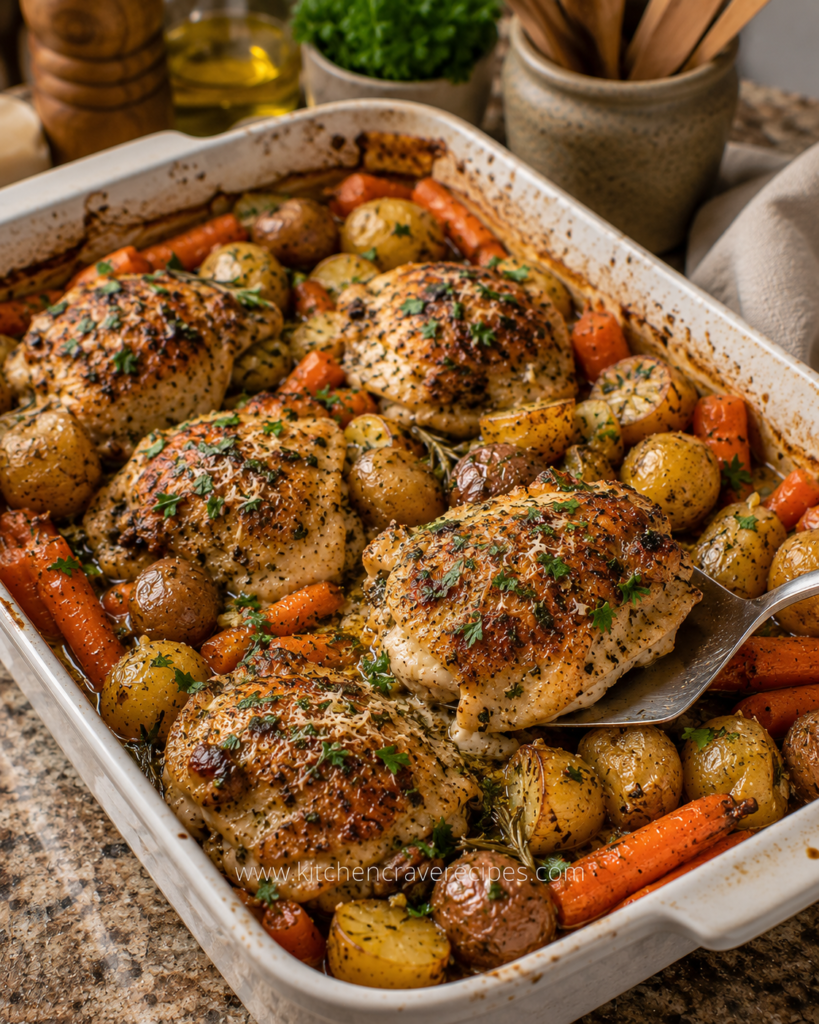
Some recipes just work — and this garlic herb chicken roasted potatoes carrots bake is one of them. Bone-in chicken breasts (or thighs) coated in a bold garlic-herb seasoning crust, roasted alongside whole baby potatoes and honey-glazed baby carrots in a single speckled ceramic baking dish — everything caramelizes in the same pan, in the same oven, at the same time. The pan drippings from the chicken seep into the vegetables as they roast, creating a flavor depth that no side-dish shortcut can replicate.
This is a legitimately high-protein weeknight dinner with minimal cleanup and maximum payoff. At roughly 45 grams of protein per serving, it holds its own as both a fitness-friendly meal and a crowd-pleasing family dinner. If you’ve been looking for a reliable, no-fuss one-pan chicken recipe that looks impressive straight from the oven, this is the one to bookmark.
Recipe Quick Info
| Prep Time | 15 minutes |
| Cook Time | 45 minutes |
| Total Time | 1 hour |
| Servings | 4 |
| Cuisine | American |
| Course | Main Dish / Dinner |
| Calories | ~490 per serving |
| Difficulty | Standard |
Why You’ll Love This Recipe
- True one-pan cleanup. Everything — chicken, potatoes, and carrots — roasts in a single baking dish, meaning one pan to wash at the end of the night.
- High-protein and genuinely filling. Each serving delivers approximately 45 grams of lean protein, making this a smart fit for active households and anyone tracking macros.
- The pan drippings are flavor gold. As the garlic herb chicken roasts, its seasoned juices run down into the potatoes and carrots, infusing every bite without any extra effort from you.
- Flexible with what you have. Baby potatoes, full-size potatoes halved, chicken breasts or thighs — this recipe tolerates swaps without losing its identity.
- No marinating required. The bold herb coating delivers full flavor with just 15 minutes of hands-on prep before everything goes into the oven.
- Meal-prep champion. Leftovers reheat beautifully for up to 4 days and make excellent next-day lunch bowls with a drizzle of olive oil.
- Visually stunning straight from the pan. The golden-crusted chicken, caramel-colored carrots, and herb-speckled baby potatoes make this look far more involved than it actually is.
Ingredients
For the Chicken
- 4 bone-in, skin-on chicken breasts (about 2½ lbs total) — as shown in the photo
- 3 tablespoons olive oil, divided
- 4 cloves garlic, minced
- 1½ teaspoons dried Italian seasoning
- 1 teaspoon smoked paprika
- 1 teaspoon garlic powder
- ½ teaspoon onion powder
- ½ teaspoon dried rosemary, crushed
- ½ teaspoon dried thyme
- 1 teaspoon kosher salt
- ½ teaspoon black pepper
For the Baby Potatoes
- 1½ lbs baby potatoes (gold and red mixed, as shown), halved if larger than 1 inch
- 1 tablespoon olive oil
- ½ teaspoon garlic powder
- ½ teaspoon kosher salt
- ¼ teaspoon black pepper
- ¼ teaspoon dried rosemary
For the Honey-Glazed Carrots
- 1 lb baby carrots (whole, as shown)
- 1 tablespoon olive oil
- 1 tablespoon honey
- ½ teaspoon kosher salt
- ¼ teaspoon black pepper
- 1 sprig fresh rosemary (for roasting alongside, as visible in the dish)
For Garnish
- 2 tablespoons fresh flat-leaf parsley, finely chopped
- Freshly grated Parmesan (optional finish, as suggested by the visible topping in the photo)
- Freshly cracked black pepper
Optional Add-Ins
- ½ lemon, thinly sliced (tuck under the chicken for brightness)
- 1 teaspoon red pepper flakes (into the herb rub for heat)
- 4 cloves whole garlic, unpeeled (toss in with the vegetables; roast and squeeze over finished dish)
Ingredient Substitutions
| Original Ingredient | Substitution | Notes |
|---|---|---|
| Bone-in chicken breasts | Bone-in chicken thighs | Thighs stay juicier at higher heat; reduce cook time by 5 min |
| Baby potatoes | Yukon Gold potatoes, quartered | Same roasting time; cut uniformly for even cooking |
| Baby carrots | Regular carrots, cut into 2-inch pieces | Identical result; cut diagonally for more surface area |
| Honey (glaze) | Maple syrup | Slightly deeper caramel flavor; same ratio |
| Olive oil | Avocado oil | Higher smoke point; no flavor difference at 400°F |
| Dried Italian seasoning | Equal parts dried oregano + basil | Works as a 1:1 swap |
| Fresh parsley garnish | Fresh chives or fresh thyme leaves | Both complement the garlic-herb profile |
Kitchen Tools Needed
- Large roasting pan or 9×13-inch ceramic baking dish (speckled white ceramic, as shown — ideal for even heat distribution)
- Large mixing bowl (for tossing vegetables)
- Small mixing bowl (for the herb rub)
- Pastry brush or spoon (for applying rub to chicken)
- Instant-read meat thermometer (essential — not optional)
- Aluminum foil (for optional resting tent)
- Sharp chef’s knife and cutting board
- Serving spatula or large spoon
Step-by-Step Instructions
Step 1: Preheat the Oven and Prep the Pan
Preheat your oven to 400°F. Lightly coat your roasting pan or baking dish with a thin layer of olive oil or cooking spray. A ceramic or heavy-gauge metal pan works best here — thin, lightweight pans cause the vegetables to steam rather than roast, which robs them of their caramelized edges.
Step 2: Build the Garlic Herb Rub
In a small bowl, combine minced garlic, Italian seasoning, smoked paprika, garlic powder, onion powder, dried rosemary, dried thyme, salt, pepper, and 2 tablespoons of the olive oil. Stir until it forms a thick, fragrant paste. This rub is the engine of the whole dish — don’t rush through measuring it. Tip: For maximum flavor penetration, loosen the skin of each chicken breast slightly with your fingers and work a small amount of the rub directly under the skin before applying the rest on top.
Step 3: Season the Chicken
Pat the chicken breasts completely dry with paper towels — this step is non-negotiable for getting a proper crust rather than a steamed-looking surface. Coat each piece thoroughly with the garlic herb rub on all exposed surfaces, including the underside. Place the chicken skin-side up in the center of the prepared baking dish and set aside while you prep the vegetables.
Step 4: Season the Baby Potatoes
In a large bowl, toss the baby potatoes with 1 tablespoon olive oil, garlic powder, salt, pepper, and dried rosemary until evenly coated. Arrange them around the chicken pieces in the baking dish, nestling them into the gaps rather than piling them — single-layer contact with the pan is what gives you golden, crispy edges on the potatoes.
Step 5: Toss and Add the Honey-Glazed Carrots
In the same large bowl (no need to wash it), toss the baby carrots with 1 tablespoon olive oil, honey, salt, and pepper. Add the rosemary sprig to the pan and tuck the glazed carrots around and between the potatoes. The honey will darken significantly during roasting, creating the amber, caramelized color you see on the finished dish.
Step 6: Roast the Entire Pan
Place the dish in the preheated 400°F oven and roast, uncovered, for 40–45 minutes. Do not open the oven for the first 30 minutes — each time the door opens, the temperature drops and slows the caramelization process. At the 35-minute mark, the chicken skin should be deep golden and the pan juices should be bubbling around the vegetables.
Step 7: Check Internal Temperature and Finish
At 45 minutes, use an instant-read thermometer to check the thickest part of the chicken breast, avoiding bone. Per the USDA Food Safety and Inspection Service, chicken must reach an internal temperature of 165°F to be safe to eat. If it reads below that, return the pan to the oven in 5-minute increments. Once the chicken is done, rest the pan for 5 minutes before garnishing and serving — resting locks in the juices that would otherwise run onto the plate.
Step 8: Garnish and Serve
Scatter fresh flat-leaf parsley generously over the entire pan, add a dusting of freshly grated Parmesan if using, and finish with cracked black pepper. Serve directly from the baking dish for the full visual effect — the golden chicken surrounded by caramelized carrots and herb-kissed potatoes looks every bit as good as it tastes.
Pro Tips
-
Dry the chicken before seasoning, every time. Surface moisture is the enemy of browning. A 30-second pat-down with paper towels makes a visible difference in the finished crust.
-
Cut all vegetables to a similar size. Baby potatoes halved to roughly the same size as the carrots ensures everything finishes at the same time. A potato that’s twice as large as its neighbors will still be hard when the chicken is done.
-
Use a thermometer instead of guessing. Chicken breasts vary wildly in size — a 6-oz breast and a 10-oz breast won’t cook at the same rate, and cutting into the meat to check costs you all the retained moisture.
-
Let the pan drippings work for you. After removing the dish from the oven, tilt it slightly and spoon some of the accumulated herb-garlic drippings back over the chicken and vegetables before serving. It takes 10 seconds and adds enormous flavor.
-
Don’t crowd the pan. If your chicken pieces are large, use a bigger pan or split across two dishes. Crowding raises humidity inside the pan and turns roasting into braising — you lose the caramelized exterior that defines this dish.
Common Mistakes to Avoid
1. Skipping the dry-pat step on the chicken.
Wet chicken surfaces steam rather than sear in the oven, producing pale, soft skin instead of the golden herb crust you’re aiming for. Always pat dry before applying any rub or oil.
2. Using boneless, skinless chicken breasts without adjusting time.
Boneless breasts cook faster and dry out quickly at 400°F. If substituting, reduce the cook time to 25–30 minutes and check temperature early starting at the 22-minute mark.
3. Piling the vegetables instead of spreading them in a single layer.
Stacked vegetables trap moisture and steam each other soft. Spread everything flat with contact to the pan bottom for proper roasting and caramelization.
4. Adding honey to the carrots at the start and burning it.
Honey caramelizes quickly, and while it deepens beautifully at 400°F over 45 minutes, excessive honey or a very hot oven can push it to burnt. Stick to 1 tablespoon and use the center rack — not the top.
5. Opening the oven repeatedly.
Every oven-door opening drops the temperature by roughly 25–50°F and adds uneven cooking. Set a timer for 35 minutes and resist checking before then.
6. Not resting the chicken before serving.
Cutting into the chicken immediately after it leaves the oven pushes all the internal moisture out onto the cutting board. A 5-minute rest with a loose foil tent is all you need to keep it juicy.
7. Under-seasoning the potatoes.
Baby potatoes have a mild, neutral flavor and need assertive seasoning to hold their own against the boldly herbed chicken. Don’t reduce the salt or garlic powder on them — they can handle it.
8. Using a thin, dark nonstick pan.
Dark pans absorb heat faster and can char the carrot bottoms before the chicken finishes cooking. Light-colored ceramic or stainless steel pans give you more control over browning.
Variations
Lighter / Lower-Calorie Version
Use bone-in, skinless chicken breasts to reduce fat from the skin. Reduce olive oil to 1½ tablespoons total across all components and swap honey for a light drizzle of pure maple syrup (1 teaspoon). You’ll still get a gorgeous roasted color — the Maillard reaction from the herb rub alone creates a satisfying crust without the skin’s added fat.
Vegetarian Version
Replace the chicken with two 15-oz cans of drained, rinsed chickpeas tossed in the full garlic herb rub. Spread in the center of the pan where the chicken would go. Reduce roasting time to 30 minutes total; chickpeas crisp beautifully at 400°F and absorb the herb-garlic oil deeply. The carrots and potatoes roast identically — no timing changes needed for them.
Spicy Version
Add 1 teaspoon cayenne pepper and 1 teaspoon crushed red pepper flakes to the garlic herb rub. Swap smoked paprika for hot smoked paprika. The heat is assertive but balanced by the honey on the carrots — the sweetness acts as a natural counterpoint to the spice in the chicken crust.
Gluten-Free Version
Every component of this recipe is naturally gluten-free as written. The only item to verify is your dried Italian seasoning blend — a small number of commercial spice blends contain anti-caking additives derived from wheat starch. Choose a certified gluten-free blend or mix your own with equal parts dried oregano, basil, and marjoram.
Low-Carb / Keto-Friendly Version
Replace the baby potatoes with halved Brussels sprouts and swap the honey on the carrots with a small drizzle of sugar-free maple-flavored syrup. The garlic herb chicken and the rest of the seasoning remain exactly the same. Net carbs drop significantly while the pan still delivers the same roasted, caramelized visual appeal.
What to Serve With This Recipe
- Simple green salad with lemon vinaigrette — the acidity cuts through the richness of the herb-roasted chicken beautifully.
- Warm crusty bread or dinner rolls — perfect for soaking up the golden pan drippings that pool around the vegetables.
- Steamed green beans with garlic butter — adds a bright green color contrast and a clean, simple flavor alongside the bold main dish.
- Caesar salad — a reliable pairing with any garlic-forward roasted chicken; try Garlic Parmesan Chicken Broccoli Rice Bowl in Easy 30-Minute
- Roasted asparagus with lemon zest — 15 minutes at 400°F alongside the pan (on a separate sheet) syncs perfectly with the oven already running.
- A dry white wine or sparkling water with lemon — Chardonnay or Pinot Gris works well with roasted chicken and root vegetables.
- Creamy coleslaw — the cool, tangy crunch alongside the hot, caramelized pan is a genuinely satisfying contrast.
Storage Instructions
Refrigerator
Allow the entire dish to cool to room temperature before transferring to airtight containers. Store chicken pieces separately from the vegetables if possible — this makes reheating more precise. Properly stored, everything keeps well in the refrigerator for up to 4 days.
Freezer
This dish freezes reasonably well, though the potatoes’ texture softens slightly after freezing and thawing. For best results, freeze the chicken and carrots together in a freezer-safe container and keep potatoes fresh for a new batch. Frozen portions keep for up to 2 months. Thaw overnight in the refrigerator before reheating.
Shelf Life Summary
| Storage Method | Duration |
|---|---|
| Refrigerator (airtight) | Up to 4 days |
| Freezer (chicken + carrots) | Up to 2 months |
| Freezer (potatoes included) | Up to 6 weeks (texture may soften) |
| Room temperature | Do not exceed 2 hours |
Reheating Instructions
Oven (Best Method)
Place desired portions in an oven-safe dish. Add 2 tablespoons of chicken broth or water to the bottom to prevent drying. Cover with foil and reheat at 350°F for 15–18 minutes until the chicken is heated through and the vegetables are warmed. Remove the foil for the final 3 minutes to re-crisp the chicken skin slightly.
Microwave (Quickest Method)
Arrange portions on a microwave-safe plate. Drizzle 1 tablespoon of chicken broth over the chicken and cover with a damp paper towel. Heat on medium power (70%) in 90-second intervals, checking after each, until the internal temperature of the chicken reaches 165°F. Per the USDA Food Safety guidelines for leftovers, all reheated poultry must hit this temperature before eating.
Stovetop
Place chicken and vegetables in a covered skillet over medium-low heat. Add 3 tablespoons of chicken broth, cover, and heat for 8–10 minutes, turning the chicken once. This method works particularly well for the carrots and potatoes, which crisp up again on contact with the hot pan surface.
Nutrition Facts
Per serving (based on 4 servings, approximately 1 chicken breast + vegetables):
| Nutrient | Amount |
|---|---|
| Calories | ~490 |
| Total Fat | 18g |
| Saturated Fat | 4g |
| Cholesterol | 145mg |
| Sodium | 710mg |
| Total Carbohydrates | 34g |
| Dietary Fiber | 5g |
| Total Sugars | 9g |
| Protein | 45g |
| Potassium | 22% DV |
| Vitamin A | 130% DV |
Disclaimer: Nutrition values are estimates calculated using standard ingredient databases and will vary based on specific brands, exact portion sizes, and any ingredient substitutions made. For precise dietary tracking, enter your specific ingredients into a verified nutritional calculator. These figures are provided for general informational reference only and are not a substitute for professional dietary advice.
Frequently Asked Questions
1. Can I use chicken thighs instead of chicken breasts?
Bone-in, skin-on chicken thighs work beautifully here and are actually more forgiving of oven heat. They stay juicier than breasts and need only about 38–40 minutes at 400°F. Check for 165°F at the thickest point, avoiding bone.
2. Do I need to marinate the chicken ahead of time?
No — the garlic herb rub delivers full flavor without marinating. If you want to prep ahead, you can rub the chicken and refrigerate it uncovered for up to 8 hours, which slightly deepens the flavor, but it’s genuinely optional.
3. Why are my potatoes still hard when the chicken is done?
This almost always means the potatoes were too large. Baby potatoes larger than 1 inch should be halved, and any that are more than 1½ inches across should be quartered. Uniformity of size is the key to everything finishing at the same time.
4. Can I make this recipe with frozen carrots?
Fresh baby carrots are strongly recommended for this dish. Frozen carrots release significant moisture as they thaw in the oven, which creates steam in the pan and prevents caramelization. If fresh isn’t available, frozen carrots can be patted very dry and used, but the honey glaze won’t set as beautifully.
5. How do I keep the chicken from drying out?
Three things: don’t remove the skin before roasting, check temperature early (at 38 minutes for average-size breasts), and rest the chicken for 5 full minutes before cutting. Bone-in pieces are also naturally more moisture-retentive than boneless.
6. Can I add other vegetables to the pan?
Yes — halved Brussels sprouts, whole cremini mushrooms, and halved red onions all work well added with the potatoes. Avoid watery vegetables like zucchini, which will release liquid and steam the other vegetables rather than roasting them.
7. What’s the best pan size for this recipe?
A 9×13-inch baking dish or a large roasting pan works best for 4 servings. The key is that everything fits in a single layer without crowding. If your pan is smaller, use two pans rather than stacking vegetables.
8. Is this recipe good for weekly meal prep?
It’s one of the most practical meal-prep dinners in this style. The chicken holds up well in the refrigerator for 4 days and can be sliced cold over salads, reheated in bowls, or served with fresh sides each day for variety.
9. Can I roast this on a sheet pan instead of a baking dish?
A heavy rimmed sheet pan works well. Make sure it has at least ½-inch raised edges so the pan drippings don’t run off in the oven. A standard half-sheet pan (18×13 inches) gives even more roasting surface, which can actually improve caramelization.
10. Why does my chicken look golden but taste under-seasoned?
Golden color comes from the Maillard reaction triggered by the rub’s sugars and proteins — it doesn’t always correlate with seasoning depth. If the flavor is falling flat, the most common fix is more salt in the rub and working some of the rub under the skin, not just on top of it.
11. Can I use fresh herbs instead of dried?
Yes — use roughly 3× the amount of fresh herbs compared to dried (e.g., 1½ teaspoons dried rosemary becomes 1½ tablespoons fresh). Fresh herbs can char slightly at 400°F, so tuck a few sprigs under the chicken rather than on top to protect them.
Expert Chef Tips
1. Season in layers, not all at once. Seasoning the chicken rub, then seasoning the potatoes separately, then seasoning the carrots separately — rather than dumping everything into one bowl — gives each component its own flavor identity while still harmonizing in the final pan.
2. The rosemary sprig is doing more than decoration. A full fresh rosemary sprig placed in the pan releases aromatic oils into the hot oven air during the entire roast, subtly flavoring every component from the carrots to the chicken skin. Don’t skip it if you can find fresh rosemary.
3. Tilt the pan and baste with drippings once during roasting. At the 30-minute mark, quickly pull the pan and spoon the accumulated herb drippings over the chicken. This adds another layer of glaze to the skin and accelerates the browning for the final 15 minutes.
4. Rest the chicken on the vegetables, not a cutting board. When the pan comes out of the oven, let the chicken rest right where it is — sitting in the pan. The residual heat from the vegetables below keeps the bottom of the chicken warm while the top finishes settling, unlike a cold cutting board that would draw heat out from the bottom.
5. Grate the Parmesan directly over the hot pan at the table. If you’re finishing with Parmesan, do it the moment the pan hits the table rather than in the kitchen. The residual heat from the pan melts it just slightly, and the aroma it releases is noticeably better than Parmesan added in the oven or pre-plated.
Recipe Summary
This garlic herb chicken roasted potatoes carrots dinner is a single-pan roast built around bone-in chicken breasts coated in a bold garlic-herb rub, surrounded by honey-glazed baby carrots and herb-tossed baby potatoes, all roasted together at 400°F for 45 minutes. It requires 15 minutes of active prep and delivers approximately 45 grams of protein per serving with serious visual impact. The pan drippings infuse the vegetables naturally, eliminating the need for a separate sauce or side dish. Meal-prep friendly, flexible with substitutions, and genuinely one of the easiest high-protein dinners you can put in regular rotation.
The One-Pan Dinner Worth Making Every Week
Once you’ve pulled a pan of garlic herb chicken roasted potatoes carrots from the oven and watched the entire table lean in toward the smell, it’s hard to go back to complicated weeknight dinners. Everything cooks together, cleans up in minutes, and tastes like real cooking — because it is. If you love this style of easy, protein-forward sheet pan cooking, also check out Crispy Garlic Parmesan Cauliflower Bites with Best 5-Ingredient and Garlic Parmesan Chicken Broccoli Rice Bowl in Easy 30-Minutefor more weeknight wins. Make this once, adjust the herbs to your taste, and it’ll find its way into your regular rotation faster than you’d expect.
✅ Quick Tips: Read the recipe in its entirety before you start cooking. This will help you understand the ingredients, steps, and timing involved, and allow you to prepare any necessary equipment or ingredients beforehand.
Best Garlic Herb Chicken Roasted Potatoes Carrots (1-Pan Easy Dinner)
Description
This garlic herb chicken roasted potatoes carrots one-pan dinner is easy, high-protein, and ready in under an hour — juicy chicken, golden potatoes, honey-glazed carrots.
Ingredients
Instructions
-
Step-by-Step Instructions
-
Step 1: Preheat the Oven and Prep the Pan
-
Preheat your oven to 400°F. Lightly coat your roasting pan or baking dish with a thin layer of olive oil or cooking spray. A ceramic or heavy-gauge metal pan works best here — thin, lightweight pans cause the vegetables to steam rather than roast, which robs them of their caramelized edges.
-
Step 2: Build the Garlic Herb Rub
-
In a small bowl, combine minced garlic, Italian seasoning, smoked paprika, garlic powder, onion powder, dried rosemary, dried thyme, salt, pepper, and 2 tablespoons of the olive oil. Stir until it forms a thick, fragrant paste. This rub is the engine of the whole dish — don't rush through measuring it. Tip: For maximum flavor penetration, loosen the skin of each chicken breast slightly with your fingers and work a small amount of the rub directly under the skin before applying the rest on top.
-
Step 3: Season the Chicken
-
Pat the chicken breasts completely dry with paper towels — this step is non-negotiable for getting a proper crust rather than a steamed-looking surface. Coat each piece thoroughly with the garlic herb rub on all exposed surfaces, including the underside. Place the chicken skin-side up in the center of the prepared baking dish and set aside while you prep the vegetables.
-
Step 4: Season the Baby Potatoes
-
In a large bowl, toss the baby potatoes with 1 tablespoon olive oil, garlic powder, salt, pepper, and dried rosemary until evenly coated. Arrange them around the chicken pieces in the baking dish, nestling them into the gaps rather than piling them — single-layer contact with the pan is what gives you golden, crispy edges on the potatoes.
-
Step 5: Toss and Add the Honey-Glazed Carrots
-
In the same large bowl (no need to wash it), toss the baby carrots with 1 tablespoon olive oil, honey, salt, and pepper. Add the rosemary sprig to the pan and tuck the glazed carrots around and between the potatoes. The honey will darken significantly during roasting, creating the amber, caramelized color you see on the finished dish.
-
Step 6: Roast the Entire Pan
-
Place the dish in the preheated 400°F oven and roast, uncovered, for 40–45 minutes. Do not open the oven for the first 30 minutes — each time the door opens, the temperature drops and slows the caramelization process. At the 35-minute mark, the chicken skin should be deep golden and the pan juices should be bubbling around the vegetables.
-
Step 7: Check Internal Temperature and Finish
-
At 45 minutes, use an instant-read thermometer to check the thickest part of the chicken breast, avoiding bone. Per the USDA Food Safety and Inspection Service, chicken must reach an internal temperature of 165°F to be safe to eat. If it reads below that, return the pan to the oven in 5-minute increments. Once the chicken is done, rest the pan for 5 minutes before garnishing and serving — resting locks in the juices that would otherwise run onto the plate.
-
Step 8: Garnish and Serve
-
Scatter fresh flat-leaf parsley generously over the entire pan, add a dusting of freshly grated Parmesan if using, and finish with cracked black pepper. Serve directly from the baking dish for the full visual effect — the golden chicken surrounded by caramelized carrots and herb-kissed potatoes looks every bit as good as it tastes.
Nutrition Facts
Servings 4
- Amount Per Serving
- Calories 490kcal
- % Daily Value *
- Total Fat 16.7g26%
- Saturated Fat 4g20%
- Total Carbohydrate 56.5g19%
- Sugars 8g
- Protein 45g90%
- Vitamin A 302 IU
- Vitamin C 12 mg
- Calcium 135 mg
- Iron 7 mg
* Percent Daily Values are based on a 2,000 calorie diet. Your daily value may be higher or lower depending on your calorie needs.