
High Protein French Onion Meatloaf: Best Crust in 75 Minutes


Introduction
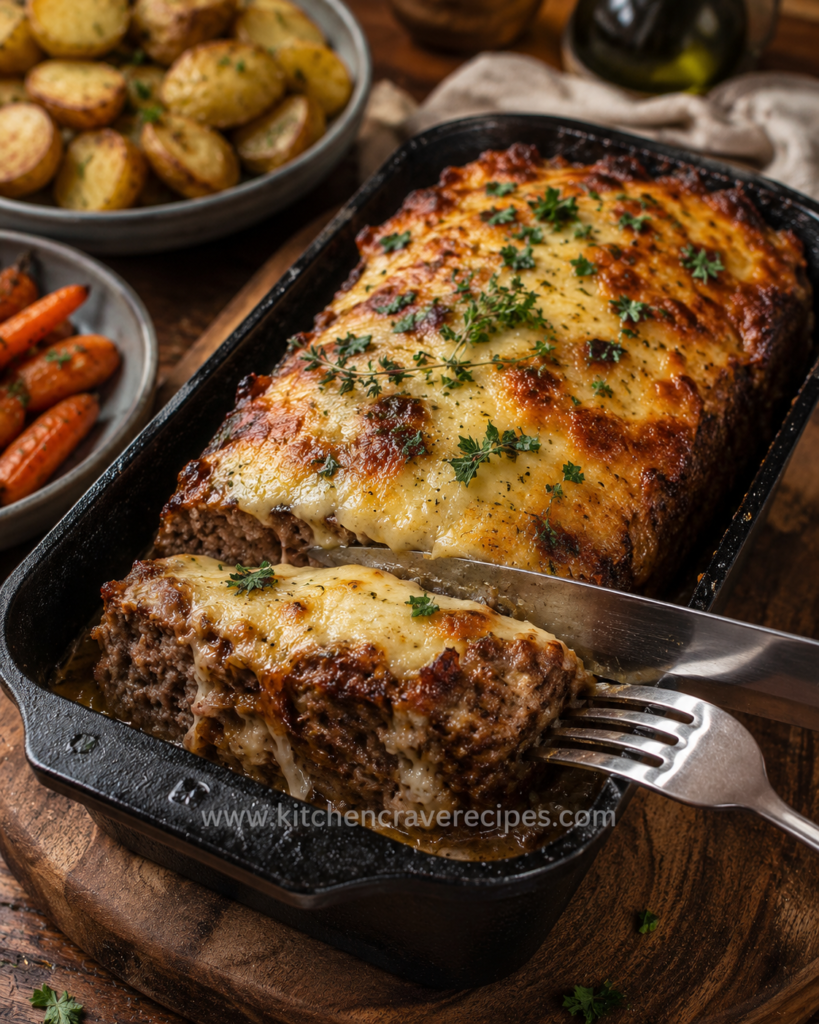
Classic meatloaf is already one of the most satisfying dinners in the American home cook’s playbook — but this French onion meatloaf takes everything familiar about it and makes it genuinely exciting. Deeply caramelized onions are folded directly into a seasoned beef mixture, giving every slice that slow-cooked sweetness and complexity you’d normally only find in a bowl of French onion soup. The whole loaf bakes in a cast-iron pan until it’s firm, juicy, and fragrant, then gets blanketed under a layer of melted Gruyère that browns and bubbles into a golden, pull-apart crust before it ever leaves the oven.
What you end up with is a meatloaf that doesn’t need ketchup, doesn’t need hiding under a glaze, and doesn’t need any explanation at the table. It stands up on its own with 38 grams of protein per slice, a visually stunning Gruyère top scattered with fresh thyme, and enough depth of flavor to compete with anything you’d order at a steakhouse. Whether it’s a Sunday dinner or a weekly meal-prep anchor, this French onion meatloaf delivers every single time.
Recipe Quick Info Table
| Detail | Info |
|---|---|
| Prep Time | 25 minutes |
| Cook Time | 65 minutes (55 min bake + 10 min broil/rest) |
| Total Time | 90 minutes |
| Servings | 6 |
| Cuisine | American / French-Inspired |
| Course | Main Course / Dinner |
| Calories | ~480 per serving |
| Difficulty | Standard |
Why You’ll Love This Recipe
- Caramelized onion flavor in every single bite. Folding deeply browned onions directly into the meat mixture infuses French onion flavor throughout the loaf — not just on the surface, but all the way to the center of every slice.
- That Gruyère crust is genuinely showstopping. A thick layer of shredded Gruyère melts, bubbles, and browns under the broiler into a golden, slightly crispy crust that stretches when you slice it — exactly the visual that makes this dish worth photographing.
- 38 grams of protein per serving. Ground beef and egg together make this one of the most protein-dense comfort food dinners you can put on a weeknight table without any complicated prep work involved.
- Bakes in a cast-iron loaf pan for a better crust. Cast iron retains heat more intensely than standard metal loaf pans, which produces a firmer, better-browned exterior on all four sides of the meatloaf rather than just the top.
- Meal-prep friendly for the whole week. This loaf slices cleanly, refrigerates well for 4 days, and reheats beautifully — making it one of the best high-protein meal-prep options in the dinner category.
- Only one pan from stovetop to oven. The onions caramelize in a skillet, the beef mixture goes into the cast-iron loaf pan, and the whole thing bakes and broils in the same vessel — minimal cleanup for maximum result.
- No ketchup glaze required. The Gruyère topping and caramelized onion interior make this meatloaf completely self-sufficient — no sugary glaze, no tomato paste smear needed to make it taste complete and satisfying.
Ingredients
For the Caramelized Onions
- 2 large yellow onions, thinly sliced (about 3 cups)
- 2 tablespoons unsalted butter
- 1 teaspoon olive oil
- ½ teaspoon kosher salt
- 1 teaspoon fresh thyme leaves (or ½ teaspoon dried thyme)
- 1 tablespoon dry sherry or dry white wine (optional but adds depth)
For the Meatloaf
- 2 lbs 80/20 ground beef
- 2 large eggs
- ½ cup whole-milk or 2% milk
- ½ cup plain panko breadcrumbs
- 2 garlic cloves, finely grated
- 1 tablespoon Worcestershire sauce
- 1 tablespoon Dijon mustard
- 1 teaspoon kosher salt
- ½ teaspoon freshly ground black pepper
- ½ teaspoon onion powder
- ¼ teaspoon smoked paprika
- ¼ teaspoon dried thyme
For the Gruyère Crust
- 1½ cups shredded Gruyère cheese (about 5 oz)
- 1 tablespoon Dijon mustard (for spreading on top before cheese)
- Fresh thyme sprigs, for garnish (as shown in the reference photo)
Optional Add-Ins
- 2 tablespoons fresh flat-leaf parsley, chopped (stirred into the meat mixture for color)
- 1 teaspoon beef bouillon paste (adds concentrated savory depth to the meat mixture)
- Pinch of nutmeg (a classic French addition that pairs well with the Gruyère)
Ingredient Substitution Table
| Original Ingredient | Best Substitute | Notes |
|---|---|---|
| 80/20 ground beef | 90/10 ground beef + 1 tbsp olive oil | Leaner beef can dry out; the added oil compensates for lost fat |
| Gruyère cheese | Swiss cheese or Comté | Similar meltability and mild nuttiness; Comté is the closer French match |
| Panko breadcrumbs | Almond flour (½ cup) | Keeps the recipe low-carb/keto; binds slightly differently but works |
| Whole milk | Unsweetened almond milk | Functionally identical in the mixture; dairy-free option |
| Dry sherry | Beef broth (2 tablespoons) | Slightly less complex, but adds moisture and savory depth to the onions |
| Yellow onions | Sweet Vidalia onions | Even sweeter when caramelized; produces a milder, more delicate flavor |
Kitchen Tools Needed
- Large skillet or sauté pan (for caramelizing onions)
- Cast-iron loaf pan or standard 9×5-inch metal loaf pan (as shown in the reference photo)
- Large mixing bowl
- Wooden spoon or spatula
- Instant-read meat thermometer
- Microplane or fine grater (for garlic)
- Chef’s knife and cutting board
- Measuring cups and spoons
- Aluminum foil (for tenting during the initial bake)
Step-by-Step Instructions
Step 1: Caramelize the Onions
Melt the butter with the olive oil in a large skillet over medium heat. Add the sliced onions and kosher salt, stir to coat, and spread into an even layer. Cook undisturbed for 5 minutes, then stir and continue cooking, stirring every 3–4 minutes, for a total of 30–35 minutes. The onions should turn from pale to golden to a deep amber-brown as the natural sugars concentrate and caramelize. Add the thyme and sherry (if using) in the last 2 minutes of cooking, scraping up any browned bits from the pan.
Embedded Tip: Don’t rush the caramelization by cranking the heat. Medium is the right temperature — higher heat browns the outside of the onions before the inside softens, which produces a bitter, unevenly cooked result rather than the sweet, jammy texture that makes this meatloaf exceptional. Patience here is the single most important factor.
Step 2: Make the Meatloaf Mixture
Preheat your oven to 375°F. In a large mixing bowl, combine the ground beef, eggs, milk, panko, grated garlic, Worcestershire sauce, Dijon mustard, salt, pepper, onion powder, smoked paprika, and dried thyme. Add the caramelized onions (reserve 2 tablespoons for garnish if desired) and mix gently with your hands until everything is just combined. Overmixing develops the protein in the ground beef, which produces a dense, tough meatloaf — work the mixture as briefly as possible while still achieving an even distribution of ingredients.
Embedded Tip: Cold hands or briefly chilling the mixing bowl before combining the meat mixture helps prevent the fat in the ground beef from warming and smearing during mixing, which maintains a better texture in the finished loaf.
Step 3: Form and Initial Bake
Transfer the meat mixture to a cast-iron loaf pan or a standard 9×5-inch loaf pan. Press it in gently to fill the pan evenly, smoothing the top with a spatula. Don’t pack it too densely — a slightly loose pack produces a more tender slice. Cover loosely with aluminum foil and bake at 375°F for 45 minutes. The foil traps steam during the initial bake, keeping the interior moist while the loaf sets.
Step 4: Add the Gruyère Crust and Finish Baking
Remove the foil after 45 minutes. Carefully spread the tablespoon of Dijon mustard in a thin, even layer over the top of the partially baked meatloaf — this acts as an adhesive and flavor layer for the cheese. Scatter the shredded Gruyère evenly across the entire top surface. Return the pan to the oven (uncovered) and bake for an additional 10 minutes, until the cheese is fully melted and the internal temperature of the meatloaf reaches 160°F throughout.
Per the USDA’s safe minimum internal temperature guidelines for ground beef, ground beef must reach 160°F to be safely consumed — always verify with a thermometer, not by visual inspection alone.
Step 5: Broil for the Golden Crust
Switch the oven to the broiler setting (high broil) and move the pan to the upper-middle rack position. Broil for 2–4 minutes, watching continuously, until the Gruyère is deeply golden and spotted with brown — the exact appearance visible in the reference photo, with the cheese caramelized and slightly puffed at the edges. Pull the pan immediately when the color is right; Gruyère goes from golden to burnt in under 60 seconds under a high broiler.
Step 6: Rest, Garnish, and Slice
Remove the meatloaf from the oven and let it rest in the pan for 10 full minutes before slicing. Resting allows the internal juices to redistribute and the meat structure to firm up enough to cut clean slices rather than crumbling. Scatter fresh thyme sprigs over the top as shown in the reference photo. Use a sharp knife to cut the loaf directly in the cast-iron pan, or run a thin spatula around the edges and carefully unmold onto a cutting board before slicing.
Pro Tips
- Caramelize the onions low and slow — no shortcuts. Thirty minutes of patient medium-heat cooking transforms raw onion into something deeply sweet, jammy, and complex. That transformation is what distinguishes this from a standard meatloaf, and no other method replicates it.
- Use an instant-read thermometer — not a timer — to judge doneness. Oven temperatures vary, and meatloaf thickness varies. The thermometer reading of 160°F in the center of the loaf is the only reliable indicator of both safety and correct texture.
- Shred your own Gruyère from a block. Pre-shredded Gruyère often contains anti-caking agents that prevent it from melting into the smooth, golden crust shown in the reference photo. A fresh block grated on a box grater or Microplane melts more cohesively and browns more evenly under the broiler.
- Don’t skip the Dijon mustard layer under the cheese. The mustard layer does two things: it acts as an adhesive that keeps the cheese anchored to the meat surface during broiling, and it adds a sharp, tangy note that balances the richness of both the beef and the Gruyère.
- Rest the meatloaf for the full 10 minutes. Slicing too early releases the accumulated juices across the cutting board instead of keeping them in the meat. Ten minutes is not negotiable — it makes the difference between a juicy, clean-sliced meatloaf and a crumbled, dry one.
Common Mistakes to Avoid
1. Rushing the caramelized onions.
Turning up the heat to speed the process produces burnt outsides and raw insides — neither sweet nor properly soft. The bitterness from burned onions cannot be corrected once it’s mixed into the meat.
Fix: Commit to 30–35 minutes at medium heat and stir every 3–4 minutes. Set a timer to remind yourself to check rather than babysitting the pan.
2. Overmixing the meat mixture.
Overworked ground beef develops excess protein bonds, producing a meatloaf with a dense, rubbery texture that resembles a compressed hockey puck rather than a tender slice.
Fix: Mix only until the ingredients are just combined — a few visible streaks of egg or panko are fine. The final bake will finish the integration.
3. Skipping the foil cover during the initial bake.
Baking uncovered for the full time dries out the exterior of the meatloaf before the interior has a chance to cook through, resulting in a hard crust and dry slices.
Fix: Cover with aluminum foil for the first 45 minutes of baking — the moisture trapped inside keeps the loaf juicy while it cooks through evenly.
4. Adding the cheese before the loaf is nearly done.
Adding Gruyère at the start of baking or too early produces melted, rubbery cheese that absorbs into the meat rather than forming a distinct golden crust on the surface.
Fix: Add the cheese only in the final 10 minutes of baking, then broil briefly for color — this sequence produces the distinct, caramelized topping shown in the reference photo.
5. Not using a thermometer to check doneness.
Ground beef meatloaf needs to reach 160°F throughout to be both safe and correctly cooked. Relying on appearance or timing alone frequently results in an undercooked center.
Fix: Insert an instant-read thermometer into the very center of the loaf. 160°F is the target — not 155°F, not 150°F.
6. Cutting into the loaf straight from the oven.
Hot meatloaf is structurally unstable — the proteins are still contracting and the juices are all concentrated toward the center. Slicing immediately produces crumbled edges and liquid pooling on the cutting board.
Fix: Ten minutes of resting in the pan is sufficient. Use the time to plate sides, pour drinks, or set the table.
7. Using a glass baking dish instead of cast iron or metal.
Glass conducts heat less efficiently than cast iron or metal, which means the exterior of the meatloaf doesn’t brown as effectively and the bottom crust stays soft rather than developing texture.
Fix: Use a cast-iron loaf pan for the best crust, or a standard metal 9×5-inch pan as a reliable second option.
Variations
Lighter Lean Beef Version
Use 90/10 ground beef in place of 80/20 and add 1 tablespoon of olive oil to the meat mixture to compensate for the reduced fat content. The finished loaf will be noticeably leaner at roughly 50 fewer calories per serving while maintaining good moisture from the caramelized onions and milk in the binder. All other steps and bake times remain identical.
Turkey French Onion Meatloaf
Swap the ground beef for 2 lbs of 93/7 ground turkey. Turkey is drier than beef and benefits from 1 extra tablespoon of milk and a tablespoon of olive oil added to the mixture. The caramelized onions are especially important in the turkey version — they supply the missing richness and keep the loaf from tasting flat. Bake at the same temperature but check the internal temperature at the 50-minute mark, as turkey can cook faster than beef in a loaf format.
Spicy French Onion Version
Add 1 tablespoon of Calabrian chili paste and ½ teaspoon of crushed red pepper flakes to the meat mixture before combining. The fruity heat of Calabrian chili pairs naturally with the sweetness of caramelized onions and the nuttiness of Gruyère without overwhelming any of the French onion character. Use pepper Jack cheese in place of half the Gruyère for an additional layer of heat in the crust.
Low-Carb / Keto Version
Replace the ½ cup of panko breadcrumbs with ½ cup of almond flour. Almond flour binds the meat mixture slightly differently — it produces a denser interior than panko — but the caramelized onions provide enough moisture to keep the slice tender. Confirm that your Worcestershire sauce and Dijon mustard brands contain no added sugar if strict keto macros are a priority.
Gluten-Free Version
Swap panko for certified gluten-free panko breadcrumbs (available at most major grocery stores) and confirm that your Worcestershire sauce is labeled gluten-free — many standard brands contain malt vinegar, which is derived from barley and is not gluten-free. All other ingredients in this recipe are naturally gluten-free without any further modifications.
What to Serve With This Recipe
- Roasted baby potatoes with herbs — as shown in the reference photo; the starchy, crispy potatoes soak up any juices from the meatloaf and complete the plate without competing with the Gruyère topping.
- Honey-glazed roasted carrots — also visible in the reference photo; their natural sweetness contrasts beautifully with the savory, umami-rich meatloaf.
- Creamy mashed potatoes — a classic pairing that’s been earning its place alongside meatloaf for decades; the richness of both components works together rather than against each other.
- Steamed green beans with lemon butter — simple and bright, cutting through the richness of the beef and melted cheese without overwhelming the plate.
- A simple green salad with Dijon vinaigrette — the acidic dressing echoes the Dijon mustard in the loaf and refreshes the palate between bites.
- Our Garlic Parmesan Chicken Bake: Best Easy 45-Minute Recipe— another naturally pairing side that shares the same Parmesan-garlic flavor profile and bakes alongside the meatloaf at the same oven temperature.
- Crusty French bread — for mopping up the beef juices that collect at the base of the pan during baking; optional but enthusiastically recommended.
Storage Instructions
Refrigerator
Let the meatloaf cool completely before slicing for storage — storing it whole preserves moisture better than slicing first. Wrap the loaf tightly in plastic wrap or store slices in an airtight container with parchment between layers. This French onion meatloaf keeps for up to 4 days in the refrigerator. The Gruyère crust softens during refrigeration but re-crisps under the broiler during reheating.
Freezer
Freeze individual slices for up to 3 months. Wrap each slice tightly in plastic wrap, then place in a zip-top freezer bag with the air pressed out. Label with the date. Thaw individual slices overnight in the refrigerator before reheating. The caramelized onions and cheese hold up well through freezing without significant quality loss.
Shelf Life Summary
| Storage Method | Duration | Notes |
|---|---|---|
| Room temperature | 2 hours maximum | Beyond 2 hours, refrigerate for food safety |
| Refrigerator (airtight) | 4 days | Gruyère crust softens; broil briefly to restore |
| Freezer (individually wrapped) | 3 months | Thaw overnight in fridge before reheating |
Reheating Instructions
Oven (Best Results — Restores the Gruyère Crust)
Preheat oven to 325°F. Place meatloaf slices in an oven-safe dish and add 2 tablespoons of beef broth around the slices (not over them) to prevent drying. Cover loosely with foil and heat for 15–18 minutes. Remove the foil and broil for 2–3 minutes to re-crisp the Gruyère topping. Per USDA food safety guidelines for reheating leftovers, reheated meat should reach an internal temperature of 165°F before eating.
Stovetop (Good for Slices)
Place a slice in a cold non-stick skillet over medium-low heat. Add a splash of beef broth, cover with a lid, and warm for 5–6 minutes until heated through. The bottom of the slice will re-crisp against the pan while the steam from the broth keeps the interior moist. This method is fastest and produces a satisfying result for single-serving reheating.
Microwave (Quickest — Softest Result)
Place a slice on a microwave-safe plate and cover with a damp paper towel. Microwave on 70% power for 90 seconds, rest for 30 seconds, then heat in additional 30-second increments until warmed through. The Gruyère crust will soften entirely — acceptable for a quick lunch, but the oven or stovetop method is always better for preserving the texture of this dish.
Nutrition Facts
| Nutrient | Per Serving (1 of 6 slices) |
|---|---|
| Calories | ~480 |
| Total Fat | 32g |
| Saturated Fat | 15g |
| Cholesterol | 175mg |
| Sodium | 640mg |
| Total Carbohydrates | 11g |
| Dietary Fiber | 1g |
| Total Sugars | 4g |
| Protein | 38g |
Nutrition Disclaimer: Nutrition values are estimated using standard USDA nutritional data and a recipe analysis tool based on the listed main ingredients without optional add-ins. Actual values will vary depending on the specific fat content of your ground beef, the brand of Gruyère, and any substitutions made. These figures are for general informational purposes only and do not constitute medical or dietary advice. Consult a registered dietitian for personalized nutritional guidance.
Frequently Asked Questions
What makes this a French onion meatloaf rather than a standard meatloaf?
Two things set it apart: deeply caramelized onions folded throughout the entire meat mixture (not just scattered on top), and a Gruyère cheese crust that melts and broils into the same golden, bubbling topping associated with French onion soup. The flavor profile of the finished loaf genuinely reflects both inspirations.
Can I make the caramelized onions ahead of time?
Yes — caramelized onions keep well in the refrigerator for up to 5 days and actually improve slightly as the sugars continue to deepen. Make a large batch over the weekend and you can assemble this French onion meatloaf in under 10 minutes of active prep on any weeknight.
Can I use a regular metal loaf pan instead of cast iron?
Absolutely — a standard 9×5-inch metal loaf pan works well. The cast-iron pan shown in the reference photo produces a slightly crispier, more browned exterior on the sides and bottom of the loaf, but the flavor and internal texture are identical regardless of pan material.
Why does my meatloaf crack on top?
Surface cracking is completely normal in meatloaf and happens as the exterior sets before the interior fully expands during baking. It doesn’t affect flavor or texture, and the Gruyère topping covers any surface cracks entirely once added. If the cracking is excessive, reduce the oven temperature by 25°F.
Can I substitute another cheese for Gruyère?
Swiss cheese is the most practical substitute — it melts similarly, has a comparable mild nuttiness, and is widely available at lower cost. Comté is the closer French match to Gruyère in flavor. Provolone works but produces a softer, less golden crust than either Gruyère or Swiss.
How do I know when the French onion meatloaf is fully cooked?
Insert an instant-read thermometer into the very center of the loaf. When it reads 160°F, the meatloaf is fully cooked through and safe to eat, per USDA guidelines for ground beef. The outer 30 minutes of baking (with cheese and broiling) add time but don’t always add significant internal temperature — always verify with the thermometer.
Can I freeze the meatloaf before baking?
Yes — assemble the loaf through Step 3 (formed and in the pan but unbaked), wrap tightly in plastic wrap and foil, and freeze for up to 2 months. Thaw completely in the refrigerator (overnight minimum) before baking from chilled. Add 10–15 minutes to the covered bake time, then proceed with the cheese topping and broil as written.
Why do I spread Dijon mustard under the Gruyère?
The Dijon mustard layer serves as an adhesive that keeps the cheese anchored to the meat surface while it melts — without it, the cheese slides toward the edges. It also adds a sharp, tangy flavor that cuts through the richness of both the beef and the Gruyère, preventing the topping from tasting one-dimensionally rich.
Is this recipe good for meal prep?
Exceptionally so. The meatloaf slices cleanly when cold, reheats well using any method, and the flavors deepen overnight as the caramelized onions continue to meld with the beef. Many people find day-two slices even more satisfying than the first serving, which makes this a particularly reliable weekly meal-prep anchor.
Can I make this recipe with a meatloaf mix (beef, pork, veal)?
Yes — a pre-blended meatloaf mix produces a slightly more complex, tender result than pure ground beef because the pork fat and veal collagen contribute to juiciness and binding. Use the same total weight (2 lbs) and identical ratios for everything else. The bake time and target internal temperature don’t change.
What’s the best way to slice meatloaf cleanly?
A sharp serrated knife cuts meatloaf more cleanly than a standard chef’s knife because the serrations grip rather than compress the meat. Cut with a gentle sawing motion rather than pressing straight down, and wipe the blade between slices. This technique preserves the integrity of the Gruyère crust on each slice.
Expert Chef Tips
1. Deglaze the onion pan with beef broth or sherry.
Once the onions are fully caramelized, there will be a golden-brown layer of concentrated sugars on the bottom of the skillet. Deglazing with 1–2 tablespoons of dry sherry or beef broth lifts all of that flavor into the onions, adding an extra layer of depth that would otherwise stay stuck to the pan and never make it into the meatloaf.
2. Add a teaspoon of beef bouillon paste to the meat mixture.
A small amount of concentrated beef bouillon paste (Better Than Bouillon is a widely available option) stirred directly into the egg-milk mixture before combining amplifies the savory depth of the finished loaf significantly. It doesn’t make the meatloaf taste like a bouillon cube — it just makes it taste more emphatically and deeply beefy.
3. Let the meat mixture rest for 5 minutes before forming.
After combining all the meatloaf ingredients, let the mixture sit uncovered for 5 minutes before pressing it into the pan. This brief rest allows the panko to fully absorb the milk and egg, which improves binding and produces a more cohesive texture in the final slice.
4. Use the broiler confidently for the Gruyère crust.
Most home cooks are nervous about the broiler, but the crust shown in the reference photo requires it. Position the rack in the upper-middle position (not the top position), broil on high, and stand at the oven door watching continuously. Thirty seconds can be the difference between perfectly golden and burnt cheese. Confidence and attention are the only tools you need.
5. Score the top of the loaf lightly before adding cheese.
Running a fork across the top surface of the half-baked meatloaf in a crosshatch pattern before spreading the Dijon mustard creates small grooves that help the mustard and cheese adhere more evenly across the whole surface. This is especially useful for getting cheese coverage all the way to the edges rather than having it pool only in the center.
Recipe Summary
This French onion meatloaf combines 30 minutes of properly caramelized onions folded into a well-seasoned ground beef mixture with a golden Gruyère crust that’s broiled to a deep amber finish — producing a high-protein dinner that delivers 38 grams of protein per slice and genuinely impressive flavor from a short ingredient list. The cast-iron loaf pan, the Dijon mustard adhesive layer, and the two-stage bake (covered then uncovered with cheese) are the three technique details that separate this version from standard meatloaf. It bakes in 90 minutes total, stores for 4 days, and reheats as well as it serves fresh.
Conclusion
Once you’ve made this French onion meatloaf, the standard version is going to feel like it’s missing something — because it is. The caramelized onions, the Gruyère crust, the Dijon layer, the fresh thyme on top: each element pulls its weight and makes the whole thing taste like a dish someone spent real time thinking about, even though the active hands-on work is surprisingly minimal. Make it on a Sunday and eat it well through Thursday. Leave a comment below telling us how your Gruyère crust came out — and don’t forget to tag us in your photos!
High Protein French Onion Meatloaf: Best Crust in 75 Minutes
Description
Classic meatloaf is already one of the most satisfying dinners in the American home cook's playbook — but this French onion meatloaf takes everything familiar about it and makes it genuinely exciting. Deeply caramelized onions are folded directly into a seasoned beef mixture, giving every slice that slow-cooked sweetness and complexity you'd normally only find in a bowl of French onion soup. The whole loaf bakes in a cast-iron pan until it's firm, juicy, and fragrant, then gets blanketed under a layer of melted Gruyère that browns and bubbles into a golden, pull-apart crust before it ever leaves the oven.
Ingredients
Instructions
-
Step-by-Step Instructions
-
Step 1: Caramelize the Onions
-
Melt the butter with the olive oil in a large skillet over medium heat. Add the sliced onions and kosher salt, stir to coat, and spread into an even layer. Cook undisturbed for 5 minutes, then stir and continue cooking, stirring every 3–4 minutes, for a total of 30–35 minutes. The onions should turn from pale to golden to a deep amber-brown as the natural sugars concentrate and caramelize. Add the thyme and sherry (if using) in the last 2 minutes of cooking, scraping up any browned bits from the pan.
-
Embedded Tip: Don't rush the caramelization by cranking the heat. Medium is the right temperature — higher heat browns the outside of the onions before the inside softens, which produces a bitter, unevenly cooked result rather than the sweet, jammy texture that makes this meatloaf exceptional. Patience here is the single most important factor.
-
Step 2: Make the Meatloaf Mixture
-
Preheat your oven to 375°F. In a large mixing bowl, combine the ground beef, eggs, milk, panko, grated garlic, Worcestershire sauce, Dijon mustard, salt, pepper, onion powder, smoked paprika, and dried thyme. Add the caramelized onions (reserve 2 tablespoons for garnish if desired) and mix gently with your hands until everything is just combined. Overmixing develops the protein in the ground beef, which produces a dense, tough meatloaf — work the mixture as briefly as possible while still achieving an even distribution of ingredients.
-
Embedded Tip: Cold hands or briefly chilling the mixing bowl before combining the meat mixture helps prevent the fat in the ground beef from warming and smearing during mixing, which maintains a better texture in the finished loaf.
-
Step 3: Form and Initial Bake
-
Transfer the meat mixture to a cast-iron loaf pan or a standard 9×5-inch loaf pan. Press it in gently to fill the pan evenly, smoothing the top with a spatula. Don't pack it too densely — a slightly loose pack produces a more tender slice. Cover loosely with aluminum foil and bake at 375°F for 45 minutes. The foil traps steam during the initial bake, keeping the interior moist while the loaf sets.
-
Step 4: Add the Gruyère Crust and Finish Baking
-
Remove the foil after 45 minutes. Carefully spread the tablespoon of Dijon mustard in a thin, even layer over the top of the partially baked meatloaf — this acts as an adhesive and flavor layer for the cheese. Scatter the shredded Gruyère evenly across the entire top surface. Return the pan to the oven (uncovered) and bake for an additional 10 minutes, until the cheese is fully melted and the internal temperature of the meatloaf reaches 160°F throughout.
-
Per the USDA's safe minimum internal temperature guidelines for ground beef, ground beef must reach 160°F to be safely consumed — always verify with a thermometer, not by visual inspection alone.
-
Step 5: Broil for the Golden Crust
-
Switch the oven to the broiler setting (high broil) and move the pan to the upper-middle rack position. Broil for 2–4 minutes, watching continuously, until the Gruyère is deeply golden and spotted with brown — the exact appearance visible in the reference photo, with the cheese caramelized and slightly puffed at the edges. Pull the pan immediately when the color is right; Gruyère goes from golden to burnt in under 60 seconds under a high broiler.
-
Step 6: Rest, Garnish, and Slice
-
Remove the meatloaf from the oven and let it rest in the pan for 10 full minutes before slicing. Resting allows the internal juices to redistribute and the meat structure to firm up enough to cut clean slices rather than crumbling. Scatter fresh thyme sprigs over the top as shown in the reference photo. Use a sharp knife to cut the loaf directly in the cast-iron pan, or run a thin spatula around the edges and carefully unmold onto a cutting board before slicing.
Nutrition Facts
Servings 6
- Amount Per Serving
- Calories 480kcal
- % Daily Value *
- Total Fat 32g50%
- Saturated Fat 15g75%
- Protein 38g76%
* Percent Daily Values are based on a 2,000 calorie diet. Your daily value may be higher or lower depending on your calorie needs.







This looks great. I don’t cook much, but I’m gonna try that.