
The Pasta Bowl That Looks Simple and Tastes Like More
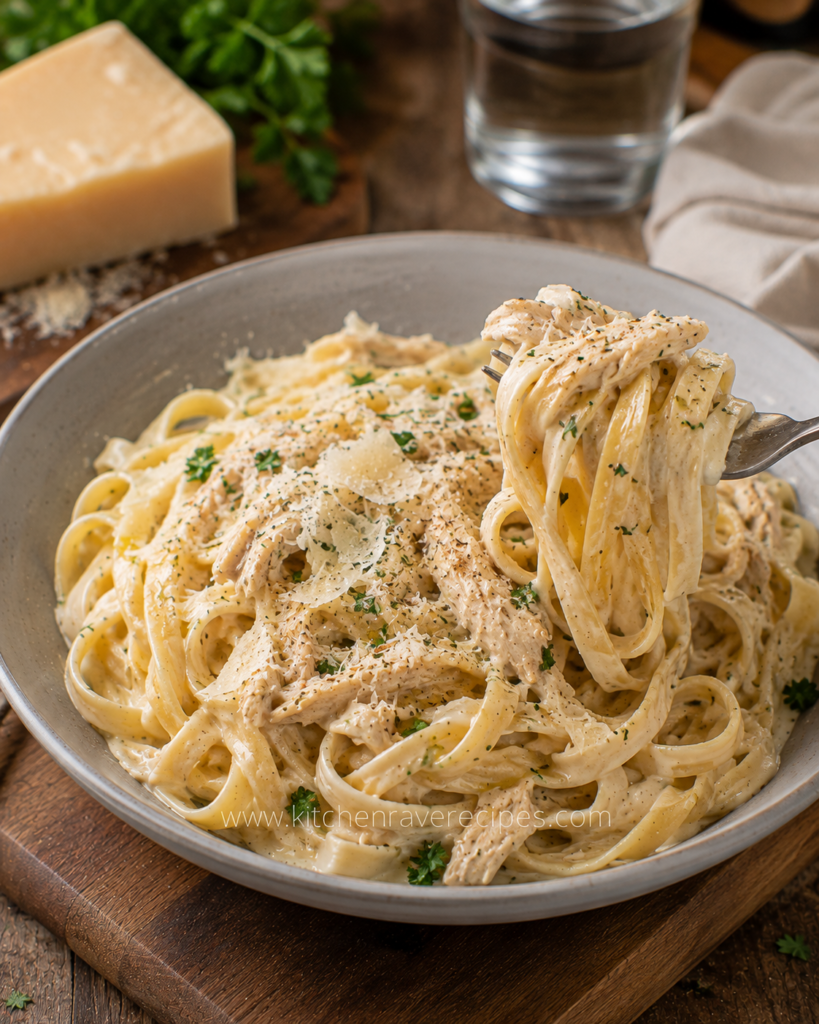
There’s a version of this dish that lives in your memory — a bowl of fettuccine so coated in cream and Parmesan that every strand glistens, with tender shredded chicken woven throughout and just enough garlic to make the whole thing feel alive. This garlic parmesan chicken fettuccine is exactly that. Served in a wide gray ceramic bowl with shaved Parmesan, cracked black pepper, and fresh chopped parsley scattered across the top, it looks deceptively simple — because it is, and that’s precisely the point.
The technique here isn’t complicated. What makes this version genuinely satisfying is the ratio: enough sauce to coat every strand without drowning it, enough chicken to make each forkful substantial, and Parmesan added off the heat so it melts smoothly rather than clumping. At approximately 50 grams of protein per serving from real chicken breast and Parmigiano-Reggiano, this is a high-protein pasta dinner that earns that description honestly.
Recipe Quick Info
| Prep Time | 10 minutes |
| Cook Time | 20 minutes |
| Total Time | 30 minutes |
| Servings | 4 |
| Cuisine | Italian-American |
| Course | Main Dish / Dinner |
| Calories | ~540 per serving |
| Difficulty | Standard |
Why You’ll Love This Recipe
- The sauce coats every strand. Fettuccine’s wide, flat surface area holds cream-based sauces better than any other pasta shape — and this garlic Parmesan sauce clings to every ribbon from edge to edge.
- Shredded chicken integrates into the sauce, not just sits on top. Pulling the chicken into fine shreds rather than slicing it means every forkful captures chicken, pasta, and sauce simultaneously rather than eating each element separately.
- 50 grams of protein per serving — legitimately. Chicken breast and freshly grated Parmesan together deliver real, sustained protein without any supplements or protein powder mixed in.
- Ready in 30 minutes with no special equipment. One pot for pasta, one skillet for the sauce — that’s the entire setup from cold ingredients to a served bowl.
- Garlic-forward without being sharp. Sautéing the garlic slowly in butter before adding cream mellows it into a sweet, rounded depth that defines the sauce without overpowering the Parmesan.
- The Parmesan shavings on top serve a purpose. Finishing with shaved (not grated) Parmesan pieces adds a textural contrast — some melt into the hot pasta, others stay intact for a salty, concentrated bite.
- Meal-prep friendly and reheats beautifully. A splash of cream or broth during reheating brings the sauce back to its original silky consistency every time, making this one of the most practical high-protein pasta recipes for batch cooking.
Ingredients
For the Chicken
- 1½ lbs boneless, skinless chicken breasts
- 1 tablespoon olive oil
- ½ teaspoon garlic powder
- ½ teaspoon Italian seasoning
- ½ teaspoon kosher salt
- ¼ teaspoon black pepper
For the Pasta
- 12 oz fettuccine (standard dried or fresh — as shown, wide flat ribbons)
- 1 tablespoon kosher salt (for pasta water)
For the Garlic Parmesan Cream Sauce
- 3 tablespoons unsalted butter
- 5 cloves garlic, minced
- 1½ cups heavy cream
- 1¼ cups freshly grated Parmesan cheese (from a block — Parmigiano-Reggiano preferred, as shown with the block in the background)
- ½ teaspoon black pepper
- ¼ teaspoon ground nutmeg
- Salt to taste
- ½ cup reserved pasta cooking water (added as needed)
For Garnish
- Shaved Parmesan (as visible in the finished bowl — larger pieces that partially melt on contact with hot pasta)
- 2 tablespoons fresh flat-leaf parsley, finely chopped (as scattered across the dish)
- Freshly cracked black pepper
Optional Add-Ins
- ¼ teaspoon red pepper flakes (into the sauce for gentle warmth)
- 1 tablespoon fresh lemon juice (stirred in at the very end for brightness)
- 2 tablespoons cream cheese (for extra body and richness in the sauce)
Ingredient Substitutions
| Original Ingredient | Substitution | Notes |
|---|---|---|
| Chicken breast | Rotisserie chicken, shredded | Skip the searing step; add directly to sauce |
| Heavy cream | Half-and-half | Sauce will be thinner; use 2 tbsp less pasta water |
| Parmesan (block, freshly grated) | Pecorino Romano | Saltier — reduce added salt by ¼ teaspoon |
| Fettuccine | Tagliatelle or pappardelle | Both wide flat noodles; same technique applies |
| Unsalted butter | European-style salted butter | Omit additional salt in the sauce step |
| Fresh garlic | 1½ tsp garlic paste | Convenient substitute; same quantity by flavor |
Kitchen Tools Needed
- Large pot (for boiling fettuccine)
- Colander
- Large skillet (12-inch stainless or nonstick — stainless preferred for building fond)
- Tongs (for tossing pasta into sauce)
- Two forks (for shredding the cooked chicken)
- Box grater (for Parmesan — never pre-shredded)
- Vegetable peeler (for shaving Parmesan garnish)
- Liquid measuring cup (for pasta water)
- Instant-read thermometer (for chicken doneness)
- Wide, shallow serving bowls (as shown — a wide gray ceramic bowl allows the pasta to be twirled and displayed properly)
Step-by-Step Instructions
Step 1: Cook the Fettuccine
Bring a large pot of water to a rolling boil and add 1 tablespoon kosher salt. Cook the fettuccine according to package directions until 1 minute shy of al dente — it will finish cooking in the sauce. Before draining, scoop out ½ cup of the starchy pasta water and set it aside in a liquid measuring cup. This pasta water is your best tool for adjusting sauce consistency at the end. Drain the fettuccine and set aside.
Step 2: Season and Cook the Chicken
While the pasta cooks, season the chicken breasts on both sides with garlic powder, Italian seasoning, salt, and pepper. Heat 1 tablespoon olive oil in a large skillet over medium-high heat until shimmering. Add the chicken and cook for 5–6 minutes per side until the exterior is golden and the internal temperature reaches 165°F — per the USDA poultry food safety guidelines, this is the minimum safe internal temperature for chicken. Transfer to a cutting board, rest for 3 minutes, then shred using two forks into fine, irregular pieces.
Step 3: Sauté the Garlic
Without wiping out the skillet, reduce the heat to medium-low. Add the butter and let it melt into the pan drippings — those browned bits from the chicken are pure flavor that will dissolve into the sauce. Add the minced garlic and cook for 60–90 seconds, stirring constantly, until fragrant and just starting to turn golden at the edges. Don’t rush this step or increase the heat — slowly sautéed garlic becomes sweet and mellow; burnt garlic turns bitter and will ruin the sauce.
Step 4: Build the Cream Sauce
Pour in the heavy cream. Increase the heat slightly to medium and bring the cream to a gentle simmer, stirring frequently. Add the black pepper and nutmeg. Let the sauce simmer for 4–5 minutes, stirring occasionally, until it reduces by about 15% and coats the back of a spoon. Tip: Keep the heat at a steady simmer throughout — a rolling boil after cream is added causes the fat to separate and the sauce to turn greasy. Medium heat and patience are the two most important ingredients in this step.
Step 5: Add the Parmesan Off the Heat
Remove the skillet from the heat entirely. Add the freshly grated Parmesan in three additions — about ⅓ cup at a time — stirring each addition until it melts completely before adding the next. This off-heat technique is the single most important step in the recipe. Cheese added to a boiling liquid seizes rather than melts, producing a grainy, clumpy sauce instead of the silky coating visible in the finished dish.
Step 6: Combine Pasta, Chicken, and Sauce
Return the skillet to low heat. Add the shredded chicken and drained fettuccine to the sauce. Using tongs, toss everything together until every strand is fully coated and the chicken is distributed evenly throughout the pasta. If the sauce feels too thick, add reserved pasta water 2–3 tablespoons at a time, tossing after each addition. Tip: The pasta will absorb the sauce quickly as it sits — it’s better to have the consistency slightly looser at this stage than you think you need, since it will tighten as it’s plated and eaten.
Step 7: Plate and Garnish
Divide the garlic parmesan chicken fettuccine among wide serving bowls using tongs to twirl and nest the pasta attractively. Top each bowl with shaved Parmesan pieces, a scatter of fresh flat-leaf parsley, and a generous crack of black pepper — exactly as shown in the finished dish. Serve immediately.
Pro Tips
-
Never use pre-shredded Parmesan from a bag. The cellulose powder coating it prevents clean melting and leaves the sauce grainy. A block of Parmigiano-Reggiano grated on the fine side of a box grater melts flawlessly off the heat.
-
Shred the chicken while it’s still warm. Chicken that has cooled completely is harder to pull apart and tends to shred into larger, denser chunks. Two forks on warm chicken produces the fine, feathery shreds that integrate into the sauce the way they should.
-
Reserve the pasta water before draining — always. Set a liquid measuring cup next to the pot as a visual reminder before you turn toward the sink. Once the pasta is drained, the water is gone. That starchy liquid is irreplaceable for rescuing a sauce that’s too thick.
-
Taste the sauce before adding extra salt. Parmesan contributes significant sodium, and the pasta water brings more. Season only after the cheese is fully incorporated and you’ve tasted the combined dish.
-
Serve immediately in warm bowls. Cream-based fettuccine cools and tightens faster than most pasta dishes because of the wide noodle surface. Run bowls under hot water and dry them right before plating for a noticeably better temperature at the table.
Common Mistakes to Avoid
1. Adding Parmesan to boiling cream.
The proteins in Parmesan seize under high heat, producing a grainy, clumpy sauce instead of a smooth one. Always remove the skillet from the heat before adding cheese, and stir it in gradually in thirds.
2. Using pre-shredded or shelf-stable Parmesan.
The anti-caking starches in bagged or canned Parmesan prevent proper melting and contribute a dusty texture to the finished sauce. A block of Parmigiano-Reggiano grated fresh is non-negotiable for this recipe.
3. Overcooking the fettuccine.
Fettuccine cooked to package-specified doneness will turn mushy after it finishes in the warm sauce. Pull it 1 full minute early — it completes cooking in the skillet and finishes perfectly al dente in the bowl.
4. Burning the garlic.
Garlic that turns brown rather than pale golden in the butter becomes bitter and harsh, and that bitterness carries through the entire sauce. Keep the heat at medium-low for the garlic step and stir it constantly for the full 60–90 seconds.
5. Skipping the pasta water.
The starchy water from the fettuccine pot acts as a natural emulsifier that keeps the cream and Parmesan cohesive. Without it, a sauce that’s slightly too thick can’t be properly loosened, and the result is dense and cloying rather than silky.
6. Slicing the chicken instead of shredding it.
Sliced chicken sits on top of pasta rather than integrating into it. Shredded chicken weaves between the fettuccine strands so every forkful captures pasta, sauce, and protein together — that integration is what makes this dish feel cohesive.
7. Letting the pasta sit in the sauce too long before serving.
Fettuccine absorbs cream sauce aggressively as it sits. Toss, plate, and serve within 5 minutes of finishing — every minute of sitting tightens the sauce further and changes the texture of the noodles.
Variations
Lighter Version
Replace heavy cream with 1 cup of half-and-half plus 2 tablespoons of cream cheese. The cream cheese adds enough body and fat to keep the sauce cohesive at lower cream fat levels. Reduce Parmesan to 1 cup and increase pasta water usage slightly to achieve the right coating consistency. This version saves approximately 70–80 calories per serving without sacrificing the garlic-Parmesan flavor profile.
Vegetarian Version
Omit the chicken entirely and replace it with 1½ cups of drained, rinsed white beans or 1 cup of sautéed cremini mushrooms. White beans integrate into the sauce similarly to shredded chicken and add protein and fiber. Sautéed mushrooms should be cooked until all moisture has evaporated before adding garlic — excess moisture will thin the cream sauce.
Spicy Version
Add ½ teaspoon of Calabrian chili paste to the butter before adding garlic, and increase black pepper to ¾ teaspoon in the sauce. The chili paste integrates cleanly into the cream and produces a warm, persistent heat that complements Parmesan rather than overwhelming it. Calabrian chili is preferable to red pepper flakes here because it fully dissolves into the sauce rather than remaining as visible flakes.
Gluten-Free Version
Substitute certified gluten-free fettuccine — several quality brands are available at most grocery stores. Every other component of this recipe is naturally gluten-free. Verify your Italian seasoning blend label, as some commercial blends include fillers derived from wheat starch. No other technique changes are needed; the sauce behaves identically with gluten-free pasta.
Low-Carb / Keto Version
Replace fettuccine with fettuccine-cut zucchini noodles or hearts of palm pasta. Don’t cook zucchini noodles separately — add them raw directly to the warm sauce and toss for 60–90 seconds only. Zucchini releases water when heated, so reduce the cream by ¼ cup and skip the pasta water addition entirely. Hearts of palm pasta holds up better to the sauce’s heat and can be briefly sautéed in the pan before adding the garlic.
What to Serve With This Recipe
- Simple arugula salad with lemon vinaigrette — the bitter, peppery leaves and bright acid cut through the richness of the cream sauce cleanly.
- Garlic bread or toasted sourdough — for the express purpose of sweeping up every remaining bit of garlic Parmesan sauce from the bowl.
- Roasted broccoli with olive oil and sea salt — adds a green vegetable and some char that pairs naturally with the Parmesan cream flavor; try Zucchini Beef Parmesan Bake (Ultimate)Best 5-Layer for inspiration on the roasting technique.
- Caesar salad — a natural companion to garlic-Parmesan pasta; the anchovy and Worcestershire in the dressing add an umami depth that complements the fettuccine beautifully.
- Steamed asparagus with olive oil — takes 8 minutes and adds elegant balance alongside the rich bowl.
- A crisp dry white wine — unoaked Chardonnay or Vermentino works beautifully with cream and Parmesan; both have enough acidity to cut through the fat without clashing with the garlic.
- Sparkling water with lemon — for a non-alcoholic palate cleanser between bites of the rich, creamy pasta.
Storage Instructions
Refrigerator
Cool the pasta completely before transferring to an airtight container. The fettuccine will absorb most of the remaining sauce as it cools and the texture will be noticeably thicker when cold — this is expected and fully reversible with a small amount of liquid during reheating. Refrigerate for up to 4 days.
Freezer
Cream-based fettuccine does not freeze well — the dairy separates upon thawing, producing a watery, broken sauce and soft, mushy noodles. If you want to batch-prep, freeze only the shredded cooked chicken in a separate freezer-safe bag for up to 2 months, and make the pasta and sauce fresh when needed.
Shelf Life Summary
| Storage Method | Duration |
|---|---|
| Refrigerator (airtight) | Up to 4 days |
| Freezer (shredded chicken only) | Up to 2 months |
| Freezer (full pasta dish) | Not recommended |
| Room temperature | Do not exceed 2 hours |
Reheating Instructions
Stovetop (Best Method)
Add the desired portion to a skillet over medium-low heat. Pour in 3–4 tablespoons of heavy cream or chicken broth. Stir gently and heat for 5–7 minutes until the pasta is warmed through and the sauce returns to its original silky consistency. This method best preserves the texture of the fettuccine and the integrity of the cream sauce.
Microwave (Quickest Method)
Place a portion in a microwave-safe bowl. Add 2 tablespoons of cream or broth and cover with a damp paper towel. Heat on medium power (70%) in 90-second intervals, stirring between each, until steaming throughout. Per the USDA food safety guidelines for leftovers, all reheated chicken-containing dishes must reach an internal temperature of 165°F before eating.
Oven
Spread the portion in an oven-safe dish, add 3 tablespoons of broth or cream, and cover tightly with foil. Heat at 325°F for 15–18 minutes, stirring once halfway through. This method works best for larger portions and produces even reheating without hotspots.
Nutrition Facts
Per serving (based on 4 servings):
| Nutrient | Amount |
|---|---|
| Calories | ~540 |
| Total Fat | 24g |
| Saturated Fat | 13g |
| Cholesterol | 158mg |
| Sodium | 680mg |
| Total Carbohydrates | 40g |
| Dietary Fiber | 2g |
| Total Sugars | 3g |
| Protein | 50g |
| Calcium | 32% DV |
Disclaimer: Nutrition values are estimates calculated using standard ingredient databases and will vary based on specific brands used, exact portion sizes, and any ingredient substitutions made. For precise dietary tracking, enter your specific ingredients into a verified nutritional calculator. These values are provided for general informational reference only and are not a substitute for professional dietary advice.
Frequently Asked Questions
1. Can I use rotisserie chicken instead of cooking chicken breasts from scratch?
Yes — rotisserie chicken is one of the best shortcuts for this recipe. Shred approximately 2½ cups of breast meat, skip Steps 2 and 3’s chicken-cooking portion, and add the shredded chicken directly to the sauce before tossing with pasta. The dish is ready even faster and the chicken is already well-seasoned.
2. Why did my garlic Parmesan chicken fettuccine sauce turn grainy?
Grainy sauce almost always means Parmesan was added over heat that was too high. The proteins in the cheese seize when the temperature is too hot, clumping instead of melting. Remove the pan from the heat completely before adding cheese, and stir it in thirds to give each batch time to fully incorporate.
3. Can I make this recipe without heavy cream?
Half-and-half works as a substitute. The sauce will be noticeably thinner, so compensate by reducing the heat more gradually during simmering and using slightly less pasta water at the end. Adding 1–2 tablespoons of cream cheese to half-and-half also helps approximate the body of a heavy cream sauce.
4. How do I stop the fettuccine from clumping together after draining?
Don’t rinse the pasta after draining — the surface starch is what helps the sauce cling. Add it directly to the warm sauce immediately after draining and toss right away. If there’s a brief gap between draining and adding to the sauce, toss the pasta with a tiny drizzle of olive oil to prevent sticking.
5. Can I use a different pasta shape for this recipe?
Tagliatelle and pappardelle are the best alternatives — both are wide, flat noodles that hold cream-based sauces similarly to fettuccine. Linguine works in a pinch. Avoid small shapes like penne or rigatoni, which don’t integrate as naturally with a shredded-chicken cream sauce.
6. Is this recipe good for meal prep?
The shredded chicken and the sauce can be prepared separately and stored for up to 4 days. Cook the fettuccine fresh when ready to eat for the best texture. If storing the complete finished dish, reheat with a splash of cream or broth to restore the sauce’s consistency.
7. How do I get the fettuccine to twirl nicely in the bowl like in the photo?
Use tongs to lift a generous portion from the skillet and allow it to twist naturally as you lower it into the bowl. A slight rotating motion with the tongs while lowering creates the nested, restaurant-style presentation. The shaved Parmesan placed on top rather than mixed in adds to the visual effect.
8. Can I add vegetables to this dish?
Wilted baby spinach, blanched broccoli florets, or sautéed mushrooms all integrate well into the garlic Parmesan sauce without changing the technique. Add them to the sauce just before tossing in the pasta — spinach wilts in 60 seconds, pre-blanched broccoli needs just 2 minutes to warm through.
9. Why does the recipe call for nutmeg in the sauce?
Ground nutmeg is a classic background spice in cream-based Italian-American sauces. At ¼ teaspoon it’s completely undetectable as a distinct flavor, but it adds subtle warmth and rounds out the richness of the cream. Don’t skip it, but don’t increase the quantity — more than ¼ teaspoon and it becomes perceptible.
10. How do I know when the cream has reduced enough?
The cream is ready when it coats the back of a wooden spoon and a line drawn through the coating holds its shape rather than running back together. Visually, it will look slightly thicker and more opaque than when it first went in. This typically takes 4–5 minutes at a steady medium simmer.
11. Can I make this dairy-free?
Replace heavy cream with full-fat coconut cream (it handles heat without curdling) and use a dairy-free hard cheese alternative or nutritional yeast (3 tablespoons) in place of Parmesan. The flavor profile shifts noticeably — coconut cream adds subtle sweetness — but the dish remains creamy and cohesive. Use the same technique throughout.
Expert Chef Tips
1. Use the chicken’s resting time productively. The 3-minute rest after cooking the chicken is the perfect window to start the garlic sautéing in the same pan. You’re not waiting — you’re overlapping steps intelligently, which is how this recipe stays under 30 minutes even with fresh-cooked chicken.
2. Add pasta water in stages, not all at once. Two to three tablespoons at a time gives you precise control over the sauce’s final consistency. Pour it all in at once and you risk going from too thick to too thin with nothing in between. Small additions and a quick toss after each one keep you in control.
3. Shave the Parmesan garnish with a vegetable peeler, not a grater. Large, irregular Parmesan shavings placed on top of the finished bowl melt partially from the pasta’s heat and partially stay intact — creating two simultaneous textures from a single ingredient. This is what’s visible in the finished dish and it’s a detail worth replicating.
4. Build the sauce in the same pan you cooked the chicken. The fond — those golden-brown bits left on the pan surface — dissolves into the butter and cream as you build the sauce, adding a savory, meaty depth that you simply can’t replicate in a clean pan. Don’t wipe the skillet between the chicken and sauce steps.
5. Finish with a squeeze of fresh lemon juice, just barely. Half a teaspoon to 1 teaspoon of fresh lemon juice stirred in after the Parmesan is fully incorporated adds a brightness that makes the whole bowl taste more alive. It doesn’t make the dish taste lemony — it just makes the garlic and Parmesan flavors stand up more clearly.
Recipe Summary
This garlic parmesan chicken fettuccine comes together in 30 minutes using one pot and one skillet: chicken breasts seasoned, seared, and shredded; fettuccine boiled just shy of al dente; and a cream sauce built from butter-sautéed garlic, reduced heavy cream, and Parmesan stirred in off the heat for a silky, smooth finish. Each serving delivers approximately 50 grams of protein from the chicken and Parmesan, and the dish serves 4 generously. Garnished with shaved Parmesan and fresh parsley in a wide bowl, it presents as far more impressive than its actual effort level.
A Bowl of Pasta That Never Gets Old
There’s a reason this style of dinner holds its place in heavy rotation — it’s fast, it’s satisfying, and it tastes exactly like what you wanted. This garlic parmesan chicken fettuccine delivers on every front: silky sauce, substantial protein, and that specific comfort that only a properly made cream pasta can offer. If you love high-protein pasta dinners that come together in one pan, also try Cheesy Chicken Pizza Bombs – Easy 35-Minute Snack and Zucchini Beef Parmesan Bake (Ultimate)Best 5-Layer for two more weeknight staples worth bookmarking. Make this once, and the 30-minute promise will feel almost too easy.
✅ Quick Tips: Read the recipe in its entirety before you start cooking. This will help you understand the ingredients, steps, and timing involved, and allow you to prepare any necessary equipment or ingredients beforehand.
Garlic Parmesan Chicken Fettuccine – Easy 30-Minute
Description
The Pasta Bowl That Looks Simple and Tastes Like More
There's a version of this dish that lives in your memory — a bowl of fettuccine so coated in cream and Parmesan that every strand glistens, with tender shredded chicken woven throughout and just enough garlic to make the whole thing feel alive. This garlic parmesan chicken fettuccine is exactly that. Served in a wide gray ceramic bowl with shaved Parmesan, cracked black pepper, and fresh chopped parsley scattered across the top, it looks deceptively simple — because it is, and that's precisely the point.
Ingredients
Instructions
-
Step-by-Step Instructions
-
Step 1: Cook the Fettuccine
-
Bring a large pot of water to a rolling boil and add 1 tablespoon kosher salt. Cook the fettuccine according to package directions until 1 minute shy of al dente — it will finish cooking in the sauce. Before draining, scoop out ½ cup of the starchy pasta water and set it aside in a liquid measuring cup. This pasta water is your best tool for adjusting sauce consistency at the end. Drain the fettuccine and set aside.
-
Step 2: Season and Cook the Chicken
-
While the pasta cooks, season the chicken breasts on both sides with garlic powder, Italian seasoning, salt, and pepper. Heat 1 tablespoon olive oil in a large skillet over medium-high heat until shimmering. Add the chicken and cook for 5–6 minutes per side until the exterior is golden and the internal temperature reaches 165°F — per the USDA poultry food safety guidelines, this is the minimum safe internal temperature for chicken. Transfer to a cutting board, rest for 3 minutes, then shred using two forks into fine, irregular pieces.
-
Step 3: Sauté the Garlic
-
Without wiping out the skillet, reduce the heat to medium-low. Add the butter and let it melt into the pan drippings — those browned bits from the chicken are pure flavor that will dissolve into the sauce. Add the minced garlic and cook for 60–90 seconds, stirring constantly, until fragrant and just starting to turn golden at the edges. Don't rush this step or increase the heat — slowly sautéed garlic becomes sweet and mellow; burnt garlic turns bitter and will ruin the sauce.
-
Step 4: Build the Cream Sauce
-
Pour in the heavy cream. Increase the heat slightly to medium and bring the cream to a gentle simmer, stirring frequently. Add the black pepper and nutmeg. Let the sauce simmer for 4–5 minutes, stirring occasionally, until it reduces by about 15% and coats the back of a spoon. Tip: Keep the heat at a steady simmer throughout — a rolling boil after cream is added causes the fat to separate and the sauce to turn greasy. Medium heat and patience are the two most important ingredients in this step.
-
Step 5: Add the Parmesan Off the Heat
-
Remove the skillet from the heat entirely. Add the freshly grated Parmesan in three additions — about ⅓ cup at a time — stirring each addition until it melts completely before adding the next. This off-heat technique is the single most important step in the recipe. Cheese added to a boiling liquid seizes rather than melts, producing a grainy, clumpy sauce instead of the silky coating visible in the finished dish.
-
Step 6: Combine Pasta, Chicken, and Sauce
-
Return the skillet to low heat. Add the shredded chicken and drained fettuccine to the sauce. Using tongs, toss everything together until every strand is fully coated and the chicken is distributed evenly throughout the pasta. If the sauce feels too thick, add reserved pasta water 2–3 tablespoons at a time, tossing after each addition. Tip: The pasta will absorb the sauce quickly as it sits — it's better to have the consistency slightly looser at this stage than you think you need, since it will tighten as it's plated and eaten.
-
Step 7: Plate and Garnish
-
Divide the garlic parmesan chicken fettuccine among wide serving bowls using tongs to twirl and nest the pasta attractively. Top each bowl with shaved Parmesan pieces, a scatter of fresh flat-leaf parsley, and a generous crack of black pepper — exactly as shown in the finished dish. Serve immediately.
Nutrition Facts
Servings 4
- Amount Per Serving
- Calories 540kcal
- % Daily Value *
- Total Fat 24g37%
- Saturated Fat 12g60%
- Total Carbohydrate 56.5g19%
- Sugars 3g
- Protein 50g100%
- Vitamin A 302 IU
- Vitamin C 12 mg
- Calcium 135 mg
- Iron 7 mg
* Percent Daily Values are based on a 2,000 calorie diet. Your daily value may be higher or lower depending on your calorie needs.