Cheesy Taco Beef Pasta: Best Easy 30-Minute Skillet Meal


The Cheesy Taco Beef Pasta That Belongs in Your Weekly Dinner Rotation
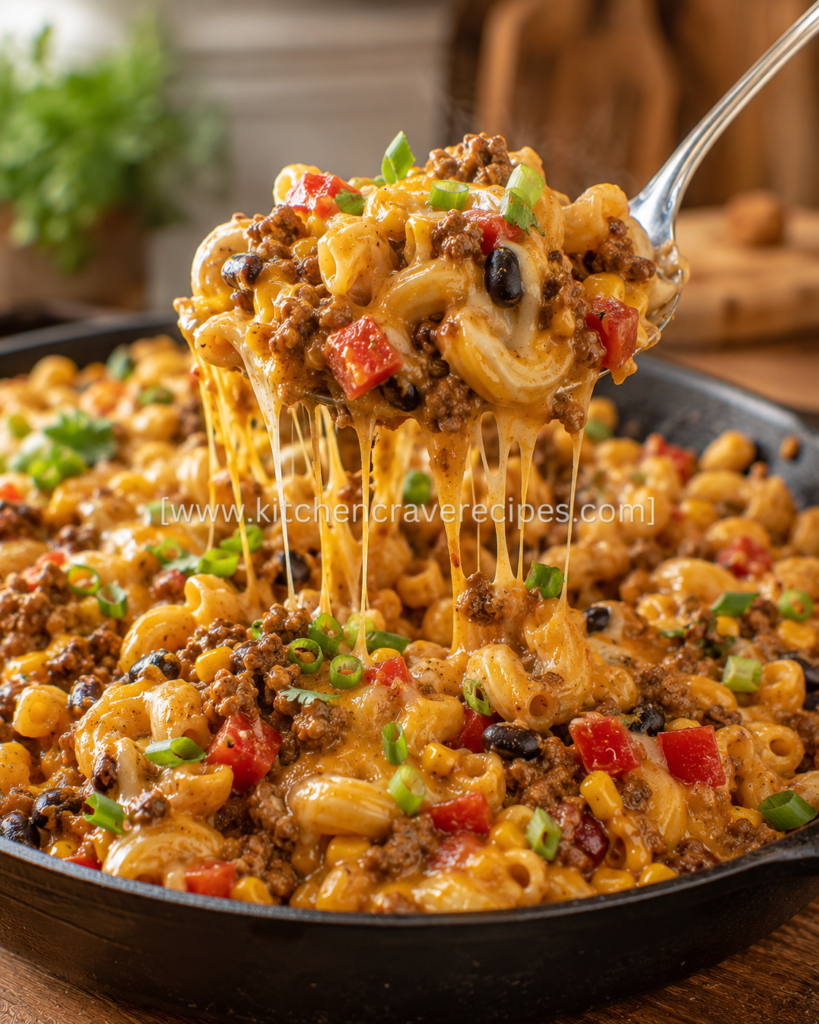
Some one-pan dinners are good. This cheesy taco beef pasta is the kind you make once and immediately add to the permanent rotation. Seasoned ground beef, tender elbow macaroni, black beans, diced tomatoes, and a taco-spiced broth all simmer together in a single skillet until the pasta absorbs every drop of flavor — then comes a blanket of melted sharp cheddar that pools into every curve of the pasta and pulls in long strings from the serving spoon. The photo shows exactly what this looks like: a dark skillet packed with the saucy, cheesy mixture, a gold spoon lifting a generous scoop, sliced green onions scattered across the melted orange-gold cheddar top.
This is a simmered one-pan pasta — everything cooks in one skillet on the stovetop, which means the pasta absorbs the seasoned beef broth as it cooks and delivers far more flavor than pasta boiled separately in plain water. At roughly 40 grams of protein per serving and done in 30 minutes, it’s a high-protein weeknight dinner that tastes like significantly more effort than it requires.
Recipe Quick Info
| Detail | Info |
|---|---|
| Prep Time | 8 minutes |
| Cook Time | 22 minutes |
| Total Time | 30 minutes |
| Servings | 4 portions |
| Cuisine | Tex-Mex American |
| Course | Main Course / One-Pan Dinner |
| Cooking Method | Simmering |
| Calories | ~520 per serving |
| Difficulty | Easy |
Why You’ll Love This Recipe
- Everything cooks in one skillet — including the pasta — The pasta simmers directly in the seasoned beef broth and taco sauce, absorbing all the spiced flavor instead of draining it away.
- Roughly 40 grams of protein per serving — Lean ground beef combined with black beans delivers a serious protein count without any supplements or protein powder required.
- That cheddar melt is the finishing move — Shredded cheddar stirred in at the end melts into the hot pasta and creates that visible, glossy, pull-apart cheese coating visible in the photo.
- Black beans add fiber, protein, and texture — They hold their shape through the simmer and add a creamy, earthy contrast to the spiced beef without competing with the taco flavor profile.
- Taco seasoning does most of the flavor work — One tablespoon of well-made taco seasoning (or a homemade blend) provides the cumin, chili powder, and garlic depth that makes this dish distinctly bold.
- Genuinely done in 30 minutes — Eight minutes of prep and 22 minutes of active cooking — no preheating, no waiting, no resting time required before serving.
- Kid-friendly and easily adjustable for heat — The base recipe is mild enough for younger palates, and adding jalapeños or extra chili powder takes it to adult heat levels in seconds.
Ingredients
For the Beef
- 1 lb lean ground beef (90/10)
- 1 tablespoon olive oil
- 1 medium yellow onion, finely diced
- 3 cloves garlic, minced
- 1 tablespoon taco seasoning (store-bought or homemade)
- ½ teaspoon smoked paprika
- ½ teaspoon ground cumin
- ½ teaspoon kosher salt
- ¼ teaspoon black pepper
For the Pasta and Sauce
- 2 cups elbow macaroni, dry (matches the pasta shape visible in the photo)
- 1 can (14.5 oz) diced tomatoes with their juice (the red tomato pieces visible throughout the dish)
- 1 can (15 oz) black beans, drained and rinsed (visible as dark whole beans in the photo)
- 2 cups low-sodium beef broth
- ½ cup water
- 1 tablespoon tomato paste
- 1 teaspoon Worcestershire sauce
For the Cheese Topping
- 2 cups shredded sharp cheddar cheese (the melted orange-gold layer covering the dish in the photo)
- ¼ cup cream cheese, softened (optional — adds creaminess to the cheese sauce)
For Garnish
- 3 green onions, thinly sliced (clearly visible as the finishing garnish in the photo)
- Sour cream, for serving (optional)
- Hot sauce, for serving (optional)
Optional Add-Ins
- 1 cup frozen corn, stirred in with the beans
- ½ cup diced red bell pepper, added with the onion
- ¼ teaspoon cayenne or sliced jalapeño, for heat
Ingredient Substitutions
| Original Ingredient | Substitution | Notes |
|---|---|---|
| Lean ground beef | Ground turkey (93/7) | Slightly less fat; season a touch more aggressively |
| Elbow macaroni | Ditalini or small shells | Hold the simmered sauce similarly well |
| Sharp cheddar | Pepper jack or Colby Jack | Both melt well; pepper jack adds heat |
| Black beans | Pinto beans or kidney beans | Comparable protein and texture |
| Beef broth | Chicken broth | Slightly lighter base; works fine |
| Taco seasoning (store-bought) | 1 tsp cumin + ½ tsp chili powder + ½ tsp garlic powder + ¼ tsp oregano | Homemade blend; adjust salt separately |
| Cream cheese | Full-fat Greek yogurt (2 tbsp) | Adds tang and protein; stir in off heat |
Kitchen Tools Needed
- Large deep skillet or wide sauté pan (12-inch, with a lid) — The primary cooking vessel; depth matters because the pasta, beef, broth, and beans all need to fit together with room for a gentle simmer
- Stovetop — This entire recipe is a stovetop simmer; no oven required
- Wooden spoon or silicone spatula — For breaking up the ground beef and stirring the simmering pasta
- Sharp chef’s knife and cutting board — For dicing the onion and mincing the garlic
- Can opener — For the diced tomatoes and black beans
- Colander — For rinsing the canned black beans
- Measuring cups and spoons — Liquid ratios matter in a one-pan pasta simmer; measure the broth and water precisely
- Lid for the skillet — Required during the covered simmer phase; a tight-fitting lid holds in the steam that cooks the pasta evenly
Step-by-Step Instructions: How to Simmer This Cheesy Taco Beef Pasta Perfectly
Step 1 — Brown the Ground Beef (7–8 minutes)
Heat the olive oil in a large deep skillet over medium-high heat until it shimmers. Add the diced onion and cook for 2–3 minutes, stirring occasionally, until softened and translucent. Add the ground beef, breaking it into small crumbles with a wooden spoon — aim for pieces no larger than a pea, which ensures even distribution throughout the pasta. Cook until no pink remains, about 5 minutes, then add the garlic and stir for 30 seconds until fragrant.
Per USDA safe minimum internal temperature guidelines, ground beef must reach an internal temperature of 160°F before other ingredients are combined.
Step 2 — Add the Spices and Tomato Paste (2 minutes)
Reduce the heat to medium. Add the taco seasoning, smoked paprika, cumin, salt, and pepper directly to the beef and stir to coat every piece. Cook the spices in the beef fat for 60 seconds — this brief blooming step activates the volatile oils in the cumin and chili and builds a noticeably deeper spice flavor that you won’t get if you add the spices directly into the liquid. Stir in the tomato paste and cook for another 30 seconds until it darkens slightly and smells slightly caramelized.
Embedded Tip: If the skillet is looking dry after draining the beef fat, add 1 tablespoon of olive oil before adding the spices. The fat is the delivery vehicle for the spice flavor — cooking them in a dry pan produces a more muted, powdery result than blooming them in fat.
Step 3 — Add the Liquid, Pasta, Beans, and Tomatoes (1 minute)
Pour in the beef broth, water, Worcestershire sauce, diced tomatoes (with their juice), and drained black beans. Stir everything together until well combined — the liquid should cover or nearly cover the pasta. Add the dry elbow macaroni and stir to distribute it evenly throughout the beef mixture so no pasta clumps together at the edges of the pan.
Step 4 — Simmer the Pasta Until Cooked Through (12–14 minutes)
Bring the mixture to a gentle simmer over medium heat — you’re looking for small, steady bubbles breaking at the surface, not a rolling boil. A rolling boil evaporates the liquid too fast, leaving the pasta undercooked in a dry, starchy pan before it has a chance to finish. Cover the skillet with a tight-fitting lid and simmer for 10–12 minutes, stirring every 3–4 minutes to prevent the pasta from sticking to the bottom.
Embedded Tip: After 10 minutes, taste a piece of pasta. It should be just barely al dente — slightly firm at the very center — at this point. Remove the lid and continue simmering uncovered for 2 more minutes to let any excess liquid reduce, leaving a thick, saucy consistency that clings to every piece of pasta rather than pooling at the bottom of the skillet.
Step 5 — Add the Cheese and Finish (2–3 minutes)
Reduce the heat to low. If using cream cheese, add it in small spoonfuls and stir until fully melted into the pasta before adding the shredded cheddar. Add the shredded cheddar in two additions — half first, stir until melted, then add the second half and stir again. This two-stage approach prevents the cheese from seizing into a clump and produces the smooth, cohesive, pull-apart melt visible in the photo. Remove from heat and scatter the sliced green onions across the top immediately before serving.
For another high-protein one-pan skillet recipe, check out Stuffed Bell Pepper Cheeseburger Bake in 30-Min for a similar flavor profile in a baked format.
Pro Tips for the Best Cheesy Taco Beef Pasta
- Keep the simmer gentle — never let it tip into a boil. A hard boil evaporates the liquid too aggressively, leaving you with dry, unevenly cooked pasta and a scorched bottom before the pasta is tender. Medium heat with a lid produces a controlled, even simmer that finishes the pasta perfectly in the liquid that’s still in the pan.
- Add the cheddar in two batches, not all at once. Dumping the full 2 cups of shredded cheddar into a hot, liquidy pan at once causes it to seize and clump rather than melt evenly. Two additions — first half stirred in, then second half — produce the smooth, glossy cheese coating you want throughout the dish.
- Measure your liquid precisely. One-pan pasta simmering is a ratio game: too much liquid leaves you with a soup; too little results in dry, starchy pasta that’s still crunchy. The 2 cups of broth plus ½ cup of water in this recipe is calibrated for 2 cups of dry elbow macaroni — don’t eyeball it.
- Break the beef into very small crumbles. Large ground beef pieces create uneven bites — you get all beef in one forkful and all pasta in the next. Use the back of the wooden spoon to break crumbles down to pea-sized pieces while browning, which distributes the beef evenly through every spoonful of the finished dish.
- Stir the simmering pasta every few minutes. Unlike pasta boiled in a large pot of water, pasta simmering in a smaller volume of seasoned liquid will stick to the pan bottom if left undisturbed. Every 3–4 minutes of stirring keeps the pasta moving and prevents scorching without interrupting the simmer.
Common Mistakes to Avoid
1. Letting the simmer tip into a rolling boil.
A rolling boil evaporates the cooking liquid far faster than the pasta can absorb it, leaving dry, undercooked pasta in a sticky, scorched pan. The fix is medium heat with the lid on — small, steady bubbles breaking at the surface are the visual cue you want to maintain throughout the covered simmer phase.
2. Adding all the cheese at once.
A large addition of cold shredded cheese into hot liquid causes it to clump and seize rather than melt smoothly. Add the cheddar in two separate additions over low heat, stirring between each, for the cohesive, stretchy melt visible in the photo.
3. Skipping the spice-blooming step.
Adding taco seasoning directly into broth without first cooking it in the beef fat produces a flat, powdery spice flavor. Sixty seconds in the hot fat activates the oils in the cumin, chili, and paprika and creates the depth that makes this dish genuinely bold rather than just spiced.
4. Using too much liquid.
Extra broth sounds safer, but too much liquid produces a watery, soup-like consistency rather than the thick, saucy pasta in the photo. Stick to the measured quantities — the pasta will absorb what it needs and the uncovered simmer at the end reduces the rest.
5. Not rinsing the black beans.
Canned black beans packed in liquid contain excess sodium and a starchy, slightly bitter brine that clouds the sauce and throws off the seasoning balance. Always drain and rinse under cold water before adding them to the skillet.
6. Using pre-shredded cheese from a bag.
Pre-shredded cheddar contains cellulose anti-caking coating that prevents clean melting and produces a greasier, less cohesive result. Block cheddar grated fresh melts smoothly into the hot pasta and creates the visible, glossy melt in the photo.
7. Not stirring during the simmer.
Unlike boiling pasta in abundant water, this pasta simmers in a concentrated, starchy, protein-rich liquid that sticks aggressively to the pan bottom if left undisturbed. Stirring every 3–4 minutes keeps the pasta from scorching on the bottom while the top continues to simmer perfectly.
Variations
Healthy / Lighter Version
Use 93/7 ground turkey in place of ground beef, which reduces the fat significantly while maintaining comparable protein. Reduce the cheddar to 1 cup and stir in 2 tablespoons of plain Greek yogurt off heat for creaminess without the added saturated fat from cream cheese. The simmer time and liquid ratios remain completely unchanged.
Vegetarian Version
Omit the ground beef entirely and replace it with 1 can (15 oz) of drained lentils plus 1 cup of crumbled firm tofu sautéed until golden before the spices are added. Use vegetable broth instead of beef broth. The taco seasoning provides all the necessary boldness, and the lentils contribute both protein and a meaty texture throughout the finished dish.
Spicy Version
Add ½ teaspoon of cayenne pepper to the spice blend in Step 2 and stir 2 tablespoons of your preferred hot sauce directly into the broth in Step 3. For visible heat elements, add 1–2 sliced jalapeños (seeds in) to the onion sauté at the start — they soften into the dish and distribute heat throughout every bite.
Gluten-Free Version
Swap the elbow macaroni for certified gluten-free pasta — chickpea elbow pasta or brown rice elbows both hold up reasonably well in a simmered format. Reduce the simmer time by 2–3 minutes since gluten-free pasta softens faster, and check the texture earlier. Confirm that your taco seasoning, Worcestershire sauce, and beef broth are labeled gluten-free, as these products sometimes contain wheat-based additives.
Low-Carb / Keto Version
This variation requires a genuinely different approach and cannot use the same simmering method. Cook the seasoned ground beef, beans, tomatoes, and spices as directed through Step 3, but omit the pasta and broth entirely. Reduce the liquid to ¼ cup beef broth, simmer for 5 minutes until thick, then serve the beef and bean mixture over cauliflower rice and top with the melted cheddar as directed.
What to Serve With This Recipe
- Warm flour or corn tortillas — Scoop the cheesy taco pasta directly into a tortilla for a hybrid taco-pasta experience
- Sliced avocado with a squeeze of lime — Cool and creamy, it cuts through the rich cheese and spiced beef beautifully
- Simple shredded lettuce and tomato salad — Fresh and undressed, it provides a textural contrast to the saucy pasta
- Sour cream and pickled jalapeños — The classic taco finishing touches work equally well spooned over this pasta
- Tortilla chips — For scooping the pasta directly from the skillet, which is entirely acceptable and enthusiastically encouraged
- A cold Mexican lager or sparkling water with lime — Refreshing acidity that pairs cleanly with the bold taco seasoning and cheddar
- Fresh pico de gallo — Tomato, onion, cilantro, and lime on top brings fresh contrast to the warm, rich skillet
For a different take on high-protein taco-flavored cooking, check out Stuffed Bell Pepper Cheeseburger Bake in 30-Min— same bold flavor profile, different format.
Storage Instructions
Refrigerator
Transfer cooled leftover cheesy taco beef pasta to an airtight container and refrigerate for up to 4 days. The pasta continues to absorb the sauce as it sits, which actually concentrates the flavor — day-two portions are often more deeply seasoned than fresh. Add a splash of broth when reheating to restore the saucy consistency.
Freezer
This dish freezes well for up to 2 months. Portion into individual freezer-safe containers before freezing for the easiest reheating. The pasta texture softens slightly after freezing and thawing, but the flavor holds very well. Thaw overnight in the refrigerator before reheating — do not microwave from frozen, which causes uneven heating and makes the cheese separate.
Shelf Life Summary
| Component | Refrigerator | Freezer |
|---|---|---|
| Full cooked pasta dish | Up to 4 days | Up to 2 months |
| Seasoned beef only (no pasta) | Up to 4 days | Up to 3 months |
| Cooked pasta only | Up to 3 days | Not recommended |
Reheating Instructions
Stovetop (Best Results)
Add the portion to a skillet over medium-low heat with 2–3 tablespoons of water or beef broth. Cover and heat for 4–6 minutes, stirring once, until warmed through and the cheese re-melts into the pasta. The added liquid restores the saucy consistency that the pasta absorbs during refrigeration.
Microwave (Quickest Option)
Transfer a single serving to a microwave-safe bowl and add a tablespoon of water before covering loosely with a damp paper towel. Heat on medium power in 90-second intervals, stirring between each, until hot throughout. Per food safety reheating guidance from FoodSafety.gov, all reheated leftovers should reach an internal temperature of 165°F before eating.
Oven
Preheat to 350°F. Spread the portion in a small baking dish, add 2 tablespoons of broth, cover with foil, and bake for 15–18 minutes until warmed through. Remove the foil for the final 3 minutes and add a small handful of fresh shredded cheddar on top if desired — it will melt fresh and reinvigorate the dish.
Nutrition Facts (Per Serving)
| Nutrient | Amount |
|---|---|
| Calories | ~520 kcal |
| Protein | ~40g |
| Total Fat | ~22g |
| Saturated Fat | ~11g |
| Carbohydrates | ~42g |
| Dietary Fiber | ~7g |
| Sugars | ~5g |
| Sodium | ~720mg |
| Cholesterol | ~100mg |
Nutrition Disclaimer: These values are estimates based on standard USDA nutritional data and will vary depending on the specific ground beef fat percentage, cheese brand, taco seasoning sodium content, and any add-ins or substitutions used. This information is a general nutritional reference only and is not intended as personalized medical or dietary advice. For precise macro tracking, use a certified nutrition calculator with the exact brands and weights you use.
Frequently Asked Questions
1. Can I use a different pasta shape instead of elbow macaroni?
Yes — any small, short pasta shape works well in a one-pan simmer. Ditalini, small shells, or cavatappi all hold the seasoned sauce similarly and cook in comparable time. Avoid long pasta like spaghetti or fettuccine — they don’t distribute evenly in the skillet and are harder to stir through a thick, protein-heavy sauce.
2. Can I bake this instead of simmering it on the stovetop?
Yes, with an adjustment. Simmer the beef, spices, and sauce components through Step 3 on the stovetop, then transfer everything to a 9×13-inch baking dish. Add par-cooked pasta (boiled for 2 minutes less than al dente), top with cheese, cover with foil, and bake at 375°F for 25 minutes uncovered for the final 5 minutes. This produces a baked pasta version rather than a saucy skillet dish.
3. Why does the pasta simmer in the pan instead of being boiled separately?
Cooking the pasta in the seasoned beef broth allows it to absorb the taco spices, tomato flavor, and beef fat as it cooks — instead of draining all that flavor down the sink with the pasta water. The result is pasta that tastes deeply of the dish rather than tasting like plain boiled noodles inside a separately made sauce.
4. How do I keep the cheese from clumping when I add it?
Two steps prevent clumping: reduce the heat to low before adding the cheese, and add it in two separate batches rather than all at once. Each addition should be fully stirred and melted before the next goes in. Adding cheese to a pan that’s still at a full simmer causes it to seize and separate rather than melt smoothly.
5. Is this cheesy taco beef pasta good for meal prep?
It’s one of the best meal-prep dinners you can make. The flavor deepens overnight, it reheats well on the stovetop or microwave with a splash of broth, and a full batch serves four generous portions for the week. Store in individual containers for the easiest grab-and-reheat lunches.
6. Can I make this with canned or jarred salsa instead of diced tomatoes?
Yes — replace the diced tomatoes with ¾ cup of your preferred chunky salsa. The salsa provides the tomato, onion, pepper, and seasoning in one ingredient. Reduce the added salt in the recipe by half since most salsas are already seasoned, and taste before serving to adjust.
7. My pasta absorbed all the liquid and is still crunchy — what do I do?
Add ¼ cup of warm broth or water, stir well, cover the skillet, and simmer for 3–4 more minutes on medium-low heat. This happens most often when the heat was too high and the liquid evaporated before the pasta was fully cooked. The extra liquid gives the pasta the moisture it needs to finish without overcooking the beef.
8. Can I double this recipe for a larger family?
Yes — double every ingredient and use a very large deep skillet or a 5-quart Dutch oven. The simmering time stays approximately the same since the heat distribution and liquid ratio are unchanged; just watch the liquid level more carefully and stir more frequently since a larger volume of pasta is more prone to sticking.
9. How do I make this dish less salty?
Use low-sodium or no-salt-added beef broth, low-sodium canned tomatoes, and a reduced-sodium taco seasoning blend (or make your own). The black beans contribute their own sodium — rinsing them thoroughly before use removes a significant portion. Add the kosher salt at the end of cooking and taste before deciding whether it needs any.
10. What makes the black beans worth including — can I leave them out?
The black beans add about 7–8 grams of additional plant-based protein per serving, plus fiber that slows digestion and keeps you full longer. They also add textural contrast — soft, creamy pockets against the pasta and beef. You can leave them out, but the protein count per serving will drop noticeably and the dish will be slightly less filling per portion.
Expert Chef Tips
1. Bloom the spices in the beef fat — not the broth.
Adding taco seasoning directly into liquid is the most common mistake home cooks make with spiced one-pan dishes. Fat-soluble flavor compounds in cumin, chili, and paprika need fat to activate and release. Sixty seconds of blooming in the beef and olive oil fat creates a noticeably bolder, deeper spice flavor throughout the finished dish.
2. Use block cheddar and grate it yourself.
This tip applies every time cheese is melted into a hot dish. Pre-shredded cheddar contains cellulose powder that prevents it from melting cleanly, producing a greasy, slightly grainy result instead of the smooth, cohesive melt in the photo. Two minutes with a box grater produces a dramatically different finished texture.
3. The pasta water is doing real flavor work — don’t drain it.
Unlike boiling pasta in a large pot, the starchy liquid in a one-pan simmer thickens as the pasta cooks and helps the cheese sauce cling to every piece. If the liquid looks reduced and the pasta looks saucy rather than soupy by the end of the simmer, that’s exactly right — that’s the starch working. Don’t add more liquid unless the pasta is genuinely undercooked.
4. Taste and adjust the seasoning before adding the cheese.
Once the cheese goes in, it’s very difficult to adjust the seasoning without breaking the melt. Taste the pasta after the simmer phase and before the cheese — this is the moment to add more salt, an extra pinch of cumin, or a splash of hot sauce. Season it exactly where you want it, then add the cheese as the finishing step.
5. Green onions go on last — not during cooking.
Sliced green onions stirred into a hot skillet lose their fresh flavor and bright color within minutes. The photo shows them scattered across the finished dish immediately before serving — that’s the right technique. Raw green onions on a hot finished dish wilt gently from the steam without losing their freshness.
Recipe Summary
This cheesy taco beef pasta is a simmered one-pan stovetop dinner — seasoned ground beef, elbow macaroni, black beans, diced tomatoes, and taco-spiced beef broth all cook together in a single skillet until the pasta is tender and the liquid has reduced to a thick, flavorful sauce. Melted sharp cheddar stirred in at the end creates the glossy, pull-apart cheese coating visible throughout every scoop. At roughly 40 grams of protein per serving and done in 30 minutes, it’s a high-protein weeknight meal that tastes like considerably more effort than it asks of you.
Dinner Is Ready in 30 Minutes — Go Make It
Weeknight cooking has a real enemy, and it’s the gap between “this sounds good” and “this is actually fast enough to make on a Tuesday.” This cheesy taco beef pasta closes that gap completely. One skillet, 30 minutes, minimal cleanup, and a dinner that delivers on protein, flavor, and that absolutely necessary cheese pull every single time.
Make a full batch, portion it for the week, and watch it become the most requested dinner in your house. For more high-protein skillet meals that follow the same one-pan approach, browse Stuffed Bell Pepper Cheeseburger Bake in 30-Min— there’s always another one worth adding to the list.
Cheesy Taco Beef Pasta: Best Easy 30-Minute Skillet Meal
Description
Some one-pan dinners are good. This cheesy taco beef pasta is the kind you make once and immediately add to the permanent rotation. Seasoned ground beef, tender elbow macaroni, black beans, diced tomatoes, and a taco-spiced broth all simmer together in a single skillet until the pasta absorbs every drop of flavor — then comes a blanket of melted sharp cheddar that pools into every curve of the pasta and pulls in long strings from the serving spoon. The photo shows exactly what this looks like: a dark skillet packed with the saucy, cheesy mixture, a gold spoon lifting a generous scoop, sliced green onions scattered across the melted orange-gold cheddar top.
Ingredients
Instructions
-
Step-by-Step Instructions: How to Simmer This Cheesy Taco Beef Pasta Perfectly
-
Step 1 — Brown the Ground Beef (7–8 minutes)
-
Heat the olive oil in a large deep skillet over medium-high heat until it shimmers. Add the diced onion and cook for 2–3 minutes, stirring occasionally, until softened and translucent. Add the ground beef, breaking it into small crumbles with a wooden spoon — aim for pieces no larger than a pea, which ensures even distribution throughout the pasta. Cook until no pink remains, about 5 minutes, then add the garlic and stir for 30 seconds until fragrant.
-
Per USDA safe minimum internal temperature guidelines, ground beef must reach an internal temperature of 160°F before other ingredients are combined.
-
Step 2 — Add the Spices and Tomato Paste (2 minutes)
-
Reduce the heat to medium. Add the taco seasoning, smoked paprika, cumin, salt, and pepper directly to the beef and stir to coat every piece. Cook the spices in the beef fat for 60 seconds — this brief blooming step activates the volatile oils in the cumin and chili and builds a noticeably deeper spice flavor that you won't get if you add the spices directly into the liquid. Stir in the tomato paste and cook for another 30 seconds until it darkens slightly and smells slightly caramelized.
-
Embedded Tip: If the skillet is looking dry after draining the beef fat, add 1 tablespoon of olive oil before adding the spices. The fat is the delivery vehicle for the spice flavor — cooking them in a dry pan produces a more muted, powdery result than blooming them in fat.
-
Step 3 — Add the Liquid, Pasta, Beans, and Tomatoes (1 minute)
-
Pour in the beef broth, water, Worcestershire sauce, diced tomatoes (with their juice), and drained black beans. Stir everything together until well combined — the liquid should cover or nearly cover the pasta. Add the dry elbow macaroni and stir to distribute it evenly throughout the beef mixture so no pasta clumps together at the edges of the pan.
-
Step 4 — Simmer the Pasta Until Cooked Through (12–14 minutes)
-
Bring the mixture to a gentle simmer over medium heat — you're looking for small, steady bubbles breaking at the surface, not a rolling boil. A rolling boil evaporates the liquid too fast, leaving the pasta undercooked in a dry, starchy pan before it has a chance to finish. Cover the skillet with a tight-fitting lid and simmer for 10–12 minutes, stirring every 3–4 minutes to prevent the pasta from sticking to the bottom.
-
Embedded Tip: After 10 minutes, taste a piece of pasta. It should be just barely al dente — slightly firm at the very center — at this point. Remove the lid and continue simmering uncovered for 2 more minutes to let any excess liquid reduce, leaving a thick, saucy consistency that clings to every piece of pasta rather than pooling at the bottom of the skillet.
-
Step 5 — Add the Cheese and Finish (2–3 minutes)
-
Reduce the heat to low. If using cream cheese, add it in small spoonfuls and stir until fully melted into the pasta before adding the shredded cheddar. Add the shredded cheddar in two additions — half first, stir until melted, then add the second half and stir again. This two-stage approach prevents the cheese from seizing into a clump and produces the smooth, cohesive, pull-apart melt visible in the photo. Remove from heat and scatter the sliced green onions across the top immediately before serving.
Nutrition Facts
Servings 4
- Amount Per Serving
- Calories 520kcal
- % Daily Value *
- Total Fat 22g34%
- Saturated Fat 11g56%
- Protein 40g80%
* Percent Daily Values are based on a 2,000 calorie diet. Your daily value may be higher or lower depending on your calorie needs.