Cottage Cheese Egg Bake: 7-Ingredient Easy Recipe


High-Protein Cottage Cheese Egg Bake with Vegetables
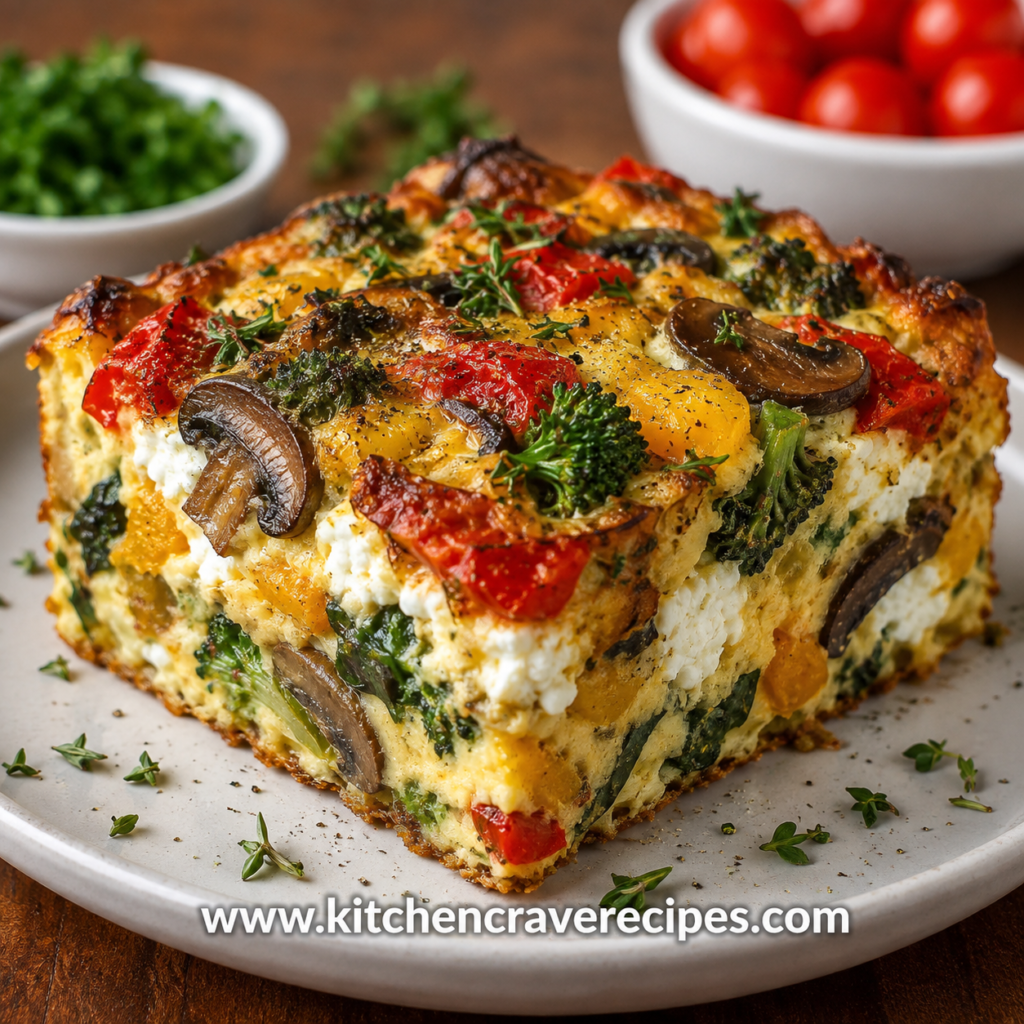
A thick, golden square of cottage cheese egg bake sits on a white ceramic plate, its cross-section revealing a colorful interior of broccoli florets, sliced brown mushrooms, roasted red peppers, and visible white curds of cottage cheese throughout the custard. Fresh thyme is scattered across the top and around the plate, and bowls of cherry tomatoes and fresh herbs frame the scene in the background. The top is lightly browned and set, with that characteristic golden edge that means every slice lifts cleanly from the pan.
This cottage cheese egg bake is built for people who want a genuinely high-protein breakfast that holds up to a full morning without snacking. The cottage cheese blends directly into the egg mixture, adding a creamy, slightly tangy texture and a meaningful protein boost that you simply don’t get from eggs alone. It bakes hands-off in about 35 minutes, slices into clean squares, and refrigerates well all week. Meal prep doesn’t need to be complicated to be this good.
Recipe Quick Info
| Detail | Info |
|---|---|
| Prep Time | 10 minutes |
| Cook Time | 35 minutes |
| Total Time | 45 minutes |
| Servings | 6 squares |
| Cuisine | American |
| Course | Breakfast / Brunch / Meal Prep |
| Calories | ~240 per serving |
| Difficulty | Simple |
Why You’ll Love This Cottage Cheese Egg Bake
- Genuinely high in protein — Each square delivers approximately 22 grams of protein from the egg and cottage cheese base, making it a breakfast that actually keeps you full.
- Meal-prep ready from the start — Slice it into squares, refrigerate, and reheat individual portions all week without any quality loss.
- Loaded with vegetables in every bite — Broccoli, mushrooms, and roasted red peppers are visible throughout the bake, not just scattered on top as an afterthought.
- No crust, no fuss — Unlike quiche, this cottage cheese egg bake skips the pastry entirely, which means fewer steps and a naturally lower-carbohydrate result.
- The cottage cheese disappears into the bake — Skeptics who don’t love cottage cheese on its own are frequently surprised to find it virtually undetectable by texture in the finished square.
- Flexible and forgiving — Swap the vegetables, add meat, change the cheese — the base recipe handles substitutions without any technique adjustments.
Ingredients
For the Egg and Cottage Cheese Base
- 8 large eggs
- 1½ cups (340g) full-fat cottage cheese (small curd preferred)
- ½ cup (120ml) whole milk
- 1 teaspoon garlic powder
- ½ teaspoon onion powder
- ½ teaspoon fine salt
- ½ teaspoon black pepper
- ½ teaspoon dried thyme (plus fresh thyme for garnish)
For the Vegetables (as shown)
- 1½ cups (135g) broccoli florets, roughly chopped into small pieces
- 1 cup (75g) brown mushrooms, sliced
- ½ cup (75g) roasted red peppers, chopped (from a jar or freshly roasted)
- 1 cup (30g) fresh baby spinach, roughly chopped
For the Cheese Layer
- 1 cup (115g) shredded sharp cheddar cheese, divided
- ½ cup (60g) additional cottage cheese, dolloped across the top before baking
Optional Add-Ins
- ½ cup cooked and crumbled breakfast sausage or bacon
- ¼ teaspoon red pepper flakes (for heat)
- 2 tablespoons sun-dried tomatoes, chopped
- Fresh cherry tomatoes, halved and pressed lightly into the top before baking
Ingredient Substitutions
| Original Ingredient | Substitution | Notes |
|---|---|---|
| Full-fat cottage cheese | 2% cottage cheese | Slightly less rich; structure of the bake is not affected |
| Whole milk | Unsweetened almond milk or oat milk | Works well; bake sets slightly firmer |
| Sharp cheddar | Gruyère, Monterey Jack, or pepper jack | All melt well; pepper jack adds heat |
| Brown mushrooms | Cremini, baby bella, or white button | Flavor profile shifts slightly but technique is identical |
| Fresh baby spinach | Frozen spinach, fully thawed and squeezed dry | Use ½ cup frozen; remove all excess moisture before adding |
| Broccoli florets | Cauliflower florets or zucchini, diced small | Both release less water than broccoli; no technique change needed |
| Roasted red peppers (jarred) | Fresh red bell pepper, diced and sautéed | Sauté briefly to soften before adding to reduce excess water |
Kitchen Tools Needed
- 9×13-inch baking dish (or 8×8-inch for a thicker bake — adjust cook time by 5–8 minutes)
- Large mixing bowl
- Whisk
- Cutting board and chef’s knife
- Measuring cups and spoons
- Rubber spatula
- Non-stick cooking spray or butter for greasing
- Instant-read thermometer (optional but recommended)
Step-by-Step Instructions
Step 1: Preheat the Oven and Prep the Pan
Preheat your oven to 375°F. Spray a 9×13-inch baking dish generously with non-stick cooking spray, or rub it with a thin coat of softened butter, making sure to get the corners and sides fully coated. A well-greased dish is the difference between squares that lift cleanly and a bake that tears apart when you try to serve it. Set the prepared pan aside while you build the egg mixture.
Step 2: Whisk the Egg and Cottage Cheese Base
Crack all 8 eggs into a large mixing bowl. Add the cottage cheese, whole milk, garlic powder, onion powder, salt, pepper, and dried thyme. Whisk vigorously for 60–90 seconds until the mixture is fully combined and the cottage cheese curds are mostly broken up but still visible in small pieces throughout — you don’t want a perfectly smooth liquid, just a well-integrated mixture. Those small curd remnants are what give the finished cottage cheese egg bake its distinctive creamy texture.
Embedded Tip: For a slightly smoother base, blend the eggs, cottage cheese, and milk together in a blender for 20 seconds before adding the dry seasonings. This produces a more uniform, custard-like texture while still delivering all the same protein and flavor.
Step 3: Prep the Vegetables
Chop the broccoli into small, bite-sized pieces — roughly ½ inch. Larger pieces stay too crunchy after baking at this temperature. Slice the mushrooms and roughly chop the roasted red peppers and spinach. Pat the roasted peppers lightly with a paper towel to remove excess jar liquid; too much moisture from any vegetable component can result in a watery bake that doesn’t set cleanly.
Step 4: Assemble the Bake
Pour half of the egg mixture into the prepared baking dish. Distribute the broccoli, mushrooms, roasted red peppers, and spinach evenly across the base. Sprinkle ¾ cup of the shredded cheddar over the vegetables. Pour the remaining egg mixture over everything and give the pan a gentle shake to encourage the liquid to settle around all the vegetables evenly.
Embedded Tip: Don’t stir the bake once assembled. Pouring the second half of the egg mixture over the top — rather than mixing everything together at once — creates a more defined, layered structure that holds together better when sliced and lifted from the pan.
Step 5: Add the Top Layer and Bake
Scatter the remaining ¼ cup of cheddar across the top. Add small spoonfuls of the extra cottage cheese distributed evenly across the surface — these dollops stay visible as soft, creamy white pockets in the finished bake, as shown in the photo. Bake at 375°F for 33–37 minutes, until the top is set and lightly golden at the edges and a toothpick inserted into the center comes out clean.
The USDA recommends cooking egg dishes to an internal temperature of 160°F for food safety. Use an instant-read thermometer to check the center of the bake — this is especially important if your oven runs cool. See USDA egg safety guidelines for full details.
Step 6: Rest, Slice, and Garnish
Remove the bake from the oven and let it rest in the pan for 8–10 minutes before cutting. Cutting too early causes the egg mixture to run and the squares to fall apart at the edges. Use a sharp knife or bench scraper to cut into 6 even squares. Scatter fresh thyme leaves over the top of each piece just before serving — the herb adds fragrance and color that the dried thyme in the base can’t replicate once baked.
Pro Tips for the Best Results
- Use small-curd cottage cheese. Small curds integrate more evenly into the egg mixture and distribute better throughout the bake. Large curd creates uneven pockets that can affect how uniformly the casserole sets.
- Squeeze your spinach. Even fresh baby spinach releases surprising amounts of moisture during baking. Wilt it briefly in a dry skillet for 60 seconds and blot dry before adding it to keep the bake from going watery in the center.
- Let the eggs come to room temperature. Cold eggs from the refrigerator slow down the early-stage baking and can cause uneven setting. Pull them out 15 minutes before you start for a more consistent result.
- Don’t overload on vegetables. More than about 3 cups of total vegetable volume overwhelms the egg base and prevents proper setting. Stick close to the recipe quantities, or increase the egg count by 2 if you want to add more vegetables.
- Rest time is not optional. The bake continues cooking from residual heat for several minutes after leaving the oven. Cutting at the 5-minute mark instead of 10 produces messy, runny squares. Wait the full 8–10 minutes.
Common Mistakes to Avoid
- Using low-fat or fat-free cottage cheese.
The fix: Low-fat cottage cheese contains more water than full-fat, which releases during baking and prevents the bake from setting firmly. Full-fat or 4% cottage cheese gives the best structure and the richest flavor in the finished squares. - Skipping the vegetable moisture step.
The fix: Watery vegetables — especially jarred roasted peppers, frozen spinach, or fresh mushrooms — release their liquid during baking and pool in the bottom of the dish. Pat peppers dry, sauté mushrooms briefly if they’re very fresh, and squeeze all moisture from any frozen vegetables before adding. - Underbaking and cutting too soon.
The fix: The center of this cottage cheese egg bake must be fully set before it’s cut. Check with a toothpick or instant-read thermometer at 160°F at the center. If the edges are done but the center still jiggles, cover loosely with foil and return to the oven for 5 more minutes. - Not greasing the pan thoroughly.
The fix: Cottage cheese tends to stick, especially at the corners and bottom of a baking dish. Use non-stick spray generously, or line the pan with parchment paper with a slight overhang for the cleanest possible lift. - Pouring cold egg mixture into a cold pan.
The fix: If your baking dish has been in the refrigerator (e.g., you assembled the bake the night before), let it sit at room temperature for 10 minutes before it goes into the oven. A cold dish going into a hot oven can crack ceramic and causes uneven baking at the base. - Using too-large vegetable pieces.
The fix: Broccoli especially needs to be chopped small — ½-inch pieces maximum. Large florets stay undercooked and crunchy at the center of the bake, which ruins the texture of the surrounding egg mixture. Smaller pieces cook through evenly in the same time the eggs need to set. - Skipping the rest period.
The fix: Set a timer for 8 minutes after the pan leaves the oven and don’t cut until it goes off. The difference between a square that holds its shape cleanly and one that collapses comes entirely down to this rest step.
Variations
Healthy Lower-Calorie Version
Use 2% cottage cheese and reduce the shredded cheddar to ½ cup total. Replace the whole milk with unsweetened almond milk and add an extra cup of baby spinach in place of the second half of the cheese topping. The protein count stays essentially the same while the calorie and fat content drop meaningfully per square — it’s still a satisfying, genuinely filling breakfast.
Vegetarian Version
This cottage cheese egg bake is already fully vegetarian as written — every component is plant-adjacent or egg-and-dairy-based. To make it more nutritionally complete as a standalone meal, add ¼ cup of cooked quinoa or black beans to the vegetable layer for extra fiber and a slightly more substantial texture. No technique changes are needed.
Spicy Version
Add ½ teaspoon of red pepper flakes and ¼ teaspoon of cayenne to the egg mixture in Step 2. Swap the sharp cheddar for pepper jack cheese. For an even bolder heat level, fold in 2 tablespoons of diced pickled jalapeños with the vegetables in Step 4. The dairy base moderates the heat enough that this version works for most people who enjoy a spicy breakfast.
Gluten-Free Version
This cottage cheese egg bake is naturally gluten-free as written — there is no flour, bread, or starch in any component. Verify that your cottage cheese and shredded cheddar brands don’t contain gluten-containing additives (some processed shredded cheeses use starch coatings that may contain wheat). No other modification is needed.
Low-Carb / Keto Version
The recipe is already very low in carbohydrates as written — approximately 5g net carbs per square from the vegetable content. To push it further toward strict keto macros, reduce the onion powder (a minor carb source), omit the roasted red peppers (slightly higher in natural sugar), and add 2 tablespoons of full-fat cream cheese to the egg mixture for extra fat. Total carbs drop to approximately 3g net per square with these changes.
What to Serve With This Recipe
- Sliced avocado — The creaminess of ripe avocado alongside the savory, protein-dense bake makes for a complete, satisfying breakfast plate.
- Fresh fruit or a simple fruit salad — A light counterpoint to the rich egg base; strawberries, blueberries, or melon work especially well.
- High Protein French Onion Meatloaf: Best Crust in 75 Minutes — A cold, vegetal smoothie alongside a warm square of this cottage cheese egg bake makes a complete, macro-balanced breakfast.
- Whole grain toast — For those who aren’t following a low-carb plan, a slice of toasted sourdough or whole wheat beneath the square turns it into an open-face sandwich situation.
- Hot sauce or salsa — A tablespoon of fresh salsa or a few dashes of Cholula over the top brightens every element and cuts through the richness of the cheddar.
- Mixed greens with lemon vinaigrette — Served alongside at brunch, a simple dressed salad makes this a full, balanced plate worthy of guests.
- Cherry tomatoes — As shown in the background of the photo; their bright acidity contrasts cleanly against the savory, creamy bake.
- High Protein French Onion Meatloaf: Best Crust in 75 Minutes — If you love this egg bake format, a stovetop frittata is the next natural recipe to try for variety across the week.
Storage Instructions
Refrigerator
Cool the bake completely before covering or transferring to storage containers. Store individual squares in airtight containers or wrap the full baking dish tightly with plastic wrap. It keeps in the refrigerator for up to 5 days, making it one of the more reliable meal-prep breakfast options available. The texture actually improves slightly on day two as the egg mixture firms up further.
Freezer
Wrap individual cooled squares tightly in plastic wrap, then place them in a zip-top freezer bag. Freeze for up to 2 months. Thaw overnight in the refrigerator before reheating — do not attempt to microwave from fully frozen, as the egg mixture reheats unevenly and the exterior can become rubbery before the center is warm.
Shelf Life Summary
| Storage Method | Duration | Quality Notes |
|---|---|---|
| Refrigerator | Up to 5 days | Best texture on days 1–3 |
| Freezer (wrapped) | Up to 2 months | Thaw overnight in fridge before reheating |
| Room temperature | No more than 2 hours | USDA guideline for cooked egg dishes |
Reheating Instructions
Microwave (Fastest)
Place one square on a microwave-safe plate. Cover loosely with a damp paper towel to prevent the egg from drying out. Heat on 70% power for 60–90 seconds, checking at the 60-second mark. The lower power setting heats the cottage cheese egg bake more gently and avoids the rubbery texture that full-power microwaving causes.
Oven (Best Texture)
Preheat the oven to 325°F. Place the square in a small baking dish and cover loosely with foil. Heat for 12–15 minutes until warmed through. This method preserves the golden edges and the interior texture better than any other reheating approach — worth the extra time if you’re not in a rush.
Stovetop (Skillet Method)
Set a non-stick skillet over medium-low heat and add a small drizzle of olive oil or butter. Place the square in the skillet, cover with a lid, and heat for 4–5 minutes, turning once halfway through. The skillet method re-crisps the bottom edge slightly, which many people prefer. For food safety guidelines on reheating egg dishes, see FoodSafety.gov’s safe minimum internal temperature chart.
Nutrition Facts
(Per serving: 1 square / ⅙ of total 9×13-inch bake)
| Nutrient | Amount |
|---|---|
| Calories | ~240 kcal |
| Total Fat | 14g |
| Saturated Fat | 6g |
| Cholesterol | 265mg |
| Sodium | 480mg |
| Total Carbohydrates | 6g |
| Dietary Fiber | 1g |
| Total Sugars | 3g |
| Protein | 22g |
Disclaimer: Nutrition values are estimates calculated using standard ingredient databases and will vary based on specific brands of cottage cheese and cheddar, exact vegetable quantities, and portion size. These figures are intended for general reference only and are not medical or dietary advice. For precise nutritional data, use a certified nutrition calculator with your exact ingredients.
Frequently Asked Questions
Q: Can I taste the cottage cheese in the finished bake?
A: Not strongly. The cottage cheese integrates into the egg mixture during baking and contributes a mild creaminess and slight tang rather than a distinct cottage cheese flavor. The visible white pockets on the surface are soft and creamy, not curd-like in the way you’d expect from eating it cold from a spoon.
Q: Can I make this cottage cheese egg bake the night before?
A: Yes — assemble the entire bake through Step 4, cover the dish tightly with plastic wrap, and refrigerate overnight. Let it sit at room temperature for 10 minutes before baking. Add the top cheese and cottage cheese dollops just before it goes in the oven. Overnight assembly actually lets the vegetables release some of their moisture into the egg mixture, which slightly improves the texture.
Q: How do I know when the egg bake is fully cooked?
A: Two reliable checks: a toothpick inserted into the center should come out clean (no wet egg mixture clinging to it), and an instant-read thermometer inserted in the center should read at least 160°F. The top should be set and no longer shiny or liquid-looking.
Q: Can I use egg whites instead of whole eggs?
A: Yes — substitute 2 egg whites for each whole egg. The bake will be firmer and slightly less rich, and the calorie and fat content drop significantly. Use 16 egg whites in place of the 8 whole eggs. Be aware that egg white bakes can become slightly rubbery if overbaked, so check at the 30-minute mark rather than 33.
Q: Can I add meat to this recipe?
A: Absolutely — cooked and crumbled breakfast sausage, diced ham, or crumbled bacon all work well. Add the cooked meat with the vegetables in Step 4. Don’t add raw meat to the egg mixture; always cook it fully before incorporating, as the internal bake temperature isn’t guaranteed to cook raw meat to a safe temperature reliably.
Q: What size pan works best?
A: A 9×13-inch pan produces squares that are about 1½ inches thick — enough to be substantial but not so tall that the center struggles to set. An 8×8-inch pan works if you want thicker, taller squares; add 5–8 minutes to the bake time and check the center temperature carefully.
Q: Can I make individual portions in a muffin tin?
A: Yes — spray a standard 12-cup muffin tin well, fill each cup about ¾ full with the egg mixture and vegetables, and bake at 375°F for 20–24 minutes until set. Individual egg cups are even easier to grab from the refrigerator during the week and reheat in about 45 seconds in the microwave.
Q: Is this recipe suitable for a low-sodium diet?
A: As written, each square contains approximately 480mg of sodium, primarily from the cottage cheese and cheddar. To reduce this, use a low-sodium cottage cheese, reduce the added salt to ¼ teaspoon, and use a low-sodium shredded cheese. These swaps can reduce sodium by 150–200mg per serving without affecting the structure or flavor significantly.
Q: Why did my bake turn out watery in the center?
A: Excess moisture from vegetables is the most common cause. Pat jarred roasted peppers completely dry, squeeze any frozen spinach until no water comes out, and sauté fresh mushrooms briefly before adding them. Mushrooms in particular release a significant amount of liquid during baking if they go in raw and whole.
Q: Can I double the recipe?
A: Yes — double all ingredients and use two 9×13-inch pans, or one very deep full-sheet roasting pan. The bake time stays approximately the same; check both pans at 35 minutes and pull when the center reaches 160°F. Stagger the pans between oven racks and rotate halfway through if your oven has hot spots.
Expert Chef Tips
1. Whisk the base aggressively — but don’t over-blend.
A well-whisked egg and cottage cheese mixture bakes more evenly and sets with a consistent texture. Sixty to ninety seconds of vigorous whisking is the target; the cottage cheese should be partially broken down but not completely smooth. Those small visible curds in the egg mixture are what make this bake look and taste different from a standard egg casserole.
2. Season the vegetables, not just the base.
Before adding the vegetables in Step 4, toss them briefly with a pinch of salt, a little black pepper, and a tiny drizzle of olive oil in a separate bowl. Pre-seasoned vegetables taste more cohesive with the egg base and don’t rely entirely on the base seasoning to carry all the flavor in the bake.
3. Use a bench scraper, not a knife, for the cleanest cuts.
A straight-edged bench scraper pressed straight down through the bake (rather than dragged like a knife) produces the cleanest, most professional-looking squares with sharp edges. Run it under warm water between cuts to prevent the egg from sticking to the blade.
4. Match your cheese to your vegetable combination.
Sharp cheddar is the right call for a vegetable mix that includes mushrooms and peppers — it’s assertive enough to hold its own against earthy flavors. If you shift to a lighter vegetable lineup (e.g., zucchini, leeks, asparagus), consider Gruyère or fontina for a more delicate, buttery cheese note that won’t overpower.
5. Line the pan if you’re taking it to a gathering.
If this cottage cheese egg bake is going to a potluck or brunch, line the baking dish with parchment paper before greasing. The parchment lets you lift the entire bake out of the dish as a single slab before cutting — much easier to transport and slice cleanly than cutting directly in the dish at someone else’s table.
Recipe Summary
This cottage cheese egg bake brings together 8 eggs, full-fat cottage cheese, shredded cheddar, and a generous load of vegetables — broccoli, mushrooms, roasted red peppers, and spinach — into a protein-dense, meal-prep-ready breakfast that bakes in under 40 minutes. The cottage cheese integrates invisibly into the egg base, contributing creaminess and protein without any detectable curd texture in the finished square. Make it Sunday, slice it into six portions, and breakfast is handled for the week.
Conclusion
A well-made cottage cheese egg bake is one of those recipes that earns its place in the weekly rotation not because it’s flashy, but because it’s genuinely reliable — high in protein, loaded with vegetables, easy to reheat, and good enough that you actually want to eat it on a Tuesday morning when motivation is low. Make it once and you’ll understand why it shows up in meal-prep circles repeatedly. The recipe works, it keeps, and it delivers exactly what a weekday breakfast needs to do.
Cottage Cheese Egg Bake: 7-Ingredient Easy Recipe
Description
A thick, golden square of cottage cheese egg bake sits on a white ceramic plate, its cross-section revealing a colorful interior of broccoli florets, sliced brown mushrooms, roasted red peppers, and visible white curds of cottage cheese throughout the custard. Fresh thyme is scattered across the top and around the plate, and bowls of cherry tomatoes and fresh herbs frame the scene in the background. The top is lightly browned and set, with that characteristic golden edge that means every slice lifts cleanly from the pan.
Ingredients
Instructions
-
Step-by-Step Instructions
-
Step 1: Preheat the Oven and Prep the Pan
-
Preheat your oven to 375°F. Spray a 9×13-inch baking dish generously with non-stick cooking spray, or rub it with a thin coat of softened butter, making sure to get the corners and sides fully coated. A well-greased dish is the difference between squares that lift cleanly and a bake that tears apart when you try to serve it. Set the prepared pan aside while you build the egg mixture.
-
Step 2: Whisk the Egg and Cottage Cheese Base
-
Crack all 8 eggs into a large mixing bowl. Add the cottage cheese, whole milk, garlic powder, onion powder, salt, pepper, and dried thyme. Whisk vigorously for 60–90 seconds until the mixture is fully combined and the cottage cheese curds are mostly broken up but still visible in small pieces throughout — you don't want a perfectly smooth liquid, just a well-integrated mixture. Those small curd remnants are what give the finished cottage cheese egg bake its distinctive creamy texture.
-
Embedded Tip: For a slightly smoother base, blend the eggs, cottage cheese, and milk together in a blender for 20 seconds before adding the dry seasonings. This produces a more uniform, custard-like texture while still delivering all the same protein and flavor.
-
Step 3: Prep the Vegetables
-
Chop the broccoli into small, bite-sized pieces — roughly ½ inch. Larger pieces stay too crunchy after baking at this temperature. Slice the mushrooms and roughly chop the roasted red peppers and spinach. Pat the roasted peppers lightly with a paper towel to remove excess jar liquid; too much moisture from any vegetable component can result in a watery bake that doesn't set cleanly.
-
Step 4: Assemble the Bake
-
Pour half of the egg mixture into the prepared baking dish. Distribute the broccoli, mushrooms, roasted red peppers, and spinach evenly across the base. Sprinkle ¾ cup of the shredded cheddar over the vegetables. Pour the remaining egg mixture over everything and give the pan a gentle shake to encourage the liquid to settle around all the vegetables evenly.
-
Embedded Tip: Don't stir the bake once assembled. Pouring the second half of the egg mixture over the top — rather than mixing everything together at once — creates a more defined, layered structure that holds together better when sliced and lifted from the pan.
-
Step 5: Add the Top Layer and Bake
-
Scatter the remaining ¼ cup of cheddar across the top. Add small spoonfuls of the extra cottage cheese distributed evenly across the surface — these dollops stay visible as soft, creamy white pockets in the finished bake, as shown in the photo. Bake at 375°F for 33–37 minutes, until the top is set and lightly golden at the edges and a toothpick inserted into the center comes out clean.
-
The USDA recommends cooking egg dishes to an internal temperature of 160°F for food safety. Use an instant-read thermometer to check the center of the bake — this is especially important if your oven runs cool. See USDA egg safety guidelines for full details.
-
Step 6: Rest, Slice, and Garnish
-
Remove the bake from the oven and let it rest in the pan for 8–10 minutes before cutting. Cutting too early causes the egg mixture to run and the squares to fall apart at the edges. Use a sharp knife or bench scraper to cut into 6 even squares. Scatter fresh thyme leaves over the top of each piece just before serving — the herb adds fragrance and color that the dried thyme in the base can't replicate once baked.
Nutrition Facts
Servings 6
- Amount Per Serving
- Calories 240kcal
- % Daily Value *
- Total Fat 14g22%
- Saturated Fat 6g30%
- Protein 22g44%
* Percent Daily Values are based on a 2,000 calorie diet. Your daily value may be higher or lower depending on your calorie needs.