Mediterranean Egg Muffins: 8-Ingredient Easy Recipe


High-Protein Mediterranean Egg Muffins with Olives & Roasted Tomatoes
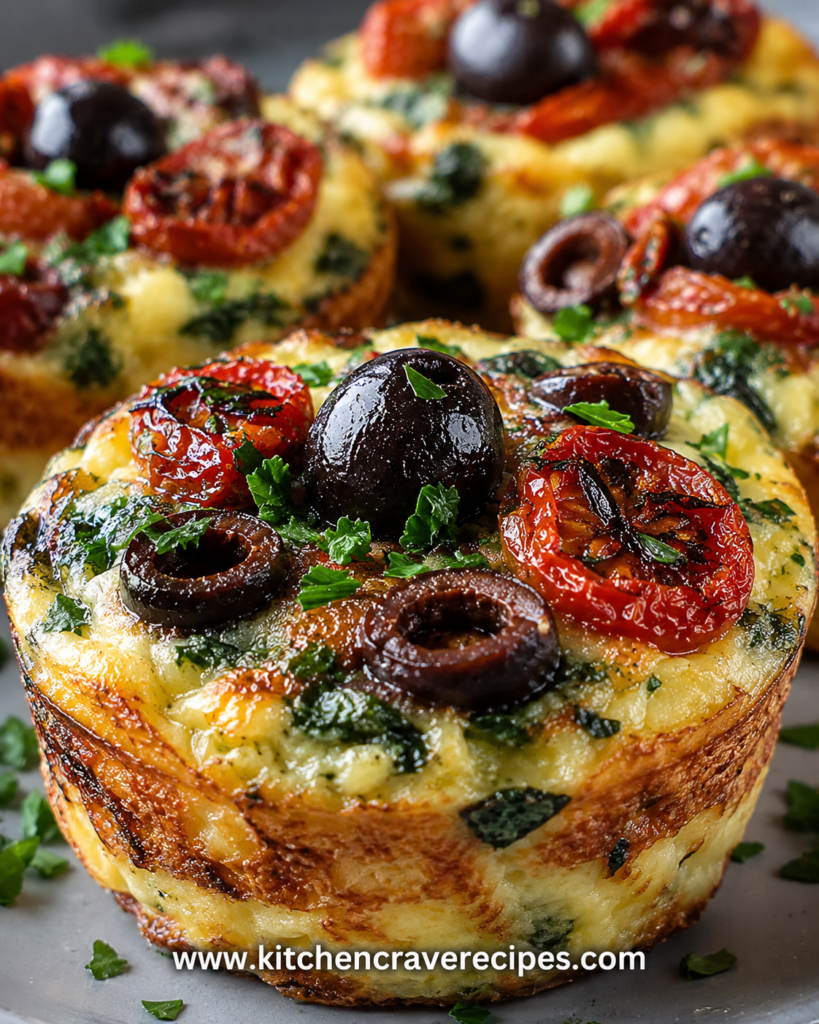
The photo makes the case immediately: deeply golden egg muffins with caramelized, blistered cherry tomato halves on top, glossy whole and sliced Kalamata olives, flecks of fresh parsley, and a spinach-and-feta-speckled interior visible along the sides. Several muffins stack loosely on a grey plate, each one browned at the edges and fully set through the center. These aren’t pale, spongy egg cups — they’re genuinely attractive, with roasted vegetable tops that look like they belong on a brunch menu.
Mediterranean egg muffins this well-constructed deliver somewhere around 10–12 grams of protein per muffin from the egg and feta base, which is meaningful for a food you can make twelve of in 30 minutes. The olive and roasted tomato topping isn’t just garnish — it bakes right into the top of the egg as it sets, creating a slightly concentrated, savory layer over the spinach-and-cheese interior. If your meal-prep breakfasts have felt monotonous, this is the recipe that changes that.
Recipe Quick Info
| Detail | Info |
|---|---|
| Prep Time | 10 minutes |
| Cook Time | 20 minutes |
| Total Time | 30 minutes |
| Servings | 12 muffins |
| Cuisine | Mediterranean / American |
| Course | Breakfast / Brunch / Snack |
| Calories | ~120 per muffin |
| Difficulty | Simple |
Why You’ll Love This Mediterranean Egg Muffins Recipe
- 30 minutes start to finish — Ten minutes of prep and 20 minutes in the oven is all it takes to have a full week of breakfast ready to go.
- Genuinely portable — Each muffin is individually portioned and firm enough to eat at room temperature, making them ideal for commutes and packed lunches.
- The roasted tomato and olive topping is the difference-maker — Pressing the toppings into the wet egg mixture before baking means they caramelize directly onto each muffin top as it sets, not just resting on a finished product.
- Feta and spinach run throughout the interior — The flavor is evenly distributed in every bite, not concentrated in the center or scattered to the edges.
- Naturally gluten-free and low-carb — There’s no bread, flour, or starch anywhere in the recipe; the egg is the structure.
- Scales effortlessly — Double the batch and bake in two muffin tins at once; the technique and timing don’t change.
Ingredients
For the Egg Base
- 8 large eggs
- ¼ cup (60ml) whole milk (or unsweetened almond milk)
- ½ teaspoon garlic powder
- ½ teaspoon dried oregano
- ¼ teaspoon fine salt
- ¼ teaspoon black pepper
- ¼ teaspoon red pepper flakes (optional but shown in photo)
For the Mediterranean Filling
- 1 cup (30g) fresh baby spinach, finely chopped
- ½ cup (75g) crumbled feta cheese
- ¼ cup (40g) sun-dried tomatoes, finely chopped (oil-packed, drained)
For the Topping (as shown)
- ½ cup (75g) cherry tomatoes, halved
- ⅓ cup (50g) Kalamata olives, pitted (a mix of whole and sliced, as shown)
- 2 tablespoons fresh flat-leaf parsley, finely chopped
Optional Add-Ins
- 2 tablespoons crumbled goat cheese in addition to or in place of some feta
- ¼ cup diced roasted red peppers (folded into the egg base)
- 2 tablespoons chopped artichoke hearts, drained and patted dry
- 1 tablespoon fresh basil, torn
Ingredient Substitutions
| Original Ingredient | Substitution | Notes |
|---|---|---|
| Whole milk | Unsweetened almond milk or oat milk | The egg mixture sets slightly firmer; flavor is negligibly different |
| Feta cheese | Goat cheese or ricotta | Goat cheese is saltier; ricotta is milder and creamier — reduce added salt if using goat cheese |
| Baby spinach | Arugula or finely chopped kale | Kale should be massaged briefly before adding; arugula adds a peppery note |
| Kalamata olives | Black olives or Castelvetrano olives | Castelvetrano are milder and buttery; black olives have less distinct flavor |
| Cherry tomatoes (topping) | Grape tomatoes, halved | Nearly identical in size and behavior; either works |
| Sun-dried tomatoes | Finely diced roasted red peppers | Lower in concentrated flavor; use ⅓ cup to compensate |
| Fresh parsley | Fresh basil or fresh oregano | Both suit the Mediterranean profile; basil is sweeter, oregano more assertive |
Kitchen Tools Needed
- Standard 12-cup muffin tin
- Large mixing bowl
- Whisk
- Measuring cups and spoons
- Rubber spatula or ladle
- Non-stick cooking spray or silicone muffin liners
- Cutting board and chef’s knife
- Instant-read thermometer (optional)
Step-by-Step Instructions
Step 1: Preheat the Oven and Prep the Tin
Preheat your oven to 375°F. Spray each cup of a standard 12-cup muffin tin very generously with non-stick cooking spray, including the rim of each cup — egg muffins are notorious for sticking at the top edge where the mixture rises slightly above the cup level. Alternatively, use silicone muffin liners, which release the finished Mediterranean egg muffins cleanly every time without any spray required.
Step 2: Whisk the Egg Base
Crack all 8 eggs into a large mixing bowl. Add the whole milk, garlic powder, dried oregano, salt, pepper, and red pepper flakes if using. Whisk vigorously for 45–60 seconds until the eggs are fully combined, the yolks and whites are fully integrated, and the mixture looks uniform in color with a few small bubbles on top. A well-whisked base distributes the seasoning and the fill-ins evenly rather than concentrating them in one section of each muffin.
Embedded Tip: For a slightly airier, more soufflé-like interior, whisk the egg base for a full 90 seconds until it looks noticeably foamy. The extra air incorporated during whisking expands in the oven and gives each muffin a lighter, puffier top — though it will settle back slightly as it cools, which is completely normal.
Step 3: Add the Filling Ingredients
Add the finely chopped spinach, crumbled feta, and chopped sun-dried tomatoes directly into the egg mixture. Stir with a rubber spatula until evenly distributed. The spinach will look like a lot before stirring but compresses quickly into the liquid. Make sure the feta is distributed throughout rather than clumped in one area — this ensures every muffin gets a comparable amount of cheese in each bite.
Step 4: Fill the Muffin Cups
Ladle or pour the egg mixture evenly into the prepared muffin cups, filling each one about ¾ full. A standard ladle or a ¼-cup measuring cup works well for portioning consistently. Don’t overfill — egg expands as it bakes, and cups filled above ¾ capacity will overflow onto the tin and create a mess that’s difficult to clean. Tap the tin gently on the counter once to settle any air pockets in the egg mixture.
Embedded Tip: If you have a spouted mixing bowl or a large liquid measuring cup with a pour spout, transfer the egg mixture there before filling. Pouring from a spout is significantly cleaner and faster than ladling and gives you much more control over the fill level in each cup.
Step 5: Add the Mediterranean Toppings
Place 2–3 cherry tomato halves on top of each filled muffin cup. Add 2–3 Kalamata olive pieces — a mix of whole and halved, as visible in the photo — pressing them lightly into the wet egg surface so they sit just below the level of the egg rather than floating on top. Scatter a small pinch of fresh parsley over each cup. The toppings should be pressed in gently enough to stay in place during baking but not submerged entirely.
Step 6: Bake the Mediterranean Egg Muffins
Bake at 375°F for 18–22 minutes, until the edges are set and golden, the tops are no longer shiny or liquid-looking, and the cherry tomatoes are blistered and slightly caramelized. A toothpick inserted into the center of the tallest muffin should come out clean with no wet egg clinging to it. According to the USDA’s food safety guidance for egg dishes, egg-based dishes should reach an internal temperature of 160°F — an instant-read thermometer confirms this in under 5 seconds.
Step 7: Rest and Remove
Let the muffin tin rest on a wire rack for 5 minutes before attempting to remove the muffins. Running a thin offset spatula or butter knife around the perimeter of each cup helps release the edges cleanly. Lift each muffin out gently by sliding the spatula underneath rather than pulling from the top. Scatter the remaining fresh parsley over the finished muffins before serving.
Pro Tips for the Best Mediterranean Egg Muffins
- Chop the spinach small. Finely chopped spinach distributes evenly into every cup and doesn’t create stringy, uneven textures in the finished muffin. Rough-torn leaves clump and cause inconsistent filling.
- Use silicone muffin liners for stress-free release. Even with generous spraying, egg can grip a metal muffin tin at the edges. Silicone liners peel off the finished muffin in one clean motion with no tearing.
- Drain the sun-dried tomatoes well. Oil-packed sun-dried tomatoes carry a significant amount of oil that, if not drained, can create greasy pockets in the egg base. Press them briefly with a paper towel after draining from the jar.
- Don’t skip the rest period. Egg continues to set from residual heat for several minutes after leaving the oven. Muffins removed and immediately flipped out of the tin are more likely to tear or collapse in the center.
- Season slightly bolder than you’d expect. The egg base tastes noticeably less seasoned once cold. If these are going into the refrigerator for meal prep, add an extra pinch of salt and oregano to the base — the flavor holds better after chilling and reheating.
Common Mistakes to Avoid
- Under-spraying the muffin tin.
The fix: Use non-stick spray generously — each cup should look visibly coated with a thin sheen. Pay special attention to the rim of each cup where egg rises and sticks. Better yet, use silicone liners and skip the spray entirely. - Overfilling the muffin cups.
The fix: Fill to ¾ capacity only. Egg expands during baking, and cups filled too full overflow onto the tin surface, sticking the muffins together and making them impossible to remove cleanly without tearing. - Adding wet toppings without patting them dry.
The fix: Cherry tomatoes carry surface moisture, and Kalamata olives from a jar are packed in brine. Pat all toppings briefly with a paper towel before placing them on top of the egg. Excess moisture prevents the top from browning properly and can make the egg around the topping rubbery. - Not pressing the toppings into the egg.
The fix: Toppings resting on top of the liquid egg mixture without being pressed in gently will simply slide off during baking. Each topping piece needs to be set just slightly into the surface so it stays in place as the egg rises and sets around it. - Baking at too high a temperature.
The fix: Temperatures above 400°F cause the edges of the muffin to cook much faster than the center, producing a rubbery perimeter and an undercooked middle. At 375°F, the heat is gentle enough to cook the egg through evenly. - Removing muffins immediately from the oven.
The fix: The 5-minute rest on a wire rack is when the egg finishes setting from residual heat. Muffins pulled and unmolded immediately are softer in the center and more likely to tear when removed. - Skipping the salt in the egg base.
The fix: Egg dishes without adequate salt taste flat regardless of the other flavors present. The feta contributes salt, but the egg base itself also needs seasoning — the ¼ teaspoon of salt in the recipe is calibrated specifically with the feta content in mind. Don’t reduce it.
Variations
Healthy Lower-Calorie Version
Reduce the whole eggs to 5 and add 6 egg whites (discarding the remaining yolks) to lower the fat content while keeping the protein count high. Use reduced-fat feta to shave additional calories from the cheese component. The muffins will bake slightly firmer and paler in color, but the Mediterranean flavor profile — olives, tomatoes, spinach — stays completely intact.
Vegetarian Version
These Mediterranean egg muffins are already fully vegetarian as written. Every component is egg-and-dairy-based or plant-derived. For a more substantial vegetarian version, add 2 tablespoons of rinsed and roughly chopped white beans to the egg mixture — they add a creamy, mild texture and additional protein without affecting the muffin structure significantly.
Spicy Version
Double the red pepper flakes in the egg base to ½ teaspoon and add 2 tablespoons of finely diced pickled pepperoncini to the filling along with the spinach. Swap the Kalamata olive topping for a mix of Kalamata and sliced hot cherry peppers. The heat is assertive but balanced by the creaminess of the feta throughout the base.
Gluten-Free Version
These Mediterranean egg muffins are naturally gluten-free — there is no flour, bread, or starch of any kind in the recipe. The only verification needed is your feta cheese brand; some imported feta varieties use minimal fillers that occasionally contain gluten. Domestic block feta is universally gluten-free, and crumbling it yourself takes 30 seconds.
Low-Carb / Keto Version
The recipe is already very low in carbohydrates — approximately 3g net carbs per muffin from the vegetable content. To reduce further, omit the sun-dried tomatoes (the most concentrated carb source in the filling) and replace with an equal volume of finely diced roasted red pepper from a jar. Net carbs drop to roughly 2g per muffin with this swap, well within strict keto parameters.
What to Serve With This Recipe
- Sliced avocado with flaky salt — The creamy fat of ripe avocado alongside the savory, briny muffins creates a naturally complete Mediterranean breakfast plate.
- Hummus and warm pita — Serving these muffins alongside a small bowl of hummus and a torn piece of warm pita turns a quick breakfast into a satisfying late-morning brunch spread.
- Cottage Cheese Egg Bake: 7-Ingredient Easy Recipe — If you’re batch-cooking two high-protein breakfasts for the week, these muffins and the egg bake complement each other beautifully in terms of flavor and format.
- Simple Greek salad — Cucumber, tomato, red onion, and a drizzle of olive oil alongside 2–3 muffins makes a complete, protein-rich lunch that needs no other preparation.
- Fresh fruit — A handful of grapes, sliced strawberries, or orange segments cuts the savory richness of the egg and feta cleanly.
- Plain full-fat Greek yogurt — A small bowl of yogurt alongside adds even more protein to the meal and echoes the tangy note from the feta in the muffins.
- Cottage Cheese Egg Bake: 7-Ingredient Easy Recipe — A cold, blended smoothie paired with 2 muffins creates a full macro-balanced breakfast in under 5 minutes on a workday morning.
- Hot coffee or cold brew — The bitterness of a good black coffee is an honest, effective counterpoint to the salt of the feta and olives.
Storage Instructions
Refrigerator
Cool the Mediterranean egg muffins completely before storing. Place them in a single layer in an airtight container — they can be stacked with parchment paper between layers if needed. They keep in the refrigerator for up to 5 days with no significant quality loss. The olive and tomato tops retain their visual appeal and flavor throughout the storage window.
Freezer
Wrap individual cooled muffins tightly in plastic wrap, then transfer to a zip-top freezer bag. Freeze for up to 2 months. Thaw overnight in the refrigerator before reheating — this produces the best texture. Microwaving directly from frozen is possible but often results in uneven heating and a slightly rubbery exterior.
Shelf Life Summary
| Storage Method | Duration | Quality Notes |
|---|---|---|
| Refrigerator | Up to 5 days | Best texture on days 1–3; still good on days 4–5 |
| Freezer (wrapped) | Up to 2 months | Thaw overnight in fridge before reheating |
| Room temperature | 2 hours maximum | USDA guideline for cooked egg-based dishes |
Reheating Instructions
Microwave (Fastest)
Place 1–2 muffins on a microwave-safe plate. Cover loosely with a damp paper towel, which traps steam and prevents the egg from drying out. Heat on 70% power for 45–60 seconds. The lower power setting heats the egg gently and avoids the rubbery texture that comes from reheating egg at full power.
Oven (Best Texture)
Preheat the oven to 325°F. Place the muffins on a small baking sheet and cover loosely with foil. Heat for 10–12 minutes until warmed through. This method re-crisps the golden edges and restores the appearance of a freshly baked Mediterranean egg muffin better than any other reheating approach.
Skillet (Quickest Hot Method)
Set a non-stick skillet over medium-low heat with a small drizzle of olive oil. Place the muffins cut-side down if halved, or on their side if whole. Cover with a lid and heat for 3–4 minutes, turning once. For general food safety guidance on reheating egg dishes to 165°F, see FoodSafety.gov’s safe minimum temperature chart.
Nutrition Facts
(Per serving: 1 Mediterranean egg muffin / 1 of 12)
| Nutrient | Amount |
|---|---|
| Calories | ~120 kcal |
| Total Fat | 8g |
| Saturated Fat | 3g |
| Cholesterol | 135mg |
| Sodium | 290mg |
| Total Carbohydrates | 3g |
| Dietary Fiber | 0.5g |
| Total Sugars | 1g |
| Protein | 10g |
Disclaimer: Nutrition values are estimates calculated using standard ingredient databases and will vary based on specific brands of feta, olive quantity, egg size, and any optional add-ins used. These figures are for general reference only and are not intended as medical or dietary advice. For precise nutritional data, use a certified nutrition calculator with your exact ingredients.
Frequently Asked Questions
Q: Can I make Mediterranean egg muffins ahead of time?
A: Yes — these are designed specifically for advance preparation. Bake a full batch, cool completely, and refrigerate for up to 5 days. Reheat 1–2 at a time in the microwave for 45–60 seconds on a weekday morning and breakfast is ready in under a minute.
Q: Why did my egg muffins stick to the pan?
A: Almost always caused by insufficient pan greasing or skipping silicone liners. Non-stick spray applied lightly around the edges of each cup (rather than spraying all 12 cups with one sweep) leaves the rim inadequately coated, which is exactly where egg rises and sticks. Re-spray each cup individually and generously for reliable release.
Q: Can I use a silicone muffin pan instead of a metal tin?
A: Yes — silicone muffin pans work well and release egg muffins even more cleanly than a sprayed metal tin. Note that silicone pans bake slightly slower than metal because they don’t conduct heat as efficiently; add 2–3 minutes to the bake time and check for doneness at the 20-minute mark.
Q: How do I know when Mediterranean egg muffins are fully cooked?
A: Three reliable indicators: the tops should be fully set and no longer shiny or jiggling when the pan is gently shaken; a toothpick inserted into the center of the tallest muffin should come out clean; and an instant-read thermometer should register 160°F at the center.
Q: Can I substitute whole eggs with just egg whites?
A: You can substitute some whole eggs with egg whites — use 2 egg whites for each whole egg you replace. Replacing all 8 whole eggs with 16 egg whites is possible but produces a noticeably firmer, paler, and slightly rubbery muffin. A 50/50 split (4 whole eggs plus 8 egg whites) gives a good balance of protein content and texture.
Q: Do the olives need to be pitted before baking?
A: Yes — always use pitted olives. Whole olives with pits baked into an egg muffin are a safety hazard and an unpleasant surprise when eating. Jarred pitted Kalamata olives are widely available and are exactly what’s visible in the photo — a mix of whole pitted and sliced.
Q: Can I add meat to these Mediterranean egg muffins?
A: Yes — diced fully cooked chicken sausage, crumbled cooked turkey sausage, or chopped cooked shrimp all work well. Add the cooked meat to the egg mixture at the same stage as the spinach and feta in Step 3. Never add raw meat to the egg base — it won’t reach safe cooking temperature in the muffin’s bake time.
Q: Can I double this recipe?
A: Absolutely — double all ingredients and use two 12-cup muffin tins, placing one on each oven rack. Rotate the pans halfway through baking if your oven has noticeable hot spots. The bake time stays the same at 18–22 minutes; check both tins at 18 minutes.
Q: Why did my muffins deflate after coming out of the oven?
A: Some deflation is completely normal for egg-based muffins — the puffed tops that come from the oven will settle by about 20–30% as they cool. This is a result of the steam inside the muffin escaping as the egg cools and contracts, not a sign that anything went wrong. The finished muffin should still be fully set and non-jiggly in the center.
Q: Can I eat these cold straight from the refrigerator?
A: Yes — Mediterranean egg muffins are one of the few egg-based breakfast foods that taste genuinely good cold. The feta and olive flavor is actually more pronounced at room temperature than when hot. Many people who make these for meal prep eat them straight from the refrigerator on busy mornings without reheating.
Expert Chef Tips
1. Finely chop everything that goes into the base.
The finer the spinach, sun-dried tomato, and feta are cut or crumbled, the more evenly they distribute through the 12 muffin cups. Rough cuts or large clumps mean some muffins get significantly more filling than others. Uniform cuts = consistent muffins = a recipe that works reliably every time.
2. Use a spouted vessel for filling.
Transfer the completed egg mixture to a large liquid measuring cup or a pitcher with a pour spout before filling the muffin cups. Pouring from a spout gives you precision control over fill level and avoids the drips and mess that come from ladling egg mixture from a large bowl. It cuts filling time in half.
3. Let the feta warm slightly before mixing.
Cold feta straight from the refrigerator doesn’t distribute as easily into the egg mixture and tends to clump. Setting it on the counter for 10 minutes while you prep the other ingredients softens it just enough to crumble and distribute more evenly throughout the base without melting.
4. The topping tells you when the muffin is done.
The cherry tomatoes on top are one of the most reliable visual doneness cues in this recipe. When they’re blistered, slightly shriveled, and caramelized at the edges — exactly as shown in the photo — the egg beneath them has had time to fully set. Shiny, plump tomatoes mean the muffin likely needs another 2–3 minutes.
5. Bake from a room-temperature mixture.
A cold egg mixture going into a hot oven bakes unevenly — the outside sets before the center has warmed through. If you prepared the egg mixture and refrigerated it the night before, let it sit at room temperature for 10 minutes before filling the tin and baking. The bake will be more even and consistent all the way through.
Recipe Summary
These Mediterranean egg muffins come together in 30 minutes from a base of 8 eggs, whole milk, feta, spinach, and sun-dried tomatoes — portioned into 12 individual cups and topped with cherry tomatoes, Kalamata olives, and fresh parsley before baking. Each muffin delivers around 10 grams of protein, holds up beautifully in the refrigerator for 5 days, and reheats in under a minute. Make them Sunday and the weekday breakfast question is already answered.
Conclusion
Few breakfast recipes earn their place in a weekly rotation as reliably as a well-made batch of Mediterranean egg muffins. They’re high in protein, genuinely good cold or reheated, easy to customize, and visually impressive enough to serve at a brunch without any apology. Make a double batch when you have the time, freeze half, and find out how different mornings feel when breakfast is already handled. The 30 minutes you spend on a Sunday evening pays dividends every single weekday.
Mediterranean Egg Muffins: 8-Ingredient Easy Recipe
Description
The photo makes the case immediately: deeply golden egg muffins with caramelized, blistered cherry tomato halves on top, glossy whole and sliced Kalamata olives, flecks of fresh parsley, and a spinach-and-feta-speckled interior visible along the sides. Several muffins stack loosely on a grey plate, each one browned at the edges and fully set through the center. These aren't pale, spongy egg cups — they're genuinely attractive, with roasted vegetable tops that look like they belong on a brunch menu.
Ingredients
Instructions
-
Step-by-Step Instructions
-
Step 1: Preheat the Oven and Prep the Tin
-
Preheat your oven to 375°F. Spray each cup of a standard 12-cup muffin tin very generously with non-stick cooking spray, including the rim of each cup — egg muffins are notorious for sticking at the top edge where the mixture rises slightly above the cup level. Alternatively, use silicone muffin liners, which release the finished Mediterranean egg muffins cleanly every time without any spray required.
-
Step 2: Whisk the Egg Base
-
Crack all 8 eggs into a large mixing bowl. Add the whole milk, garlic powder, dried oregano, salt, pepper, and red pepper flakes if using. Whisk vigorously for 45–60 seconds until the eggs are fully combined, the yolks and whites are fully integrated, and the mixture looks uniform in color with a few small bubbles on top. A well-whisked base distributes the seasoning and the fill-ins evenly rather than concentrating them in one section of each muffin.
-
Embedded Tip: For a slightly airier, more soufflé-like interior, whisk the egg base for a full 90 seconds until it looks noticeably foamy. The extra air incorporated during whisking expands in the oven and gives each muffin a lighter, puffier top — though it will settle back slightly as it cools, which is completely normal.
-
Step 3: Add the Filling Ingredients
-
Add the finely chopped spinach, crumbled feta, and chopped sun-dried tomatoes directly into the egg mixture. Stir with a rubber spatula until evenly distributed. The spinach will look like a lot before stirring but compresses quickly into the liquid. Make sure the feta is distributed throughout rather than clumped in one area — this ensures every muffin gets a comparable amount of cheese in each bite.
-
Step 4: Fill the Muffin Cups
-
Ladle or pour the egg mixture evenly into the prepared muffin cups, filling each one about ¾ full. A standard ladle or a ¼-cup measuring cup works well for portioning consistently. Don't overfill — egg expands as it bakes, and cups filled above ¾ capacity will overflow onto the tin and create a mess that's difficult to clean. Tap the tin gently on the counter once to settle any air pockets in the egg mixture.
-
Embedded Tip: If you have a spouted mixing bowl or a large liquid measuring cup with a pour spout, transfer the egg mixture there before filling. Pouring from a spout is significantly cleaner and faster than ladling and gives you much more control over the fill level in each cup.
-
Step 5: Add the Mediterranean Toppings
-
Place 2–3 cherry tomato halves on top of each filled muffin cup. Add 2–3 Kalamata olive pieces — a mix of whole and halved, as visible in the photo — pressing them lightly into the wet egg surface so they sit just below the level of the egg rather than floating on top. Scatter a small pinch of fresh parsley over each cup. The toppings should be pressed in gently enough to stay in place during baking but not submerged entirely.
-
Step 6: Bake the Mediterranean Egg Muffins
-
Bake at 375°F for 18–22 minutes, until the edges are set and golden, the tops are no longer shiny or liquid-looking, and the cherry tomatoes are blistered and slightly caramelized. A toothpick inserted into the center of the tallest muffin should come out clean with no wet egg clinging to it. According to the USDA's food safety guidance for egg dishes, egg-based dishes should reach an internal temperature of 160°F — an instant-read thermometer confirms this in under 5 seconds.
-
Step 7: Rest and Remove
-
Let the muffin tin rest on a wire rack for 5 minutes before attempting to remove the muffins. Running a thin offset spatula or butter knife around the perimeter of each cup helps release the edges cleanly. Lift each muffin out gently by sliding the spatula underneath rather than pulling from the top. Scatter the remaining fresh parsley over the finished muffins before serving.
Nutrition Facts
Servings 12
- Amount Per Serving
- Calories 120kcal
- % Daily Value *
- Total Fat 8g13%
- Saturated Fat 3g15%
- Protein 10g20%
* Percent Daily Values are based on a 2,000 calorie diet. Your daily value may be higher or lower depending on your calorie needs.