
High-Protein Mushroom Spinach Scramble
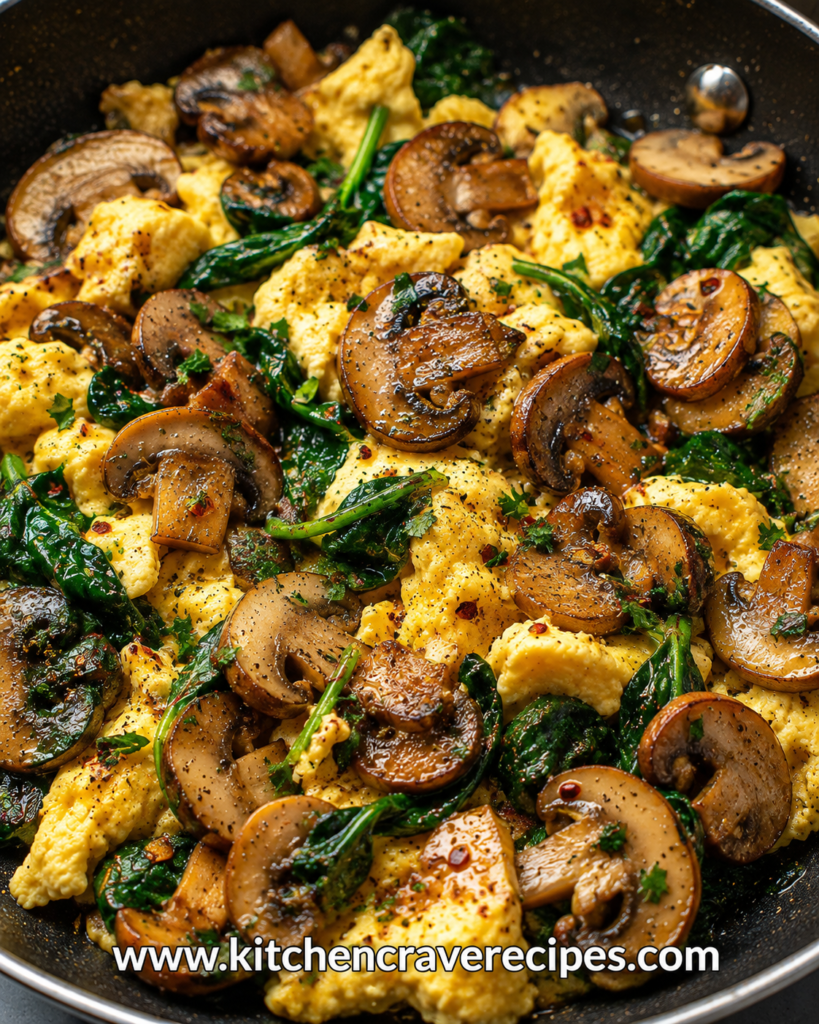
The skillet in the photo tells the whole story: golden, softly scrambled eggs in large, pillowy curds woven through with deeply browned cremini mushroom slices, wilted spinach, visible red pepper flakes, and flecks of fresh herbs — all cooked together in a single dark non-stick pan. Nothing is overworked. The eggs still look creamy and just barely set, the mushrooms have real color on them, and the spinach is bright and tender rather than grey and waterlogged.
This mushroom spinach scramble is exactly the kind of breakfast that earns a permanent place in the weekly rotation — high in protein, ready in under 15 minutes, and built from ingredients most people already keep on hand. The technique matters more than the ingredient list here: searing the mushrooms first in a hot dry pan, then cooking the eggs low and slow at the end, is what separates a genuinely good scramble from a rubbery one. Master those two steps and this becomes one of the most reliable breakfasts you know.
Recipe Quick Info
| Detail | Info |
|---|---|
| Prep Time | 5 minutes |
| Cook Time | 10 minutes |
| Total Time | 15 minutes |
| Servings | 2 |
| Cuisine | American |
| Course | Breakfast / Brunch |
| Calories | ~280 per serving |
| Difficulty | Simple |
Why You’ll Love This Mushroom Spinach Scramble
- 15 minutes from start to finish — Five minutes of prep and 10 minutes of active cooking mean breakfast is genuinely on the table before your coffee gets cold.
- One pan, zero fuss — The mushrooms, spinach, and eggs all cook in the same skillet in sequence, so cleanup is a single pan and a spatula.
- The mushrooms are properly browned, not steamed — Searing them in a dry hot pan before the eggs go in produces deep, nutty color and concentrated flavor that makes the whole scramble taste more complex.
- Soft, custardy eggs every time — Low-and-slow scrambling over reduced heat produces large, tender curds that stay creamy rather than dry and rubbery.
- Genuinely high in protein — Four eggs plus the additional protein from the mushrooms (which contribute 2–3g per cup) puts each serving well over 20 grams of protein.
- Easy to scale for a crowd — Double the mushroom spinach scramble for four people using the same technique; just use a larger skillet and add 30 extra seconds to the egg stage.
Ingredients
For the Mushroom Spinach Scramble
- 4 large eggs
- 2 tablespoons unsalted butter, divided
- 1½ cups (115g) cremini mushrooms, sliced ¼-inch thick
- 2 cups (60g) fresh baby spinach
- 2 garlic cloves, minced
- ¼ teaspoon fine salt (for eggs)
- ¼ teaspoon black pepper, freshly ground
- ¼ teaspoon red pepper flakes (as shown — adjustable)
- 1 tablespoon fresh flat-leaf parsley, finely chopped (garnish)
Optional Add-Ins
- 2 tablespoons crumbled feta or shredded Parmesan (stirred in at the end)
- 1 tablespoon soy sauce or tamari (added to mushrooms while searing for a savory umami note)
- 1 tablespoon heavy cream (whisked into eggs before cooking for extra richness)
- ¼ teaspoon smoked paprika (added to the egg mixture before whisking)
Ingredient Substitutions
| Original Ingredient | Substitution | Notes |
|---|---|---|
| Cremini mushrooms | Baby bella, shiitake, or white button mushrooms | Shiitake have a more intense, woodsy flavor; white button is milder — all sear well |
| Unsalted butter | Olive oil or ghee | Olive oil is dairy-free; ghee has a higher smoke point and nuttier flavor |
| Baby spinach | Arugula or finely chopped kale | Kale needs 1–2 extra minutes to soften; arugula wilts faster than spinach |
| Fresh garlic | ¼ teaspoon garlic powder | Add to the egg mixture rather than sautéing separately |
| Fresh parsley | Fresh chives or fresh basil | Chives add an onion note; basil shifts the flavor profile sweeter |
| Red pepper flakes | A dash of hot sauce or cayenne | Either works; adjust quantity to taste |
Kitchen Tools Needed
- Large non-stick skillet (10–12 inches)
- Mixing bowl
- Whisk or fork
- Rubber spatula or silicone spatula
- Cutting board and chef’s knife
- Measuring spoons
- Paper towels (for patting mushrooms dry)
Step-by-Step Instructions
Step 1: Prep All Ingredients Before the Heat Goes On
Slice the mushrooms, mince the garlic, roughly chop the spinach if the leaves are large, and crack the eggs into a mixing bowl. Add the salt, pepper, and red pepper flakes to the eggs and whisk until fully combined with no visible streaks of white — about 30 seconds of brisk whisking. Having everything prepped before you start cooking is essential for a 10-minute scramble; once the skillet is hot there’s no time to stop and slice.
Embedded Tip: Pat the mushroom slices dry with a paper towel before they go into the pan. Wet mushrooms steam rather than sear, which produces a grey, rubbery texture and prevents any browning from occurring. A quick pat takes 10 seconds and dramatically changes the final flavor of the mushroom spinach scramble.
Step 2: Sear the Mushrooms
Heat a large non-stick skillet over medium-high heat until it’s genuinely hot — about 90 seconds. Add 1 tablespoon of the butter and let it foam and subside, then add the mushroom slices in a single layer. Do not stir for 2–3 minutes. Let the mushrooms sit undisturbed until the bottom side is deeply golden and caramelized. Stir once, then cook for another 1–2 minutes until the second side has color. The mushrooms should look bronzed and slightly shrunken, not pale and wet.
Step 3: Add Garlic and Spinach
Reduce the heat to medium. Add the minced garlic to the skillet with the mushrooms and stir for 30–45 seconds until fragrant — don’t let the garlic brown or it will turn bitter. Add the baby spinach and toss with tongs or the spatula until just wilted, about 60–90 seconds. The spinach should be bright green and just tender, not completely collapsed and dark. Push everything to one side of the pan or transfer to a plate briefly if the pan looks crowded.
Embedded Tip: If the pan looks very crowded after adding the spinach, transfer the mushroom and spinach mixture to a plate while you cook the eggs in the same pan. Fold everything together at the very end. A crowded pan drops in temperature and forces the eggs to steam rather than scramble properly.
Step 4: Scramble the Eggs Low and Slow
Reduce the heat to medium-low. Add the remaining 1 tablespoon of butter to the skillet and let it melt fully. Pour in the whisked egg mixture. Let the eggs sit undisturbed for 20–30 seconds until the edges just begin to set, then use a rubber spatula to gently fold the eggs from the outside toward the center in slow, wide strokes. Continue folding every 15–20 seconds, removing the pan from the heat for a few seconds between folds if the eggs seem to be setting too quickly. The goal is large, glossy, softly set curds — not small, dry pieces.
According to the USDA’s food safety guidelines for eggs, scrambled eggs should reach an internal temperature of 160°F for food safety. Pull the pan off the heat when the eggs look just barely underdone — they’ll finish cooking from residual heat in about 30 seconds off the burner.
Step 5: Combine and Serve
When the eggs are 80–90% set but still look slightly glossy, fold the mushroom and spinach mixture back into the pan (or combine everything if you kept them together). Give it two or three gentle folds to distribute everything evenly. Slide onto a plate immediately — leaving the scramble in the hot pan continues cooking it and will push the eggs past the creamy stage into dry territory. Scatter fresh parsley over the top and serve immediately.
Pro Tips for the Best Mushroom Spinach Scramble
- Hot pan for mushrooms, low heat for eggs. These two temperatures are not negotiable. Mushrooms need high heat to brown; eggs need low heat to stay creamy. The sequence is the entire recipe.
- Don’t crowd the mushrooms. Single layer, no overlapping. A crowded pan drops in temperature immediately and produces steamed mushrooms instead of seared ones. If your skillet is small, sear the mushrooms in two batches.
- Season the eggs before whisking, not after. Salt added to the egg mixture before cooking seasons the proteins from within. Salt added to finished scrambled eggs sits on the surface and tastes sharp rather than integrated.
- Pull the pan off heat early. The eggs carry over cooking from residual pan heat for at least 30 seconds after the burner is off. Removing the pan when the eggs look 80% done produces finished eggs that look 100% done by the time they reach the plate.
- Serve immediately. Scrambled eggs don’t wait. Have the plate warm and the garnish ready before the eggs go into the pan — the whole cooking process is under 4 minutes once the vegetables are done.
Common Mistakes to Avoid
- Not patting the mushrooms dry before searing.
The fix: Surface moisture on mushrooms vaporizes in the pan and steams the mushrooms before they can develop any browning. Thirty seconds with a paper towel eliminates this entirely. This is the single most impactful prep step for this mushroom spinach scramble. - Stirring the mushrooms too soon.
The fix: Let the mushrooms sit undisturbed for a full 2–3 minutes on the first side. Premature stirring interrupts the Maillard reaction and prevents browning from developing. The temptation to move them around is real — resist it. - Cooking the eggs on too-high heat.
The fix: Medium-low is the maximum for scrambled eggs if you want large, creamy curds. High heat produces small, rubbery, overcooked pieces in under 90 seconds. If the eggs set faster than you can fold them, the heat is too high — reduce it immediately. - Over-wilting the spinach.
The fix: Spinach needs only 60–90 seconds over medium heat to wilt. Cooking it longer causes it to release water, turn dark green, and lose the fresh flavor that makes this scramble feel bright and vegetable-forward rather than heavy. - Letting the garlic brown.
The fix: Add minced garlic only after reducing the heat to medium, and stir it constantly for no more than 45 seconds. Browned or burnt garlic turns bitter and dominates every other flavor in the pan. If it starts smelling sharp or acrid, add the spinach immediately to stop the cooking. - Leaving the eggs in the hot pan after pulling from the stove.
The fix: Transfer the finished scramble to a plate immediately after pulling from the heat. A non-stick skillet retains enough heat to continue cooking eggs for 1–2 minutes after the burner is off, pushing them from creamy to rubbery. - Using cold eggs straight from the refrigerator.
The fix: Cold eggs cook unevenly — the outer layer sets before the center warms through. Let eggs sit at room temperature for 10–15 minutes before cracking, or submerge them in warm water for 5 minutes if you’re short on time.
Variations
Healthy Lower-Calorie Version
Use 2 whole eggs and 4 egg whites in place of 4 whole eggs. Replace the butter with 1 teaspoon of olive oil spray for the mushroom sear and another teaspoon for the eggs. The calorie count drops to approximately 180 per serving and the fat content reduces significantly, while the protein count stays comparable. The egg whites produce a firmer, slightly less custardy texture, so cooking them even lower and slower than usual helps compensate.
Vegetarian Version
This mushroom spinach scramble is already fully vegetarian as written. For a more substantial vegetarian breakfast, add ¼ cup of rinsed and drained white beans to the pan along with the spinach — they heat through in 60 seconds and add plant protein and a creamy, slightly starchy texture that rounds out the dish without changing the technique.
Spicy Version
Double the red pepper flakes to ½ teaspoon and add 1 tablespoon of finely diced fresh jalapeño with the garlic in Step 3. Finish the plated scramble with a few dashes of hot sauce. The dairy in the butter moderates the heat enough that this version works for most people who enjoy a spicy breakfast without being aggressively hot.
Gluten-Free Version
This mushroom spinach scramble is naturally gluten-free as written — every ingredient is free of wheat, barley, and rye. The only watch-out is the optional soy sauce add-in, which contains wheat. Use certified gluten-free tamari in its place for an identical umami result without any gluten content.
Low-Carb / Keto Version
The recipe is already very low in carbohydrates — approximately 4g net carbs per serving from the vegetables. To increase fat for strict keto macros, add 1 tablespoon of heavy cream to the egg mixture before whisking and finish the plated scramble with a tablespoon of full-fat sour cream or crumbled goat cheese. The recipe otherwise requires no modification.
What to Serve With This Recipe
- Whole grain toast or sourdough — A slice of sturdy, well-toasted bread alongside the scramble gives you something to scoop with and rounds out the macros for non-low-carb eaters.
- Sliced avocado — The creaminess of ripe avocado pairs naturally with the savory, earthy flavors of the mushroom and egg combination.
- Cottage Cheese Egg Bake: 7-Ingredient Easy Recipe — If you’re planning a high-protein brunch spread, this bake alongside the mushroom scramble covers two different textures and formats without overlapping flavors.
- Fresh fruit — A small bowl of sliced strawberries, melon, or grapes cuts through the richness of the butter and egg and adds a clean, sweet contrast.
- Plain full-fat Greek yogurt — A small bowl alongside adds another protein source and a cooling, tangy counterpoint to the savory scramble.
- Hot sauce on the side — Cholula, Tabasco, or any vinegar-based hot sauce lets each person control their own heat level rather than committing the whole dish to one spice level.
- Cottage Cheese Egg Bake: 7-Ingredient Easy Recipe — Served together at a weekend brunch, the two recipes offer distinct flavor profiles while sharing a high-protein, vegetable-forward theme.
- Black coffee or cold brew — The bitterness of unsweetened coffee contrasts cleanly with the richness of the scrambled eggs and the earthiness of the mushrooms.
Storage Instructions
Refrigerator
Scrambled eggs are best eaten immediately, but leftover mushroom spinach scramble stores reasonably well in an airtight container in the refrigerator for up to 2 days. The texture will be firmer and slightly drier after storage, which is an inherent quality of refrigerated scrambled eggs — not a sign of a problem. Store the scramble flat in the container rather than piled, which helps it reheat more evenly.
Freezer
Scrambled eggs do not freeze well. The egg proteins break down during freezing and thawing, resulting in a watery, rubbery texture that bears little resemblance to the fresh dish. Freeze the sautéed mushrooms and spinach mixture separately if needed; they freeze well for up to 1 month and can be combined with freshly scrambled eggs when ready to serve.
Shelf Life Summary
| Storage Method | Duration | Quality Notes |
|---|---|---|
| Refrigerator | Up to 2 days | Texture firms up; best reheated gently |
| Freezer (eggs) | Not recommended | Texture degrades significantly |
| Freezer (mushrooms/spinach only) | Up to 1 month | Thaw overnight in fridge before reheating |
| Room temperature | 2 hours maximum | USDA guideline for cooked egg dishes |
Reheating Instructions
Microwave (Fastest)
Place the leftover scramble in a microwave-safe bowl or plate. Cover loosely with a damp paper towel to trap steam and prevent the eggs from drying out further. Heat on 50% power for 45–60 seconds, stirring once halfway through. Low power is key — reheating scrambled eggs at full power produces a rubbery, dried-out result in under 30 seconds.
Stovetop (Best Texture)
Set a non-stick skillet over low heat. Add ½ teaspoon of butter and let it melt, then add the leftover scramble. Stir gently with a spatula for 1–2 minutes until warmed through, being careful not to break up the eggs more than necessary. This method restores some of the original creamy texture better than any other reheating approach. For safe reheating temperatures for cooked egg dishes, refer to FoodSafety.gov’s minimum internal temperature guidelines.
Oven (For Larger Quantities)
Preheat the oven to 300°F. Place the scramble in a small oven-safe dish, cover tightly with foil, and heat for 8–10 minutes until warmed through. The foil traps moisture and prevents the eggs from drying out on the surface.
Nutrition Facts
(Per serving: half of the full recipe / 2 eggs + half the vegetables)
| Nutrient | Amount |
|---|---|
| Calories | ~280 kcal |
| Total Fat | 20g |
| Saturated Fat | 9g |
| Cholesterol | 385mg |
| Sodium | 320mg |
| Total Carbohydrates | 5g |
| Dietary Fiber | 1g |
| Total Sugars | 2g |
| Protein | 18g |
Disclaimer: Nutrition values are estimates calculated using standard ingredient databases and will vary based on specific mushroom variety, egg size, butter quantity, and any optional add-ins used. These figures are for general reference only and are not intended as medical or dietary advice. For precise nutritional data, use a certified nutrition calculator with your exact ingredients.
Frequently Asked Questions
Q: What is the best mushroom variety for a mushroom spinach scramble?
A: Cremini mushrooms are the best everyday choice — they’re widely available, affordable, and have enough flavor to stand alongside the eggs without disappearing. Shiitake mushrooms offer a more intense, woodsy flavor and hold their texture slightly better after cooking; they’re worth using when you want the mushroom flavor to be the dominant element.
Q: How do I get creamy scrambled eggs instead of rubbery ones?
A: Two things matter most: low heat and early removal from the stove. Medium-low is the maximum for scrambled eggs, and the pan should come off the heat when the eggs look about 80% set. Residual heat finishes the cooking in the next 30 seconds. Stirring gently and infrequently also helps — constant stirring breaks the curds into small, dry pieces.
Q: Can I add cheese to this mushroom spinach scramble?
A: Yes — crumbled feta, shredded Parmesan, or fresh goat cheese all work well. Add the cheese when the eggs are about 70% set and fold it in gently with the last 1–2 strokes before pulling the pan from the heat. The residual heat melts it just enough to integrate without making the eggs greasy.
Q: Can I make this recipe dairy-free?
A: Yes — substitute the butter with olive oil or a neutral-flavored coconut oil. The flavor will be slightly less rich without butter, but the technique stays identical. Olive oil can handle the high heat needed for the mushroom sear and the low heat needed for the eggs equally well.
Q: Why does my spinach get watery in the scramble?
A: Overcooked spinach releases a significant amount of moisture. Cook it only until just wilted — 60 to 90 seconds over medium heat — and remove it from the pan (or fold it in) immediately. If your spinach consistently produces excess water, press it lightly with a spatula after wilting and tilt the pan to drain any liquid before adding the eggs.
Q: Can I prep the mushrooms and spinach in advance?
A: Yes — the sautéed mushroom and spinach mixture can be made up to 3 days ahead and refrigerated. When ready to eat, rewarm the vegetables briefly in the skillet before adding freshly scrambled eggs. This makes the active morning cook time under 5 minutes.
Q: Is this recipe suitable for intermittent fasting?
A: This mushroom spinach scramble is a clean, whole-food meal with no added sugars and minimal carbohydrates, which makes it a logical choice for breaking a fast. Eggs and butter are both fat-and-protein dominant with negligible glucose response. Note that dietary decisions around fasting protocols are personal and beyond the scope of a recipe article — consult a healthcare provider for individualized advice.
Q: Can I use frozen spinach instead of fresh?
A: You can, but the texture and result are noticeably different. Frozen spinach must be fully thawed and squeezed very dry before use — it contains significantly more water per cup than fresh spinach and will make the scramble watery if the moisture isn’t removed. Use about ⅓ cup of fully squeezed frozen spinach in place of the 2 cups of fresh.
Expert Chef Tips
1. The dry sear method changes everything.
Add mushrooms to a hot pan with no fat at all for the first 60 seconds before adding the butter. The initial dry contact with the hot pan surface accelerates browning significantly and produces deeper caramelization than starting with fat. Add the butter after that first minute to finish the browning and add flavor.
2. Use a wide pan, not a small one.
A 10–12 inch skillet gives the mushrooms enough surface area to sear rather than steam and gives the eggs room to move around during folding. A small 8-inch pan is genuinely too small for this recipe at two servings — you’ll end up with steamed mushrooms and crowded, unevenly cooked eggs.
3. Season in layers, not just at the end.
Salt the mushrooms lightly while they sear (draws out a small amount of moisture that then evaporates and concentrates flavor), season the egg mixture before cooking, and taste again before plating. This layered seasoning approach produces a more cohesive, well-seasoned dish than a single salting at the end.
4. The parsley is not optional.
Fresh parsley added immediately before serving contributes bright, grassy flavor and visual contrast that dried parsley, or no parsley at all, cannot replicate. The difference between a mushroom spinach scramble finished with fresh herbs and one plated plain is immediately noticeable — the herb makes the dish taste finished rather than half-assembled.
5. Rest the pan off heat while you fold.
Moving the pan on and off the burner during the egg-folding stage gives you dramatically more control over the final texture. When the eggs look like they’re setting faster than you want, lift the pan completely off the heat for 10–15 seconds, continue folding, then return it briefly. This technique is the difference between eggs cooked to order and eggs you hope came out right.
Recipe Summary
This mushroom spinach scramble is a 15-minute, single-pan breakfast built on four eggs, seared cremini mushrooms, wilted baby spinach, garlic, and red pepper flakes — with fresh parsley scattered over the top before serving. The mushrooms go in first over high heat for real browning, then the eggs follow low and slow for creamy, custardy curds. Each serving delivers approximately 18 grams of protein with under 5 grams of net carbs.
Conclusion
A well-made mushroom spinach scramble is one of those breakfasts that looks simple in the ingredient list but genuinely impresses anyone who eats it — because the technique does the work that a long ingredient list usually does. Get the mushrooms properly browned and the eggs properly soft, and you have a breakfast that’s hard to improve on. Make it once on a weekday morning and it’ll become part of the regular lineup without any convincing required.
Mushroom Spinach Scramble: 5-Ingredient Easy Recipe
Description
The skillet in the photo tells the whole story: golden, softly scrambled eggs in large, pillowy curds woven through with deeply browned cremini mushroom slices, wilted spinach, visible red pepper flakes, and flecks of fresh herbs — all cooked together in a single dark non-stick pan. Nothing is overworked. The eggs still look creamy and just barely set, the mushrooms have real color on them, and the spinach is bright and tender rather than grey and waterlogged.
Ingredients
Instructions
-
Step-by-Step Instructions
-
Step 1: Prep All Ingredients Before the Heat Goes On
-
Slice the mushrooms, mince the garlic, roughly chop the spinach if the leaves are large, and crack the eggs into a mixing bowl. Add the salt, pepper, and red pepper flakes to the eggs and whisk until fully combined with no visible streaks of white — about 30 seconds of brisk whisking. Having everything prepped before you start cooking is essential for a 10-minute scramble; once the skillet is hot there's no time to stop and slice.
-
Embedded Tip: Pat the mushroom slices dry with a paper towel before they go into the pan. Wet mushrooms steam rather than sear, which produces a grey, rubbery texture and prevents any browning from occurring. A quick pat takes 10 seconds and dramatically changes the final flavor of the mushroom spinach scramble.
-
Step 2: Sear the Mushrooms
-
Heat a large non-stick skillet over medium-high heat until it's genuinely hot — about 90 seconds. Add 1 tablespoon of the butter and let it foam and subside, then add the mushroom slices in a single layer. Do not stir for 2–3 minutes. Let the mushrooms sit undisturbed until the bottom side is deeply golden and caramelized. Stir once, then cook for another 1–2 minutes until the second side has color. The mushrooms should look bronzed and slightly shrunken, not pale and wet.
-
Step 3: Add Garlic and Spinach
-
Reduce the heat to medium. Add the minced garlic to the skillet with the mushrooms and stir for 30–45 seconds until fragrant — don't let the garlic brown or it will turn bitter. Add the baby spinach and toss with tongs or the spatula until just wilted, about 60–90 seconds. The spinach should be bright green and just tender, not completely collapsed and dark. Push everything to one side of the pan or transfer to a plate briefly if the pan looks crowded.
-
Embedded Tip: If the pan looks very crowded after adding the spinach, transfer the mushroom and spinach mixture to a plate while you cook the eggs in the same pan. Fold everything together at the very end. A crowded pan drops in temperature and forces the eggs to steam rather than scramble properly.
-
Step 4: Scramble the Eggs Low and Slow
-
Reduce the heat to medium-low. Add the remaining 1 tablespoon of butter to the skillet and let it melt fully. Pour in the whisked egg mixture. Let the eggs sit undisturbed for 20–30 seconds until the edges just begin to set, then use a rubber spatula to gently fold the eggs from the outside toward the center in slow, wide strokes. Continue folding every 15–20 seconds, removing the pan from the heat for a few seconds between folds if the eggs seem to be setting too quickly. The goal is large, glossy, softly set curds — not small, dry pieces.
-
According to the USDA's food safety guidelines for eggs, scrambled eggs should reach an internal temperature of 160°F for food safety. Pull the pan off the heat when the eggs look just barely underdone — they'll finish cooking from residual heat in about 30 seconds off the burner.
-
Step 5: Combine and Serve
-
When the eggs are 80–90% set but still look slightly glossy, fold the mushroom and spinach mixture back into the pan (or combine everything if you kept them together). Give it two or three gentle folds to distribute everything evenly. Slide onto a plate immediately — leaving the scramble in the hot pan continues cooking it and will push the eggs past the creamy stage into dry territory. Scatter fresh parsley over the top and serve immediately.
Nutrition Facts
Servings 2
- Amount Per Serving
- Calories 280kcal
- % Daily Value *
- Total Fat 20g31%
- Saturated Fat 9g45%
- Protein 18g36%
* Percent Daily Values are based on a 2,000 calorie diet. Your daily value may be higher or lower depending on your calorie needs.