Lemon Garlic Butter Baked Cod – Best Easy 25-Min Dinner

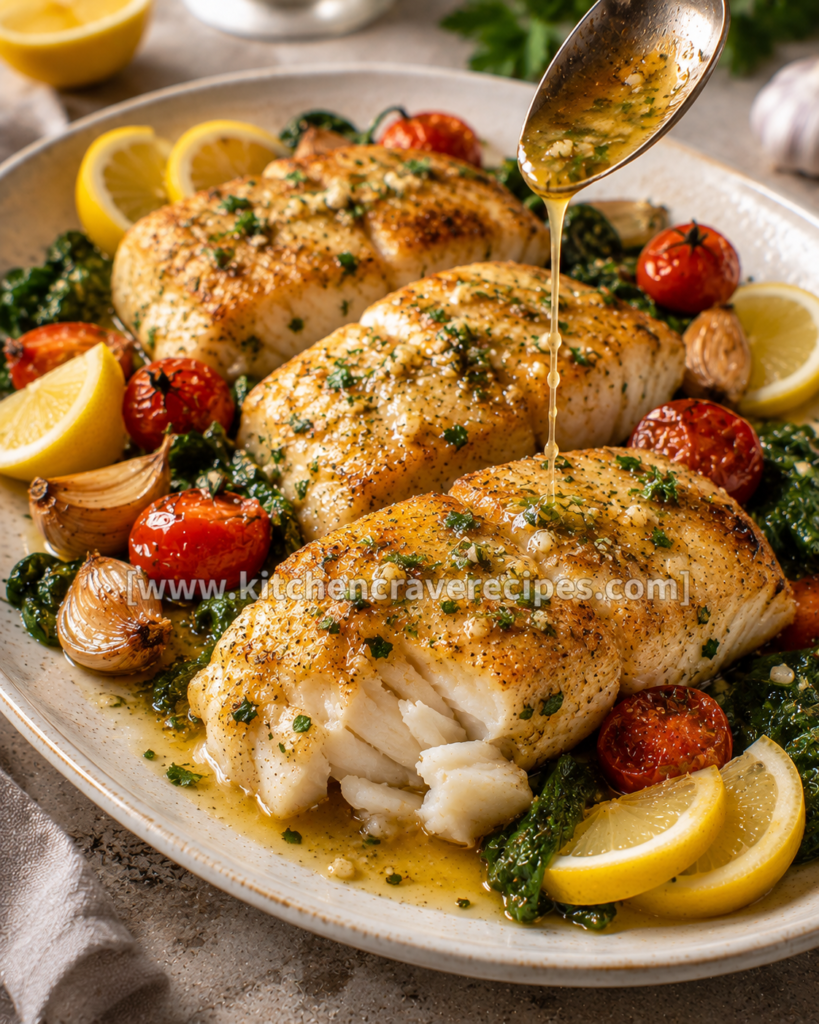

If there’s one fish recipe that converts people who claim they don’t like fish, it’s this lemon garlic butter baked cod. Four thick cod fillets nestle into a parchment-lined baking dish, get bathed in a pool of golden garlic butter, and come out of the oven in just 20 minutes — flaky, glistening, and smelling like a restaurant you’d actually want to go back to. The reference photo captures it exactly: plump white cod fillets in a golden butter sauce with lemon rounds pressed alongside, a scatter of red pepper flakes for color and warmth, and fresh chopped parsley finishing the whole thing. Everything happens in one dish with almost no active work on your part. Whether you’re cooking a fast weeknight dinner or trying to get more fish on the table without a complicated process, this recipe handles both situations without asking anything difficult of you.
Recipe Quick Info
| Detail | Info |
|---|---|
| Prep Time | 5 minutes |
| Cook Time | 20 minutes |
| Total Time | 25 minutes |
| Servings | 4 |
| Cuisine | American |
| Course | Main Course |
| Cooking Method | Baking |
| Calories | ~290 kcal per serving |
| Difficulty | Easy |
Why You’ll Love This Recipe
- On the table in 25 minutes — from cold oven to plated dinner faster than most takeout options, with zero compromise on flavor or presentation.
- That garlic butter sauce is exceptional — butter, garlic, lemon juice, and a pinch of red pepper flakes melt into a rich, aromatic pool that both bastes the cod as it bakes and doubles as a spooning sauce at the table.
- Foolproof for beginner fish cooks — baking cod at a moderate temperature is the most forgiving method for white fish; it gives you a wider window between perfectly done and overcooked than any other technique.
- One dish, minimal cleanup — parchment paper lines the baking dish so the garlic butter doesn’t burn onto the surface, and the whole thing goes straight from oven to table.
- Naturally light and high in protein — cod is one of the leanest white fish available, delivering approximately 28 grams of protein per fillet with very little fat before the butter is added.
- Visually stunning without any effort — lemon rounds, scattered parsley, and golden butter pooled around white fish fillets look restaurant-worthy straight from the oven.
- Adaptable for almost every dietary need — easily made dairy-free, gluten-free, low-carb, or spicy with simple swaps that don’t change the core technique.
Ingredients
For the Cod
- 4 cod fillets (about 6 oz each, roughly 1½ inches thick)
- ½ teaspoon kosher salt
- ¼ teaspoon freshly ground black pepper
- ½ teaspoon smoked paprika
- ¼ teaspoon crushed red pepper flakes (visible in the photo)
For the Lemon Garlic Butter Sauce
- 4 tablespoons unsalted butter, melted
- 4 cloves garlic, minced (about 1½ tablespoons)
- 3 tablespoons fresh lemon juice (about 1 large lemon)
- 1 teaspoon lemon zest
- 1 tablespoon olive oil
- ½ teaspoon Dijon mustard (emulsifies the sauce and adds subtle depth)
For Garnish (as shown in photo)
- 1 lemon, sliced into thin rounds
- 2 tablespoons fresh flat-leaf parsley, roughly chopped
Optional Add-Ins
- 1 tablespoon capers (for a briny, Mediterranean note)
- 2 tablespoons dry white wine (add to the butter sauce for acidity)
- ¼ teaspoon cayenne pepper (for a more pronounced heat level than red pepper flakes alone)
Substitution Table
| Original Ingredient | Substitution | Notes |
|---|---|---|
| Cod fillets | Haddock, halibut, or pollock | All firm white fish; adjust time for thickness |
| Unsalted butter | Vegan butter or ghee | Ghee adds nuttier flavor; vegan butter keeps it dairy-free |
| Fresh lemon juice | Fresh lime juice | Slightly more acidic, works well — avoid bottled lemon juice |
| Dijon mustard | Whole-grain mustard | Slightly coarser texture; same emulsifying effect |
| Fresh parsley | Fresh dill or fresh chives | Both pair naturally with fish and lemon |
| Smoked paprika | Sweet paprika | Loses smokiness but maintains the warm color |
Kitchen Tools Needed
- Oven — preheated to 400°F; the specific baking temperature ensures the cod cooks through gently without the exterior drying out before the center is done
- 8×12 inch or 9×13 inch baking dish — large enough to hold 4 fillets without overlapping; as shown in the photo, a round or square baking vessel both work
- Parchment paper — lines the baking dish to prevent the garlic butter from scorching onto the surface and makes serving and cleanup effortless
- Small mixing bowl and whisk — for whisking together the garlic butter sauce before pouring over the fish
- Microplane or fine grater — for zesting the lemon before juicing it
- Instant-read thermometer — for confirming the cod has reached the correct internal temperature
- Spoon or pastry brush — for spooning extra butter sauce over the fillets before baking and once more at serving
- Paper towels — for patting the cod fillets dry before seasoning
How to Bake Lemon Garlic Butter Cod Perfectly Every Time
Step 1: Preheat the Oven and Prep the Baking Dish
Preheat your oven to 400°F and allow a full 15 minutes for it to reach true temperature — an under-preheated oven starts the cod in cooler conditions, extending the bake time unevenly and producing a pallid, steamed result rather than the glistening, lightly golden fillets shown in the photo. Line the baking dish with parchment paper, leaving a slight overhang on the sides so you can lift the parchment easily after baking if needed. Lightly brush or drizzle 1 teaspoon of olive oil onto the parchment before placing the fish.
Step 2: Pat the Cod Dry and Season
Remove the cod fillets from the refrigerator 5 minutes before baking — cold fish going into the oven creates uneven cooking from the outside in. Pat each fillet completely dry on all sides with paper towels; surface moisture steams in the oven and prevents any surface color from developing. Season the top of each fillet evenly with salt, pepper, smoked paprika, and red pepper flakes, pressing the seasoning lightly into the surface so it doesn’t shake off when the butter is poured over.
Embedded Tip: Zest the lemon before juicing it — it’s nearly impossible to grate a juiced lemon effectively. Do this step before you start cooking so the zest is ready when the sauce comes together.
Step 3: Make the Lemon Garlic Butter Sauce
In a small bowl, whisk together the melted butter, minced garlic, fresh lemon juice, lemon zest, olive oil, and Dijon mustard until smooth and fully combined. The mustard acts as an emulsifier, keeping the butter and lemon juice from separating as the sauce sits — which means it stays cohesive and glossy throughout baking rather than breaking into a greasy pool. The sauce should smell intensely of garlic and lemon immediately, which is a good sign you’ve got the ratio right.
Step 4: Assemble the Dish and Add Lemon Slices
Place the seasoned cod fillets in the parchment-lined baking dish, leaving a small gap between each piece so heat can circulate. Pour the lemon garlic butter sauce evenly over all four fillets, making sure every surface gets coated. Tuck lemon rounds alongside and slightly on top of the fillets, exactly as shown in the photo — they release additional lemon oil and juice as they heat in the oven, infusing the sauce further. Any extra sauce that pools in the bottom of the dish will become the spooning sauce at the table.
Embedded Tip: Pour the sauce slowly and evenly rather than dumping it all in one spot. You want every fillet coated, not just the one nearest the pour.
Step 5: Bake the Cod
Slide the baking dish onto the center rack of the preheated 400°F oven. Bake uncovered for 18–20 minutes, depending on the thickness of the fillets. Do not open the oven door during the first 15 minutes — each opening drops the internal temperature by 25–50°F, disrupting the steady, gentle heat that bakes cod evenly from edge to center. The cod is done when the flesh turns completely opaque throughout, the thickest part flakes easily when pressed with a fork, and the butter sauce in the dish is bubbling gently around the edges.
For food safety, confirm the internal temperature with an instant-read thermometer. According to the FDA Fish and Shellfish Safety guidelines, fish must reach an internal temperature of 145°F to be safe to eat. At this temperature, well-portioned cod fillets will be moist and flaky — not dry.
Step 6: Garnish and Serve
Remove the dish from the oven and immediately spoon the pooled lemon garlic butter from the bottom of the dish back over the fillets one final time. Scatter the freshly chopped parsley generously over the top. Serve directly from the baking dish, or use a wide spatula to transfer individual fillets to plates, spooning the remaining butter sauce alongside. The lemon slices are edible and look beautiful on the plate — leave them with each serving.
Pro Tips for Perfect Lemon Garlic Butter Baked Cod
1. Use thick fillets — not thin ones.
Cod fillets thinner than 1 inch bake through in under 12 minutes, leaving almost no margin for error. Aim for fillets that are 1 to 1½ inches thick at the center; they give you that 18–20 minute window where the exterior is just right and the center has had time to catch up.
2. Baking-method Pro Tip — use an oven thermometer.
Home ovens frequently run 25–50°F hotter or cooler than their displayed temperature. An inexpensive oven thermometer placed on the center rack tells you the actual temperature — at which point you can adjust the dial accordingly. Cod baked at 375°F instead of 400°F will take noticeably longer and produce a softer, more pallid surface; at 425°F it can dry out before the center is done.
3. Don’t skip the Dijon in the sauce.
It might seem like a minor addition, but the Dijon prevents the butter and lemon juice from separating in the heat of the oven. A broken butter sauce produces a greasy layer on top of the fish rather than the golden, cohesive coating you see in the photo. One teaspoon makes a real and visible difference.
4. Mince the garlic finely — or grate it.
Large chunks of garlic can remain sharp and slightly raw after 20 minutes at 400°F if they don’t make direct contact with the hot butter. Fine mincing — or grating directly with a microplane — ensures the garlic blooms fully into the sauce and distributes flavor evenly across every bite.
5. Spoon the sauce over the fish twice.
Once before baking and once immediately after pulling the dish from the oven. The second spoon-over re-coats the surface with the concentrated, now-more-deeply-flavored butter and adds the glossy finish visible in the photo that a single pre-bake coat alone won’t achieve.
Common Mistakes to Avoid
1. Opening the oven door repeatedly while baking. (Method-specific mistake)
This is the single most common reason baked fish comes out unevenly cooked. Every door opening drops the oven temperature significantly and disrupts the steady, gentle heat cod needs to cook evenly from edge to center. Set a timer for 18 minutes, check once, and keep the door closed until then.
2. Using frozen cod that hasn’t been fully thawed.
Partially frozen fillets have an ice-cold center that takes significantly longer to reach 145°F than the exterior — meaning the outer portions overcook and turn rubbery before the center is safe and done. Always thaw completely in the refrigerator overnight and pat very dry before baking.
3. Skipping the parchment paper.
Garlic butter in a hot oven burns onto an unlined baking dish quickly, creating both a cleaning nightmare and a bitter, scorched flavor in the sauce. Parchment completely prevents both problems and adds nothing to the prep time.
4. Over-baking the cod.
The most common fish mistake of all — and baked cod is especially susceptible because it looks done before it actually is. Pull it at 145°F internal temperature and the moment the flesh flakes when pressed. Over-baked cod becomes chalky and dry, and no amount of extra butter sauce fully compensates.
5. Using bottled lemon juice instead of fresh.
The difference between fresh and bottled lemon juice in a butter sauce this simple is immediately apparent. Bottled juice has a muted, slightly metallic flavor; fresh juice is bright and clean. For a recipe this straightforward, fresh lemon is non-negotiable.
6. Not seasoning the fish before the sauce goes on.
Pouring butter sauce over unseasoned cod means the salt and spice sit only on top of the sauce layer — not on the fish itself. Season the fillets directly first, then add the butter sauce over the top so the seasoning makes contact with the fish surface before baking.
7. Using a baking dish that’s too small.
Fillets crowded together release steam between them, creating a humid environment that prevents any surface browning and makes the texture of the exterior soggy rather than lightly set. Leave visible space around each fillet for best results.
Variations
Healthier Version
Reduce the butter to 2 tablespoons and add 1 tablespoon of extra-virgin olive oil and 1 tablespoon of chicken or vegetable broth to maintain enough liquid to baste the fish. The sauce will be lighter in body but still fully flavored — the garlic, lemon, and paprika carry the dish well without full-fat butter volume. Serve over steamed spinach or zucchini noodles to keep the whole meal under 350 calories.
Vegetarian Version
Replace the cod with 4 thick slices of extra-firm tofu (pressed for at least 30 minutes) or 4 large portobello mushroom caps. Apply the same lemon garlic butter sauce and bake at 400°F for 20–22 minutes for tofu or 15–18 minutes for mushrooms. Mushroom caps will release moisture as they bake — pour off any excess liquid halfway through and return to the oven to allow the sauce to concentrate on the surface.
Spicy Version
Double the red pepper flakes to ½ teaspoon and add ¼ teaspoon of cayenne to the butter sauce. Stir 1 teaspoon of sriracha into the finished sauce before pouring over the fillets. The lemon juice and butter balance the heat well, keeping the spice level present but not overwhelming against the mild flavor of the cod.
Gluten-Free Version
Every ingredient in this recipe is naturally gluten-free — no substitutions are needed. Confirm that your Dijon mustard and smoked paprika are certified gluten-free if serving someone with celiac disease, as some brands process these in facilities that handle gluten-containing products.
Low-Carb / Keto Version
This recipe is already low-carb and keto-compatible as written. To lean further into the keto profile, increase the butter to 5 tablespoons and serve the cod over cauliflower mash or sautéed garlic spinach rather than rice or potatoes. Adding 1 tablespoon of heavy cream to the butter sauce produces an even richer, slightly more velvety texture in the finished dish.
What to Serve With Lemon Garlic Butter Baked Cod
- Steamed jasmine or basmati rice — absorbs the lemon garlic butter sauce pooled in the dish beautifully; the most natural pairing.
- Garlic butter roasted asparagus — quick to prepare and already aligned with the garlic-butter flavor profile of the main dish.
- Creamy mashed potatoes — rich and comforting alongside the bright, citrus-forward fish; the butter in both components ties them together.
- Simple arugula salad with shaved Parmesan — peppery and slightly bitter; it cuts through the richness of the butter sauce cleanly.
- Roasted cherry tomatoes — add to the baking dish in the last 8 minutes of cooking; they collapse into a sweet, jammy contrast to the savory butter.
- Crusty sourdough bread — for spooning up the remaining lemon garlic butter from the dish; not an optional step for anyone at this table.
- Cauliflower rice — keeps the meal low-carb while absorbing the butter sauce just as effectively as regular rice. Try pairing with Glazed Garlic Herb Beef – Best Easy 4-Hour Recipe for a complete light dinner.
- Steamed green beans with slivered almonds — mild and slightly crunchy; a clean textural counterpoint to the tender, flaky fish. For more easy seafood dinner ideas, browse Crispy Garlic Parmesan Fish Bites – Best 30-Min Recipe.
Storage Instructions
Refrigerator
Allow the cod to cool to room temperature — no longer than 2 hours after baking. Transfer to an airtight container and store the remaining lemon garlic butter sauce separately in a small jar. Refrigerate for up to 3 days. The butter sauce will solidify in the refrigerator and can be gently rewarmed before spooning over the reheated fish.
Freezer
Cooked cod can be frozen, though the texture softens noticeably after thawing due to the moisture content of the fish. If freezing, wrap each fillet individually in plastic wrap before placing in a freezer-safe zip-top bag. Freeze for up to 1 month. The lemon garlic butter sauce freezes separately in a small container for up to 2 months.
Shelf Life Summary
| Storage Method | Duration |
|---|---|
| Room temperature | Up to 2 hours (discard after) |
| Refrigerator (airtight) | Up to 3 days |
| Freezer (cooked cod) | Up to 1 month |
| Freezer (butter sauce only) | Up to 2 months |
Reheating Instructions
Oven (Best Method)
Preheat oven to 275°F — a lower temperature than the original bake prevents the already-cooked cod from drying out during reheating. Place the fillets in a baking dish with a tablespoon of butter or broth added to the bottom. Cover tightly with foil and reheat for 10–12 minutes until warmed through to 145°F.
Microwave (Fastest Option)
Place cod on a microwave-safe plate and spoon a teaspoon of butter or water over the top. Cover loosely with a damp paper towel. Microwave on 50% power in 45-second intervals until just heated through — high power causes the fish to tighten and become rubbery within seconds.
Stovetop (Best for Restoring the Sauce)
Place the cod and reserved butter sauce together in a covered non-stick skillet over low heat. Warm for 3–4 minutes, gently spooning the sauce over the fish as it heats. Per the FDA safe food handling guidelines, all reheated fish should reach an internal temperature of 145°F before serving.
Nutrition Facts
Per serving (1 cod fillet with lemon garlic butter sauce, based on 4 servings)
| Nutrient | Amount |
|---|---|
| Calories | ~290 kcal |
| Total Fat | 16g |
| Saturated Fat | 8g |
| Cholesterol | 110mg |
| Sodium | 380mg |
| Total Carbohydrates | 3g |
| Dietary Fiber | 0g |
| Sugars | 1g |
| Protein | 28g |
| Omega-3 Fatty Acids | ~0.3g |
Nutrition Disclaimer: These values are estimates calculated using standard nutritional databases and will vary based on the exact size and thickness of the cod fillets, the specific butter brand used, and any optional add-ins included. This information is for general reference only and is not a substitute for advice from a registered dietitian or healthcare professional.
Frequently Asked Questions
1. How do I know when baked cod is done?
The most reliable indicator is an instant-read thermometer reading 145°F in the thickest part. Visually, done cod is completely opaque throughout with no translucency remaining, and the flesh separates into clean flakes when pressed gently with a fork. If it still looks glassy in the center, return it to the oven for 2–3 more minutes and check again.
2. Can I use frozen cod fillets without thawing first?
It’s not recommended. Baking from frozen produces uneven results — the exterior overcooks before the frozen interior reaches a safe temperature. Always thaw completely in the refrigerator overnight. If you’re in a hurry, submerge the sealed bag of cod in cold water for 30–45 minutes to thaw faster.
3. What’s the best type of cod to buy?
Pacific cod or Atlantic cod both work well here. Look for fillets that are uniformly white with no browning or yellowing at the edges, and choose pieces that are roughly the same thickness so they bake evenly. Wild-caught cod generally has a firmer texture than farmed, which holds up slightly better in a butter-bake.
4. Can I make the lemon garlic butter sauce ahead of time?
Yes — whisk it together up to 2 days in advance and store in a jar in the refrigerator. The butter will solidify, so warm it briefly in the microwave (10–15 seconds) and whisk again before using. The garlic flavor intensifies slightly over time, which is actually a welcome improvement.
5. My butter sauce separated and looks greasy — what went wrong?
The most common cause is skipping the Dijon mustard, which acts as an emulsifier. The second cause is the sauce sitting in a very hot dish for too long before the fish went in. Whisk the sauce together fresh just before pouring it over the cod, and include the Dijon — it takes 30 seconds and prevents this entirely.
6. Can I bake cod in foil packets instead of an open dish?
Yes — foil packets trap steam and produce a more gently steamed result rather than the open-baked texture shown in the photo. The flavor is still excellent, but the surface won’t develop the same slight golden color. Foil packets are a good choice if you want maximum moisture retention or you’re cooking outdoors.
7. Is this recipe suitable for meal prep?
Cooked cod holds in the refrigerator for up to 3 days and reheats well at low temperature. It works well in grain bowls, flaked into tacos, or served cold over a salad — the lemon garlic butter flavor is versatile enough to adapt across several different meal formats through the week.
8. Can I add vegetables to the baking dish?
Yes — cherry tomatoes, asparagus tips, sliced zucchini, or thin-sliced fennel all work well added directly to the dish. Add them at the same time as the fish and cut them small enough that they’re tender after 18–20 minutes. Avoid dense vegetables like carrots or broccoli florets, which need longer cooking than the cod.
9. What if I can’t find cod — what’s the best substitute?
Haddock is the closest match in flavor and texture and behaves identically at 400°F for the same bake time. Halibut works but is significantly more expensive. Pollock is milder and slightly softer — it’s a good budget option that still takes the lemon garlic butter sauce beautifully.
10. Does this recipe work with skin-on cod?
It does — place the fillets skin-side down in the dish. The skin won’t crisp in a butter-based baking environment (it would need direct dry heat for that), but it holds the fillet together and peels away easily after baking. Season and sauce the flesh side as normal.
Expert Chef Tips
1. Buy your cod from a fishmonger on the day you plan to cook it.
Fresh cod has a clean, almost neutral ocean smell — not fishy. Any ammonia or strong odor means the fish is past its prime, and no amount of lemon butter will fully mask it. Same-day fresh cod bakes with a noticeably cleaner flavor and firmer texture than fish that’s been sitting in the grocery refrigerator case for two days.
2. Grate the garlic instead of mincing it for the sauce.
A microplane turns garlic into a fine paste that dissolves completely into the butter sauce without leaving any chunks behind. This produces a more uniform garlic flavor across every bite rather than concentrated pockets — and eliminates the risk of biting into a sharp, undercooked garlic chunk in an otherwise delicate dish.
3. Use European-style butter if you have it.
European-style butter has a higher butterfat content (82–84% versus the standard American 80%), which produces a noticeably richer, more golden sauce. Brands like Kerrygold or Plugrá are widely available and make a visible difference in the final color and body of the lemon garlic butter.
4. Rest the cod in the dish for 2 minutes before serving.
Just as you would rest a steak, letting the cod sit off heat for 2 minutes allows the juices to stabilize within the flakes. Immediately plating and cutting into it releases more liquid onto the plate. Two minutes of patience produces a noticeably juicier result at the table.
5. Save the pan butter for finishing pasta or vegetables.
Any remaining lemon garlic butter in the baking dish after the cod is served is a concentrated, fish-infused sauce that works beautifully tossed with angel hair pasta, drizzled over steamed broccoli, or spooned over grilled bread. Don’t leave it in the dish — pour it into a small pitcher and put it on the table.
Recipe Summary
Lemon garlic butter baked cod is built on five straightforward steps: preheat to 400°F, season dry fillets, whisk a quick garlic butter sauce with lemon and Dijon, pour it over the fish with lemon rounds, and bake uncovered for 18–20 minutes. The entire recipe is done in 25 minutes and requires one baking dish. The key is hitting 145°F internal temperature and spooning the pooled butter back over the fillets the moment the dish comes out of the oven.
Conclusion
Easy weeknight dinners don’t have to sacrifice flavor, and this lemon garlic butter baked cod proves that point completely. Flaky, perfectly cooked white fish in a bright, golden butter sauce takes under half an hour from start to finish — and produces the kind of result that makes people assume you know something they don’t. Make it once on a weeknight when you need dinner fast, and you’ll find yourself coming back to it even when you have all the time in the world. It’s simply that good, that reliably.
Lemon Garlic Butter Baked Cod – Best Easy 25-Min Dinner
Description
If there's one fish recipe that converts people who claim they don't like fish, it's this lemon garlic butter baked cod. Four thick cod fillets nestle into a parchment-lined baking dish, get bathed in a pool of golden garlic butter, and come out of the oven in just 20 minutes — flaky, glistening, and smelling like a restaurant you'd actually want to go back to. The reference photo captures it exactly: plump white cod fillets in a golden butter sauce with lemon rounds pressed alongside, a scatter of red pepper flakes for color and warmth, and fresh chopped parsley finishing the whole thing. Everything happens in one dish with almost no active work on your part. Whether you're cooking a fast weeknight dinner or trying to get more fish on the table without a complicated process, this recipe handles both situations without asking anything difficult of you.
Ingredients
Instructions
-
How to Bake Lemon Garlic Butter Cod Perfectly Every Time
-
Step 1: Preheat the Oven and Prep the Baking Dish
-
Preheat your oven to 400°F and allow a full 15 minutes for it to reach true temperature — an under-preheated oven starts the cod in cooler conditions, extending the bake time unevenly and producing a pallid, steamed result rather than the glistening, lightly golden fillets shown in the photo. Line the baking dish with parchment paper, leaving a slight overhang on the sides so you can lift the parchment easily after baking if needed. Lightly brush or drizzle 1 teaspoon of olive oil onto the parchment before placing the fish.
-
Step 2: Pat the Cod Dry and Season
-
Remove the cod fillets from the refrigerator 5 minutes before baking — cold fish going into the oven creates uneven cooking from the outside in. Pat each fillet completely dry on all sides with paper towels; surface moisture steams in the oven and prevents any surface color from developing. Season the top of each fillet evenly with salt, pepper, smoked paprika, and red pepper flakes, pressing the seasoning lightly into the surface so it doesn't shake off when the butter is poured over.
-
Embedded Tip: Zest the lemon before juicing it — it's nearly impossible to grate a juiced lemon effectively. Do this step before you start cooking so the zest is ready when the sauce comes together.
-
Step 3: Make the Lemon Garlic Butter Sauce
-
In a small bowl, whisk together the melted butter, minced garlic, fresh lemon juice, lemon zest, olive oil, and Dijon mustard until smooth and fully combined. The mustard acts as an emulsifier, keeping the butter and lemon juice from separating as the sauce sits — which means it stays cohesive and glossy throughout baking rather than breaking into a greasy pool. The sauce should smell intensely of garlic and lemon immediately, which is a good sign you've got the ratio right.
-
Step 4: Assemble the Dish and Add Lemon Slices
-
Place the seasoned cod fillets in the parchment-lined baking dish, leaving a small gap between each piece so heat can circulate. Pour the lemon garlic butter sauce evenly over all four fillets, making sure every surface gets coated. Tuck lemon rounds alongside and slightly on top of the fillets, exactly as shown in the photo — they release additional lemon oil and juice as they heat in the oven, infusing the sauce further. Any extra sauce that pools in the bottom of the dish will become the spooning sauce at the table.
-
Embedded Tip: Pour the sauce slowly and evenly rather than dumping it all in one spot. You want every fillet coated, not just the one nearest the pour.
-
Step 5: Bake the Cod
-
Slide the baking dish onto the center rack of the preheated 400°F oven. Bake uncovered for 18–20 minutes, depending on the thickness of the fillets. Do not open the oven door during the first 15 minutes — each opening drops the internal temperature by 25–50°F, disrupting the steady, gentle heat that bakes cod evenly from edge to center. The cod is done when the flesh turns completely opaque throughout, the thickest part flakes easily when pressed with a fork, and the butter sauce in the dish is bubbling gently around the edges.
-
For food safety, confirm the internal temperature with an instant-read thermometer. According to the FDA Fish and Shellfish Safety guidelines, fish must reach an internal temperature of 145°F to be safe to eat. At this temperature, well-portioned cod fillets will be moist and flaky — not dry.
-
Step 6: Garnish and Serve
-
Remove the dish from the oven and immediately spoon the pooled lemon garlic butter from the bottom of the dish back over the fillets one final time. Scatter the freshly chopped parsley generously over the top. Serve directly from the baking dish, or use a wide spatula to transfer individual fillets to plates, spooning the remaining butter sauce alongside. The lemon slices are edible and look beautiful on the plate — leave them with each serving.
Nutrition Facts
Servings 4
- Amount Per Serving
- Calories 290kcal
- % Daily Value *
- Total Fat 16g25%
- Saturated Fat 8g40%
- Protein 28g57%
* Percent Daily Values are based on a 2,000 calorie diet. Your daily value may be higher or lower depending on your calorie needs.