Best Chicken Broccoli Pasta Bake (35-Min Ultimate Dinner)


The Chicken Broccoli Pasta Bake Your Whole Family Will Ask For Again
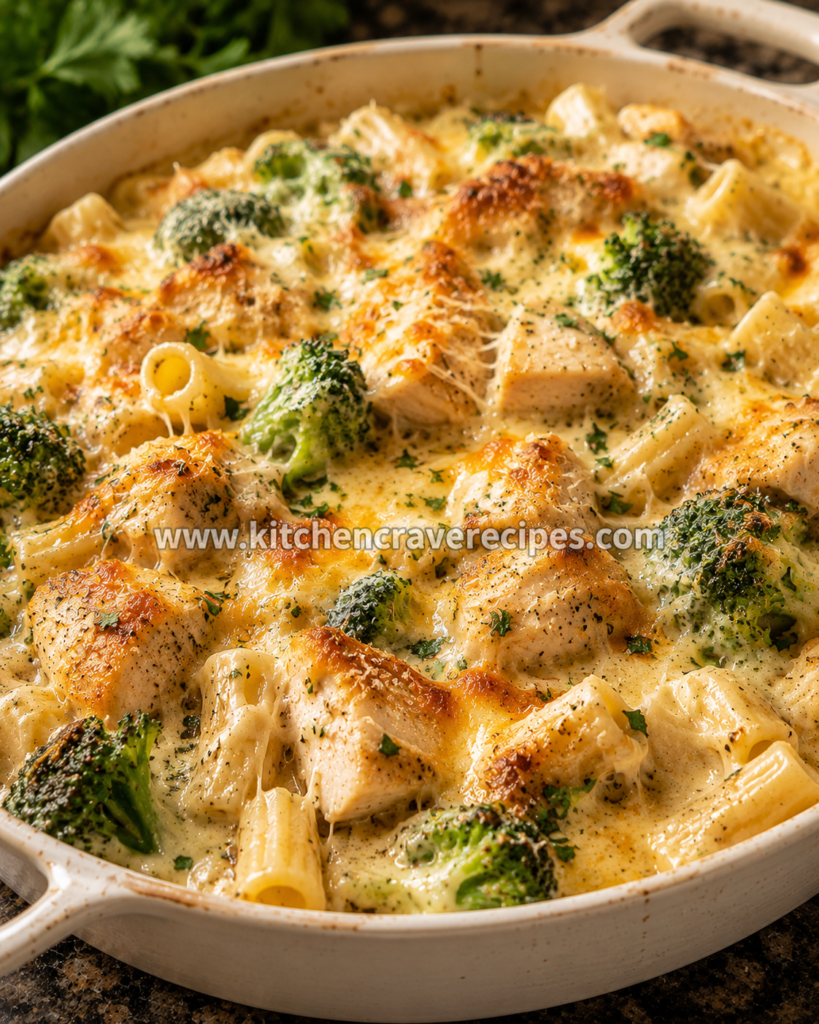
Some dinners feel like too much effort for a weeknight. This one doesn’t. This chicken broccoli pasta bake — built in a single large skillet on the stovetop — brings together seared chicken pieces, bright broccoli florets, and thin spaghetti-style pasta in a silky, two-cheese cream sauce that comes together in about 35 minutes from start to finish. The photo shows it exactly: a wide enameled skillet filled edge to edge with golden chicken, vivid green broccoli, and pasta coated in a pale gold cheddar and Parmesan cream sauce, finished with fresh parsley and cracked black pepper.
Every component cooks in the same pan, building layers of flavor at each stage. The chicken sears first, then the sauce uses those same browned bits as its foundation — and the pasta finishes cooking right in the sauce, absorbing every drop of that creamy, cheesy flavor rather than sitting in water separately.
Recipe Quick Info
| Detail | Info |
|---|---|
| Prep Time | 10 minutes |
| Cook Time | 25 minutes |
| Total Time | 35 minutes |
| Servings | 4 |
| Cuisine | American |
| Course | Main Dish / Dinner |
| Cooking Method | Sautéing |
| Calories | ~560 per serving |
| Difficulty | Standard |
Why You’ll Love This Chicken Broccoli Pasta Bake
- Everything cooks in one skillet. The chicken, sauce, broccoli, and pasta all come together in a single wide pan — real one-pan cooking with almost nothing to clean up afterward.
- The pasta finishes in the sauce. Thin spaghetti cooks directly in the cream sauce rather than in a separate pot, absorbing the garlic, cheddar, and Parmesan flavor from the inside out.
- High protein in every serving. Seared chicken breast plus two cheeses delivers close to 46 grams of protein per plate without any specialty ingredients or protein powders.
- Ready faster than delivery. From cold pan to plated dinner in 35 minutes — faster than most takeout windows and dramatically more satisfying than a reheated box.
- Genuinely crowd-pleasing. Seared chicken, creamy cheese sauce, and broccoli is a combination that consistently works for kids, athletes, and everyone in between at the same table.
- Meal-prep friendly. The assembled skillet stores well for 3 days and reheats beautifully with a splash of broth — the sauce re-emulsifies easily and the broccoli holds its texture better than most pasta dishes.
- Flexible enough to adapt. Swap the pasta shape, change the cheese, add heat or vegetables — the core sauté technique is the anchor and it works under almost any variation you throw at it.
Ingredients
For the Chicken
- 1.5 lbs boneless, skinless chicken breasts, cut into 1½-inch bite-sized pieces
- 1 tablespoon olive oil
- 1 tablespoon unsalted butter
- 1 teaspoon garlic powder
- 1 teaspoon onion powder
- 1 teaspoon smoked paprika
- ½ teaspoon dried Italian seasoning
- ½ teaspoon kosher salt
- ¼ teaspoon cracked black pepper
For the Creamy Cheese Sauce
- 5 cloves garlic, minced
- 1 tablespoon unsalted butter
- 1¼ cups heavy cream
- 1 cup low-sodium chicken broth
- ¾ cup sharp cheddar cheese, freshly shredded
- ½ cup Parmesan cheese, freshly grated
- 1 teaspoon Dijon mustard
- ½ teaspoon onion powder
- ¼ teaspoon white pepper
- Salt to taste
For the Pasta and Broccoli
- 8 oz thin spaghetti or angel hair pasta, broken in half
- 2½ cups fresh broccoli florets (bite-sized)
- ½ cup reserved pasta water (or additional broth to adjust consistency)
For Garnish
- 2 tablespoons fresh flat-leaf parsley, finely chopped
- Extra cracked black pepper
- Additional Parmesan for the table
Optional Add-Ins
- ½ teaspoon crushed red pepper flakes for heat
- 1 cup baby spinach, stirred in during the last 2 minutes
- 1 tablespoon lemon juice for brightness, added to sauce before pasta
- 4 strips crispy bacon, crumbled over the top at serving
Ingredient Substitutions
| Original Ingredient | Substitution | Notes |
|---|---|---|
| Thin spaghetti | Angel hair, linguine, or spaghetti | Thicker pasta needs 2–3 extra minutes in the sauce |
| Sharp cheddar | Colby Jack or Gruyère | Gruyère adds a nutty depth; Colby is milder and melts smoothly |
| Heavy cream | Half-and-half | Slightly lighter; sauce will be thinner but still cohesive |
| Chicken breast | Boneless, skinless chicken thighs | Richer flavor; sear 1–2 extra minutes per side |
| Fresh broccoli | Frozen broccoli florets, thawed | Pat dry before adding; thaw fully to prevent steaming in the pan |
| Parmesan (block, freshly grated) | Pecorino Romano | Sharper and saltier — reduce added salt by ¼ teaspoon |
| Chicken broth | Dry white wine (Pinot Grigio) | Adds acidity and complexity; use same quantity |
Kitchen Tools Needed
- 12–14 inch wide enameled or stainless steel skillet with a lid — essential for the sauté method; wide enough to cook the chicken without crowding and deep enough to hold the pasta as it cooks in the sauce
- Large pot (optional) — only needed if you prefer to par-cook the broccoli separately before adding; the skillet handles everything otherwise
- Tongs — for turning chicken pieces without breaking them during the sear
- Wooden spoon or silicone spatula — for building the sauce and folding in the pasta
- Whisk — for incorporating cheese into the warm cream sauce without lumps
- Microplane or box grater — for freshly shredding cheddar and Parmesan from a block
- Instant-read thermometer — to confirm chicken pieces reach 165°F before serving
- Ladle or measuring cup — for adding broth or reserved pasta water to adjust sauce consistency
- Cutting board and sharp knife — for breaking down the chicken and cutting broccoli to uniform floret size
How to Sauté This Chicken Broccoli Pasta Bake Perfectly Every Time
Step 1: Season and Sear the Chicken (8 minutes)
In a small bowl, combine the garlic powder, onion powder, smoked paprika, Italian seasoning, salt, and black pepper. Toss the chicken pieces in the spice blend until every piece is evenly coated. Heat the olive oil and 1 tablespoon of butter in a large wide skillet over medium-high heat until the butter has melted and the oil begins to shimmer — about 90 seconds.
Add the chicken pieces in a single layer. Do not stir immediately — let them sear undisturbed for 3–4 minutes until the underside is deep golden brown and lifts cleanly from the pan. The sizzle when they hit the pan should be immediate and assertive; anything quieter means the pan isn’t hot enough and the chicken will steam rather than sear. Flip and cook the second side for 2–3 minutes more until fully cooked through.
Confirm doneness with an instant-read thermometer — according to USDA food safety guidelines, chicken must reach an internal temperature of 165°F. Transfer the seared chicken pieces to a clean plate and set aside — they will go back into the skillet at the end.
Embedded Tip: Don’t overcrowd the pan. Chicken pieces that are too close together drop the skillet temperature and steam rather than sear, resulting in pale, soft exteriors with no browning. Work in two batches if your skillet is smaller than 12 inches.
Step 2: Build the Garlic Cream Sauce (5 minutes)
Reduce the heat to medium. Add the remaining tablespoon of butter to the same skillet — it should melt immediately in the residual heat. Add the minced garlic and cook, stirring constantly, for 60–90 seconds until fragrant and very lightly golden at the edges. Work quickly: garlic in butter at medium heat moves from perfectly golden to bitter in under a minute.
Pour in the chicken broth and use a wooden spoon to scrape up every caramelized bit from the bottom of the pan — those browned fond bits dissolve instantly into the liquid and add a depth of flavor that the sauce cannot replicate any other way. Add the heavy cream, Dijon mustard, onion powder, and white pepper, stirring to combine. Bring the mixture to a gentle simmer over medium heat, watching for small steady bubbles breaking at the surface — not a rolling boil, which would cause the cream to reduce too fast and the cheese to seize.
Step 3: Cook the Pasta Directly in the Sauce (10 minutes)
Add the broken thin spaghetti directly into the simmering cream sauce, pressing the pieces down so they are submerged. The pasta will begin to absorb the sauce and swell visibly within the first 2 minutes. Stir every 60–90 seconds to prevent the strands from clumping at the bottom of the skillet. If the sauce looks thick before the pasta is cooked through, add splashes of chicken broth or reserved pasta water — 2 tablespoons at a time — to keep everything moving.
Add the broccoli florets at the 5-minute mark, nestling them into the pasta so they cook in the sauce alongside the pasta for the final 4–5 minutes. The broccoli should turn bright, vivid green — that color shift happens within the first 2 minutes of heat contact and signals that the florets are properly blanched while still holding their shape. By the 10-minute mark, the pasta should be al dente and the broccoli tender-crisp.
Embedded Tip: Stir more frequently in the final 3 minutes of pasta cooking. As the sauce thickens and reduces, the bottom of the skillet gets hotter and the pasta can stick if left unattended. Frequent stirring also ensures the sauce coats every strand evenly rather than pooling in the center.
Step 4: Melt in the Cheese and Return the Chicken (4 minutes)
Reduce the heat to medium-low. Add the freshly shredded cheddar and freshly grated Parmesan to the skillet in two or three additions, stirring between each until fully melted and incorporated before adding the next. The sauce will shift from pale cream to a glossy, golden-yellow color — thick enough to coat the pasta completely but still fluid enough to move when the pan is tilted.
Return the seared chicken pieces to the skillet and fold them gently into the pasta and sauce. Allow everything to heat together over medium-low for 2 minutes so the chicken warms through and the flavors meld. The finished skillet should look exactly like the photo — golden chicken pieces and bright broccoli visible throughout a creamy, cheese-coated pasta that fills the pan edge to edge.
Step 5: Garnish and Serve
Remove the skillet from the heat. Scatter fresh flat-leaf parsley generously over the top and add a few extra cracks of black pepper. Serve directly from the skillet at the table — this is genuinely one of those dishes that looks more impressive served from the pan than portioned onto individual plates in the kitchen.
For a lighter side to balance this rich skillet dinner, pair it with Easy Cheesy Chicken Enchilada Bake (5-Star Ultimate Dinner).
Pro Tips for the Best Chicken Broccoli Pasta Bake
1. Preheat the skillet before anything goes in. The sauté method lives or dies on pan temperature. A properly preheated skillet sears the chicken in the first 60 seconds of contact; an underheated one allows the chicken to release liquid and stew. Two full minutes of heating over medium-high before adding the fat is the non-negotiable starting point.
2. Break the spaghetti in half before it goes in. Full-length thin spaghetti in a wide skillet tangles immediately and cooks unevenly. Breaking it in half gives you pieces short enough to submerge fully in the sauce and stir without the strands climbing up the sides of the pan or clumping into a knot.
3. Add the cheese off a rolling boil. Cheese added to actively boiling cream seizes — the proteins tighten before they can dissolve and the sauce goes grainy. Reduce the heat to medium-low before the cheese goes in and let it melt slowly. Patience here is the difference between a silky sauce and a lumpy one.
4. Use freshly shredded cheese only. Pre-shredded cheddar contains cellulose anti-caking agents that resist melting cleanly into a warm sauce. Block cheese grated just before use melts in seconds at medium-low heat, producing the glossy, fluid sauce visible in the photo.
5. Taste before you add salt to the sauce. The chicken broth, Parmesan, and cheddar all contribute sodium. Always taste the sauce after the cheese is fully incorporated and before adjusting salt — you may need very little or none at all depending on your specific ingredients.
Common Sautéing Mistakes to Avoid
1. Overcrowding the chicken in the skillet.
Too many chicken pieces in the pan simultaneously drops the surface temperature and causes them to steam in their own released juices. The result is pale, soft chicken with no sear. Cook in two batches if needed, or use the largest skillet you have. A proper sear takes 3–4 minutes of undisturbed contact with a hot pan.
2. Stirring the chicken immediately after it hits the pan.
The sear needs time to form before it will release cleanly from the pan surface. Moving the chicken in the first 2 minutes tears the crust and sticks it to the skillet. Leave it alone — a properly seared piece releases on its own when it’s ready to be flipped.
3. Letting the cream sauce reach a full boil.
A rolling boil causes cream to reduce too aggressively and the fat can begin to separate, leaving a greasy, thin sauce instead of a cohesive creamy one. Keep the heat at medium and look for small, lazy bubbles — not aggressive bubbling — once the cream goes in.
4. Adding pasta to a sauce that isn’t hot enough.
Pasta added to a lukewarm sauce will absorb liquid unevenly and take significantly longer to cook than expected, leaving some strands overhydrated while others are still stiff. Make sure the cream sauce is actively simmering before the pasta goes in.
5. Skipping the fond-scraping step after the chicken.
Those browned bits left on the skillet floor after searing the chicken are caramelized proteins and sugars — concentrated savory flavor that dissolves instantly into the broth when deglazing. Wiping the pan or skipping this step throws away the foundation of the sauce’s depth.
6. Not adjusting consistency with broth or pasta water.
As the pasta cooks in the sauce, it absorbs liquid continuously. If the sauce reduces to a thick paste before the pasta is done, don’t panic — add broth or reserved pasta water 2 tablespoons at a time and stir. The starch in the pasta water thickens the sauce gently without diluting flavor.
7. Adding the broccoli too early.
Broccoli added at the same time as the pasta will be completely soft and falling apart by the time the pasta is done. Add the florets halfway through the pasta cooking — at the 5-minute mark — so they finish together with exactly the right texture: bright green, tender-crisp, and holding their shape.
Variations
Healthy Swap: Lighter Cream Sauce
Replace the heavy cream with evaporated skim milk (1 cup) and reduce the cheddar to ½ cup, using extra Parmesan for flavor concentration. Add 2 tablespoons of low-fat cream cheese to the sauce while it simmers — it adds body without the fat load of heavy cream. The sauté method, timing, and temperatures stay exactly the same. Total calories drop by roughly 100 per serving.
Vegetarian Version
Omit the chicken and replace with 2 cups of sliced cremini mushrooms sautéed in the same skillet over medium-high heat for 6–7 minutes until deeply browned and all their moisture has evaporated. Add 1 can of drained white cannellini beans for protein alongside the broccoli. Build the sauce in the same pan as written. The technique is identical — just swap the chicken sear for the mushroom sear.
Spicy Version
Stir 1 teaspoon of crushed red pepper flakes into the garlic as it cooks in the butter — the heat blooms directly into the fat and distributes evenly through the sauce. Add ½ teaspoon of cayenne to the chicken spice rub before searing. Swap the sharp cheddar for pepper Jack cheese, which adds a clean dairy heat alongside the chili warmth without overpowering the garlic Parmesan base.
Gluten-Free Version
Substitute certified gluten-free thin spaghetti or rice noodles — both work in the sauté method though rice noodles cook faster (about 6–7 minutes in sauce rather than 10). Confirm that your chicken broth and Dijon mustard are labeled gluten-free, as both can contain hidden gluten depending on the brand. Every other ingredient in this recipe is naturally gluten-free.
Low-Carb / Keto Variation
Replace the pasta entirely with 3 cups of riced cauliflower stirred directly into the cream sauce in Step 3. Cauliflower riced and added to hot sauce takes only 4–5 minutes to become tender — much shorter than pasta — so add it about 5 minutes after the sauce is built, with the broccoli. The cheese sauce, seared chicken, and broccoli remain exactly as written. Net carbs drop from roughly 40g to under 10g per serving.
What to Serve With This Chicken Broccoli Pasta Bake
This is a complete, filling one-skillet meal, but these sides round the table out nicely:
- Simple arugula salad with lemon vinaigrette — the bitter, peppery leaves cut through the richness of the cream sauce perfectly.
- Crusty garlic bread or toasted sourdough — for mopping up the cheesy sauce left in the skillet.
- Roasted cherry tomatoes — sweet and acidic, they contrast the creaminess of the pasta without competing with the flavors.
- Steamed green beans with olive oil — a light, clean side that adds a second vegetable to the meal without any extra effort.
- Chilled sparkling water with lemon or a dry white wine — a crisp Pinot Grigio or unoaked Chardonnay complements the garlic-cheese profile well.
- Sliced cucumber and red onion salad with white wine vinegar — cool, crisp, and refreshing against the warm, rich skillet.
- A warm dinner roll — simple but effective, especially for serving this at a family dinner table. Pair it with Easy Cheesy Chicken Enchilada Bake (5-Star Ultimate Dinner)for a complete spread.
Storage Instructions
Refrigerator
Store leftover chicken broccoli pasta bake in an airtight container for up to 3 days. The thin pasta continues to absorb sauce as it sits, so the leftovers will be thicker and creamier than the day they were made — in a good way. Store any fresh parsley garnish separately and add it fresh after reheating.
Freezer
The cream sauce can separate slightly when frozen and thawed, so the fully assembled skillet is not ideal for long-term freezing. The seared chicken pieces freeze very well on their own for up to 2 months — freeze in a single layer first, then transfer to a zip-top bag. Make the sauce and pasta fresh when ready to serve the thawed chicken.
Shelf Life Summary
| Component | Refrigerator | Freezer |
|---|---|---|
| Fully assembled skillet | Up to 3 days | Not recommended |
| Seared chicken (alone) | Up to 4 days | Up to 2 months |
| Cream sauce (alone) | Up to 3 days | Not recommended |
| Cooked pasta (plain) | Up to 5 days | Up to 2 months |
Reheating Instructions
Cream-based pasta dishes need gentle, low-heat reheating to keep the sauce from breaking. Per USDA food safety guidance, all reheated leftovers must reach an internal temperature of 165°F before eating.
Stovetop (Best Method): Transfer the pasta to a skillet over medium-low heat. Add 2–3 tablespoons of chicken broth or whole milk and stir gently as the mixture heats. The sauce will re-emulsify within 2–3 minutes of gentle warming, returning to its original silky consistency. Heat for 5–6 minutes total, stirring occasionally, until warmed through.
Microwave (Fastest Option): Place a single portion in a microwave-safe bowl, add a splash of broth, and cover loosely with a damp paper towel. Heat on medium power (60%) in 90-second intervals, stirring between each, until hot throughout. Medium power prevents the cream from separating under rapid heat — high power alone will make the sauce greasy.
Oven (For Larger Portions): Transfer to an oven-safe dish, add 3 tablespoons of broth, cover tightly with foil, and heat at 325°F for 15–18 minutes until warmed through. Stir once halfway through. This method works best for reheating a full remaining half of the original skillet.
Nutrition Facts (Per Serving)
| Nutrient | Amount |
|---|---|
| Calories | ~560 |
| Total Fat | 24g |
| Saturated Fat | 12g |
| Cholesterol | 130mg |
| Sodium | 610mg |
| Total Carbohydrates | 40g |
| Dietary Fiber | 3g |
| Sugars | 3g |
| Protein | 46g |
Nutrition Disclaimer: All nutritional values are estimates calculated using standard ingredient databases and will vary depending on specific brands, portion sizes, and any substitutions or optional add-ins. These figures are provided as general guidance only and do not constitute medical or dietary advice. For precise dietary tracking, use a verified nutrition calculator with your exact measured ingredients.
Frequently Asked Questions
1. Can I actually bake this dish in the oven instead of cooking it on the stovetop?
Yes — assemble the seared chicken, par-cooked pasta (boil to 2 minutes under al dente first), broccoli, and sauce in a 9×13 baking dish, top with the cheddar and Parmesan, and bake covered at 375°F for 20 minutes. Uncover for the final 5 minutes to melt and lightly brown the cheese. The stovetop sauté method produces a creamier, more cohesive sauce; the baked version produces a slightly firmer, casserole-style texture.
2. Why does my cream sauce turn grainy after adding the cheese?
Grainy cheese sauce is almost always caused by one of two things: adding cheese to cream that is actively boiling, or using pre-shredded cheese with anti-caking agents. Reduce the heat to medium-low before the cheese goes in, add it in small handfuls, and whisk between each addition. Block cheese grated just before use is the other half of the solution.
3. Can I use frozen broccoli instead of fresh?
Frozen broccoli works, but it must be fully thawed and patted very dry before going into the skillet. Frozen florets that are still partially icy release significant water into the sauce as they heat, thinning it and causing the pasta to become waterlogged. Thaw overnight in the refrigerator and blot dry with a paper towel before adding at the 5-minute pasta mark.
4. What is the best pasta shape for this recipe?
Thin spaghetti and angel hair work best because their thin profile cooks quickly and absorbs the cream sauce efficiently without needing a long simmer time. Thicker pasta shapes like rigatoni or penne need longer cooking and more liquid in the pan — doable, but you’ll need to add broth more frequently and extend the cooking time by 4–5 minutes.
5. How do I prevent the chicken from drying out?
Two things matter most: cutting the chicken into consistent-sized pieces (so they all finish at the same time), and not overcooking them during the initial sear. The pieces only need to reach 165°F — pull them at that exact temperature. They will continue to carry-over cook slightly on the plate, and they warm through again when returned to the sauce at the end.
6. Can I make this dish ahead of time for meal prep?
Absolutely. Cook the full recipe, let it cool to room temperature, divide into airtight meal prep containers, and refrigerate for up to 3 days. Reheat individual portions in the microwave on medium power with a splash of broth stirred in. The pasta continues absorbing the sauce as it sits, making leftovers even creamier and more cohesive than the day it was made.
7. Why cook the pasta directly in the sauce instead of boiling it separately?
Cooking the pasta directly in the cream sauce allows the pasta to absorb the garlic, cheese, and cream flavor from the inside out rather than sitting in plain water. It also releases starch directly into the sauce as it cooks, which naturally thickens it without any additional flour or cornstarch. The result is a more cohesive, flavorful sauce that clings to every strand.
8. Is this recipe actually high in protein?
Yes. A 6-oz portion of chicken breast contains approximately 36–38g of protein. The cheddar and Parmesan cheese together contribute roughly 7–9g per serving. The thin spaghetti adds another 6–7g of plant-based protein, bringing the total close to 46g of protein per serving from whole-food ingredients.
9. Can I use a non-stick skillet instead of stainless or enameled?
Non-stick works for the overall cooking process, but it won’t produce the same quality of sear on the chicken — the lower heat tolerance of most non-stick coatings means you can’t run the skillet as hot as needed for deep browning. More importantly, non-stick pans don’t generate the same fond (browned bits) that builds the sauce’s depth. Use stainless or enameled if you have the choice.
10. What if my sauce is too thick before the pasta finishes cooking?
Add chicken broth or the reserved pasta water — 2 tablespoons at a time — stirring after each addition until the sauce loosens to a flowing consistency again. Starchy pasta water is better than plain water here because it thickens gently and doesn’t dilute the sauce flavor the way water alone would. Keep a cup of warm broth next to the stove while the pasta cooks.
11. Can I add other vegetables to this skillet?
Yes — mushrooms, sun-dried tomatoes, baby spinach, and diced red bell pepper all integrate well. Sauté high-moisture vegetables like mushrooms first in the skillet before building the sauce so their liquid evaporates fully. Delicate additions like spinach can go in during the last 2 minutes of cooking — they wilt in the residual heat without needing any additional cooking time.
Expert Chef Tips
1. Cut the chicken pieces to a consistent 1½-inch size. Uniformity is what makes the sauté method work cleanly for chicken. Pieces that are dramatically different in size cook at different rates, and the smaller ones will be dry and overcooked by the time the larger ones reach 165°F. Take 2 extra minutes to trim and cut evenly — it pays off in every bite.
2. Deglaze immediately while the pan is still hot. The caramelized fond on the bottom of the skillet begins to harden as the pan cools. Add the chicken broth the moment the garlic has finished cooking — while the pan is still at full heat — and the fond dissolves in seconds. Waiting too long means scrubbing rather than deglazing, and lost flavor.
3. Build the garlic flavor at medium heat, not high. After removing the chicken, drop the heat to medium before adding the garlic. Garlic in butter at high heat goes from raw to burnt in under a minute. Medium heat gives you the 60–90 seconds you need to develop a sweet, mellow garlic flavor without the bitterness that comes from over-darkening.
4. Finish the sauce seasoning after the cheese, not before. The Parmesan and cheddar both contribute salt to the sauce. Seasoning before they’re fully incorporated risks an over-salted final dish. Add the cheese, let it melt completely, taste the sauce, and then decide how much additional salt — if any — the dish actually needs.
5. Serve directly from the skillet. A wide, full skillet of creamy chicken broccoli pasta bake carried to the table looks genuinely impressive — far more so than individual portions plated in the kitchen. It also keeps the dish hot longer since the pan retains heat, and it means one less round of dishes. Set the skillet on a trivet and let everyone serve themselves.
Recipe Summary
This chicken broccoli pasta bake is a single-skillet stovetop dinner built entirely on the sauté method — seared chicken pieces develop a golden crust in a hot pan, broth deglazes the fond into the cream sauce base, and thin spaghetti finishes cooking directly in that garlic cheddar-Parmesan cream alongside bright broccoli florets. The whole skillet comes together in 35 minutes, delivers close to 46 grams of protein per serving, and cleans up in minutes.
One Skillet, One Great Dinner — Make It Tonight
There is a reason this kind of recipe stays in the rotation: it delivers every time, for every eater, without requiring a complicated technique or a long shopping list. This chicken broccoli pasta bake is the one-skillet weeknight dinner that manages to feel like more than the sum of its parts — golden seared chicken, vivid green broccoli, silky cheese sauce, and pasta that absorbed every drop of flavor as it cooked. Make it once this week and see how quickly it becomes the answer every time someone asks what’s for dinner. Looking for more high-protein skillet dinners built on real ingredients? Browse Easy Cheesy Chicken Enchilada Bake (5-Star Ultimate Dinner) for your next weeknight favorite.
Best Chicken Broccoli Pasta Bake (35-Min Ultimate Dinner)
Description
Some dinners feel like too much effort for a weeknight. This one doesn't. This chicken broccoli pasta bake — built in a single large skillet on the stovetop — brings together seared chicken pieces, bright broccoli florets, and thin spaghetti-style pasta in a silky, two-cheese cream sauce that comes together in about 35 minutes from start to finish. The photo shows it exactly: a wide enameled skillet filled edge to edge with golden chicken, vivid green broccoli, and pasta coated in a pale gold cheddar and Parmesan cream sauce, finished with fresh parsley and cracked black pepper.
Ingredients
Instructions
-
How to Sauté This Chicken Broccoli Pasta Bake Perfectly Every Time
-
Step 1: Season and Sear the Chicken (8 minutes)
-
In a small bowl, combine the garlic powder, onion powder, smoked paprika, Italian seasoning, salt, and black pepper. Toss the chicken pieces in the spice blend until every piece is evenly coated. Heat the olive oil and 1 tablespoon of butter in a large wide skillet over medium-high heat until the butter has melted and the oil begins to shimmer — about 90 seconds.
-
Add the chicken pieces in a single layer. Do not stir immediately — let them sear undisturbed for 3–4 minutes until the underside is deep golden brown and lifts cleanly from the pan. The sizzle when they hit the pan should be immediate and assertive; anything quieter means the pan isn't hot enough and the chicken will steam rather than sear. Flip and cook the second side for 2–3 minutes more until fully cooked through.
-
Confirm doneness with an instant-read thermometer — according to USDA food safety guidelines, chicken must reach an internal temperature of 165°F. Transfer the seared chicken pieces to a clean plate and set aside — they will go back into the skillet at the end.
-
Embedded Tip: Don't overcrowd the pan. Chicken pieces that are too close together drop the skillet temperature and steam rather than sear, resulting in pale, soft exteriors with no browning. Work in two batches if your skillet is smaller than 12 inches.
-
Step 2: Build the Garlic Cream Sauce (5 minutes)
-
Reduce the heat to medium. Add the remaining tablespoon of butter to the same skillet — it should melt immediately in the residual heat. Add the minced garlic and cook, stirring constantly, for 60–90 seconds until fragrant and very lightly golden at the edges. Work quickly: garlic in butter at medium heat moves from perfectly golden to bitter in under a minute.
-
Pour in the chicken broth and use a wooden spoon to scrape up every caramelized bit from the bottom of the pan — those browned fond bits dissolve instantly into the liquid and add a depth of flavor that the sauce cannot replicate any other way. Add the heavy cream, Dijon mustard, onion powder, and white pepper, stirring to combine. Bring the mixture to a gentle simmer over medium heat, watching for small steady bubbles breaking at the surface — not a rolling boil, which would cause the cream to reduce too fast and the cheese to seize.
-
Step 3: Cook the Pasta Directly in the Sauce (10 minutes)
-
Add the broken thin spaghetti directly into the simmering cream sauce, pressing the pieces down so they are submerged. The pasta will begin to absorb the sauce and swell visibly within the first 2 minutes. Stir every 60–90 seconds to prevent the strands from clumping at the bottom of the skillet. If the sauce looks thick before the pasta is cooked through, add splashes of chicken broth or reserved pasta water — 2 tablespoons at a time — to keep everything moving.
-
Add the broccoli florets at the 5-minute mark, nestling them into the pasta so they cook in the sauce alongside the pasta for the final 4–5 minutes. The broccoli should turn bright, vivid green — that color shift happens within the first 2 minutes of heat contact and signals that the florets are properly blanched while still holding their shape. By the 10-minute mark, the pasta should be al dente and the broccoli tender-crisp.
-
Embedded Tip: Stir more frequently in the final 3 minutes of pasta cooking. As the sauce thickens and reduces, the bottom of the skillet gets hotter and the pasta can stick if left unattended. Frequent stirring also ensures the sauce coats every strand evenly rather than pooling in the center.
-
Step 4: Melt in the Cheese and Return the Chicken (4 minutes)
-
Reduce the heat to medium-low. Add the freshly shredded cheddar and freshly grated Parmesan to the skillet in two or three additions, stirring between each until fully melted and incorporated before adding the next. The sauce will shift from pale cream to a glossy, golden-yellow color — thick enough to coat the pasta completely but still fluid enough to move when the pan is tilted.
-
Return the seared chicken pieces to the skillet and fold them gently into the pasta and sauce. Allow everything to heat together over medium-low for 2 minutes so the chicken warms through and the flavors meld. The finished skillet should look exactly like the photo — golden chicken pieces and bright broccoli visible throughout a creamy, cheese-coated pasta that fills the pan edge to edge.
-
Step 5: Garnish and Serve
-
Remove the skillet from the heat. Scatter fresh flat-leaf parsley generously over the top and add a few extra cracks of black pepper. Serve directly from the skillet at the table — this is genuinely one of those dishes that looks more impressive served from the pan than portioned onto individual plates in the kitchen.
Nutrition Facts
Servings 4
- Amount Per Serving
- Calories 560kcal
- % Daily Value *
- Total Fat 24g37%
- Saturated Fat 12g60%
- Protein 46g92%
* Percent Daily Values are based on a 2,000 calorie diet. Your daily value may be higher or lower depending on your calorie needs.