Garlic Butter Salmon Creamy Sauce in 35 Min
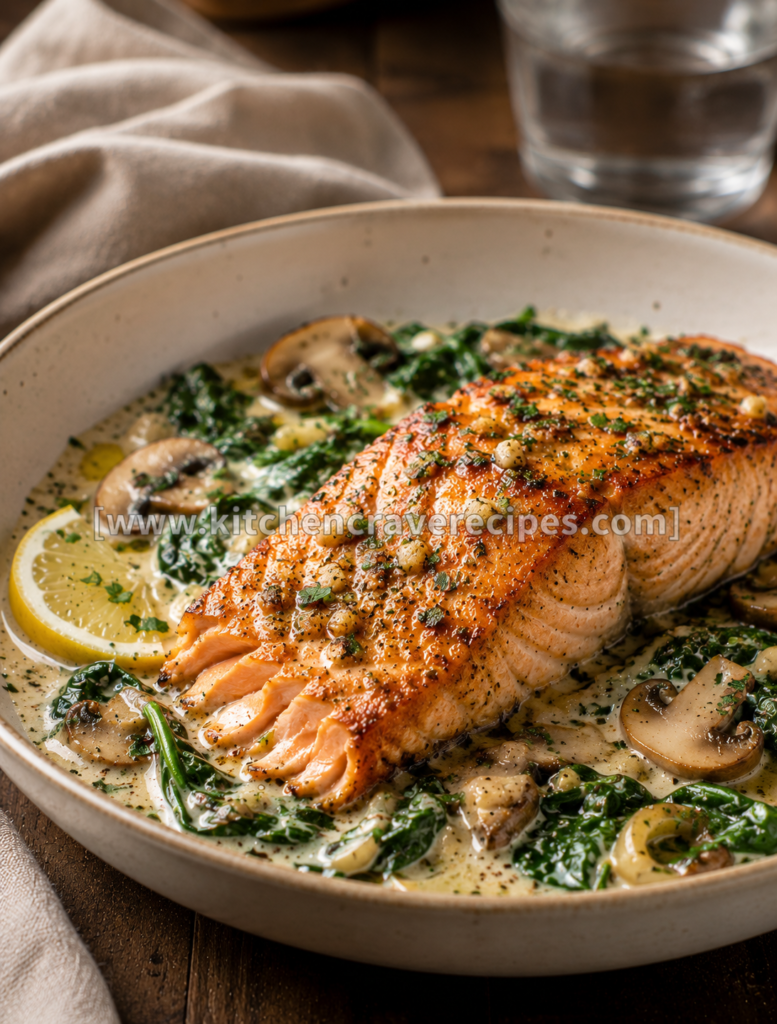
Pull this plate to the table and it looks like something that took a trained line cook to produce — a deeply golden salmon fillet resting on a bed of wilted spinach and caramelized mushrooms, all of it pooled in a silky, herb-flecked
garlic butter salmon creamy sauce that spreads across the plate like something from a proper restaurant. The photo tells the whole story: one thick, beautifully seared fillet, golden and caramelized on the skin side, set over tender baby spinach and golden-edged sliced mushrooms, everything draped in a white cream sauce with visible flecks of fresh herbs throughout. The entire dish is built in a single skillet on the stovetop using the sauté method — no oven, no complicated technique — and it comes together in 35 minutes from a cold pan. This is the kind of recipe that makes a regular weeknight feel like a special occasion without requiring one.
Recipe Quick Info
| Detail |
Info |
| Prep Time |
10 minutes |
| Cook Time |
25 minutes |
| Total Time |
35 minutes |
| Servings |
4 portions |
| Cuisine |
American / French-Inspired |
| Course |
Main Dish |
| Cooking Method |
Sautéing |
| Calories |
~480 per serving |
| Difficulty |
Standard |
Why You'll Love This Recipe
- Restaurant-quality plating from a single skillet — the sauté method gives the salmon a deeply golden, caramelized crust that looks and tastes far more impressive than the effort involved suggests.
- The creamy sauce comes together in minutes — after sautéing the salmon, mushrooms, and spinach, the cream sauce is built directly in the same skillet, picking up every bit of flavor left in the pan from the garlic butter.
- Perfectly balanced in flavor and texture — the richness of the cream sauce is anchored by garlic butter and fresh herbs, while the mushrooms and spinach add earthy depth and a slight vegetal freshness that keeps each bite interesting.
- Done in 35 minutes with one pan — from heating the skillet to plating the finished dish, this entire recipe happens on the stovetop in a single skillet with minimal cleanup afterward.
- Naturally low in carbohydrates — salmon, spinach, mushrooms, cream, and butter together contain very few carbs, making this a genuinely satisfying option for anyone following a low-carb or keto eating plan.
- Adaptable to what's in your refrigerator — the sauce formula works with any mushroom variety, and the spinach can be swapped for other tender greens without changing the cooking method or timing.
- Impressive enough for guests, easy enough for Tuesday — the finished plate, as shown in the photo, looks like something that required serious culinary training; the actual process is straightforward sautéing from start to finish.
Ingredients
For the Salmon
- 4 salmon fillets (6 oz each, skin-on preferred)
- 1 teaspoon kosher salt
- ½ teaspoon black pepper
- ½ teaspoon smoked paprika
- 1 tablespoon olive oil
- 1 tablespoon unsalted butter
For the Mushrooms and Spinach
- 8 oz cremini or baby bella mushrooms, sliced (as visible in the photo)
- 3 cups fresh baby spinach
- 2 tablespoons unsalted butter
- 3 cloves garlic, minced
- ¼ teaspoon kosher salt
- ¼ teaspoon black pepper
For the Garlic Butter Creamy Sauce
- 2 tablespoons unsalted butter
- 3 cloves garlic, minced
- 1 cup heavy cream
- ½ cup low-sodium chicken broth (or dry white wine)
- ¼ cup freshly grated Parmesan cheese
- 1 tablespoon fresh parsley, finely chopped (plus more for garnish as shown)
- 1 teaspoon fresh thyme leaves (or ½ teaspoon dried)
- ½ teaspoon kosher salt
- ¼ teaspoon white pepper
- ½ teaspoon fresh lemon juice
Optional Add-Ins
- 1 tablespoon capers, drained (adds brininess)
- ¼ teaspoon red pepper flakes (adds gentle heat to the sauce)
- 1 tablespoon sun-dried tomatoes, finely chopped
Substitution Table
| Ingredient |
Substitution |
Notes |
| Salmon fillets |
Halibut or sea bass fillets |
Similar thickness — sauté timing stays the same |
| Heavy cream |
Full-fat coconut cream |
Dairy-free; adds slight sweetness; use unsweetened |
| Chicken broth |
Dry white wine (Sauvignon Blanc) |
Wine adds complexity; simmer an extra minute to cook off alcohol |
| Cremini mushrooms |
Shiitake or oyster mushrooms |
Both sauté beautifully; shiitake adds deeper, earthier flavor |
| Baby spinach |
Baby kale or arugula |
Arugula adds pepperiness; kale needs 1–2 extra minutes to wilt |
| Parmesan |
Pecorino Romano |
Slightly saltier; reduce added salt in sauce by a pinch |
| Fresh parsley |
Fresh chives or fresh basil |
Each changes the herb character of the sauce subtly |
Kitchen Tools Needed
- 12-inch stainless steel or cast-iron skillet — the primary pan for the entire recipe; stainless produces better fond (the caramelized bits left by searing) that enriches the sauce, which is the key to this sauté-method dish
- Fish spatula — thin, flexible, and essential for flipping salmon fillets cleanly without breaking the crust
- Tongs — for handling the salmon during searing and for tossing the mushrooms and spinach
- Wooden spoon or silicone spatula — for building and stirring the cream sauce without scratching the skillet
- Whisk — for incorporating the Parmesan into the cream sauce without lumps
- Instant-read thermometer — to confirm salmon reaches the FDA-recommended internal temperature
- Microplane or fine grater — for freshly grating Parmesan directly into the sauce
- Paper towels — for patting the salmon fillets dry before searing (non-negotiable for a proper crust)
- Cutting board and chef's knife — for slicing mushrooms, mincing garlic, and chopping herbs
How to Sauté Garlic Butter Salmon with Creamy Sauce Perfectly Every Time
Step 1 — Prep the Salmon and Season
Pat each salmon fillet completely dry on all sides with paper towels — surface moisture is what prevents a proper golden crust, so this step is genuinely important. Combine the salt, pepper, and smoked paprika in a small bowl, then rub the blend evenly over the flesh side of each fillet. Let the seasoned salmon sit at room temperature while you prep the remaining ingredients — 10 minutes is enough time for the seasoning to adhere and the cold fish to temper slightly, which helps it cook more evenly.
Step 2 — Sear the Salmon (Core Sauté Step)
Heat the olive oil and 1 tablespoon of butter in a 12-inch skillet over
medium-high heat until the butter foams and the foam begins to subside — that's the signal the pan is hot enough. Place the salmon fillets flesh-side down and press them gently with your spatula for the first 10 seconds to ensure full contact with the pan. Sauté without moving them for
4–5 minutes until the flesh turns opaque two-thirds of the way up the side and the bottom develops a deep golden crust. Flip carefully using a fish spatula and sauté the skin side for another
2–3 minutes. The salmon is done when an instant-read thermometer inserted into the thickest part reads
125–130°F for medium or
145°F for fully cooked — the FDA recommends 145°F for fish safety; see
https://www.fda.gov/food/buy-store-serve-safe-food/safe-minimum-internal-temperatures. Transfer the salmon to a plate and tent loosely with foil while you build the rest of the dish.
Step 3 — Sauté the Mushrooms
Without wiping the skillet, add 2 tablespoons of butter over medium-high heat. Once the butter melts and begins to foam, add the sliced mushrooms in a single layer. Sauté without stirring for
3–4 minutes — resist the urge to move them around, because undisturbed contact with the hot pan is what produces the golden, caramelized edges visible in the photo rather than grey, steamed mushrooms. Once they're browned on one side, stir and continue cooking for another 2 minutes until golden throughout. Season with salt and pepper.
Embedded tip: The mushrooms will release moisture as they cook — you'll see a small amount of liquid appear in the pan around the 2-minute mark. Keep the heat at medium-high so that moisture evaporates quickly rather than pooling and steaming the mushrooms. The liquid should be gone within another minute or two.
Step 4 — Add Garlic and Wilt the Spinach
Push the mushrooms to one side of the skillet and add the minced garlic to the center of the pan. Sauté the garlic for 30 seconds, stirring constantly, until it turns fragrant and just barely golden at the edges — don't let it brown fully or it will turn bitter in the cream sauce. Add the baby spinach and toss everything together with tongs, cooking for 1–2 minutes until the spinach is fully wilted and bright green. Transfer the mushroom and spinach mixture to the plate with the salmon and keep warm.
Step 5 — Build the Garlic Butter Creamy Sauce
Reduce the heat to
medium and add the remaining 2 tablespoons of butter to the skillet. Once melted, add the minced garlic and stir for 30 seconds. Pour in the chicken broth (or white wine) and scrape up any browned bits from the bottom of the pan with a wooden spoon — that fond is pure concentrated flavor and it dissolves into the sauce, giving the
garlic butter salmon creamy sauce its distinctive depth. Let the broth reduce for 1–2 minutes until slightly reduced and fragrant.
Pour in the heavy cream and stir to combine. Bring to a gentle simmer — small, steady bubbles at the edges of the pan, not a rolling boil — and cook for
3–4 minutes, stirring occasionally, until the sauce thickens enough to coat the back of a spoon. Sprinkle in the Parmesan a little at a time, whisking after each addition until fully melted. Add the fresh parsley, thyme, salt, white pepper, and lemon juice and stir to combine.
Embedded tip: Adding the Parmesan off a rolling boil prevents it from clumping or turning stringy in the sauce — keep the heat gentle and add it gradually for the smoothest, most cohesive result.
Step 6 — Plate and Serve
Spoon a generous pool of the creamy garlic butter sauce onto each warm plate. Arrange the wilted spinach and sautéed mushrooms in the center of the sauce, then rest a salmon fillet on top — exactly as shown in the photo. Spoon a little extra sauce over the top of the salmon and finish with a scatter of freshly chopped parsley. Serve immediately while the sauce is still fluid and glossy.
Pro Tips for Perfect Sautéed Garlic Butter Salmon
The pan must be properly hot before the salmon touches it. For a sauté method, the skillet needs to reach the right temperature before any protein goes in — otherwise the fish sticks and steams rather than searing. The butter should foam actively and the foam should just begin to subside before the fillets are placed in. Test with a small drop of water: it should evaporate on contact within 1 second.
Sear flesh-side down first, always. The flesh side of the salmon is where the most visible color and crust develop. Searing it first in a screaming-hot pan while the fish is at its firmest produces the cleanest golden crust — by the time you flip, the skin side only needs a few minutes to crisp and the fish is nearly done.
Don't move the salmon while it sears. This is the single most important rule for the sauté phase: consistent contact with the hot pan surface is what builds a crust. Moving the fish breaks the Maillard reaction before it sets, resulting in a torn, patchwork crust rather than one uniform golden surface.
Deglaze before the cream goes in. The browned bits stuck to the bottom of the pan after searing the salmon and mushrooms are the foundation of the sauce's flavor. Always add the broth or wine first and scrape those bits up before the cream goes in — skipping this step leaves the most flavorful part of the dish behind.
Finish the sauce with lemon juice off the heat. A small amount of acid — just ½ teaspoon of fresh lemon juice — added at the very end brightens the cream sauce and prevents it from tasting heavy or one-dimensional. Add it after the heat is off so the cream doesn't separate from the sudden temperature shift of cold citrus.
Common Mistakes to Avoid
1. Not patting the salmon dry before searing (sauté-specific mistake).
Surface moisture on the fish causes it to steam rather than sear in the hot pan — the result is a pale, stuck fillet instead of a golden, caramelized crust. Pat every surface dry with paper towels right before seasoning and again just before placing in the pan.
2. Overcrowding the skillet with mushrooms.
Adding all the mushrooms at once to a pan that can't accommodate them in a single layer traps steam between them, causing grey, soft mushrooms instead of the golden-edged, caramelized slices shown in the photo. Work in batches if necessary and keep the heat high.
3. Letting the cream sauce boil hard.
A rolling boil in a cream sauce causes fat separation — the butter and cream split into an oily, broken liquid rather than a smooth, cohesive sauce. Keep the heat at medium and aim for a gentle simmer with small, lazy bubbles at the edge of the pan throughout the sauce-building phase.
4. Adding cold Parmesan all at once.
Room-temperature Parmesan added gradually melts cleanly into the simmering cream. Cold Parmesan added all at once can clump and create stringy pockets rather than a smooth sauce. Grate it fresh, let it sit for a minute to take the chill off, and whisk it in small additions.
5. Skipping the resting period after searing the salmon.
Even 3–4 minutes of resting under a foil tent allows the residual heat to finish cooking the center of the fillet gently and the juices to redistribute throughout the flesh. Cutting into it immediately releases all the moisture onto the plate rather than keeping it in the fish.
6. Overcooking the garlic.
Garlic sautéed past golden turns bitter and carries that bitterness through the entire cream sauce. Thirty seconds in a medium heat pan is enough — pull it the moment it smells fragrant and turns the palest yellow, not brown.
7. Using pre-grated Parmesan from a shaker jar.
The powdered Parmesan sold in shelf-stable containers contains cellulose and anti-caking agents that prevent it from melting into cream sauces properly. It often clumps rather than dissolves. Always use freshly grated Parmesan from a block for a smooth, restaurant-quality sauce.
Variations
Healthy Lightened-Up Version
Reduce the heavy cream to ½ cup and replace the other half with additional low-sodium chicken broth, then stir in 2 tablespoons of full-fat Greek yogurt off the heat to add body without all the fat. The sauce will be slightly thinner but still coats the salmon beautifully. The sauté method and all timings remain identical.
Vegetarian Version
Replace the salmon with two large, thick portobello mushroom caps per person — brush with olive oil, season with salt, paprika, and pepper, and sauté in butter for 4–5 minutes per side until deeply browned and tender. Build the same cream sauce in the same skillet. Use vegetable broth in place of chicken broth. The entire dish retains its visual richness and the cream sauce is unchanged.
Spicy Version
Add ½ teaspoon of red pepper flakes directly to the garlic butter when building the cream sauce, and stir 1 teaspoon of sriracha into the finished sauce before plating. The heat is warm and building rather than sharp, and it pairs naturally with the richness of the cream without overwhelming the delicate salmon flavor.
Gluten-Free Version
This recipe is naturally gluten-free as written — no flour is used to thicken the sauce. The cream reduces and the Parmesan provides all the body needed. Simply verify that your chicken broth and any white wine used are certified gluten-free, as some brands contain trace wheat from processing.
Low-Carb / Keto Version
The recipe as written is already very low in carbohydrates — salmon, mushrooms, spinach, cream, butter, and Parmesan together are all keto-friendly ingredients. To lean further into keto macros, increase the butter to 3 tablespoons when building the sauce and use an extra splash of heavy cream. Serve over a bed of cauliflower rice or zucchini noodles instead of pasta or rice.
What to Serve With This Recipe
- Crusty sourdough or French bread — essential for soaking up every last drop of the garlic butter creamy sauce from the plate.
- Steamed jasmine or basmati rice — a neutral base that lets the boldly flavored sauce take center stage without competing.
- Roasted asparagus with lemon — the natural bitterness and char of asparagus balance the richness of the cream sauce.
- Cauliflower rice — the low-carb grain alternative for anyone eating keto who still wants something under the sauce.
- Simple green salad with champagne vinaigrette — crisp acidity from a light dressing cuts through the butter and cream beautifully.
- Garlic roasted broccolini — tender, slightly charred, and naturally complementary to the garlic notes already in the sauce.
- A chilled glass of Sauvignon Blanc or Pinot Gris — both have the acidity to balance a rich cream sauce and the lightness not to overpower delicate salmon.
For more elegant yet easy seafood dinners, try
Cheesy Beef and Biscuit Skillet — Easy 45 Min or
Easy Creamy Garlic Salmon Pasta Bake (5-Star Ultimate Dinner)— both come together in under 40 minutes with similar pantry staples.
Storage Instructions
Refrigerator
Store the salmon and sauce in separate airtight containers if possible — the salmon continues to absorb the sauce overnight, which thickens the sauce and can make the fish taste over-seasoned after a day. The salmon keeps for up to
2 days refrigerated; the cream sauce keeps for up to
3 days. Reheat the sauce separately and add the salmon at the end.
Freezer
Cream-based sauces do not freeze well — the emulsion breaks during freezing and thawing, producing a separated, grainy texture when reheated. The salmon itself can be frozen for up to
1 month wrapped tightly in plastic and then foil, but the sauce is best made fresh. If you want to freeze a batch, freeze only the salmon and make a fresh sauce when reheating.
Shelf Life Summary
| Storage Method |
Duration |
| Refrigerator — salmon (cooked) |
Up to 2 days |
| Refrigerator — cream sauce |
Up to 3 days |
| Freezer — salmon only |
Up to 1 month |
| Freezer — cream sauce |
Not recommended |
| Room temperature |
No longer than 2 hours |
Reheating Instructions
Stovetop (Best Method)
Place the cream sauce in a small saucepan over
medium-low heat and stir gently until just warmed through — do not boil. Add the salmon fillet to the pan, cover with a lid, and heat for 3–4 minutes until the fish is warmed through. This method preserves the sauce's smooth texture better than any other.
Microwave
Place a single portion in a microwave-safe dish and cover loosely with a damp paper towel. Heat on
medium power (60–70%) in 60-second intervals, checking between each, until the salmon is warmed and the sauce is fluid again. Avoid high power — it causes the cream to separate and can overcook the outer edges of the salmon while the center remains cold.
Oven
Preheat to
275°F. Place the salmon in an oven-safe dish, spoon the sauce over the top, and cover tightly with foil. Bake for
10–12 minutes until just warmed through. The low temperature prevents the cream from breaking and keeps the salmon from drying out.
For safe reheating temperature standards, visit
https://www.foodsafety.gov/food-safety-charts/safe-minimum-cooking-temperature.
Nutrition Facts
(Per serving — 1 salmon fillet with sauce, mushrooms, and spinach, based on 4 servings total)
| Nutrient |
Amount |
| Calories |
~480 |
| Total Fat |
34g |
| Saturated Fat |
16g |
| Cholesterol |
155mg |
| Sodium |
620mg |
| Total Carbohydrates |
6g |
| Dietary Fiber |
1g |
| Total Sugars |
2g |
| Protein |
38g |
| Calcium |
140mg |
| Omega-3 Fatty Acids |
~2,200mg |
Nutrition Disclaimer: These values are estimates calculated using standard nutritional databases and will vary based on the size of the salmon fillets, specific brands of cream and broth used, and any optional add-ins or substitutions. For precise dietary tracking, use a verified nutrition calculator with the exact products and quantities you purchase.
Frequently Asked Questions
Can I use skinless salmon fillets instead of skin-on?
Yes. Skinless fillets sear fine using this sauté method — the texture of the flesh side is what creates the golden crust. The skin-on option is preferred because the skin protects the bottom of the fillet from overcooking while the flesh side sears, but skinless works well with careful heat control and a slightly shorter cook time on the second side.
How do I know when the salmon is cooked perfectly?
The most reliable method is an instant-read thermometer: 125–130°F is medium (slightly translucent center, very moist), and 145°F is fully cooked through. Visually, the fish will turn from translucent deep pink to opaque pale pink as it cooks — check the thickest point, and pull it from the pan just before it looks fully opaque because residual heat continues cooking it for another minute after removal.
Can I use frozen salmon fillets?
Yes, but thaw them completely in the refrigerator overnight before cooking. Never sauté salmon from frozen — the ice on the surface causes violent spitting in the hot butter and prevents any meaningful crust from forming. After thawing, pat very dry before seasoning, since frozen-then-thawed salmon releases considerably more moisture than fresh.
What's the best mushroom variety for this recipe?
Cremini (baby bella) mushrooms are used in this recipe and shown in the photo for good reason — they have enough density to withstand the high sauté heat without turning mushy, and their flavor is earthy enough to hold its own against the garlic butter cream sauce. Shiitake mushrooms are a superb alternative with a deeper, more complex flavor. Button mushrooms work but are milder and release more water.
Why does my cream sauce keep breaking or turning oily?
Cream sauce breaks when the heat is too high for too long. The fix: keep the heat at medium (not medium-high) once the cream goes in, and never let it come to a rolling boil. If it breaks, remove from heat immediately, add 2 tablespoons of cold heavy cream, and whisk vigorously — this often brings it back together.
Can I make the sauce ahead of time?
The garlic butter cream sauce can be made up to 2 days ahead and refrigerated. Reheat it gently in a small saucepan over medium-low heat, whisking in a splash of broth or cream to loosen it if it's thickened in the refrigerator. Sear the salmon fresh when you're ready to serve — the sauce is easy to revive, but day-old sautéed salmon is never as good as fresh.
Is this recipe suitable for a keto diet?
Yes — as written, each serving contains approximately 6 grams of total carbohydrates and around 5 grams net carbs, which fits comfortably within a standard ketogenic framework. The salmon, butter, cream, Parmesan, spinach, and mushrooms are all naturally low-carb ingredients. Serve over cauliflower rice instead of regular rice to keep the full meal within keto macros.
Can I substitute the heavy cream with something lighter?
Half-and-half works as a substitute but produces a noticeably thinner sauce that takes longer to reduce. Whole milk alone is not recommended — it lacks the fat content to prevent curdling at the sauté pan temperatures involved. If you want a dairy-free option, full-fat canned coconut cream is the most stable substitute and produces a smooth, cohesive sauce.
Can I bake this instead of sautéing it?
Yes, though the result differs. Bake seasoned salmon fillets on a sheet pan at 400°F for 12–14 minutes. Make the cream sauce separately on the stovetop using the same formula, then spoon it over the baked salmon at serving. You won't get the same caramelized crust or the pan-fond flavor that sautéing builds into the sauce, but the overall dish is still very good and requires less active attention.
What does "building fond" mean and why does it matter?
Fond is the French culinary term for the browned, caramelized bits left on the bottom of a pan after searing protein. In this recipe, those bits — left by the seared salmon and sautéed mushrooms — are scraped up with broth or wine during the deglazing step and dissolve into the cream sauce, contributing a concentrated, roasted, savory depth that can't be achieved any other way. It's the reason this garlic butter salmon creamy sauce tastes restaurant-quality rather than just "cream with garlic."
Expert Chef Tips
Temper the salmon before cooking. Pulling the fillets from the refrigerator 15 minutes before they hit the pan allows the surface to warm slightly, which means the flesh cooks more evenly from edge to center. Sautéing a fridge-cold fillet results in a cooked exterior and an under-cooked center before you realize the outside is already done.
Use a stainless steel skillet, not nonstick, for this dish. Nonstick pans don't generate the same level of fond (the caramelized residue that flavors the sauce) because their coating prevents proper browning. A stainless steel or cast-iron skillet builds a more flavorful crust on the salmon and a richer sauce from the drippings left behind.
Rest the salmon tented with foil, not covered tightly. A tight seal traps steam that softens the crust you just worked to build. A loose foil tent holds the heat while allowing moisture to escape, so the crust stays crisp and the interior finishes gently from the residual heat.
Keep a splash of broth nearby during sauce-building. If the sauce reduces faster than expected or thickens beyond your preference before the salmon is plated, a quick tablespoon of warm broth whisked in smooths it right back to the right consistency without diluting the flavor.
Recipe Summary
This
garlic butter salmon creamy sauce recipe is a complete stovetop dinner built entirely in one skillet using the sauté method — salmon fillets seared golden in garlic butter, served over caramelized mushrooms and wilted spinach, and finished with a Parmesan-enriched cream sauce built from the pan drippings. The key to the dish is heat management: high heat for searing the salmon and mushrooms, medium heat for the cream sauce, and patience when adding the cheese. From prep to plated, the total time is 35 minutes, and the result looks and tastes significantly more refined than the effort required.
Conclusion
When a single skillet and 35 minutes produce something that genuinely looks like restaurant work, that's a recipe worth keeping. This
garlic butter salmon creamy sauce delivers on every level — a properly seared fillet, a deeply flavorful cream sauce built from the same pan, and a bed of golden mushrooms and wilted spinach that makes every bite interesting from start to finish. Make it once on a weeknight and it will become your go-to answer for dinner guests, date nights, or any evening that deserves something a little more considered than usual. We'd love to know how yours turned out — leave a comment and tell us which variation you tried.