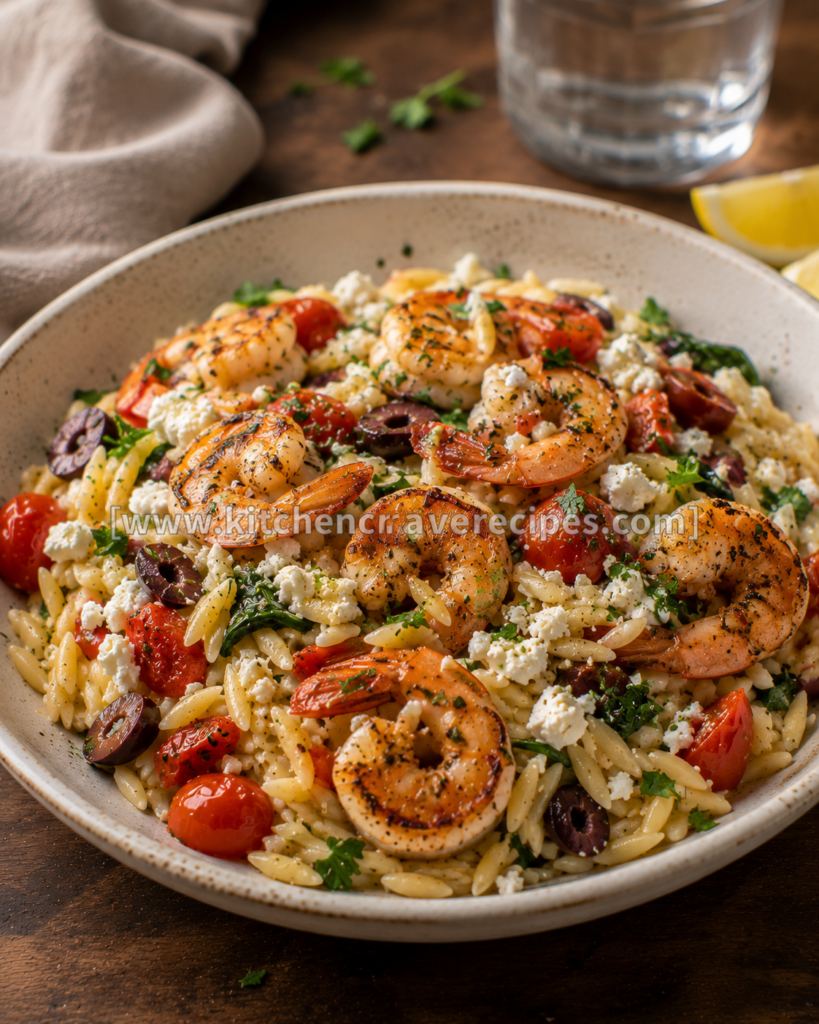
Greek Shrimp with Orzo and Feta — 35 Min
Open this recipe on a weeknight and you'll have a cast-iron skillet full of color on the table in 35 minutes flat.
Greek shrimp with orzo and feta is everything a one-pan dinner should be — boldly seasoned shrimp sautéed until deeply charred and caramelized, tossed with tender orzo, halved cherry tomatoes in red and yellow, briny Kalamata and green olives, crumbled feta, and a generous handful of fresh herbs. The photo tells the full story: a Staub cast-iron skillet packed with texture and vivid color, the shrimp golden-edged and slightly charred from the high sauté heat, the orzo toasted and glossy, everything studded with olives and bright tomatoes. This dish is built for the sauté method — high heat, quick cooking, layered in the same skillet from start to finish — and it tastes like something a Greek taverna would serve without reservation.
Recipe Quick Info
| Detail |
Info |
| Prep Time |
10 minutes |
| Cook Time |
25 minutes |
| Total Time |
35 minutes |
| Servings |
4 portions |
| Cuisine |
Greek / Mediterranean |
| Course |
Main Dish |
| Cooking Method |
Sautéing |
| Calories |
~490 per serving |
| Difficulty |
Standard |
Why You'll Love This Recipe
- One cast-iron skillet for the entire dish — the shrimp, orzo, tomatoes, olives, and herbs all come together in the same pan using the sauté method, which means the orzo absorbs the savory shrimp drippings and every bite tastes cohesive.
- Deeply caramelized shrimp in under 4 minutes — cooking shrimp over medium-high heat in a properly preheated cast-iron skillet produces that gorgeous, slightly charred exterior visible in the photo without any risk of overcooking.
- A full Mediterranean pantry in every bite — halved cherry tomatoes in red and yellow, briny Kalamata and green olives, crumbled feta, and fresh herbs make this a genuinely complex-tasting dish built from simple, easy-to-find ingredients.
- 35 minutes start to finish — the orzo cooks in the same skillet after the shrimp are set aside, absorbing flavor from the garlic and olive oil left in the pan rather than draining away plain in a separate pot.
- Naturally high in protein — shrimp is one of the leanest high-protein ingredients available, and a full serving here delivers around 32 grams of protein alongside a well-balanced mix of vegetables and whole-grain pasta.
- Scales easily for a crowd — the Staub-style cast-iron skillet shown in the photo can comfortably hold a doubled batch, and the sauté technique scales directly without any change to timing or method.
- Beautiful enough to serve to guests — the color contrast of the golden shrimp, red and yellow tomatoes, dark olives, white feta, and vivid green herbs makes this a dish people photograph before they eat it.
Ingredients
For the Shrimp
- 1½ lbs large shrimp (16/20 count), peeled and deveined, tails on or off
- 1½ teaspoons smoked paprika
- 1 teaspoon dried oregano
- ½ teaspoon garlic powder
- ½ teaspoon onion powder
- ¼ teaspoon cayenne pepper
- ½ teaspoon kosher salt
- ¼ teaspoon black pepper
- 2 tablespoons olive oil
For the Orzo Base
- 1½ cups dry orzo pasta
- 2 tablespoons olive oil
- 4 cloves garlic, minced
- 2½ cups low-sodium chicken broth (or vegetable broth)
- ½ cup dry white wine (optional, or substitute extra broth)
- ½ teaspoon kosher salt
- ¼ teaspoon black pepper
For the Mediterranean Mix-Ins (as visible in photo)
- 1½ cups mixed cherry tomatoes, halved — red and yellow varieties
- ½ cup Kalamata olives, halved (visible in photo)
- ½ cup green olives, halved (visible in photo)
- 3 oz crumbled feta cheese
- ½ cup fresh baby spinach or baby kale, loosely packed
- 3 tablespoons fresh parsley, roughly chopped
- 2 tablespoons fresh basil, chiffonade
- 1 tablespoon fresh lemon juice
- Lemon wedges for serving
Optional Add-Ins
- 1 tablespoon capers, drained
- ¼ cup sun-dried tomatoes, roughly chopped
- ½ teaspoon red pepper flakes for added heat
Substitution Table
| Ingredient |
Substitution |
Notes |
| Large shrimp |
Scallops or diced chicken breast |
Chicken needs 6–8 minutes per side; sauté method unchanged |
| Orzo pasta |
Couscous or small pasta shells |
Couscous cooks faster — adjust liquid and timing accordingly |
| Chicken broth |
Vegetable broth or seafood stock |
Seafood stock adds depth; vegetable broth keeps it neutral |
| Kalamata olives |
Nicoise olives |
Similar brine level and size — works directly as a swap |
| Feta cheese |
Goat cheese or ricotta salata |
Goat cheese is creamier; ricotta salata is firmer and saltier |
| Fresh parsley |
Fresh dill |
Dill is more authentically Greek — excellent here |
| White wine |
Additional chicken broth + 1 tsp lemon juice |
Mimics the acidity wine adds to the orzo base |
Kitchen Tools Needed
- 12-inch cast-iron skillet (such as Staub or Lodge) — the primary vessel for the entire recipe, as shown in the photo; cast iron's heat retention is what gives the shrimp their charred, caramelized exterior in the sauté phase
- Stovetop — medium-high for searing the shrimp; medium for building the orzo
- Tongs — for placing and flipping the shrimp quickly in the hot skillet
- Wooden spoon or silicone spatula — for stirring the orzo as it simmers in the pan
- Lid or aluminum foil — for covering the skillet while the orzo absorbs the broth
- Cutting board and chef's knife — for halving tomatoes, olives, and prepping herbs
- Microplane or fine grater — for lemon zest if desired
- Citrus juicer — for fresh lemon juice at finishing
- Instant-read thermometer — optional; shrimp doneness is most easily judged visually (pink and curled), but the FDA safe minimum for shrimp is 145°F
How to Sauté Greek Shrimp with Orzo and Feta Perfectly Every Time
Step 1 — Season the Shrimp
Pat the shrimp completely dry with paper towels — surface moisture prevents the high sauté heat from producing the caramelized char visible in the photo. Combine the smoked paprika, oregano, garlic powder, onion powder, cayenne, salt, and black pepper in a small bowl. Toss the shrimp in 1 tablespoon of olive oil, then coat evenly with the spice blend. Set aside while the skillet heats.
Step 2 — Sear the Shrimp (Core Sauté Step)
Heat the cast-iron skillet over
medium-high heat for 2–3 minutes until the pan is properly hot — hold your palm 3 inches above the surface; if it's uncomfortable within 2 seconds, the pan is ready. Add the remaining 1 tablespoon of olive oil and let it shimmer and just begin to smoke. Add the shrimp in a single layer — do not crowd them — and sauté undisturbed for
90 seconds until the bottom edges turn deep orange and slightly charred. Flip each shrimp with tongs and sauté for another
60–90 seconds until just opaque throughout and curled into a loose C-shape. The FDA recommends 145°F as the safe internal temperature for shrimp — for the full reference, see
https://www.fda.gov/food/buy-store-serve-safe-food/safe-minimum-internal-temperatures. Transfer to a plate and set aside — the shrimp will go back into the skillet at the end to avoid overcooking.
Embedded tip: Work in two batches if your skillet can't hold all the shrimp in a single, uncrowded layer. Crowding drops the pan temperature immediately, causing the shrimp to steam rather than sear, and you lose all the charred flavor visible in the photo.
Step 3 — Build the Orzo Base
Without wiping the skillet, reduce the heat to
medium. Add 2 tablespoons of olive oil and the minced garlic. Sauté the garlic for 30–45 seconds, stirring constantly, until fragrant and just barely golden at the edges — the residual heat and drippings from the shrimp will make the garlic brown quickly, so watch closely. Add the dry orzo and stir to coat it in the garlic oil, toasting it for 1–2 minutes until it smells nutty and turns very lightly golden. This toasting step adds a subtle depth that plain boiled orzo never achieves.
Step 4 — Simmer the Orzo
Pour in the white wine (if using) and let it bubble and reduce for 1 minute, scraping up any browned bits from the shrimp sear with a wooden spoon — those bits are concentrated flavor. Add the chicken broth, salt, and pepper. Stir to combine and bring to a gentle simmer. Cover the skillet with a lid or foil and cook for
10–12 minutes, stirring once halfway through, until the orzo is tender and has absorbed most of the liquid. The orzo is done when it's al dente with a small amount of glossy, starchy liquid remaining — not dry and not soupy.
Embedded tip: Check the orzo at 10 minutes — it absorbs liquid faster than you might expect. If it looks dry before it's fully tender, add ¼ cup of warm broth and continue.
Step 5 — Add the Mediterranean Mix-Ins
Reduce the heat to
medium-low. Stir in the halved cherry tomatoes, Kalamata olives, green olives, and fresh spinach or baby kale. Toss everything together and cook for 1–2 minutes — just long enough for the tomatoes to warm through and release a small amount of juice into the orzo, and for the greens to wilt. The tomatoes should stay intact and retain their shape; you don't want them completely broken down.
Step 6 — Return the Shrimp and Finish
Nestle the seared shrimp back into the orzo, pressing them slightly into the top layer so they warm through from the residual heat of the pan without overcooking. Squeeze the lemon juice over the top, scatter the fresh parsley and basil across the surface, and crumble the feta evenly over everything. Give the pan one final gentle toss with tongs and serve directly from the skillet with lemon wedges on the side — exactly as shown in the photo.
Pro Tips for Perfect Sautéed Greek Shrimp with Orzo
The cast-iron skillet must be fully preheated before the shrimp go in. This is the single most important variable in the sauté method for this dish. A properly preheated cast-iron pan reaches and holds a surface temperature high enough to caramelize the shrimp's exterior in under 2 minutes — a lukewarm pan produces grey, steamed shrimp with no color and no char.
Toast the orzo before adding liquid. Dry orzo stirred in olive oil and garlic for 1–2 minutes over medium heat takes on a nutty, golden quality that adds a layer of flavor the final dish couldn't achieve if the pasta went in raw with the broth. Don't skip this — it takes 90 seconds and makes a real difference.
Add feta last, never during cooking. Crumbled feta added to a hot pan melts unevenly and loses its texture. Scattered over the finished dish right before serving, it retains its crumbly, creamy character and provides cool contrast against the warm orzo — the temperature difference is part of what makes each bite interesting.
Use large shrimp (16/20 count), not small. Smaller shrimp overcook within seconds at the high heat required to develop a charred crust. A 16/20 shrimp has enough mass to develop color on the outside while the center finishes to 145°F — smaller shrimp will be rubbery before the surface has time to caramelize.
Don't stir the shrimp for the first 90 seconds. Undisturbed contact with the screaming-hot cast iron is what creates the char lines and golden crust visible in the photo. Stirring too early breaks the Maillard reaction before the crust has set, leaving you with uniformly cooked but pale shrimp.
Common Mistakes to Avoid
1. Crowding the shrimp in the skillet (sauté-specific mistake).
Adding too many shrimp at once drops the pan temperature instantly and causes steaming rather than searing. Work in two batches if necessary and keep the heat at medium-high throughout. The extra 3 minutes for a second batch is worth it for the charred result shown in the photo.
2. Not patting the shrimp dry before seasoning.
Wet shrimp create steam in the pan, which lowers the surface temperature and produces pale, rubbery exteriors. Even 30 seconds with a paper towel on both sides makes a visible difference in the final color and texture of the sear.
3. Adding the tomatoes and olives too early.
Halved cherry tomatoes added before the orzo finishes cooking turn completely soft and mushy. They should go in at the very end — during the final 1–2 minutes — so they warm through and release a small amount of juice without losing their shape or turning into sauce.
4. Overcooking the orzo before adding mix-ins.
Orzo continues cooking from residual heat even after the skillet is off the burner. Pull it from the heat when it's just al dente with a small amount of liquid remaining — it will absorb the last of the moisture and reach perfect tenderness on its own without becoming gluey.
5. Using pre-crumbled "dry" feta from a shaker container.
The feta visible in the photo is block feta crumbled by hand — it's creamier, saltier, and far more flavorful than the pre-crumbled dry variety. Block feta packed in brine is always the superior choice for a dish where the cheese is a primary flavor.
6. Returning the shrimp to the skillet over high heat.
The shrimp are already cooked when they go back into the pan in Step 6. High heat at this stage turns them from perfectly cooked to rubbery and tight within 60 seconds. Nestle them into the warm orzo on medium-low and let the ambient heat do the work.
7. Skipping the wine deglaze.
The browned bits left on the cast iron after searing the shrimp are loaded with savory flavor. The wine (or extra broth) added in Step 4 lifts and dissolves those bits into the orzo cooking liquid. Skipping this step means leaving some of the best flavor in the dish behind on the bottom of the pan.
Variations
Healthy Lightened-Up Version
Reduce the olive oil to 1 tablespoon total across the whole recipe and increase the chicken broth to 3 cups to compensate for moisture. Use reduced-fat feta (available at most grocery stores) and double the fresh spinach. The sauté method is unchanged — the result is a noticeably lighter dish with the same bold Mediterranean flavor profile and significantly fewer calories per serving.
Vegetarian Version
Replace the shrimp with 1 can (15 oz) of drained, rinsed chickpeas and 1½ cups of diced firm tofu. Sauté the tofu in the same hot cast-iron skillet in the same way as the shrimp — 2 minutes per side over medium-high heat until golden. Add the chickpeas in Step 5 with the tomatoes. Use vegetable broth throughout. The dish retains its protein content and all of its Greek Mediterranean flavors.
Spicy Version
Double the cayenne in the shrimp spice blend and add ½ teaspoon of red pepper flakes to the garlic oil in Step 3 before the orzo goes in. Stir 1 tablespoon of harissa paste into the broth before adding it to the orzo — harissa adds North African heat notes that pair well with the Greek ingredient base. Serve with extra lemon wedges to balance the heat.
Gluten-Free Version
Substitute certified gluten-free orzo (several brands carry it, including DeLallo) or use a similarly sized gluten-free pasta shape such as rice-based ditalini. Confirm your chicken broth is labeled gluten-free. The sauté method and all timings apply directly — no changes needed to technique or steps.
Low-Carb / Keto Version
Replace the orzo entirely with riced cauliflower. Add 2 cups of cauliflower rice to the skillet after the garlic has sautéed, skip the broth-simmer step, and toss the cauliflower rice for 4–5 minutes over medium-high heat until just tender. Proceed with adding the tomatoes, olives, feta, shrimp, and herbs exactly as written. This is a genuinely different base from orzo but works naturally with all the Mediterranean mix-ins and keeps the carb count very low.
What to Serve With This Recipe
- Warm pita bread or crusty sourdough — essential for scooping up the olive oil–glossed orzo and tomato juices left in the skillet.
- Classic Greek salad (horiatiki) — crisp cucumber, red onion, tomato, olives, and a block of feta dressed simply with olive oil and oregano — a natural pairing.
- Tzatziki with cucumber dippers — cool, garlicky yogurt sauce cuts through the richness of the olive oil and feta beautifully.
- Lemon roasted potatoes — if you want something more substantial on the side, Greek-style roasted potatoes with lemon and oregano complement the dish perfectly.
- Simple arugula salad with lemon vinaigrette — peppery arugula dressed with lemon and olive oil mirrors the flavors in the main dish without duplicating them.
- Chilled dry rosé or a crisp Assyrtiko — both Greek and Mediterranean whites pair naturally with seafood and lemon.
- Extra crumbled feta and lemon wedges at the table — the simplest and most universally appreciated accompaniment.
For more Mediterranean-inspired dinners, try
Easy Creamy Garlic Salmon Pasta Bake (5-Star Ultimate Dinner) or
Best Cheesy Keto Taco Soup — Easy 30-Minute Foolproof Bowl — both come together quickly with the same pantry staples.
Storage Instructions
Refrigerator
Transfer leftovers to an airtight container within 2 hours of cooking. The orzo will absorb the remaining liquid and the olive oil as it sits, becoming denser and drier by the next day. Add a splash of broth or olive oil when reheating to restore moisture. Store for up to
3 days — the shrimp remain safe to eat refrigerated for up to 3 days per FDA seafood handling guidelines.
Freezer
The orzo-based dish freezes adequately but not ideally — orzo tends to turn mushy after freezing and thawing. The shrimp themselves freeze better when stored separately, wrapped tightly in plastic wrap and then foil, for up to
1 month. If you anticipate leftovers, consider freezing only the shrimp and making fresh orzo when you want to use them.
Shelf Life Summary
| Storage Method |
Duration |
| Refrigerator (airtight container) |
Up to 3 days |
| Freezer — shrimp only |
Up to 1 month |
| Freezer — full assembled dish |
Not recommended (orzo texture suffers) |
| Room temperature |
No longer than 2 hours |
Reheating Instructions
Stovetop (Best Method)
Place the leftovers in a skillet over
medium heat with 2–3 tablespoons of chicken broth or a drizzle of olive oil. Cover with a lid and heat for 4–5 minutes, stirring once or twice, until everything is warmed through and the orzo has loosened back to its original texture. Add fresh herbs at the end rather than reheating them — dried-out parsley doesn't recover well.
Microwave
Transfer a single portion to a microwave-safe bowl and add 1–2 tablespoons of broth or water over the top. Cover loosely with a damp paper towel and microwave on
medium power (70%) in 60-second intervals, stirring between each, until fully heated. Avoid high power — it toughens the shrimp rapidly and makes the orzo gummy at the edges.
Oven
Spread the leftovers in an oven-safe dish, add 3 tablespoons of broth, cover tightly with foil, and bake at
300°F for 12–15 minutes until warmed through. This is the slowest method but the most even for a full portion — useful if reheating for guests.
For general food-safe reheating standards, see
https://www.foodsafety.gov/food-safety-charts/safe-minimum-cooking-temperature.
Nutrition Facts
(Per serving — based on 4 servings total)
| Nutrient |
Amount |
| Calories |
~490 |
| Total Fat |
18g |
| Saturated Fat |
5g |
| Cholesterol |
215mg |
| Sodium |
890mg |
| Total Carbohydrates |
46g |
| Dietary Fiber |
3g |
| Total Sugars |
4g |
| Protein |
32g |
| Calcium |
180mg |
Nutrition Disclaimer: These values are estimates calculated using standard nutritional databases and will vary based on the size of the shrimp, specific broth and olive oil brands, the amount of feta used, and any optional add-ins. For precise tracking, use a verified nutrition calculator with the exact products and quantities you purchase.
Frequently Asked Questions
Can I use frozen shrimp for this recipe?
Yes — thaw them overnight in the refrigerator or under cold running water for 10–15 minutes in their bag. Pat them very dry with paper towels before seasoning. Frozen-then-thawed shrimp release more moisture than fresh, so the drying step is even more critical for achieving the char visible in the photo.
Do I have to use a cast-iron skillet?
A cast-iron skillet (as shown in the photo) is strongly preferred because its heat retention is what enables the shrimp to sear and char rather than steam. A heavy stainless steel skillet is a good second choice. Avoid nonstick — the lower maximum heat tolerance of most nonstick pans prevents the kind of high-heat sauté this dish requires for properly caramelized shrimp.
How do I know when the shrimp are done cooking?
Perfectly cooked shrimp curl into a loose C-shape and turn entirely opaque pink — a tight O-shape means they're overcooked. The sauté time is short: 90 seconds per side over medium-high heat in a properly preheated cast-iron pan. If you prefer a thermometer check, 145°F at the thickest point confirms they're safe and done.
Can I make this recipe ahead of time?
The orzo base can be made up to 1 day ahead and refrigerated — reheat it in the skillet with a splash of broth before adding the fresh mix-ins and finishing with the shrimp. Always sear the shrimp fresh; pre-cooked shrimp reheated in the dish for a second time tend to become rubbery. The five minutes of fresh shrimp sautéing is worth doing just before serving.
Is this dish suitable for a gluten-free diet?
With one substitution: replace the standard orzo with a certified gluten-free orzo or a similarly sized gluten-free pasta shape. All other ingredients in the recipe — shrimp, olive oil, tomatoes, olives, feta, herbs, and broth — are naturally gluten-free. Verify your chicken broth label, as some brands contain trace wheat.
Can I add more vegetables to this dish?
Yes — diced zucchini, artichoke hearts, or roasted red peppers all work well. Add any raw, diced vegetables (like zucchini) in Step 5 with the tomatoes and olives. Artichoke hearts and roasted peppers can go in straight from the jar since they're already cooked — just warm them through.
What does toasting the orzo do and why does it matter?
Toasting dry orzo in olive oil and garlic for 1–2 minutes before adding broth triggers a light browning reaction on the pasta surface that adds a subtle nuttiness to the finished dish. It also reduces the orzo's tendency to turn gluey during cooking. It's a small step that requires no extra dishes and makes a noticeable difference in the depth of the final flavor.
Can I bake this instead of sautéing it?
Yes, though the result differs. Sear the shrimp first in a skillet using the method above, set them aside, and transfer the orzo (with garlic, broth, and mix-ins) to a baking dish. Bake covered at 375°F for 20–22 minutes until the orzo is tender. Nestle the seared shrimp on top for the last 5 minutes of baking. You lose the pan-fond flavor that makes the stovetop sauté version exceptional, but the baked version is easier for larger batches.
Why is there both Kalamata and green olives in this recipe?
The two olive varieties provide different flavor profiles that work together: Kalamata olives are deeper, more intensely briny, and slightly fruity; green olives (such as Castelvetrano or standard pimento-stuffed) are milder, buttery, and slightly tangy. Together, they create a more interesting olive flavor than using one variety alone — and the color contrast between dark purple and bright green is part of what makes the dish as visually striking as shown in the photo.
How do I prevent the orzo from sticking to the cast-iron skillet?
Two things prevent sticking: coating the dry orzo in olive oil before adding the broth (the toasting step does this naturally), and stirring once at the midpoint of the broth-absorption phase. If the skillet seems dry before the orzo is fully tender, add ¼ cup of warm broth and stir to loosen. Cast iron can create hot spots — keeping the heat at medium (not high) during the orzo phase also helps.
Expert Chef Tips
Build from the bottom up — never wipe the skillet between components. The entire flavor architecture of this dish depends on layering in the same pan: shrimp drippings season the garlic oil, the garlic oil flavors the toasted orzo, and the deglazing wine pulls the shrimp fond into the broth. Wiping the skillet at any point eliminates one of those layers and flattens the dish.
Use block feta packed in brine, not pre-crumbled. Block feta is moister, saltier, and more flavorful than the dry pre-crumbled variety. Crumble it by hand just before serving — the slightly irregular, chunky pieces provide better texture contrast against the orzo than the fine, powder-like crumble from a pre-shredded bag.
Finish with a generous squeeze of fresh lemon, not bottled. The brightness and floral quality of fresh lemon juice changes the whole dish in the final seconds before serving. Bottled lemon juice is more acidic and less aromatic — it doesn't do the same job in a dish where fresh citrus is one of the primary flavor notes.
Let the skillet come to the table. Serving directly from a cast-iron Staub-style skillet keeps the dish warmer for longer and creates exactly the visual impact shown in the photo — the contrast of vivid colors against the dark skillet is part of the appeal. Place it on a trivet and let people serve themselves from the center of the table.
Recipe Summary
This
Greek shrimp with orzo and feta is a 35-minute, single-skillet dinner that builds flavor in layers using the sauté method — shrimp seared charred and golden in a screaming-hot cast-iron pan, followed by garlic-toasted orzo cooked in broth and the shrimp drippings, then finished with cherry tomatoes, Kalamata and green olives, feta, and a riot of fresh herbs. The technique is straightforward, the ingredients are pantry-friendly, and the result is a visually impressive dish that looks far more involved than it actually is. Serve directly from the skillet for the full effect.
Conclusion
If there's a weeknight dinner that earns a regular spot in the rotation on first try, it's this one.
Greek shrimp with orzo and feta is fast, colorful, deeply flavorful, and built from the kind of Mediterranean pantry staples that most home cooks already keep stocked. The sauté method does the heavy lifting in under 4 minutes of active cook time on the shrimp, and the rest practically builds itself in the same skillet. Make it once, and it becomes the answer every time someone asks what's for dinner. We'd love to hear which olive variety you used or how you customized the dish — leave a comment below.