The High Protein Beef Lasagna That Actually Hits Your Macros
Most lasagna recipes weren't built with protein goals in mind — they were built for comfort, and they deliver on that front while quietly loading up on refined carbs and excess fat. This high protein beef lasagna is a different animal entirely. It's built from the ground up to maximize protein at every layer: lean ground beef in a deeply savory tomato meat sauce, a thick ricotta and egg filling that adds structure and richness, and a generous blanket of whole-milk mozzarella blistered to golden-brown perfection across the top.
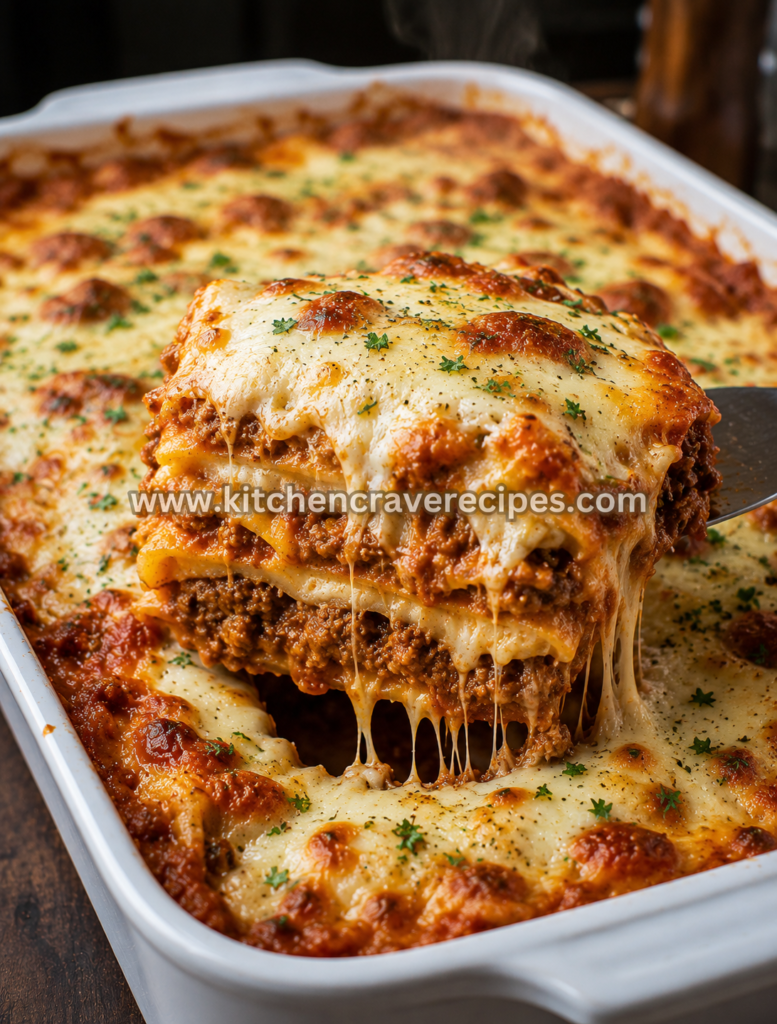
What you're looking at in the photo is a white ceramic baking dish with classic lasagna noodles layered in generous, sliceable sections — lifted cleanly with a spatula, stringy cheese pulling between each piece, scattered with fresh chopped herbs. This isn't diet food pretending to be satisfying. It's genuinely delicious food that happens to deliver serious protein in every square.
Recipe Quick Info
| Detail |
Info |
| Prep Time |
30 minutes |
| Cook Time |
45 minutes |
| Total Time |
75 minutes |
| Servings |
8 |
| Cuisine |
Italian-American |
| Course |
Main Dish / Dinner |
| Estimated Calories |
~520 per serving |
| Difficulty |
Standard |
Why You'll Love This High Protein Beef Lasagna
- 45 grams of protein per serving. The combination of lean ground beef, whole-milk ricotta, eggs, and mozzarella stacks protein at every single layer — not just the meat.
- Classic flavor without any compromise. This tastes like the lasagna everyone grew up wanting — rich, deeply savory, and loaded with real cheese — not like a gym-food substitute.
- Meal-prep built into the recipe. This high protein beef lasagna makes eight generous portions, holds beautifully in the fridge for five days, and reheats without losing texture.
- Only one baking dish to clean. The meat sauce and ricotta filling come together quickly in separate pans, but everything bakes and serves from one dish.
- Freezer-friendly for up to 3 months. Bake it, cool it, slice it, and freeze individual portions for grab-and-go high-protein meals all week.
- Slices cleanly every time. The egg-enriched ricotta layer acts as a binding agent between noodles, so you get clean, restaurant-style slices instead of a collapsed mess on the plate.
- Scales up effortlessly. Use two pans and double the batch — the technique stays exactly the same, and you'll have enough for a large gathering or two full weeks of meal prep.
- Customizable macros. Swap ingredients at the variation level (see below) to adjust calories, carbs, or fat without rebuilding the recipe from scratch.
Ingredients
For the Meat Sauce
- 2 lbs 93/7 lean ground beef
- 1 medium yellow onion, finely diced
- 5 cloves garlic, minced
- 1 can (28 oz) crushed tomatoes
- 1 can (14.5 oz) diced tomatoes, drained
- 2 tablespoons tomato paste
- 1 teaspoon dried Italian seasoning
- 1 teaspoon dried basil
- ½ teaspoon dried oregano
- 1 teaspoon kosher salt
- ½ teaspoon black pepper
- ½ teaspoon crushed red pepper flakes
- 1 teaspoon granulated sugar
- 2 tablespoons olive oil
For the Ricotta Layer
- 2 cups whole-milk ricotta cheese
- 2 large eggs
- ½ cup freshly grated Parmesan
- 1 teaspoon garlic powder
- ½ teaspoon kosher salt
- ¼ teaspoon black pepper
- 2 tablespoons fresh flat-leaf parsley, finely chopped
For the Noodle and Cheese Layers
- 12 classic lasagna noodles (boiled and drained)
- 3 cups whole-milk mozzarella, shredded (divided)
- ¼ cup freshly grated Parmesan (for the top)
For Garnish
- 2 tablespoons fresh flat-leaf parsley, roughly chopped
Optional Add-Ins
- ½ cup cottage cheese (blended smooth — stir into ricotta layer for extra protein with a lighter texture)
- 1 cup baby spinach, wilted and squeezed dry (layer between noodles for added micronutrients)
- ½ cup diced mushrooms (sauté with the onion for extra savory depth)
Substitution Table
| Original Ingredient |
Substitution |
Notes |
| 93/7 lean ground beef |
90/10 ground turkey |
Slightly milder flavor; season more aggressively |
| Whole-milk ricotta |
Part-skim ricotta |
Lower fat; slightly less creamy texture |
| Whole-milk mozzarella |
Part-skim mozzarella |
Melts well; slightly less rich |
| Classic lasagna noodles |
No-boil lasagna noodles |
Add ¼ cup extra water or broth to the meat sauce |
| Crushed tomatoes |
Jarred marinara (28 oz) |
Reduce added salt by half; skip the sugar |
| Fresh parsley |
Fresh basil |
Brighter, slightly sweeter finish |
Kitchen Tools Needed
- Large skillet or sauté pan (12-inch)
- Medium mixing bowl
- Large pot for boiling noodles
- Colander
- 9×13-inch baking dish (ceramic or glass)
- Wooden spoon or silicone spatula
- Chef's knife and cutting board
- Measuring cups and spoons
- Aluminum foil
- Instant-read thermometer
- Oven mitts
Step-by-Step Instructions
Step 1: Preheat the Oven and Start the Pasta Water (5 minutes)
Preheat your oven to 375°F with the rack positioned in the center. Bring a large pot of generously salted water to a boil — it should taste mildly briny, like a light broth. Getting both of these going first keeps the rest of the recipe moving efficiently without any waiting around mid-assembly.
Step 2: Cook the Lasagna Noodles (10 minutes)
Add the lasagna noodles to the boiling water and cook according to package directions until just al dente — typically 9–10 minutes. Drain them and lay them flat on a lightly oiled sheet of parchment or foil so they don't stick together while you finish the sauce. Do not overcook them here; they'll finish cooking in the oven and will turn soft and mushy if they go in fully done.
Embedded Tip: Drizzle a small amount of olive oil over the drained noodles and gently toss to coat. This prevents sticking without adding any noticeable flavor impact on the finished lasagna.
Step 3: Make the Meat Sauce (15 minutes)
Heat 2 tablespoons of olive oil in a large skillet over medium-high heat. Add the diced onion and cook for 3 minutes until soft and translucent. Add the garlic and stir for 30 seconds until fragrant. Add the ground beef, breaking it apart with a wooden spoon, and cook until no pink remains — about 6–7 minutes.
Food Safety Note: Ground beef must reach an internal temperature of 160°F before it's safe to eat, per USDA food safety guidelines. Use an instant-read thermometer to confirm before moving to the next step.
Drain any excess fat — with 93/7 beef there won't be much, but remove what's there. Stir in the tomato paste and cook for 90 seconds, letting it caramelize slightly against the hot pan. Add both cans of tomatoes, the Italian seasoning, basil, oregano, salt, pepper, red pepper flakes, and sugar. Stir well, bring to a gentle simmer, and cook uncovered for 8 minutes until the sauce thickens and deepens in color.
Step 4: Make the Ricotta Filling (5 minutes)
In a medium bowl, combine the ricotta, eggs, ½ cup Parmesan, garlic powder, salt, pepper, and chopped parsley. Stir until smooth and fully combined. The eggs are essential here — they bind the ricotta layer so it holds its shape when sliced rather than sliding apart on the plate.
Embedded Tip: If your ricotta seems watery, drain it in a fine-mesh strainer for 10 minutes before mixing. Excess moisture will make the ricotta layer slide and the lasagna structure lose definition after cutting.
Step 5: Assemble the Lasagna (7 minutes)
Lightly grease the bottom of your 9×13 baking dish with olive oil or non-stick spray. Spread ½ cup of the meat sauce across the bottom in a thin, even layer — this prevents the noodles from sticking and drying out. Then build in this order:
- Layer 1: 3 lasagna noodles, slightly overlapping
- Layer 1 filling: One-third of the ricotta mixture, spread to the edges; one-third of the remaining meat sauce; ¾ cup shredded mozzarella
- Layer 2: 3 lasagna noodles
- Layer 2 filling: One-third of the ricotta mixture; one-third of the meat sauce; ¾ cup mozzarella
- Layer 3: 3 lasagna noodles
- Layer 3 filling: Remaining ricotta; remaining meat sauce; remaining mozzarella
- Top layer: 3 lasagna noodles; remaining mozzarella; ¼ cup Parmesan
Press each noodle layer down gently as you build to keep everything compact and even.
Step 6: Bake the Lasagna (45 minutes total)
Cover the dish tightly with aluminum foil — tent it slightly so the foil doesn't touch and stick to the cheese. Bake at 375°F for 25 minutes. Remove the foil and bake for an additional 20 minutes, until the cheese on top is deeply golden-brown with visible blistering, exactly as shown in the photo. The edges should be bubbling actively when you pull it from the oven.
Step 7: Rest and Garnish (10 minutes)
Let the lasagna rest uncovered for 10 full minutes before cutting. This is the single most important step for clean slices — the layers need time to set and reabsorb the liquid. Scatter the freshly chopped parsley over the top while still hot and serve immediately.
Pro Tips for the Best High Protein Beef Lasagna
- Use 93/7 beef, not leaner. Going leaner than 93/7 produces dry, chalky-textured meat that can't absorb sauce the way a slightly fattier grind can — flavor and protein both suffer.
- Caramelize the tomato paste before adding the tomatoes. Those 90 seconds in a hot dry pan turn the paste from sharp and raw to rich and deep — it adds more complexity than any additional spice could.
- Shred your own mozzarella. Block mozzarella shredded fresh melts into smooth, stringy pulls. Bagged pre-shredded cheese contains anti-caking starch that makes it melt into a greasy, uneven layer.
- Don't skip the 10-minute rest. Cutting immediately after baking causes the layers to slide apart and the cheese to run. Ten minutes produces the clean, structured slices you see in the photo.
- Season every layer individually. The ricotta needs its own salt and garlic powder. The meat sauce needs seasoning tasted and adjusted before assembly. Under-seasoned layers produce a flat-tasting result no matter how good the technique is.
Common Mistakes to Avoid
1. Using regular ground beef (80/20) instead of lean.
Fix: With 80/20, the extra fat renders into the sauce and makes the finished lasagna greasy at the base. Stick with 93/7 for maximum protein and a cleaner texture.
2. Overcooking the noodles before baking.
Fix: Cook them to just al dente — they'll absorb sauce and continue softening in the oven. Fully cooked noodles turn mushy and lose structural integrity in the final dish.
3. Skipping the eggs in the ricotta layer.
Fix: Eggs bind the ricotta so it holds its shape under heat. Without them, the ricotta layer spreads, slides, and loses its distinct identity between noodles.
4. Not draining watery ricotta.
Fix: Excess moisture from ricotta pools at the bottom and makes the noodles soggy. Strain for 10 minutes in a fine-mesh strainer before mixing if it looks very wet.
5. Baking uncovered the entire time.
Fix: Start covered to trap steam and cook the interior through evenly. Removing the foil for the last 20 minutes is what creates the golden-brown blistered cheese you see in the photo — baking uncovered from the start dries out the top before the inside heats through.
6. Cutting immediately after baking.
Fix: A 10-minute rest is non-negotiable for clean slices. The structural integrity of every layer depends on this cooling window.
7. Under-seasoning the meat sauce.
Fix: Taste the sauce before assembly and adjust. A flat meat sauce makes the entire lasagna taste dull regardless of how well the cheese layer performs.
8. Not spreading sauce on the bottom of the dish.
Fix: That thin base layer of sauce prevents the bottom noodles from drying out and sticking to the dish during baking. Never skip it.
Variations
Healthy / Lower-Calorie Version
Replace the whole-milk ricotta with part-skim ricotta and use part-skim mozzarella. Swap ½ cup of the ricotta for blended low-fat cottage cheese, which adds extra protein while cutting fat. You can also reduce the mozzarella between layers to ½ cup each and reserve the larger amount only for the top. Protein stays high while calories drop to approximately 440 per serving.
Vegetarian Version
Replace the ground beef with a combination of 1 cup cooked green lentils and 2 cups finely diced portobello mushrooms sautéed in olive oil. The lentils provide plant-based protein and absorb the tomato sauce deeply, while portobellos contribute a meaty, umami-rich bite. Keep all other components identical — the structure and layering technique work exactly the same way.
Spicy Version
Add 1 full teaspoon of crushed red pepper flakes to the meat sauce (double the original amount) and stir in 1 teaspoon of smoked paprika alongside the other dried spices. The heat builds gradually through the layers and plays beautifully against the richness of the ricotta and mozzarella. This version pairs particularly well with a cold sparkling water or a glass of Sangiovese.
Gluten-Free Version
Use certified gluten-free lasagna noodles — brown rice-based varieties hold up best during both boiling and baking without becoming gummy. Verify your canned tomatoes are certified GF (most are, but check the label). All other ingredients in this high protein beef lasagna are naturally gluten-free, making this a straightforward one-swap adaptation.
Low-Carb / Keto Version
Replace the pasta noodles entirely with thin lengthwise-sliced zucchini or eggplant, salted, patted completely dry, and roasted at 425°F for 12 minutes before layering. The roasting step is mandatory — it drives off excess water that would otherwise make the lasagna soggy. Protein and fat content remain high; net carbs drop significantly. Pair with
Mushroom Spinach Scramble: 5-Ingredient Easy Recipe for a fully keto-compliant dinner.
What to Serve With This High Protein Beef Lasagna
- Classic Caesar salad — the crisp, cool romaine and sharp dressing contrast perfectly with the rich, hot lasagna.
- Roasted broccoli with garlic and lemon — simple, protein-complementing, and ready in the same oven window.
- Crusty sourdough or garlic bread — for scooping up extra meat sauce from the edges of the dish.
- Simple arugula salad with shaved Parmesan — peppery and bright, it cuts through the richness without competing for attention.
- Roasted asparagus with olive oil — light, quick to make, and nutritionally balanced alongside a protein-heavy main.
- Caprese salad with fresh basil — the fresh tomato and mozzarella echo the flavors in the lasagna and add a clean, cool counterpoint.
- Sparkling water with lemon or a glass of Chianti — both work beautifully with the tomato-forward, beef-rich flavor profile.
For another high-protein Italian-style dinner idea, check out
Mushroom Spinach Scramble: 5-Ingredient Easy Recipe— same approach, different protein, equally crowd-pleasing.
Storage Instructions
Refrigerator
Cool the lasagna completely before covering the dish tightly with plastic wrap or foil, or transferring individual slices to airtight containers. Stored properly, this high protein beef lasagna keeps well in the refrigerator for up to
5 days. Individual portions are ideal for meal-prep use — they reheat quickly and hold their layered structure.
Freezer
This lasagna freezes beautifully either before or after baking. For baked lasagna, cool completely, cut into individual portions, wrap each tightly in plastic wrap and then foil, and freeze for up to
3 months. For unbaked lasagna, assemble completely through the final cheese layer, wrap tightly, and freeze. Thaw overnight in the refrigerator before baking and add 10–15 minutes to the covered baking time.
Shelf Life Summary
| Storage Method |
Duration |
| Room temperature |
No more than 2 hours |
| Refrigerator (covered) |
Up to 5 days |
| Freezer (baked, wrapped) |
Up to 3 months |
| Freezer (unbaked, assembled) |
Up to 3 months |
Reheating Instructions
Oven (Best Method)
Preheat to 350°F. Place a portion in an oven-safe dish, add 1–2 tablespoons of water or broth over the top, and cover loosely with foil. Heat for 20–25 minutes until the center reaches 165°F. Remove foil for the last 5 minutes to re-crisp the cheese topping. This method best preserves the original texture of the ricotta and noodle layers.
Microwave (Fastest Method)
Place a single portion on a microwave-safe plate, cover with a damp paper towel to retain moisture, and heat on medium power (70%) in 90-second intervals until heated through. The FDA recommends reheating all cooked meat dishes to a safe internal temperature of 165°F — refer to the
FDA safe minimum temperature guidelines for full details.
Stovetop
Add a single portion to a small saucepan with 2 tablespoons of water or marinara. Cover with a lid and heat on medium-low for 7–9 minutes, turning gently once midway through. The added liquid prevents the noodles from drying out and keeps the meat sauce from scorching.
Nutrition Facts (Per Serving — Based on 8 Servings)
| Nutrient |
Amount |
| Calories |
~520 |
| Total Fat |
22g |
| Saturated Fat |
10g |
| Cholesterol |
130mg |
| Sodium |
820mg |
| Total Carbohydrates |
38g |
| Dietary Fiber |
3g |
| Total Sugars |
8g |
| Protein |
45g |
| Calcium |
380mg |
| Iron |
5mg |
Nutrition Disclaimer: Values are estimated using standard nutrition calculation software based on the recipe as written with 8 servings. Actual values will vary depending on specific brands, portion sizes, and any ingredient substitutions you make. For precise dietary tracking, input your exact ingredients into a verified nutrition calculator or consult a registered dietitian.
Frequently Asked Questions
How much protein is actually in this high protein beef lasagna?
Each serving contains approximately 45 grams of protein, coming from three sources: lean ground beef, whole-milk ricotta mixed with eggs, and the mozzarella-Parmesan topping. Every layer contributes, making the protein count genuinely high rather than concentrated only in the meat.
Can I use no-boil lasagna noodles instead?
Yes. If using no-boil noodles, add ¼ cup of water or broth to the meat sauce before assembly. The no-boil noodles absorb liquid from the sauce as they cook, so a slightly wetter sauce ensures they soften completely without cracking or staying stiff.
Why does my lasagna come out watery?
The most common causes are wet ricotta that wasn't drained, under-reduced meat sauce, or noodles that released too much cooking water. Drain ricotta if it looks thin, simmer the sauce until visibly thickened, and pat the boiled noodles dry before layering.
Can I assemble this lasagna the night before?
Absolutely — it's actually better that way. Assemble fully, cover tightly with foil, and refrigerate overnight. The noodles absorb flavor from the sauce as it sits. Add 10–15 minutes to the covered bake time since it will be cold going into the oven.
What's the best cheese for maximum protein?
Whole-milk ricotta contributes the most protein per layer. Freshly grated Parmesan is also protein-dense by weight. For the mozzarella layer, whole-milk variety melts better and has a slightly higher protein content than part-skim.
Can I freeze individual slices?
Yes, and it's one of the most practical things about this recipe. Cool the baked lasagna completely, cut into individual portions, wrap each tightly in plastic wrap followed by foil, and freeze for up to 3 months. Thaw overnight in the refrigerator before reheating.
Do I need to cover the lasagna while baking?
Start covered for the first 25 minutes to cook the interior evenly and prevent the cheese from over-browning before the center heats through. Then remove the foil for the final 20 minutes to develop that golden, blistered cheese top shown in the photo.
Can I double this recipe?
Yes — use two 9×13 baking dishes and divide everything evenly between them. Bake on separate racks in the oven, rotating the pans halfway through. The technique and timing remain the same for both pans.
What can I use instead of ricotta to boost protein further?
Blended whole-milk cottage cheese is the most effective swap. It has a higher protein content than ricotta, and when blended until completely smooth, the texture is nearly identical in the finished lasagna. Use a 1:1 ratio as a full or partial replacement.
How do I get clean slices like in the photo?
Three things: eggs in the ricotta (binding), proper 10-minute resting time after baking (setting), and a sharp straight-edge knife or bench scraper rather than a serrated blade (cutting cleanly through layers rather than dragging them).
Can I add vegetables without changing the protein count significantly?
Yes. Baby spinach, diced zucchini, or mushrooms can be added to the meat sauce or layered between noodles. Their protein contribution is minimal, so the per-serving count stays close to 45 grams. Make sure to sauté or wilt vegetables before adding — raw vegetables release water during baking.
Is this recipe good for meal prep?
It's one of the best options available for high-protein meal prep. Eight structured portions, five days of refrigerator life, and the ability to freeze individual slices makes it easy to batch-cook once and eat well all week.
Expert Chef Tips
Brown the beef in a single batch without crowding the pan. If your skillet isn't large enough to cook 2 lbs of beef in one layer, do it in two rounds. Crowding causes the meat to steam rather than sear, which produces gray, bland-looking beef instead of the dark, caramelized crumbles that build flavor into the sauce.
Rest the ricotta mixture for 5 minutes after mixing. Letting the seasoned ricotta sit briefly before spreading allows the garlic powder to hydrate and the parsley to release its oils. The flavor is noticeably more cohesive than ricotta spread immediately after mixing.
Use the bottom layer of sauce generously. That initial thin spread of meat sauce across the bottom of the baking dish isn't just anti-stick insurance — it also pre-seasons the bottom noodles before they absorb anything from above, giving the first layer as much flavor as the top.
Broil for 2–3 minutes at the very end if your cheese isn't blistering. After removing the foil, if the cheese isn't coloring the way you want, switch to low broil for the final 2–3 minutes. Watch closely every 30 seconds — the line between beautifully blistered and burned is narrow at broiler temperatures.
Let the sauce cool slightly before assembly. A very hot meat sauce loosens the ricotta during layering, which can cause it to slide rather than sit in a defined layer. Giving the sauce 5 minutes off the heat before you start building makes a real difference in the definition of each layer after baking.
Recipe Summary
This high protein beef lasagna is built for people who want real comfort food and real nutritional results — not one or the other. Lean ground beef, egg-enriched whole-milk ricotta, and generous mozzarella create three distinct protein sources across multiple layers, delivering approximately 45 grams per serving. The recipe takes 75 minutes from start to table, serves eight, and stores in the refrigerator for five days or the freezer for three months. It's one of the most practical, satisfying high-protein dinners you can have in regular rotation.
A Lasagna You'll Make on Repeat
Great food doesn't need to choose between tasting incredible and fueling your body well — and this high protein beef lasagna proves it every single time it comes out of the oven. The golden-brown blistered top, the defined ricotta layers, the deeply savory meat sauce, the pull of fresh mozzarella between each slice — this is a recipe that earns its place in your permanent rotation. Make it on Sunday, portion it out, and you've got five days of genuinely satisfying meals waiting in the fridge. That's a win any day of the week.