Cheesy Ground Beef Crescent Roll Bake — Best 45-Min
Some casseroles are fine. This one gets scraped clean. The
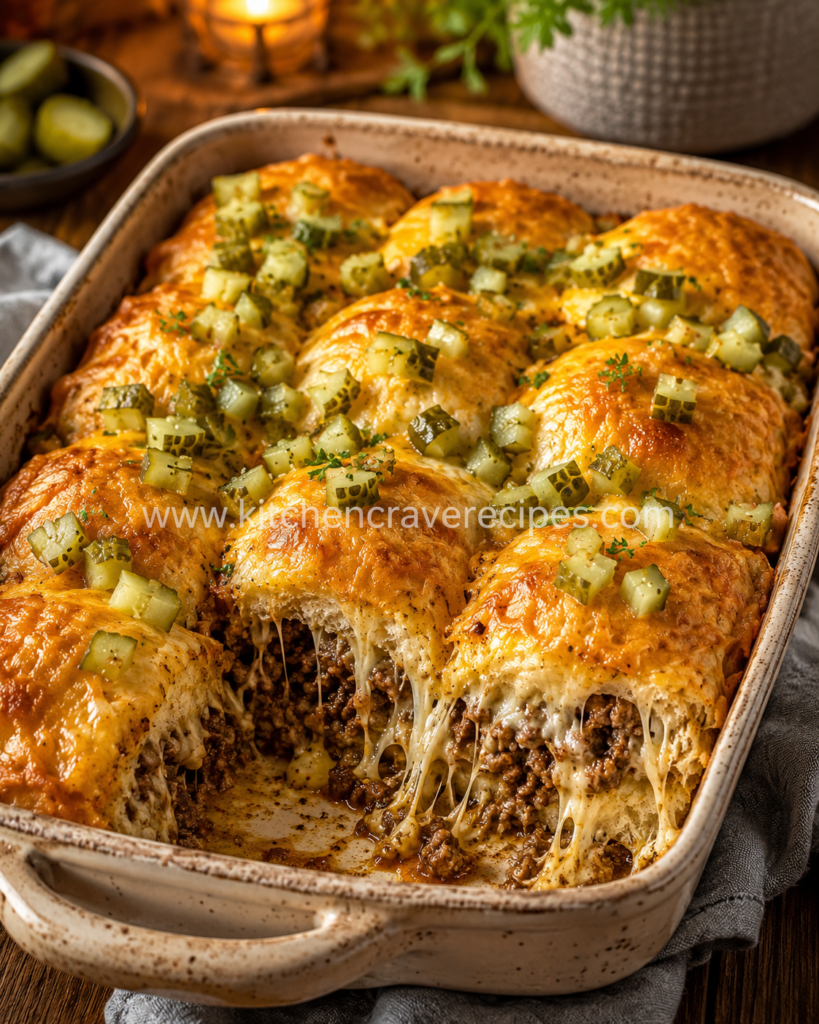
cheesy ground beef crescent roll bake is a three-layer situation — seasoned beef on the bottom, a double layer of melted cheddar and white cheese in the middle, and a sheet of crescent roll dough draped over the top and baked until it puffs into a deeply golden, bubbled crust that shatters slightly when you press a spoon through it. The whole thing gets finished with a pile of chopped dill pickles right out of the oven, which sounds unexpected and tastes exactly right. It bakes in a single glass dish at 375°F for about 25 minutes, and the result looks and tastes like something far more involved than it actually is. Weeknight dinner, game day, potluck — this bake handles all of them without complaint.
Recipe Quick Info
| Field |
Details |
| Prep Time |
20 minutes |
| Cook Time |
25 minutes |
| Total Time |
45 minutes |
| Servings |
6 |
| Course |
Main Course / Casserole |
| Cuisine |
American |
| Cooking Method |
Baking |
| Calories |
~570 per serving |
| Difficulty |
Easy |
Why You'll Love This Recipe
- Three satisfying layers in one dish. Seasoned beef, melted double-cheese, and a golden crescent roll crust create a casserole with real textural contrast — savory, stretchy, and crisp all at once — in every single spoonful.
- The pickle topping is a genuine revelation. Chopped dill pickles scattered over the hot crust add a sharp, briny punch that cuts through the richness of the cheese and beef in exactly the way this dish needs.
- One baking dish, minimal cleanup. The beef cooks in a skillet, transfers to the dish, and the whole thing bakes from there — total dishes used is mercifully low for something that looks this impressive straight out of the oven.
- Bakes in just 25 minutes at 375°F. Once assembled, the oven does all the heavy lifting — the crescent roll dough puffs and browns reliably without any attention or adjustment needed mid-bake.
- Genuinely crowd-pleasing for all ages. The cheeseburger flavor profile is universally familiar and approachable — kids eat it without negotiation, adults want seconds, and there are rarely leftovers to deal with.
- Endlessly riffable on the same base. Swap in pepper jack for heat, add caramelized onions, use a burger sauce layer — the structure of this cheesy ground beef crescent roll bake supports almost any direction you want to take it.
- Works as a make-ahead assembly. The beef layer can be cooked and seasoned up to 2 days ahead, refrigerated, and the dish assembled and baked when ready — making this one of the more practical options for weeknight cooking.
Ingredients
For the Ground Beef Layer
- 1½ lbs ground beef (80/20 blend)
- 1 teaspoon kosher salt
- ½ teaspoon freshly ground black pepper
- 1 teaspoon garlic powder
- 1 teaspoon onion powder
- 1 tablespoon Worcestershire sauce
- 1 tablespoon yellow mustard
- 2 tablespoons ketchup
For the Cheese Layer
- 1½ cups shredded sharp cheddar cheese, divided
- 1 cup shredded Monterey Jack or white cheddar cheese
- 4 oz cream cheese, softened and dolloped across the beef layer (optional but visible in the photo as part of the white cheese layer)
For the Crescent Roll Top
- 2 cans (8 oz each) refrigerated crescent roll dough
- 1 tablespoon unsalted butter, melted (for brushing the dough before baking)
For the Pickle Topping
- ½ cup dill pickles, drained and roughly chopped into ¼-inch pieces
Optional Add-Ins (added to the beef layer)
- ½ cup diced white onion, cooked down with the beef
- 2 tablespoons burger sauce or Thousand Island dressing spread over the beef layer
- ½ teaspoon smoked paprika added to the beef seasoning
Ingredient Substitutions
| Original Ingredient |
Substitution |
Notes |
| 80/20 ground beef |
Ground turkey (93/7) |
Leaner; add 1 tsp olive oil to the skillet and increase Worcestershire to 1½ tsp to compensate for lower fat flavor |
| Sharp cheddar |
Colby Jack or mild cheddar |
Milder melt; Colby Jack produces a smoother, creamier pull — less sharp flavor but still excellent |
| Crescent roll dough |
Puff pastry sheet (thawed) |
Puff pastry produces a flakier, more laminated crust; press seams together and bake at 400°F for 20 min |
| Cream cheese |
Sour cream (3 tablespoons) |
Dollop over the beef before the shredded cheese; adds tang and moisture without the same richness |
| Dill pickles |
Bread and butter pickles |
Sweeter, milder brine — reduces the sharp contrast with the beef but still provides the textural element |
| Yellow mustard in beef |
Dijon mustard |
Adds more complexity and depth; the flavor integrates well into the beef rather than standing alone |
Kitchen Tools Needed
- 9×13-inch glass baking dish — the correct vessel for this bake; glass conducts heat evenly, allows you to monitor browning on the bottom, and is the format clearly shown in the reference photo
- Oven (preheated to 375°F) — the primary cooking tool; the crescent roll dough requires a consistent, moderate oven temperature to puff and brown evenly without burning at the edges before the center sets
- Large skillet (12-inch) — for cooking and seasoning the ground beef filling before it goes into the baking dish
- Wooden spoon or silicone spatula — for breaking up the beef into fine crumbles as it cooks
- Pastry brush — for applying melted butter to the crescent roll dough surface before baking, which promotes deep, even browning
- Sharp knife and cutting board — for chopping the dill pickles into uniform pieces
- Aluminum foil — on hand in case the crescent roll top browns faster than the 25-minute mark; tent loosely if needed in the final 5 minutes
- Instant-read meat thermometer — to verify the ground beef filling has reached a safe internal temperature of 160°F before assembly if you're reheating pre-cooked beef
Step-by-Step Instructions
Step 1: Preheat the Oven and Prep the Dish
Set your oven to
375°F and allow it to fully preheat before the dish goes in — this takes most ovens 15 to 20 minutes. Lightly grease your 9×13-inch glass baking dish with cooking spray or a thin film of butter, paying attention to the corners. A greased dish ensures the crescent roll edges release cleanly when serving rather than sticking to the glass where the cheese has bubbled and caramelized against the sides.
Step 2: Cook and Season the Ground Beef
Heat a large skillet over
medium-high heat and add the ground beef. Let it sit undisturbed for 60 seconds before breaking it up — this allows the bottom to develop a brief, flavorful brown before the crumbling begins. Break the beef into small, fine pieces using a wooden spoon or spatula, cooking for
7 to 8 minutes total until no pink remains and the crumbles are evenly browned.
Drain the excess fat, leaving roughly a teaspoon behind for flavor. Return the skillet to medium heat and stir in the Worcestershire sauce, yellow mustard, ketchup, garlic powder, onion powder, salt, and pepper. Cook for another
60 seconds, stirring constantly, until the seasoning coats every crumble and the sauces cook into the beef rather than pooling separately. The mixture should smell deeply savory — beefy, tangy, with a subtle sweetness from the ketchup. Remove from heat.
According to
USDA ground beef safety guidelines, ground beef must reach an internal temperature of
160°F to be safe to eat. Verify with an instant-read thermometer if you have any uncertainty about doneness.
💡 Embedded Tip: Keep the beef crumbles small and consistent — large chunks don't layer as evenly under the crescent dough and can create uneven bumps that prevent the dough from lying flat before it puffs in the oven.
Step 3: Build the Layers
Spread the seasoned beef evenly across the bottom of the greased baking dish, pressing it gently into a uniform layer that reaches all four corners. If using cream cheese, drop small dollops across the hot beef now — the residual heat softens them slightly so they spread more easily under the shredded cheese. Scatter ¾ cup of the cheddar and all of the Monterey Jack evenly over the beef layer, then reserve the remaining ¾ cup of cheddar for the top.
Step 4: Lay the Crescent Roll Dough
Open both cans of crescent roll dough and carefully unroll them onto a clean surface. The dough comes pre-perforated into triangles — press the seams together firmly with your fingertips to seal them into two solid rectangles before laying them over the dish. Lay the sealed dough sheets across the top of the cheese layer, pressing the edges against the sides of the baking dish to form a complete, sealed top crust. If the two sheets don't quite cover the full surface, pinch and stretch them gently to close any gaps — exposed cheese will bubble up through openings during baking and can scorch on the surface.
💡 Embedded Tip: Cold crescent dough is slightly stiffer and easier to handle — if your kitchen is warm and the dough has softened considerably, pop it back in the refrigerator for 5 minutes before unrolling and sealing the seams.
Step 5: Top and Bake
Scatter the remaining ¾ cup of shredded cheddar evenly over the top of the crescent dough. Brush the entire surface — including the edges — with the tablespoon of melted butter using a pastry brush. The butter encourages the dough to brown into that deep, glossy amber color visible in the finished dish and adds a slight richness to the crust's flavor. Slide the dish onto the
center rack of the preheated 375°F oven and bake
uncovered for 22 to 25 minutes, until the crescent roll top is a deep golden-brown, the cheese is fully melted and visibly bubbling at the edges, and the dough sounds hollow when tapped lightly on the surface.
Step 6: Add the Pickle Topping and Rest
Remove the dish from the oven and immediately scatter the chopped dill pickles evenly across the entire surface while the cheese is still hot and slightly molten — they'll settle into the surface as the bake rests. Allow the dish to rest for
5 minutes before scooping and serving. Resting allows the cheese layer to firm up just enough to hold its shape when spooned rather than running entirely across the plate, and it prevents burns from the molten interior.
For a complete weeknight dinner, serve alongside
Cheesy Taco Beef Pasta: Best Easy 30-Minute Skillet Meal — the crisp, cold contrast is a perfect match for a warm, cheesy casserole fresh from the oven.
Pro Tips for Perfect Cheesy Ground Beef Crescent Roll Bake
1. Seal every crescent roll seam completely before baking — this is the most important baking-specific technique in this recipe.
Unsealed seams allow cheese and beef juices to bubble up through the dough during the 25-minute bake, which prevents even browning and can cause the surface to look patchy and uneven. Press the perforations together firmly with dry fingertips, not wet ones — moisture makes the seams re-open in the oven.
2. Place the dish on the center rack, never the bottom.
Bottom-rack placement causes the underside of the glass dish to overheat relative to the top, which can result in an overcooked beef layer and an undercooked dough surface simultaneously. The center rack puts equal oven heat above and below, giving you the evenly golden top crust and fully heated interior this casserole requires.
3. Don't skip brushing the dough with butter.
The melted butter layer over the top of the crescent dough is what produces the deep amber, glossy crust visible in the finished photo — plain crescent dough baked without it will be pale and matte. Apply it generously, including the edges where the dough meets the dish wall.
4. Drain the beef thoroughly before layering.
Excess fat pooling in the bottom of the baking dish turns the crescent roll base soggy from below, particularly near the edges. After draining the skillet, briefly blot the cooked beef with a paper towel if the mixture still looks shiny before transferring to the dish.
5. Add the pickles after baking, not before.
Chopped dill pickles placed on top of the dough before baking will steam under the heat, releasing liquid that makes the crust soft and blotchy. Adding them immediately after the dish comes out of the oven preserves their crunch, color, and sharp brine — which is exactly what this bake needs as a finishing element.
Common Mistakes to Avoid
1. Opening the oven door repeatedly to check on the bake — the most common baking error for this recipe.
Every time the oven door opens during baking, the temperature inside drops by 25 to 50°F, which disrupts the even heat the crescent dough needs to puff and brown consistently. Set a timer for 22 minutes and use the oven light to check progress through the glass door — only open it to tent with foil if the top is browning faster than expected.
2. Leaving gaps in the crescent dough top.
Gaps allow melted cheese to bubble up through the surface, which creates dark, burnt cheese spots on top of the dough and pale, unbrowned patches where the dough never achieved direct heat contact. Take the extra 60 seconds to seal every seam and stretch the dough to cover every inch of the dish surface.
3. Using too much moisture in the beef seasoning.
Adding extra ketchup or Worcestershire beyond the recipe amounts introduces liquid that steams the underside of the crescent dough rather than allowing the bottom crust to set. Stick to the measurements as written — the flavor is concentrated enough without adding more.
4. Skipping the 5-minute rest before scooping.
The cheese layer straight from the oven is fully molten and will run across the plate when scooped. Resting even for 5 minutes gives it enough time to tighten into a semi-set, stretchy pull rather than a liquid pour — the difference between a clean, photogenic scoop and a pile of beef swimming in cheese.
5. Using pre-shredded cheese in bags for the middle layer.
The anti-caking agents in pre-shredded cheese (typically potato starch or cellulose) prevent the clean, full melt that creates the stretchy cheese pull visible in the photo. For the middle layer specifically, block cheese grated at home melts more completely and produces a more cohesive, molten interior. The top layer tolerates pre-shredded cheese more easily since it has direct oven heat.
6. Not greasing the baking dish.
The combination of melted cheese and crescent dough baking against the sides of a glass dish creates a formidable seal if the surface isn't prepared. Greasing prevents the casserole from sticking to the dish walls and makes serving the first few portions significantly easier without tearing the crust.
7. Assembling the dish while the beef is still steaming hot.
Very hot beef accelerates the softening of the crescent roll dough before it goes in the oven, which can cause it to slide or shrink when transferred rather than staying in place as a flat, even top crust. Allow the beef to cool in the dish for 3 to 4 minutes before laying the dough over the top.
Variations
Healthy (Lighter Version)
Use 93/7 lean ground turkey in place of ground beef, reduce the shredded cheese to 1½ cups total, and skip the cream cheese layer. Swap one can of crescent roll dough for a sheet of thin whole-wheat flatbread pressed across the top — this reduces calories significantly while maintaining the satisfying baked-crust experience. Note that the flatbread version won't puff the way crescent dough does; it will bake flat and slightly crisp rather than pillowy and golden.
Vegetarian
Replace the ground beef with 1½ lbs of a plant-based ground meat substitute — Beyond Meat or Impossible Burger both brown well in a skillet and produce a similar crumble texture. Season exactly as the original recipe directs, including the Worcestershire sauce (use a vegan-certified version such as Annie's). All other components — cheese, dough, pickle topping — remain unchanged. The bake time and temperature are identical.
Spicy
Add 1 teaspoon of chipotle chili powder and ½ teaspoon of cayenne pepper to the beef seasoning in Step 2. Swap the Monterey Jack for pepper jack cheese in the middle layer, and top the finished bake with sliced pickled jalapeños alongside the dill pickles. The crescent roll crust and melted cheese absorb and balance the heat effectively — this version has persistent warmth without overwhelming the overall flavor.
Gluten-Free
Standard crescent roll dough is not gluten-free. For a gluten-free version, use a gluten-free puff pastry sheet (available at many grocery stores in the freezer section — Wholly Wholesome and similar brands work well) as the top crust. Bake at 400°F for 18 to 20 minutes rather than 375°F for 25, as gluten-free pastry often requires slightly higher heat to brown properly. Verify that your Worcestershire sauce and ketchup are also labeled gluten-free, as some brands contain malt vinegar.
Low-Carb / Keto
This variation requires replacing the crescent roll dough entirely — it is not low-carb. Use a cauliflower-based pizza crust (pre-made, thawed) pressed over the top, or create a fathead dough top (mozzarella, cream cheese, almond flour, and egg) and press it into a flat layer over the cheese and beef. Bake at 375°F for 20 to 22 minutes until the fathead crust is set and lightly golden. The beef and cheese layers are already keto-compatible with no changes needed.
What to Serve With Cheesy Ground Beef Crescent Roll Bake
- Iceberg wedge salad — cold, crisp, and lightly dressed; a natural counterpoint to the richness of the casserole.
- Simple corn on the cob — sweet and summery; pairs effortlessly with the burger-inspired flavor profile of this bake.
- Dill pickle spears (extra) — lean into the pickle topping by serving a bowl of whole spears alongside for crunch and acidity.
- Classic coleslaw — cool, creamy coleslaw softens the savory richness of each scoop without competing with the flavors already in the dish.
- Tomato soup — a warm, slightly acidic soup alongside a cheesy bake is one of the most reliable comfort food pairings that exists.
- Roasted broccoli — the slight char and vegetal bitterness of roasted broccoli florets balance the fat in the cheese and beef layers cleanly.
- Sweet potato fries — their natural sweetness contrasts the savory, tangy beef filling in a way that makes both taste better; try Cheesy Taco Beef Pasta: Best Easy 30-Minute Skillet Meal for the perfect side.
- Simple green salad with ranch dressing — the most weeknight-appropriate side; quick, balanced, and universally eaten without complaint.
Storage Instructions
Refrigerator
Allow the bake to cool completely — within 2 hours of coming out of the oven — before covering the dish tightly with plastic wrap or aluminum foil, or transferring portions to an airtight container. The cheesy ground beef crescent roll bake keeps well in the refrigerator for up to
3 days. The crescent crust softens as it sits, but reheating restores reasonable crispness to the top.
Freezer
This casserole freezes best before the crescent dough is applied. Cook and season the beef, layer the cheese, and freeze the dish covered with foil for up to
2 months. When ready to serve, thaw overnight in the refrigerator, top with fresh crescent dough, and bake as directed from cold — adding 5 to 7 extra minutes to the bake time. Freezing the fully assembled and baked casserole is possible but results in a softer, less distinct crust texture upon reheating.
Shelf Life Summary
| Storage Method |
Duration |
| Refrigerator (covered, cooked) |
Up to 3 days |
| Freezer (assembled, pre-bake) |
Up to 2 months |
| Freezer (fully cooked) |
Up to 1 month (texture impact) |
| Room temperature (cooked) |
2 hours maximum |
Reheating Instructions
Oven (Best for Restoring the Crust)
Preheat to
350°F. Place individual portions or the whole dish (covered loosely with foil) in the oven for
12 to 15 minutes until heated through. Remove the foil for the last 3 minutes to allow the crescent top to re-crisp slightly. This is the only method that meaningfully restores any crunch to the crust.
Microwave (Fastest Option)
Place a portion on a microwave-safe plate and cover loosely with a damp paper towel. Microwave on
medium power (70%) in 60-second intervals until steaming through — typically 2 to 3 intervals for a standard portion. The crust will be soft rather than crisp, but the beef and cheese layers reheat evenly and taste excellent.
Stovetop
Add a portion to a covered skillet over
medium-low heat with 1 tablespoon of water. Heat for
5 to 7 minutes, covered, until warmed through. This method works best for the beef and cheese components; the crescent top will not re-crisp but stays soft and tender rather than rubbery.
For USDA-recommended guidance on safely reheating cooked ground beef dishes, visit
FoodSafety.gov's safe temperature reference chart.
Nutrition Facts
Per serving (1/6 of the full 9×13-inch bake, base recipe without optional add-ins)
| Nutrient |
Amount |
| Calories |
~570 kcal |
| Total Fat |
34g |
| Saturated Fat |
16g |
| Cholesterol |
105mg |
| Sodium |
890mg |
| Total Carbohydrates |
32g |
| Sugars |
6g |
| Protein |
29g |
| Iron |
3.1mg |
Nutrition Disclaimer: All values are estimates calculated using standard nutrition databases based on the ingredient quantities listed in the base recipe. Actual values will vary depending on specific brands used, ground beef fat content, cheese varieties, and any optional add-ins or substitutions. This information is intended as a general guide only and does not substitute for advice from a registered dietitian or healthcare provider.
Frequently Asked Questions
Can I use only one can of crescent roll dough instead of two?
One can will partially cover a 9×13-inch dish but won't reach the edges completely. If you want a thinner, less doughy top crust, one can stretched carefully across the surface works — just expect thinner coverage and slightly faster browning, so check at the 18-minute mark rather than 22.
What's the best cheese combination for this bake?
Sharp cheddar on top for color and flavor, and a combination of Monterey Jack and cream cheese in the middle for the stretchy, molten pull visible in the photo. The cream cheese adds body to the middle layer that prevents the other cheeses from simply melting into the beef and disappearing.
Why do I need to seal the crescent roll seams?
The dough is perforated into triangles for rolling individually — if you don't press the seams closed, those perforations stay open in the oven and allow the cheese filling to bubble up through the gaps, creating dark, burnt cheese spots on the surface and uneven dough browning. Thirty seconds of pressing seams closed before laying the dough prevents this entirely.
Can I make this ahead and refrigerate it overnight before baking?
Yes, with one important note: don't apply the crescent roll dough until right before baking. The dough will absorb moisture from the beef and cheese layers overnight and lose its ability to puff properly. Assemble the beef and cheese layers, refrigerate covered, and lay the dough on top immediately before the dish goes into the preheated oven. Add 5 extra minutes to the bake time since the filling will be cold.
How do I know when the bake is fully done?
Three visual cues together: the crescent roll top is a deep, even golden-brown across the entire surface with no pale patches; the cheese is visibly bubbling at the sides of the dish; and the dough sounds slightly hollow when tapped in the center. If only one or two of these cues are present, give it another 3 minutes.
Can I use a different type of ground meat?
Ground turkey, ground chicken, or ground pork all work in this format. Ground pork in particular produces a richly flavored filling — slightly fattier than beef — that works exceptionally well with the cheddar and dill pickle combination. Season all of these exactly as the recipe directs, adjusting salt slightly upward for leaner poultry versions to maintain flavor depth.
Why are the pickles added after baking, not before?
Dill pickles placed on raw crescent dough before baking release liquid as they heat, which steams the dough surface from above and prevents it from browning. Added immediately after the dish comes out of the oven, the pickles retain their sharp flavor and slight crunch rather than turning soft and bland inside the casserole.
Can I use crescent roll sheets (seamless) instead of regular crescent rolls?
Crescent roll sheets are actually the easier option here — they're the same dough without the pre-cut perforations, which means no seams to press closed. Use them exactly as described: unroll, lay over the cheese layer, brush with butter, and bake identically. They produce a slightly more uniform crust with no visible seam lines.
Is this recipe suitable for a potluck?
It's one of the more potluck-friendly recipes in this format. The glass baking dish travels well, the casserole holds at room temperature for up to 2 hours after baking, and it scoops and serves cleanly into individual portions without needing any special equipment beyond a large spoon. Bring the pickles separately and scatter them right before serving if you want them to stay crisp.
Expert Chef Tips
1. Press the dough cold and work quickly.
Crescent dough warms up fast in a kitchen-temperature environment — the warmer it gets, the stickier and harder to handle it becomes. Open the cans, seal the seams, and lay the dough over the dish in one smooth motion rather than fussing with it repeatedly. Cold dough is cooperative; warm dough is not.
2. Build the cheese layer in two parts for maximum pull.
Using some cheese directly on the beef and reserving the rest for the top of the dough — rather than putting all of it in the middle — ensures you get melted cheese both inside the casserole and a bubbling, caramelized cheese surface on top simultaneously. The top layer is what creates the visible browning and the stretchy cheese that appears when you scoop through the crust.
3. Season the beef aggressively — it carries the whole dish.
The crescent dough and cheese are both mild on their own. The beef layer is the primary flavor driver of this entire casserole, which means it needs to be seasoned boldly enough to hold its own against a thick layer of bread and cheese on top. Taste the beef before it goes into the dish and adjust salt, pepper, and Worcestershire before assembly rather than after.
4. Use a glass baking dish, not metal, for this recipe.
Glass conducts heat more slowly and evenly than metal, which is actually an advantage here — it prevents the bottom beef layer from overcooking or drying out during the 25-minute bake while the dough on top is still completing its browning. Metal pans can cause the beef layer to scorch against the bottom before the top has fully set.
5. Let the dish cool on a wire rack, not on the stovetop or counter.
Placing the hot glass dish directly on a cool countertop creates a temperature differential that can cause thermal shock — particularly with Pyrex-style glass. A wire rack keeps air circulating under the dish and prevents uneven cooling. This is a small safety habit that also slows the rate at which the bottom of the casserole continues cooking from residual heat.
Recipe Summary
This cheesy ground beef crescent roll bake is a 45-minute, one-dish casserole built in three distinct layers — seasoned beef, melted double cheese, and a buttered crescent roll top baked at 375°F until deeply golden and bubbled. The finishing touch is a generous scatter of chopped dill pickles added immediately out of the oven, which delivers the sharp brine the richness of the cheese and beef genuinely needs. Every spoon through the crust reveals a molten, stretchy cheese pull that makes this bake as satisfying to serve as it is to eat.
Conclusion
There are casseroles you make once and there are casseroles your family quietly starts requesting by name — this
cheesy ground beef crescent roll bake tends to become the second kind very quickly. It's honest, satisfying comfort food that comes together in under an hour, bakes hands-free, and produces a golden, cheese-pulling, pickle-topped result that genuinely earns the silence that falls over the table when everyone takes their first bite. Make it on a weeknight, make it for a potluck, make it for game day — just make sure you've got enough pickles on hand, because that topping is half the reason people come back for seconds. For more easy, crowd-pleasing casserole ideas, browse
Creamy Garlic Parmesan Chicken — Easy 5-Star Recipe.