Easy 30-Minute Honey Garlic Lemon Salmon (Best Ever)


Easy 30-Minute Honey Garlic Lemon Salmon (Best Ever)
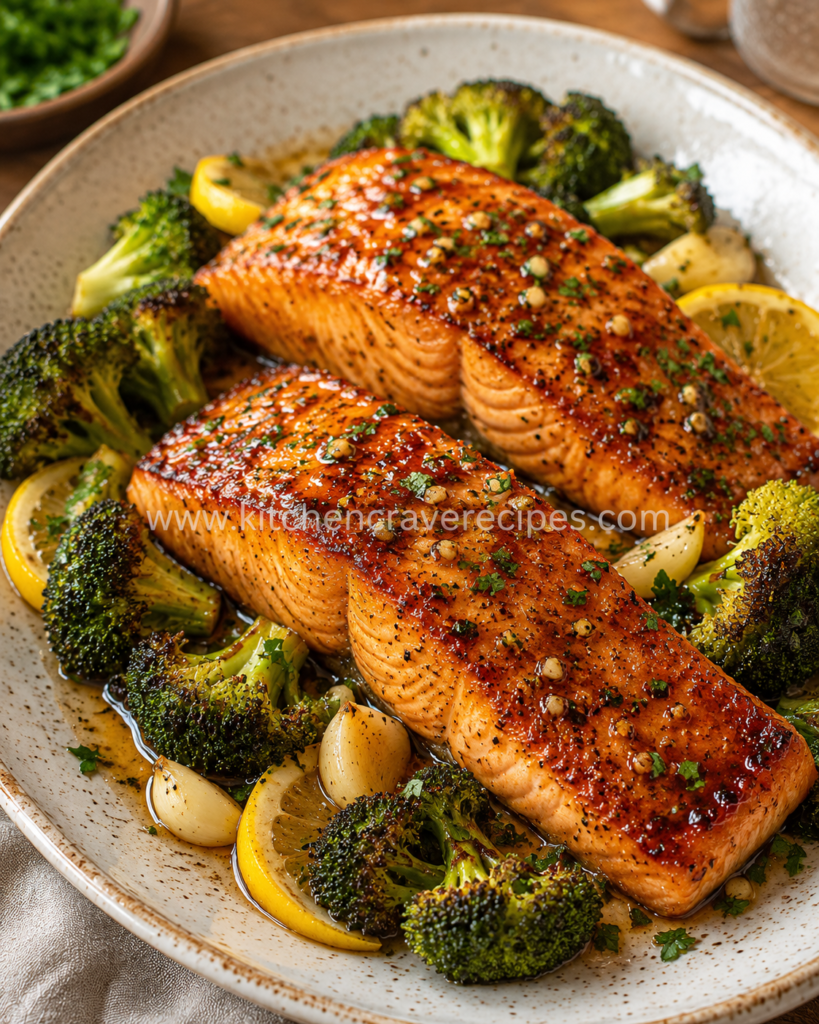
There are weeknight dinners that feel like a compromise, and then there’s honey garlic lemon salmon — the kind of meal that makes everyone at the table ask if you ordered from somewhere. Three salmon fillets sit in a dark sheet pan, their tops deeply caramelized to a russet-amber, each one crowned with a lemon round and flecked with minced garlic and fresh herbs. Roasted broccoli crowds the edges of the pan, picking up every drop of the glossy honey garlic glaze that runs off during cooking. This is a one-pan dinner that delivers restaurant-level flavor with almost zero cleanup.
Roasting is the secret here. The oven’s dry, high heat — combined with an unobstructed pan — lets the honey in the glaze reduce and caramelize directly onto the salmon’s surface rather than steaming away. The result is a sticky, lacquered crust with a flaky, buttery interior that a stovetop method simply can’t replicate in the same way. If you’ve ever pulled salmon from the oven and found it pale and wet, this recipe will change everything.
Recipe Quick Info
| Detail | Info |
|---|---|
| Prep Time | 10 minutes |
| Cook Time | 20 minutes |
| Total Time | 30 minutes |
| Servings | 3–4 |
| Course | Main Course |
| Cuisine | American |
| Cooking Method | Roasting |
| Calories | ~420 per serving |
| Difficulty | Easy |
Why You’ll Love This Honey Garlic Lemon Salmon
- One pan, true cleanup — the salmon, glaze, and broccoli all roast together on a single sheet pan, meaning dinner and dishes are done at the same time.
- Caramelized crust without a skillet — roasting at high heat gives the honey garlic glaze time to reduce and brown on the fish’s surface, producing a gorgeous, lacquered finish.
- Ready in 30 minutes flat — from cold salmon fillets to a plated dinner is genuinely 30 minutes, making this realistic even on the busiest weeknights.
- Naturally gluten-free — every ingredient in the base recipe is gluten-free, with no swaps or substitutions needed.
- Kid-friendly and crowd-pleasing — the honey softens the garlic’s sharpness and the lemon keeps it bright, producing a flavor profile that works for picky eaters and dinner guests alike.
- Nutritionally balanced in one dish — each serving delivers lean omega-3-rich protein alongside fiber-packed roasted broccoli, with no extra sides required.
- Endlessly adaptable — the glaze works on chicken thighs, shrimp, or tofu with identical technique and timing adjustments you can find in the Variations section below.
Ingredients
For the Salmon & Broccoli
- 3–4 salmon fillets (6 oz each, skin-on, about 1 inch thick)
- 3 cups fresh broccoli florets
- 2 tablespoons olive oil, divided
- 1 teaspoon kosher salt, divided
- ½ teaspoon black pepper, divided
- ½ teaspoon smoked paprika
For the Honey Garlic Lemon Glaze
- 3 tablespoons honey
- 4 cloves garlic, finely minced
- 2 tablespoons fresh lemon juice (about 1 large lemon)
- 1 tablespoon low-sodium soy sauce
- 1 teaspoon lemon zest
- 1 tablespoon unsalted butter, melted
- 1 tablespoon fresh flat-leaf parsley, finely chopped
For Garnish
- 1 lemon, sliced into rounds
- Extra chopped fresh parsley
Optional Add-Ins
- ¼ teaspoon crushed red pepper flakes (for heat)
- 1 teaspoon Dijon mustard stirred into the glaze (adds depth and a slight tang)
- 1 tablespoon grated Parmesan over the broccoli before roasting
Substitution Guide
| Original Ingredient | Substitution | Notes |
|---|---|---|
| Honey | Pure maple syrup | Slightly earthier; caramelizes the same way |
| Fresh lemon juice | Fresh lime juice | Changes the flavor profile subtly but works well |
| Soy sauce | Coconut aminos | Keeps the recipe gluten-free and slightly sweeter |
| Fresh garlic | ¾ tsp garlic powder | Use only if fresh is unavailable; flavor is milder |
| Broccoli | Asparagus or green beans | Adjust roasting time — asparagus needs only 10–12 min |
| Salmon fillets | Steelhead trout | Nearly identical fat content and cooking behavior |
Kitchen Tools Needed
- Rimmed sheet pan (13×18-inch half-sheet pan is ideal — the rim catches the glaze runoff)
- Aluminum foil or parchment paper (for lining the pan; foil holds up better under high roasting heat)
- Small mixing bowl (for whisking the glaze)
- Whisk or fork
- Pastry brush or spoon (for applying glaze to fillets)
- Instant-read thermometer (essential for checking doneness without cutting — target 125–130°F for medium, 145°F for fully cooked per USDA guidelines)
- Tongs (for handling broccoli and moving fillets without breaking them)
- Zester or microplane (for lemon zest)
- Sharp chef’s knife and cutting board
Step-by-Step Instructions
Step 1: Preheat the Oven and Prep the Pan
Preheat your oven to 425°F and position a rack in the upper-middle slot — this is the sweet spot for roasting salmon, where the top heat is close enough to caramelize the glaze without drying the interior before the fish cooks through. Line your sheet pan with foil and brush it lightly with olive oil to prevent sticking.
Step 2: Make the Honey Garlic Lemon Glaze
In a small bowl, whisk together the honey, minced garlic, fresh lemon juice, lemon zest, soy sauce, and melted butter until fully combined. The glaze should look glossy and slightly thick — the honey and butter emulsify together once whisked. Set aside two tablespoons of glaze to use for basting partway through roasting. Stir in the chopped parsley just before using.
Embedded Tip: Mince the garlic as finely as possible. Larger garlic pieces can brown too fast at 425°F and turn bitter before the salmon finishes cooking — a microplane works perfectly here.
Step 3: Season the Broccoli
Spread the broccoli florets across one half of the prepared sheet pan. Drizzle with 1 tablespoon olive oil, season with ½ teaspoon salt and ¼ teaspoon black pepper, and toss directly on the pan to coat. Push the florets to the outer edges of the pan to leave room for the salmon fillets in the center and along one side. The broccoli goes in first because it needs a head start — it will roast for 5 minutes before the salmon joins the pan.
Step 4: Start the Broccoli Roast
Slide the sheet pan with broccoli into the preheated oven and roast for 5 minutes. During this time, the florets begin to soften slightly and develop light browning on the edges. This head start ensures the broccoli is fully tender and charred by the time the salmon is done, rather than underdone or raw in the center.
Step 5: Add the Salmon to the Pan
Remove the sheet pan from the oven (use oven mitts — the pan will be hot). Pat the salmon fillets completely dry with paper towels; this step is non-negotiable for browning, since surface moisture creates steam that prevents caramelization. Place the fillets skin-side down in the center of the pan, spacing them at least an inch apart so hot air circulates freely around each piece. Drizzle the remaining tablespoon of olive oil over the fillets, then season with the remaining salt, pepper, and smoked paprika.
Step 6: Glaze and Roast
Spoon or brush the honey garlic lemon glaze generously over the top and sides of each salmon fillet. Place a lemon round on top of each fillet — this is visible in the photo and it does more than look beautiful; the lemon releases juice as it heats, basting the top of the fish during roasting. Slide the pan back into the oven and roast for 8 minutes.
Embedded Tip: Don’t cover the pan with foil during roasting. An uncovered pan is essential for caramelization — covering traps steam and gives you poached, pale salmon instead of the deep amber crust you’re going for.
Step 7: Baste and Finish Roasting
After 8 minutes, pull the pan out and spoon the reserved glaze over each fillet. You’ll notice the glaze on the surface has already begun to caramelize — it will look a shade darker and slightly tacky. Return the pan to the oven and roast for a final 7 minutes, or until the salmon’s top is a deep golden-amber and the flesh flakes easily at the thickest point when pressed gently with a fork.
Step 8: Check Doneness and Rest
Use an instant-read thermometer inserted into the thickest part of the largest fillet. The USDA recommends an internal temperature of 145°F for fully cooked fish. For medium doneness with a slightly translucent center — which is how many salmon lovers prefer it — pull the fillets at 125–130°F. Let the salmon rest on the pan for 2 minutes before serving; the fillets will continue cooking slightly from residual heat and the glaze will set into a gorgeous lacquer.
Step 9: Plate and Serve
Arrange the salmon fillets alongside the roasted broccoli, spoon any glaze that has pooled in the pan over the top, and finish with a scatter of fresh parsley and extra lemon rounds. Serve immediately.
Pro Tips for Perfect Honey Garlic Lemon Salmon
Dry the fish completely before glazing. Even a small amount of surface moisture creates a steam barrier that prevents the honey glaze from adhering and caramelizing properly. Pat every fillet with paper towels until the surface feels tacky to the touch, not wet.
Use a rimmed sheet pan, not a flat baking sheet. At 425°F, the glaze will run slightly and a rimmed pan catches everything — those caramelized drips at the bottom of the pan are where the flavor is, and you want them basting the broccoli, not smoking on the oven floor.
Let the fillets come closer to room temperature before roasting. Cold salmon straight from the refrigerator takes longer to cook through, which means the outside can overcook before the inside reaches the right temperature. Letting fillets sit out for 10–15 minutes while you prep everything else makes a real difference.
Choose skin-on fillets for roasting. The skin acts as a natural insulator on the bottom of the fillet, protecting the flesh from the hot pan and giving you a wider window between perfectly cooked and overcooked. It peels off easily after roasting if you don’t want to eat it.
Roasting method tip — trust your eyes on the caramelization cues. At 425°F, the honey glaze will go from glossy to lightly browned to deeply caramelized in just a few minutes. When the surface is a rich amber-mahogany color and you can smell the garlic starting to turn nutty (not sharp), the fish is in its final minute or two. Don’t wait for a timer — look at the pan.
Common Mistakes to Avoid
1. Skipping the pat-dry step.
Wet salmon steams instead of roasting, and wet salmon won’t caramelize. Always pat fillets bone-dry with paper towels before applying the glaze — this is the single biggest difference between a pale, wet fillet and a caramelized one.
2. Roasting at too low a temperature.
Salmon roasted at 350°F will be fully cooked but won’t develop the caramelized, lacquered surface you see in the photo. Stay at 425°F for this recipe. Lower temps are fine for gentle baking but defeat the purpose of a honey glaze.
3. Overcrowding the sheet pan.
When fillets touch each other on the pan, they steam each other’s sides and the glaze can’t set properly. Keep at least 1 inch of space between each fillet and between the fish and the broccoli for proper hot-air circulation — this is the most common roasting mistake and it costs you the crust.
4. Applying all the glaze at once.
Brushing the entire glaze on before the salmon goes in risks burning the garlic before the fish is done. Reserve a portion for basting halfway through — this builds layers of flavor and ensures the final glaze coat is bright and fresh, not charred.
5. Opening the oven door repeatedly.
Every time you open the oven door, the temperature drops 25–50°F and the recovery time steals minutes from your cook. Open once to baste at the halfway point, and trust the process. Constant checking creates uneven cooking.
6. Using thin, tail-end fillets.
Thin fillets (under ¾ inch at the thickest point) will overcook before the glaze caramelizes. If your fillets are on the thinner side, reduce total roasting time to 10–12 minutes and check the temperature early.
7. Skipping the broccoli head start.
Putting salmon and broccoli in the oven at exactly the same time is a recipe for raw broccoli or overcooked salmon. The 5-minute head start for the broccoli is calibrated so both components finish at the same time.
8. Letting the salmon sit too long before serving.
Unlike a roast or stew, salmon doesn’t hold well. Serve within 5 minutes of pulling it from the oven for the best texture — the flaky interior tightens and dries if it sits uncovered too long.
Variations
Healthy / Lower-Calorie Version
Replace the butter in the glaze with an additional teaspoon of olive oil and reduce the honey to 2 tablespoons. The glaze will be slightly thinner but still caramelizes beautifully. Increase the broccoli to 4 cups and add a handful of sliced zucchini to the pan. Each serving drops to approximately 360 calories while keeping all the core flavors intact.
Vegetarian / Vegan Version
Swap the salmon for two 14-oz blocks of extra-firm tofu, pressed and sliced into 1-inch thick planks, and replace the butter with olive oil. Tofu roasts best at the same 425°F, but needs a full 25 minutes total — flip the planks at the halfway point so both sides caramelize. The honey garlic lemon glaze works identically on tofu, and the finished dish is surprisingly satisfying. For fully vegan, substitute maple syrup for the honey.
Spicy Version
Add ½ teaspoon of crushed red pepper flakes and 1 teaspoon of sriracha directly to the glaze before brushing. The heat blooms during roasting and cuts through the sweetness of the honey for a sweet-heat balance. This version pairs particularly well with a cooling cucumber salad or a simple rice bowl on the side.
Gluten-Free Version
The base recipe is already gluten-free as written. Just confirm your soy sauce is labeled gluten-free, or use coconut aminos as noted in the substitution table above — coconut aminos are slightly sweeter, so you may want to reduce the honey by half a tablespoon to compensate.
Low-Carb / Keto Version
Replace the honey with a keto-friendly liquid sweetener such as Lakanto sugar-free maple syrup or Swerve brown sugar syrup. Both caramelize adequately at 425°F and keep the net carbs in the glaze under 2g per serving. Swap broccoli for cauliflower florets or asparagus for an even lower-carb side. Note that this variation uses the same roasting method and timing as the original.
What to Serve With This Recipe
- Steamed jasmine or basmati rice — soaks up the honey garlic glaze pooled on the plate beautifully.
- Garlic mashed cauliflower — a low-carb alternative that complements the buttery salmon without competing with the glaze.
- Simple green salad with lemon vinaigrette — keeps things light and adds a crisp contrast to the rich, caramelized fish.
- Roasted asparagus — can be added right to the sheet pan in place of or alongside the broccoli; adjust timing to 10–12 minutes total for thin spears.
- Crusty sourdough bread — for dragging through the caramelized glaze left on the plate (no judgment).
- Garlic Butter Salmon Creamy Sauce in 35 Min — a bright, protein-packed grain side that mirrors the lemon notes in the glaze and rounds out the meal.
- Cold cucumber dill salad — the cool, creamy contrast cuts through the richness of the honey butter glaze perfectly.
- Crispy roasted potatoes — add them to a separate sheet pan at the same oven temperature so everything finishes together.
Storage Instructions
Refrigerator
Store leftover salmon and broccoli in an airtight container in the refrigerator for up to 3 days. Keep the salmon and broccoli in the same container — the residual glaze helps keep the fish moist as it sits. Place a paper towel loosely on top of the salmon before sealing the container; it absorbs excess moisture and prevents the crust from going soggy.
Freezer
Roasted salmon can be frozen, though the texture of the flake changes slightly upon thawing. Wrap individual cooled fillets tightly in plastic wrap, then seal in a zip-top freezer bag with the air pressed out. Freeze for up to 1 month. Broccoli can be frozen separately in a bag for up to 2 months, though it will be softer after reheating. Thaw salmon overnight in the refrigerator — never at room temperature.
Shelf Life Summary
| Storage Method | Duration |
|---|---|
| Room temperature | Do not store (2-hour rule) |
| Refrigerator (airtight) | Up to 3 days |
| Freezer (wrapped tightly) | Up to 1 month |
Reheating Instructions
Oven (Best Method): Preheat your oven to 275°F and place the salmon on a foil-lined sheet pan. Add a teaspoon of water or a small squeeze of lemon juice over the top to prevent the surface from drying out. Cover loosely with foil and reheat for 12–15 minutes, until warmed through. This method preserves the most texture and keeps the glaze from burning.
Microwave (Quickest Method): Place the salmon on a microwave-safe plate and cover with a damp paper towel. Heat on 50% power for 90 seconds, check the center, and continue in 30-second intervals. Full power will overcook the edges and leave the center cold — lower power is always better for fish.
Stovetop: Warm a non-stick skillet over low heat and add a splash of water or broth. Place the salmon skin-side down, cover the pan with a lid, and heat for 4–5 minutes until warmed through. This is a good option if you want to re-crispen the bottom while keeping the top moist.
For food safety reference, the FDA’s safe minimum cooking temperature guidelines recommend reheating all cooked fish to an internal temperature of 145°F before serving leftovers.
Nutrition Facts (Per Serving, Based on 4 Servings)
| Nutrient | Amount |
|---|---|
| Calories | ~420 kcal |
| Total Fat | 22g |
| Saturated Fat | 5g |
| Unsaturated Fat | 15g |
| Cholesterol | 95mg |
| Sodium | 480mg |
| Total Carbohydrates | 18g |
| Dietary Fiber | 2g |
| Total Sugars | 14g |
| Protein | 36g |
| Omega-3 Fatty Acids | ~2,000mg |
Nutrition Disclaimer: These values are estimates calculated using a standard nutrition database and will vary depending on the exact size of the salmon fillets, the brand of soy sauce or honey used, and any ingredient substitutions made. For precise dietary tracking, use a verified nutrition calculator with your specific ingredients and quantities.
Frequently Asked Questions
What is the best internal temperature for roasted salmon?
The USDA recommends 145°F for fully cooked salmon. Many home cooks and chefs prefer pulling it at 125–130°F for a medium, slightly translucent center that’s moist and flaky rather than dry. Use an instant-read thermometer inserted into the thickest part to check.
Can I use frozen salmon fillets for this recipe?
Yes, but thaw them completely in the refrigerator overnight first. Roasting frozen salmon creates uneven cooking — the outside overcooks before the interior reaches temperature. Pat thawed fillets extra dry, as frozen fish releases more moisture than fresh.
Can I bake this instead of roasting it?
You can, but the result will be different. Baking typically refers to lower, gentler oven heat (300–350°F). At that temperature, the honey glaze won’t caramelize — it will stay pale and syrupy rather than developing the lacquered amber crust shown in the photo. For this recipe, roasting at 425°F is specifically what produces the caramelized finish that makes it great.
Do I have to use skin-on salmon?
Skinless fillets work, but the skin protects the bottom of the fillet from the hot pan during roasting and gives you a slightly wider window before overcooking. If using skinless, consider reducing your roasting time by 2–3 minutes and checking the temperature earlier.
Can I make the glaze ahead of time?
Absolutely. The honey garlic lemon glaze keeps in a sealed jar in the refrigerator for up to 5 days. Give it a quick whisk before using, as the honey and butter may separate slightly when cold. It also works as a marinade — coat the fillets and refrigerate for up to 2 hours before roasting.
Why is my salmon sticking to the pan?
Two reasons: the pan wasn’t lined or oiled, or the salmon was moved too early. Salmon releases naturally from a hot, oiled surface once the bottom layer of protein has set — usually after about 6–7 minutes of roasting. Line with foil, oil the foil, and resist the urge to nudge the fillets before the halfway baste point.
How do I know the salmon is done without a thermometer?
Press the thickest part of the fillet gently with a fork. Fully cooked salmon will flake apart cleanly along its natural segments. The color change is also a reliable cue — the flesh transitions from deep translucent orange-pink to a lighter, opaque coral-pink as it cooks. When most of the fillet looks opaque with just a small translucent center, it’s done.
Is this recipe good for meal prep?
Yes, with some caveats. The salmon stores well for 3 days and reheats decently at low oven temperatures. However, the caramelized crust softens after refrigeration and reheating, so meal-prepped portions are better for rice bowls or salad toppings where the texture difference is less noticeable.
Can I add other vegetables to the sheet pan?
Definitely. Cherry tomatoes, thinly sliced bell peppers, snap peas, and green beans all roast well at 425°F in similar timeframes to the broccoli. Avoid thick, dense vegetables like carrots or beets — they need longer roasting at lower temperatures than what salmon can tolerate.
Can I double this recipe?
Yes, but use two sheet pans rather than crowding one. Overcrowding is the number-one roasting mistake — too many fillets on one pan causes steaming instead of roasting, and you’ll lose the caramelized crust entirely. Rotate the pans halfway through if your oven has uneven heat distribution.
What’s the best type of honey to use?
A mild, liquid wildflower honey or clover honey works best — they’re neutral enough not to overpower the garlic and lemon. Avoid strongly flavored honeys like buckwheat for this recipe, as they can compete with the glaze’s balance. If your honey has crystallized, gently warm the jar in a bowl of hot water before measuring.
Can I use bottled lemon juice instead of fresh?
Fresh lemon juice is strongly preferred. Bottled lemon juice has a flat, slightly preserved flavor that becomes more noticeable when used in glazes and doesn’t reduce into the same bright, concentrated citrus note that fresh juice does at high heat.
Expert Chef Tips
Buy center-cut fillets when possible. Center-cut portions are uniform in thickness, which means every fillet finishes cooking at the same time. Tail-end fillets taper to near nothing and will be overcooked before the thicker sections are done — a small detail that makes a big difference when roasting multiple pieces simultaneously.
Build the glaze in layers, not all at once. Applying glaze before roasting, then again at the halfway baste point, builds depth of flavor that a single coat can’t match. The first layer caramelizes and bonds to the surface; the second coat stays brighter and more aromatic. Think of it the same way a pitmaster thinks about barbecue sauce — it’s a layering process.
Let the pan do the work and don’t touch the fish. Resist the urge to check, prod, or reposition the salmon between the initial placement and the halfway baste. Every time you move the fillet, you risk breaking the crust that’s forming on the surface and bottom. Set it, baste once, and let the oven finish the job.
The broccoli is a flavor component, not just a side. Roasting broccoli at 425°F next to a honey garlic glaze means the florets pick up the aromatic drippings as they fall from the fish. Position the broccoli close to — but not touching — the salmon fillets so it benefits from the glaze without sitting in pooled liquid, which would steam it rather than roast it.
Rest before plating, always. Two minutes of resting time after the pan comes out of the oven allows the proteins in the salmon to relax and the juices to redistribute through the fillet. Slicing or serving immediately after roasting pushes all those juices out onto the plate. It’s a short wait with a noticeably better result.
Recipe Summary
This honey garlic lemon salmon with broccoli is a high-heat sheet pan roast that delivers caramelized, lacquered salmon fillets and charred broccoli florets in a single 30-minute window. The glaze — built from honey, fresh garlic, lemon juice, and butter — is applied in two stages for layered, complex flavor. The recipe is naturally gluten-free, nutritionally balanced, and reliable enough for weeknight dinners while looking polished enough for guests. Everything roasts on one pan at 425°F, keeping both the technique and the cleanup straightforward.
Conclusion
If you’ve been looking for a recipe that proves weeknight dinners don’t have to be boring or complicated, this honey garlic lemon salmon is exactly that recipe. The combination of high-heat roasting, a honey-forward glaze, and fresh lemon delivers something that genuinely tastes like effort — even when you know it took less than 30 minutes start to finish. Make it once and it’ll become the kind of dish you find yourself turning to on a Tuesday night when you need dinner to feel like an occasion. Try it this week, and let the caramelized crust speak for itself.
Easy 30-Minute Honey Garlic Lemon Salmon (Best Ever)
Description
There are weeknight dinners that feel like a compromise, and then there's honey garlic lemon salmon — the kind of meal that makes everyone at the table ask if you ordered from somewhere. Three salmon fillets sit in a dark sheet pan, their tops deeply caramelized to a russet-amber, each one crowned with a lemon round and flecked with minced garlic and fresh herbs. Roasted broccoli crowds the edges of the pan, picking up every drop of the glossy honey garlic glaze that runs off during cooking. This is a one-pan dinner that delivers restaurant-level flavor with almost zero cleanup.
Ingredients
Instructions
-
Step-by-Step Instructions
-
Step 1: Preheat the Oven and Prep the Pan
-
Preheat your oven to 425°F and position a rack in the upper-middle slot — this is the sweet spot for roasting salmon, where the top heat is close enough to caramelize the glaze without drying the interior before the fish cooks through. Line your sheet pan with foil and brush it lightly with olive oil to prevent sticking.
-
Step 2: Make the Honey Garlic Lemon Glaze
-
In a small bowl, whisk together the honey, minced garlic, fresh lemon juice, lemon zest, soy sauce, and melted butter until fully combined. The glaze should look glossy and slightly thick — the honey and butter emulsify together once whisked. Set aside two tablespoons of glaze to use for basting partway through roasting. Stir in the chopped parsley just before using.
-
Embedded Tip: Mince the garlic as finely as possible. Larger garlic pieces can brown too fast at 425°F and turn bitter before the salmon finishes cooking — a microplane works perfectly here.
-
Step 3: Season the Broccoli
-
Spread the broccoli florets across one half of the prepared sheet pan. Drizzle with 1 tablespoon olive oil, season with ½ teaspoon salt and ¼ teaspoon black pepper, and toss directly on the pan to coat. Push the florets to the outer edges of the pan to leave room for the salmon fillets in the center and along one side. The broccoli goes in first because it needs a head start — it will roast for 5 minutes before the salmon joins the pan.
-
Step 4: Start the Broccoli Roast
-
Slide the sheet pan with broccoli into the preheated oven and roast for 5 minutes. During this time, the florets begin to soften slightly and develop light browning on the edges. This head start ensures the broccoli is fully tender and charred by the time the salmon is done, rather than underdone or raw in the center.
-
Step 5: Add the Salmon to the Pan
-
Remove the sheet pan from the oven (use oven mitts — the pan will be hot). Pat the salmon fillets completely dry with paper towels; this step is non-negotiable for browning, since surface moisture creates steam that prevents caramelization. Place the fillets skin-side down in the center of the pan, spacing them at least an inch apart so hot air circulates freely around each piece. Drizzle the remaining tablespoon of olive oil over the fillets, then season with the remaining salt, pepper, and smoked paprika.
-
Step 6: Glaze and Roast
-
Spoon or brush the honey garlic lemon glaze generously over the top and sides of each salmon fillet. Place a lemon round on top of each fillet — this is visible in the photo and it does more than look beautiful; the lemon releases juice as it heats, basting the top of the fish during roasting. Slide the pan back into the oven and roast for 8 minutes.
-
Embedded Tip: Don't cover the pan with foil during roasting. An uncovered pan is essential for caramelization — covering traps steam and gives you poached, pale salmon instead of the deep amber crust you're going for.
-
Step 7: Baste and Finish Roasting
-
After 8 minutes, pull the pan out and spoon the reserved glaze over each fillet. You'll notice the glaze on the surface has already begun to caramelize — it will look a shade darker and slightly tacky. Return the pan to the oven and roast for a final 7 minutes, or until the salmon's top is a deep golden-amber and the flesh flakes easily at the thickest point when pressed gently with a fork.
-
Step 8: Check Doneness and Rest
-
Use an instant-read thermometer inserted into the thickest part of the largest fillet. The USDA recommends an internal temperature of 145°F for fully cooked fish. For medium doneness with a slightly translucent center — which is how many salmon lovers prefer it — pull the fillets at 125–130°F. Let the salmon rest on the pan for 2 minutes before serving; the fillets will continue cooking slightly from residual heat and the glaze will set into a gorgeous lacquer.
-
Step 9: Plate and Serve
-
Arrange the salmon fillets alongside the roasted broccoli, spoon any glaze that has pooled in the pan over the top, and finish with a scatter of fresh parsley and extra lemon rounds. Serve immediately.
Nutrition Facts
Servings 4
- Amount Per Serving
- Calories 420kcal
- % Daily Value *
- Total Fat 22g34%
- Saturated Fat 5g25%
- Protein 36g72%
* Percent Daily Values are based on a 2,000 calorie diet. Your daily value may be higher or lower depending on your calorie needs.