
High Protein Bang Bang Salmon That Broils to Perfection in 25 Minutes
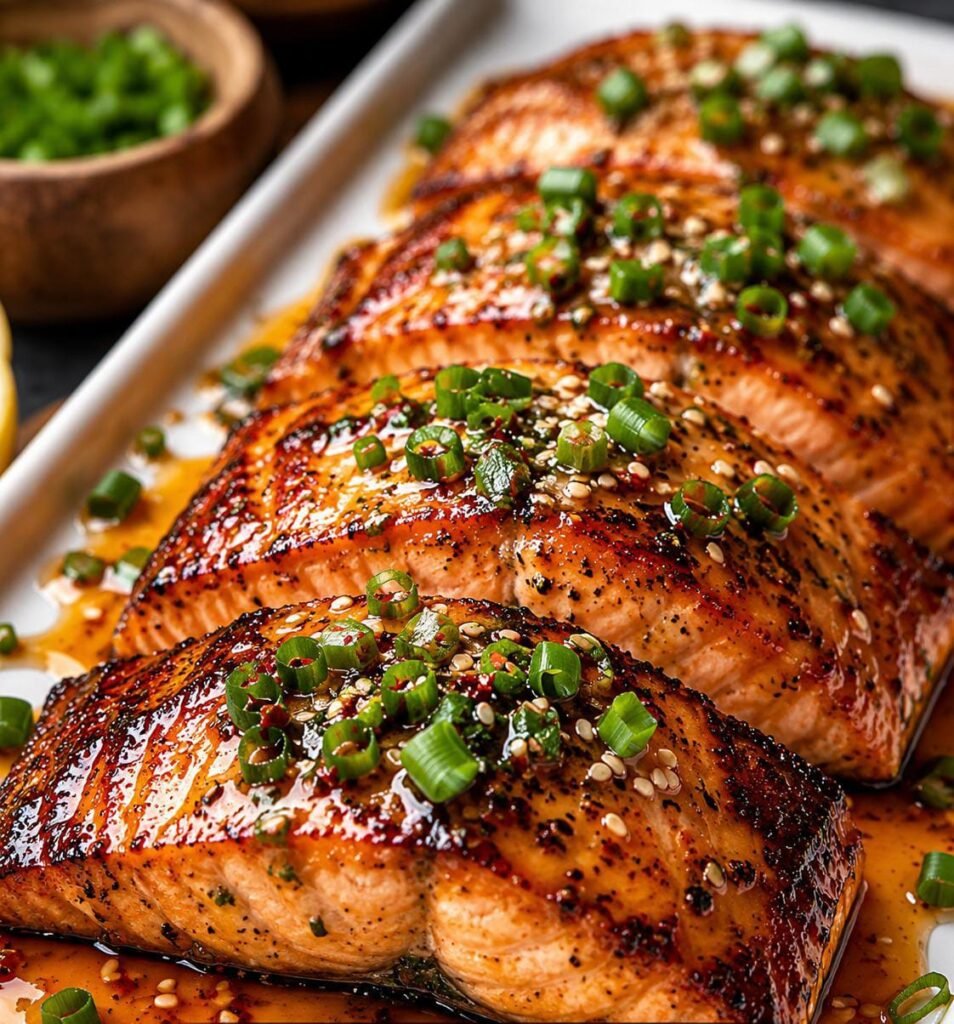
The photo tells you exactly what’s waiting at the end of this recipe: deeply caramelized salmon fillets glistening with a sticky, spicy-sweet bang bang glaze, scattered with sliced scallions and sesame seeds, served on a white sheet pan with a wedge of lemon alongside. Every piece has that high-heat broiler color — mahogany-brown at the edges, deep amber across the surface, with visible char from the broiler element working at full intensity just inches above. This is high protein bang bang salmon done right.
Broiling is the method that makes this dish sing. The top-down, intense direct heat caramelizes the sweet components in the bang bang sauce within minutes, producing a lacquered finish that no other method replicates as efficiently. Each fillet delivers approximately 42 grams of protein, making this genuinely one of the best high-protein weeknight dinners you can build in 25 minutes. No flipping required, no frying, just one sheet pan going under the broiler and a sauce that does most of the work for you.
Recipe Quick Info
| Detail | Info |
|---|---|
| Prep Time | 10 minutes |
| Cook Time | 12–15 minutes |
| Total Time | 25 minutes |
| Servings | 4 |
| Cuisine | Asian-American Fusion |
| Course | Main Dish / Dinner |
| Cooking Method | Broiling |
| Estimated Calories | ~430 per serving |
| Difficulty | Easy |
Why You’ll Love This High Protein Bang Bang Salmon
- 42 grams of protein per fillet — from one of the most nutrient-dense fish available. Salmon is rich in complete protein and omega-3 fatty acids, making it one of the most efficient high-protein dinner choices.
- The broiler does what no other method can in this time frame. High-heat top-down broiling caramelizes the bang bang glaze in minutes, creating a lacquered, deeply colored crust that stays juicy inside.
- The bang bang sauce is three ingredients and five minutes. Sweet chili sauce, sriracha, and a touch of mayonnaise combine into a sauce that’s spicy, creamy, and genuinely addictive without requiring any cooking of its own.
- Scallions and sesame seeds aren’t optional — they’re structural. The photo shows both scattered generously across every fillet; the scallions add a fresh, sharp counterpoint to the sweet glaze and the sesame seeds add crunch.
- One sheet pan, almost no cleanup. Everything broils on a single foil-lined pan — no extra pots, no basting dishes, no stovetop splatter to clean afterward.
- Ready in 25 minutes from fridge to table. With the broiler preheating while you make the sauce, the active cooking window is under 15 minutes — this is legitimately one of the fastest high-protein dinners in your rotation.
- Meal-prep approved and freezer friendly. The broiled salmon holds its texture better than pan-seared salmon when stored properly, and the glaze reheats without turning oily.
Ingredients
For the Salmon
- 4 salmon fillets (6–7 oz each, skin-on), pin bones removed
- 1 tablespoon olive oil
- ½ teaspoon kosher salt
- ½ teaspoon black pepper
- ½ teaspoon garlic powder
- ½ teaspoon smoked paprika
For the Bang Bang Sauce / Glaze
- 3 tablespoons sweet chili sauce
- 2 tablespoons sriracha
- 2 tablespoons mayonnaise (full-fat)
- 1 tablespoon honey
- 1 tablespoon low-sodium soy sauce
- 1 teaspoon sesame oil
- 2 cloves garlic, finely minced
For Garnish
- 4 scallions, thinly sliced
- 1 tablespoon sesame seeds (white, or white and black mixed as shown in the photo)
- 1 lemon, cut into wedges
Optional Add-Ins
- ½ teaspoon crushed red pepper flakes (add to the bang bang sauce for extra heat)
- 1 teaspoon freshly grated ginger (stir into the sauce for a more pronounced Asian-inspired profile)
- 1 tablespoon lime juice (substitute for lemon for a sharper citrus note)
Substitution Table
| Original Ingredient | Substitution | Notes |
|---|---|---|
| Salmon fillets | Steelhead trout fillets | Nearly identical fat content and cook time; slightly milder flavor |
| Sweet chili sauce | Honey + ½ tsp red pepper flakes | Less complex but achieves the same sweet-heat balance |
| Sriracha | Sambal oelek | Chunkier texture, purer chili flavor, slightly less sweet |
| Full-fat mayonnaise | Greek yogurt | Tangier, lower fat; thins slightly under broiler heat — reduce to 1 tbsp |
| Sesame oil | Omit or use ½ tsp toasted walnut oil | Sesame is strongly flavored — don’t replace with neutral oil |
| Soy sauce | Tamari | 1:1 swap; makes the dish gluten-free with no flavor change |
Kitchen Tools Needed
- Broiler-safe rimmed baking sheet (half-sheet pan)
- Aluminum foil (for lining — makes cleanup trivial)
- Wire rack (optional but recommended — elevates fillets for even broiling)
- Pastry brush or silicone basting brush
- Small mixing bowl (for the bang bang sauce)
- Instant-read thermometer
- Tongs or a flat fish spatula
- Measuring spoons
- Chef’s knife and cutting board
How to Broil High Protein Bang Bang Salmon Perfectly Every Time
Step 1: Position the Broiler Rack and Preheat (5 minutes)
Set your oven rack so the salmon will sit 6 inches below the broiler element — not 4, not 8, specifically 6. This is the broiling sweet spot for thick salmon fillets: close enough for rapid surface caramelization, far enough to allow the heat to penetrate to the center before the outside burns. Turn the broiler to HIGH and let it preheat for a full 5 minutes. A cold broiler element means the fish starts steaming instead of searing.
Step 2: Make the Bang Bang Sauce (5 minutes)
While the broiler preheats, whisk together the sweet chili sauce, sriracha, mayonnaise, honey, soy sauce, sesame oil, and minced garlic in a small bowl until completely smooth. The sauce should be thick enough to coat the back of a spoon — if it looks too thin, add an extra ½ tablespoon of mayonnaise. Set aside 2 tablespoons of the sauce separately to use as a finishing drizzle after broiling; the rest goes on the fish before it enters the oven.
Embedded Tip: The reserved sauce applied after broiling stays bright and vibrant — it hasn’t been cooked, so the sriracha and sweet chili flavors are sharper and more pronounced on the finished fillet. This two-application technique is what gives the dish its layered, complex flavor despite using a simple sauce.
Step 3: Prep and Season the Salmon (3 minutes)
Line your rimmed baking sheet with aluminum foil and set a wire rack on top if using. Pat each salmon fillet thoroughly dry with paper towels — surface moisture steams under the broiler and prevents caramelization. Brush each fillet lightly with olive oil on all exposed surfaces, then season evenly with kosher salt, black pepper, garlic powder, and smoked paprika. Place skin-side down on the rack or foil-lined pan.
Step 4: Apply the First Coat of Bang Bang Glaze
Using a pastry brush, coat the top and sides of each fillet generously with the bang bang sauce — use roughly three-quarters of the total sauce, reserving 2 tablespoons for finishing. Make sure the sauce covers the entire top surface right to the edges. Any sauce that pools on the foil around the fish will caramelize during broiling and baste the sides of the fillets naturally as the sauce bubbles.
Embedded Tip: Don’t apply the sauce in a thin, delicate layer. A generous coat means there’s enough sugar content to caramelize meaningfully under the broiler. Thin sauce dries out instead of lacquering — visible in the color difference between a lightly sauced fillet and a properly coated one.
Step 5: Broil the Salmon (12–15 minutes)
Slide the pan under the preheated broiler and set a timer for 10 minutes. Watch the salmon closely from minute 8 onward — the glaze will bubble, then begin to darken at the edges and caramelize across the surface. You’re looking for the deep mahogany-amber color shown in the photo, with slightly charred edges and a sauce surface that looks sticky and lacquered rather than wet and glossy.
At 10–12 minutes, check the internal temperature with an instant-read thermometer inserted into the thickest part of the fillet. Per FDA guidelines for safe fish consumption, salmon should reach an internal temperature of 145°F. For a slightly less firm, medium-style result, pull at 130–135°F — the salmon will continue cooking from residual heat for 1–2 minutes after leaving the broiler.
Step 6: Finish with Reserved Sauce, Garnish, and Serve
Remove the pan from the broiler and let the salmon rest on the pan for 2 minutes — this brief rest stabilizes the flake and allows the interior temperature to even out. Drizzle or brush the reserved 2 tablespoons of bang bang sauce over each fillet while still hot. Scatter sliced scallions and sesame seeds generously over every piece, exactly as shown in the photo. Serve immediately with lemon wedges on the side.
Pro Tips for Perfect Broiled Bang Bang Salmon
- Preheat the broiler element fully — 5 full minutes, not the time it takes to beep. A genuinely hot element caramelizes the glaze surface within the first 2–3 minutes of broiling. An underheated element means the salmon steams and the sauce never caramelizes into the lacquered finish you’re after.
- Keep the oven door cracked slightly during broiling. Most home ovens cycle the broiler element on and off if the internal temperature rises too high with the door fully closed. A 2-inch gap keeps the element running continuously at full intensity — this is the method-specific broiling tip that changes the outcome on home ovens significantly.
- Apply sauce in two rounds — before and after broiling. The first coat caramelizes and becomes part of the crust. The second coat, applied fresh after the fish comes out, keeps the flavor bright and adds a glossy, restaurant-quality appearance to the finished dish.
- Dry the fillets completely before oiling and seasoning. Moisture on the surface of the fish creates steam under the broiler, which competes with caramelization. Paper towels pressed firmly on all surfaces for 10 seconds per fillet make a noticeable difference in the final color.
- Use an instant-read thermometer — don’t guess doneness on salmon. Overcooked salmon loses its silky texture and omega-3 richness rapidly. A thermometer removes all guesswork and ensures every fillet is cooked to exactly the right point.
Common Mistakes to Avoid
1. Broiling with the rack too close to the element.
Fix: Positioning the salmon 4 inches or less from the broiler element burns the sauce before the interior cooks through. Six inches is the correct distance for thick salmon fillets — it gives the heat time to penetrate while the surface caramelizes. This is the method-specific broiling mistake that affects this dish most.
2. Not preheating the broiler fully.
Fix: A cold broiler element means 3–4 minutes of wasted time where the salmon steams in rising oven heat rather than searing. Always preheat on HIGH for 5 minutes before the pan goes in.
3. Using thin, watery sauce instead of a thick glaze.
Fix: Thin sauce runs off the fish and pools on the foil without coating. The mayo in this recipe provides the emulsified body needed for the sauce to cling — don’t reduce it or substitute with a thinner product without compensating with a thickener.
4. Skipping the pat-dry step.
Fix: Surface moisture on the salmon creates steam that fights against caramelization and leaves the glaze looking wet and pale instead of dark and lacquered. Two firm presses with paper towels per fillet is all it takes.
5. Applying all the sauce before broiling.
Fix: Sauce cooked for the full broiling time loses its fresh, bright flavor — the sriracha and chili notes dull under extended heat. Reserving 2 tablespoons to apply fresh after broiling gives the dish a two-layer flavor profile that cooked-only sauce can’t achieve.
6. Leaving the oven door fully closed during broiling.
Fix: Many home ovens cycle the broiler off to prevent overheating when the door is sealed. Keeping the door open 2 inches ensures the element runs at continuous intensity throughout the cook, which is essential for consistent caramelization.
7. Not resting the salmon before garnishing.
Fix: Scattering scallions and sesame seeds on fish straight from the broiler causes them to wilt and steam in the residual heat. Two minutes of rest means the garnishes stay crisp, green, and visually striking — exactly as they appear in the photo.
Variations
Healthy / Lower-Calorie Version
Replace the full-fat mayonnaise with plain 2% Greek yogurt and reduce the honey to ½ tablespoon. Greek yogurt still provides the emulsified body that makes the sauce cling to the fish, but it cuts approximately 50 calories per serving and adds a subtle tanginess that works well against the sweetness of the chili sauce. The broiling method and timing remain identical.
Vegetarian Version
Substitute thick-cut extra-firm tofu slabs (pressed for 20 minutes and patted completely dry) for the salmon fillets. Apply the bang bang sauce exactly as directed and broil at 6 inches from the element for 8–10 minutes, watching closely — tofu has less fat than salmon and can burn faster. The sauce caramelizes similarly on the tofu surface and delivers nearly identical visual and flavor results. Note that this variation uses a different protein source entirely and is not a direct fish substitute.
Spicy Version
Double the sriracha to 4 tablespoons and add ½ teaspoon of crushed red pepper flakes and ½ teaspoon of gochugaru (Korean red pepper flakes) directly to the sauce. The layered heat from three different chili sources builds gradually and pairs particularly well with the sweet chili sauce’s natural sweetness. Serve with extra lemon wedges to cut through the heat between bites.
Gluten-Free Version
Replace the low-sodium soy sauce with certified gluten-free tamari in a 1:1 ratio. Verify that your sweet chili sauce brand is gluten-free — most are, but labels vary. All other ingredients in this high protein bang bang salmon recipe are naturally gluten-free, making this a single-swap adaptation that requires no technique changes.
Low-Carb / Keto Version
Replace the sweet chili sauce with a blend of 1 tablespoon of sugar-free apricot preserves and 1 teaspoon of chili garlic sauce, and reduce the honey to ½ teaspoon of a keto-friendly sweetener like allulose. The sauce still caramelizes under the broiler and the heat profile remains similar. Serve over cauliflower rice or alongside our keto roasted bok choy recipe for a fully low-carb plate.
What to Serve With This High Protein Bang Bang Salmon
- Steamed jasmine rice or brown rice — neutral enough to let the bold bang bang glaze lead while soaking up any sauce that drips from the fillets.
- Roasted bok choy with garlic — slightly bitter, quick to roast in the same oven while the broiler preheats, and a natural flavor match for Asian-inspired glazed fish.
- Cucumber sesame salad — cool, crisp, and refreshing, it provides direct contrast to the heat in the sriracha-forward glaze.
- Steamed edamame with sea salt — a high-protein, low-effort side that takes 5 minutes and complements the sweet-spicy sauce beautifully.
- Mango avocado salsa — the fruity sweetness and creamy avocado cool the heat in the bang bang sauce and add a colorful, fresh component to the plate.
- Simple arugula salad with lemon vinaigrette — peppery and bright, it cuts through the richness of the salmon and the sweet glaze without competing.
For a complete high-protein dinner spread, pair this with High Protein Crispy Chicken — Best Baked 40g Recipe — it takes 10 minutes, uses simple pantry ingredients, and rounds out the meal perfectly.
Storage Instructions
Refrigerator
Allow the broiled salmon to cool completely before storing — sealing it hot traps steam that softens the glaze and creates a wet, unappetizing surface. Transfer fillets to an airtight container with a paper towel underneath each piece to absorb condensation. The high protein bang bang salmon keeps well in the refrigerator for up to 3 days.
Freezer
Broiled salmon fillets freeze for up to 2 months when wrapped individually in plastic wrap and then placed in a freezer-safe zip-lock bag with excess air pressed out. Freeze flat. The glaze doesn’t freeze quite as cleanly as the fish itself, so plan to re-apply a small amount of fresh bang bang sauce after reheating. Thaw overnight in the refrigerator — never at room temperature.
Shelf Life Summary
| Component | Refrigerator | Freezer |
|---|---|---|
| Broiled bang bang salmon | Up to 3 days | Up to 2 months |
| Bang bang sauce (unmade) | Up to 5 days | Not recommended |
| Assembled plate with garnishes | Same day only | Do not freeze |
Reheating Instructions
Oven (Best Method — Preserves the Glaze)
Preheat to 275°F. Place the salmon skin-side down on a foil-lined baking sheet, cover loosely with foil, and heat for 12–15 minutes until just warmed through. Low and slow is the right call here — high oven heat overcooks already-broiled salmon quickly and turns the texture dry and chalky.
Microwave (Fastest Method)
Place a single fillet on a microwave-safe plate, cover with a damp paper towel to retain moisture, and heat on medium power (60–70%) for 60–90 seconds. Do not use full power — salmon reheated at high microwave power overcooks from the inside out. Refer to the FDA’s safe minimum internal temperature guidelines for all reheated fish — 145°F is the target.
Stovetop
Add the salmon fillet skin-side down to a cold non-stick skillet. Place over medium-low heat and cover with a lid. Heat for 4–5 minutes until the fish is just warmed through — you’re not re-searing it, just gently heating. Adding 1 tablespoon of water to the pan before covering creates gentle steam that keeps the salmon moist and loosens the glaze without burning it.
Nutrition Facts (Per Serving — Based on 4 Servings)
| Nutrient | Amount |
|---|---|
| Calories | ~430 |
| Total Fat | 22g |
| Saturated Fat | 4g |
| Cholesterol | 110mg |
| Sodium | 680mg |
| Total Carbohydrates | 14g |
| Dietary Fiber | 1g |
| Total Sugars | 11g |
| Protein | 42g |
| Omega-3 Fatty Acids | ~2,000mg |
| Potassium | 860mg |
Nutrition Disclaimer: These values are estimated using standard nutrition calculation software based on the recipe as written with 4 servings. Actual values will vary depending on the specific brands used, salmon fillet size, and any ingredient substitutions. The omega-3 content is specific to Atlantic farmed salmon and will vary by fish source. For precise dietary tracking, consult a registered dietitian or input your exact ingredients into a verified nutrition calculator.
Frequently Asked Questions
Can I bake this instead of broiling it?
Yes — bake at 400°F for 15–18 minutes until the internal temperature reaches 145°F. The result will be moist and fully cooked, but the glaze won’t caramelize to the same dark, lacquered finish that broiling produces. For baking, apply all the sauce before cooking rather than reserving any for finishing.
What makes this version “high protein” compared to regular bang bang salmon?
The protein content comes from the salmon itself — a 6–7 oz fillet naturally contains 38–42 grams of complete protein. This recipe doesn’t add protein powders or supplements; it simply uses a full-sized fillet and keeps the sauce light enough not to mask the nutritional value of the fish.
Why does the photo show the fillets on a white sheet pan without individual plates?
That’s the most accurate way to serve and photograph broiled salmon — it shows the full glaze color and garnish placement. You can transfer to individual plates for serving, but presenting on the sheet pan (lined cleanly with fresh foil after broiling) is a legitimate and visually striking plating option.
How do I know when the bang bang glaze has caramelized enough?
Watch for the color shift: the sauce starts wet and orange-red, then darkens to a deeper mahogany-amber as the sugars caramelize. The surface should look sticky and lacquered, not shiny and wet. Visible slight char at the thinnest edges of the fillet is normal and desirable — it’s the broiler doing its job.
Can I use skinless salmon for this recipe?
Yes, but skin-on fillets are preferable for broiling because the skin acts as a natural barrier against the intense top heat, protecting the underside while the glazed top surface caramelizes. Skinless fillets work fine — just monitor internal temperature more closely since the bottom is more exposed to the heated pan surface.
Is the bang bang sauce spicy?
At the levels in this recipe, it’s moderately spicy — noticeable heat from the sriracha balanced by the sweetness of the chili sauce and honey. Reduce the sriracha to 1 tablespoon for a mild version, or increase to 3 tablespoons for a genuinely hot result. The mayonnaise in the sauce also tempers perceived heat significantly.
Can I make the bang bang sauce ahead of time?
Yes — mix the sauce and store it in an airtight jar in the refrigerator for up to 5 days. Stir well before using, as the ingredients may separate slightly. Having the sauce pre-made makes this a 15-minute meal from fridge to table on busy weeknights.
What’s the difference between sweet chili sauce and sriracha — can I use just one?
Sweet chili sauce is thick, mild, and sweet with a subtle heat. Sriracha is thinner, sharper, and more intensely hot. They perform different roles in the bang bang sauce — the sweet chili provides body and sweetness while the sriracha delivers the heat. Using only one throws the balance off significantly.
Do I need a wire rack inside the baking sheet for broiling?
It’s recommended but not required. A wire rack elevates the fillets so the broiler heat can reach the sides of each piece, producing slightly more even caramelization. Without a rack, the fish rests on foil and the bottom doesn’t color, but the top still broils correctly. Use a rack if you have one; skip it without concern if you don’t.
Can I make this recipe with frozen salmon?
Yes, but thaw completely in the refrigerator overnight before cooking. Broiling from frozen is not effective — the surface burns before the interior thaws and heats through. Pat the thawed fillets extra thoroughly before oiling and seasoning, as thawed fish releases more surface moisture than fresh.
Expert Chef Tips
Buy salmon fillets of uniform thickness when possible. Fillets that are thick at one end and thin at the other cook unevenly under the broiler — the thin tail end will be done 3–4 minutes before the thick center. Ask your fishmonger to cut center-cut portions, or tuck the thin tail end under itself to create a more uniform depth before broiling.
Reserve sauce before cooking — always, not sometimes. The restaurant technique of finishing a broiled or roasted protein with a fresh application of the same sauce (rather than letting all of it cook) is what separates dull, flat-tasting glazed fish from layered, vibrant glazed fish. The cooked layer adds depth; the fresh layer adds brightness. Both matter.
Line the baking sheet with two layers of foil. Bang bang sauce is sugar-forward, and caramelized sugar bonds to metal with surprising strength. Double foil means you can lift the entire liner off the pan after cooking and the pan underneath is essentially clean. This is the single most practical tip for making broiled glazed fish genuinely easy to clean up.
Use a digital instant-read thermometer, not a fork-flake test. The fork-flake test tells you when salmon is well-done — which, for a high-protein bang bang salmon that you’re spending real money on, is often too done. A thermometer reading of 130–135°F yields a silky, barely-set center that’s both texturally superior and nutritionally optimal for omega-3 retention.
Recipe Summary
This high protein bang bang salmon delivers approximately 42 grams of protein per fillet using skin-on salmon broiled at HIGH heat 6 inches from the broiler element for 12–15 minutes. A three-ingredient bang bang sauce of sweet chili sauce, sriracha, and mayonnaise is applied in two rounds — before broiling for caramelization and fresh after broiling for brightness — then finished with sliced scallions, sesame seeds, and lemon. The whole recipe takes 25 minutes from start to table and works equally well as a weeknight dinner or a high-protein meal-prep centerpiece for the week.
Make This Your Go-To High-Protein Weeknight Fish
Once you’ve made high protein bang bang salmon under the broiler once, the speed and the results will make it a fixture in your rotation. That deep, caramelized glaze — the one that looks like it took serious technique — comes from five minutes under a properly preheated broiler element and a sauce that takes less time to make than it takes to bring water to a boil. The scallions, the sesame seeds, the reserved sauce drizzled on at the end — every choice in this recipe has a reason behind it. Make it on a Tuesday when you’re tired and need something fast, or make it on Saturday when you want something genuinely impressive. Either way, it delivers.
High Protein Bang Bang Salmon — Best 25-Min Broiled
Description
The photo tells you exactly what's waiting at the end of this recipe: deeply caramelized salmon fillets glistening with a sticky, spicy-sweet bang bang glaze, scattered with sliced scallions and sesame seeds, served on a white sheet pan with a wedge of lemon alongside. Every piece has that high-heat broiler color — mahogany-brown at the edges, deep amber across the surface, with visible char from the broiler element working at full intensity just inches above. This is high protein bang bang salmon done right.
Ingredients
Instructions
-
Step 1: Position the Broiler Rack and Preheat (5 minutes)
-
Set your oven rack so the salmon will sit 6 inches below the broiler element — not 4, not 8, specifically 6. This is the broiling sweet spot for thick salmon fillets: close enough for rapid surface caramelization, far enough to allow the heat to penetrate to the center before the outside burns. Turn the broiler to HIGH and let it preheat for a full 5 minutes. A cold broiler element means the fish starts steaming instead of searing.
-
Step 2: Make the Bang Bang Sauce (5 minutes)
-
While the broiler preheats, whisk together the sweet chili sauce, sriracha, mayonnaise, honey, soy sauce, sesame oil, and minced garlic in a small bowl until completely smooth. The sauce should be thick enough to coat the back of a spoon — if it looks too thin, add an extra ½ tablespoon of mayonnaise. Set aside 2 tablespoons of the sauce separately to use as a finishing drizzle after broiling; the rest goes on the fish before it enters the oven.
-
Embedded Tip: The reserved sauce applied after broiling stays bright and vibrant — it hasn't been cooked, so the sriracha and sweet chili flavors are sharper and more pronounced on the finished fillet. This two-application technique is what gives the dish its layered, complex flavor despite using a simple sauce.
-
Step 3: Prep and Season the Salmon (3 minutes)
-
Line your rimmed baking sheet with aluminum foil and set a wire rack on top if using. Pat each salmon fillet thoroughly dry with paper towels — surface moisture steams under the broiler and prevents caramelization. Brush each fillet lightly with olive oil on all exposed surfaces, then season evenly with kosher salt, black pepper, garlic powder, and smoked paprika. Place skin-side down on the rack or foil-lined pan.
-
Step 4: Apply the First Coat of Bang Bang Glaze
-
Using a pastry brush, coat the top and sides of each fillet generously with the bang bang sauce — use roughly three-quarters of the total sauce, reserving 2 tablespoons for finishing. Make sure the sauce covers the entire top surface right to the edges. Any sauce that pools on the foil around the fish will caramelize during broiling and baste the sides of the fillets naturally as the sauce bubbles.
-
Embedded Tip: Don't apply the sauce in a thin, delicate layer. A generous coat means there's enough sugar content to caramelize meaningfully under the broiler. Thin sauce dries out instead of lacquering — visible in the color difference between a lightly sauced fillet and a properly coated one.
-
Step 5: Broil the Salmon (12–15 minutes)
-
Slide the pan under the preheated broiler and set a timer for 10 minutes. Watch the salmon closely from minute 8 onward — the glaze will bubble, then begin to darken at the edges and caramelize across the surface. You're looking for the deep mahogany-amber color shown in the photo, with slightly charred edges and a sauce surface that looks sticky and lacquered rather than wet and glossy.
-
At 10–12 minutes, check the internal temperature with an instant-read thermometer inserted into the thickest part of the fillet. Per FDA guidelines for safe fish consumption, salmon should reach an internal temperature of 145°F. For a slightly less firm, medium-style result, pull at 130–135°F — the salmon will continue cooking from residual heat for 1–2 minutes after leaving the broiler.
-
Step 6: Finish with Reserved Sauce, Garnish, and Serve
-
Remove the pan from the broiler and let the salmon rest on the pan for 2 minutes — this brief rest stabilizes the flake and allows the interior temperature to even out. Drizzle or brush the reserved 2 tablespoons of bang bang sauce over each fillet while still hot. Scatter sliced scallions and sesame seeds generously over every piece, exactly as shown in the photo. Serve immediately with lemon wedges on the side.
Nutrition Facts
Servings 4
- Amount Per Serving
- Calories 430kcal
- % Daily Value *
- Total Fat 22g34%
- Saturated Fat 4g20%
- Protein 42g84%
* Percent Daily Values are based on a 2,000 calorie diet. Your daily value may be higher or lower depending on your calorie needs.