
Best Golden Caramelized Bread Pudding (5-Star Easy Bake)
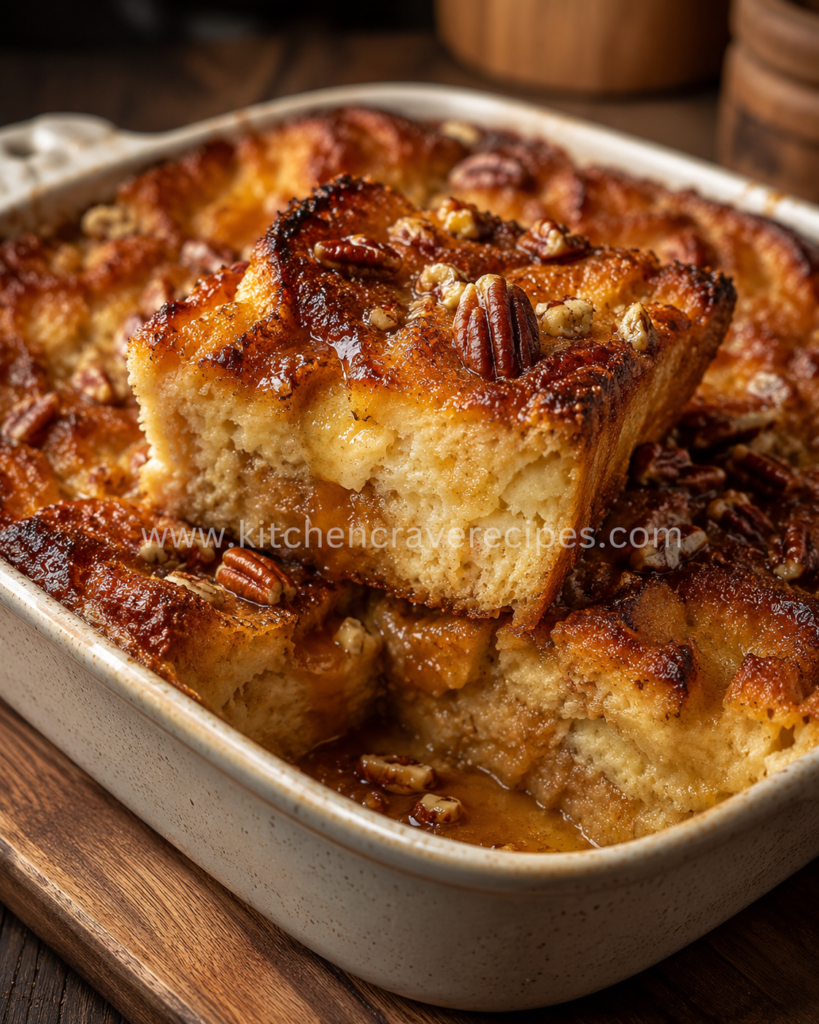
There are desserts that look impressive, and then there are desserts that stop conversation the moment they hit the table. This golden caramelized bread pudding is firmly in the second category. One look at that deeply bronzed, crackling sugar crust — bubbling at the edges, rich amber at the center — and everyone in the room wants a piece before you’ve even set it down. The photo above shows exactly what you’re working toward: a thick, shatteringly caramelized top sitting over a pillowy, custard-soaked interior, all baked in a single deep dish until the whole thing is set, fragrant, and outrageously good.
What makes this version different from a standard bread pudding is the deliberate caramelization that happens at the surface during baking. A generous dusting of brown sugar on top melts, bubbles, and ultimately crisps into a brittle, toffee-like shell — the kind you crack through with a spoon the way you would a crème brûlée. Underneath, the bread has absorbed a vanilla-and-cinnamon custard so thoroughly that every bite is soft, creamy, and deeply flavored. This is comfort food at its most sophisticated.
Recipe Quick Info
| Detail | Info |
|---|---|
| Prep Time | 20 minutes |
| Cook Time | 55 minutes |
| Total Time | 1 hour 15 minutes |
| Servings | 8 |
| Cuisine | American Southern |
| Course | Dessert |
| Cooking Method | Baking |
| Calories | ~410 per serving |
| Difficulty | Easy |
Why You’ll Love This Recipe
- That crackling caramel crust is the real star. Brown sugar bakes into a shatteringly crisp, toffee-scented shell that makes every spoonful feel special — no blowtorch required.
- One baking dish, minimal cleanup. Everything comes together in a single vessel that goes straight from your oven to the table without extra pots or pans to scrub.
- Custardy, creamy center every single time. The egg-and-cream custard ratio is carefully tested so the interior sets firm enough to slice but stays luxuriously soft and rich.
- Uses bread you already have. Day-old sandwich bread, brioche, French bread, or even leftover dinner rolls all work beautifully — this recipe actually improves with stale bread.
- Flexible enough to feed a crowd. Doubles cleanly for a 9×13-inch pan, which makes it one of the best make-ahead desserts for holiday gatherings or potlucks.
- Deeply customizable without losing what makes it great. You can swap in bourbon, add raisins, or fold in chocolate chips without disrupting the structure of this golden caramelized bread pudding.
- Bakes hands-off in under an hour. Once it’s in the oven, you’re free — the bake time is forgiving and the internal temperature tells you exactly when it’s done.
Ingredients
Custard Base
- 6 large eggs
- 2 cups whole milk
- 1 cup heavy cream
- ¾ cup granulated sugar
- 1 tablespoon pure vanilla extract
- 1½ teaspoons ground cinnamon
- ¼ teaspoon ground nutmeg
- ¼ teaspoon fine salt
Bread
- 10 cups day-old bread, torn into 1½-inch chunks (about 12 oz / 340g) — brioche, French bread, or thick-cut white bread
Caramel Crust Topping
- ½ cup packed dark brown sugar
- 2 tablespoons unsalted butter, melted
- ¼ teaspoon ground cinnamon
Optional Add-Ins
- ½ cup raisins or dried cranberries
- ½ cup semi-sweet chocolate chips
- 2 tablespoons bourbon or dark rum (added to the custard)
- ½ teaspoon orange zest
Ingredient Substitutions
| Original Ingredient | Substitution | Notes |
|---|---|---|
| Heavy cream | Half-and-half or evaporated milk | Slightly less rich but still creamy |
| Whole milk | 2% milk | Works fine; avoid skim |
| Granulated sugar | Coconut sugar | Adds a subtle molasses note |
| Dark brown sugar (topping) | Light brown sugar | Lighter color crust, equally crisp |
| Brioche | Croissants (day-old) | Exceptionally buttery result |
| Butter (topping) | Coconut oil (melted) | Dairy-free option for the crust |
Kitchen Tools Needed
- 9×9-inch or 9×13-inch baking dish (ceramic or glass preferred for even heat distribution)
- Oven preheated to 350°F — the primary tool for this baking recipe
- Large mixing bowl
- Whisk
- Measuring cups and spoons
- Small bowl (for the caramel topping mixture)
- Pastry brush (to butter the baking dish)
- Instant-read thermometer (to check doneness)
- Aluminum foil (for tenting if the top browns too quickly)
- Rubber spatula
- Chef’s knife or bread knife (for tearing/cutting bread)
Step-by-Step Instructions
Step 1 — Dry Out the Bread (15 minutes)
Preheat your oven to 350°F. Spread the torn bread chunks in a single layer on a rimmed baking sheet and slide them into the oven for 10 to 12 minutes, until they feel dry and slightly stiff at the edges but haven’t taken on any color. Stale or dried bread is non-negotiable here — it absorbs the custard deeply rather than turning to mush. If your bread is already a day or two old and feels firm, you can skip this step entirely.
Step 2 — Make the Custard
In a large mixing bowl, whisk together the eggs, whole milk, heavy cream, granulated sugar, vanilla extract, cinnamon, nutmeg, and salt. Whisk vigorously for about 90 seconds until the eggs are fully incorporated and the mixture looks smooth, slightly frothy, and a uniform pale yellow. You shouldn’t see any streaks of egg white. Embedded tip: A tiny pinch of salt is essential — it doesn’t make the pudding salty, it sharpens every other flavor in the custard.
Step 3 — Soak the Bread
Butter your baking dish generously. Add the dried bread chunks to the dish, then pour the custard evenly over the top. Press down gently with your hands or a rubber spatula so every piece of bread makes contact with the liquid. Let the bread soak for at least 15 minutes at room temperature — 20 minutes is even better. You want the custard to travel all the way to the center of each chunk; press down once or twice during the soak to encourage absorption.
Step 4 — Make the Caramel Crust Topping
In a small bowl, stir together the packed dark brown sugar, melted butter, and cinnamon until the mixture looks like wet sand. Scatter this evenly across the top of the soaked bread, covering the surface as completely as you can. The brown sugar will melt and bubble during baking, forming the signature caramelized crust that defines this golden caramelized bread pudding. Embedded tip: Don’t press the sugar down — letting it sit loosely on top allows it to melt into a continuous caramel sheet rather than sinking into the bread.
Step 5 — Bake to Golden Perfection
Place the baking dish on the center rack of your preheated 350°F oven. Bake uncovered for 50 to 55 minutes. You’re looking for three visual cues: the sugar crust should be a deep amber-mahogany color (as shown in the photo), the edges should be set and pulling slightly from the sides of the dish, and the center should have only a very faint wobble when you nudge the rack. For absolute confidence, insert an instant-read thermometer into the center — it should read between 160°F and 165°F. The USDA recommends egg-based custard dishes reach a safe internal temperature of at least 160°F.
If the crust is browning faster than the pudding is setting — usually around the 35-minute mark — tent the dish loosely with aluminum foil. Remove the foil for the last 10 minutes to allow the top to re-crisp and deepen in color.
Step 6 — Rest Before Serving
Remove the dish from the oven and let the golden caramelized bread pudding rest on a wire rack for at least 10 minutes before scooping. This rest period matters: it allows the custard to finish setting from residual heat, which gives you clean, defined spoonfuls rather than a soupy mess. The caramel crust will firm further as it cools slightly. Serve warm from the dish.
Pro Tips for the Best Results
- Use the correct bread-to-custard ratio. If your bread feels fully saturated before baking — no dry pieces visible at all — you have the ratio right. If large dry patches remain after soaking, add 2 to 3 tablespoons of additional milk before topping.
- Dark brown sugar makes a noticeably better crust than light. The higher molasses content in dark brown sugar burns slower and builds a richer, more complex toffee flavor on top.
- Room-temperature eggs and dairy are worth the extra step. Cold custard ingredients don’t whisk together as smoothly, and a lumpy custard can lead to an uneven set in the baked pudding.
- Baking method tip — resist opening the oven door. Every time you open the door, the oven temperature drops by 25°F or more, which disrupts the custard’s ability to set evenly. Set a timer and trust the process; open only to check the internal temperature near the end.
- Serve with something cool or creamy against the warm crust. A scoop of vanilla ice cream or a drizzle of cold heavy cream over the hot pudding creates a contrast that makes the caramel flavor even more pronounced.
Common Mistakes to Avoid
1. Using fresh bread instead of stale or dried bread.
Fresh bread is too moist to absorb the custard properly — it turns pasty and dense after baking. Always use day-old bread, or dry it in the oven before soaking.
2. Rushing the soak time.
Fifteen minutes is the minimum; skimping leads to a dry, bready center surrounded by a wet exterior. Press the bread into the custard at least twice during soaking.
3. Opening the oven door too often while baking.
This is the most common baking-method mistake. Repeated door-opening causes temperature swings that prevent the custard from setting evenly, often leaving a wet, sunken center. Open the oven only once, near the end of the bake, to check doneness.
4. Skipping the thermometer and relying only on visual cues.
The top can look done while the center is still liquid. An instant-read thermometer reading of 160–165°F at the center is the only reliable way to know the custard has fully set.
5. Over-sweetening the custard.
The brown sugar crust is already very sweet. If you add extra sugar to the custard base, the final dessert can tip from rich into cloying. Stick to ¾ cup granulated sugar in the custard as written.
6. Spreading the caramel topping unevenly.
Bare patches on top will bake pale and dry instead of caramelizing. Take a few extra seconds to spread the brown sugar mixture wall-to-wall before the dish goes into the oven.
7. Serving immediately out of the oven.
Cutting into this golden caramelized bread pudding right away results in a runny, shapeless scoop. Ten minutes of resting transforms it — don’t skip it.
8. Using a metal baking pan without reducing heat.
Dark metal pans conduct heat more aggressively than ceramic or glass, which can burn the bottom before the custard sets. If using a dark metal pan, reduce the oven temperature to 325°F and check for doneness 5 minutes earlier.
Variations
Healthy Version
Swap heavy cream for whole-milk Greek yogurt (whisked smooth) and reduce the granulated sugar to ½ cup. Use whole-grain bread for added fiber. The crust will be slightly less glossy but still caramelizes well, and the custard stays creamy from the yogurt’s fat content.
Vegetarian Version
This recipe is already vegetarian. For a fully plant-based version, replace eggs with a mixture of 1½ cups silken tofu blended smooth with 2 tablespoons cornstarch, and use oat milk in place of dairy milk and cream. The crust will still caramelize; the custard will be slightly firmer after baking.
Spicy Version
Add ½ teaspoon cayenne pepper and ¼ teaspoon smoked paprika to the caramel topping mixture before baking. The heat blooms against the sweetness of the brown sugar crust, creating a Mexican-inspired flavor profile. A drizzle of chili-infused honey after baking pushes it further.
Gluten-Free Version
Substitute a good-quality gluten-free brioche or sandwich loaf, dried in the oven exactly as the base recipe instructs. The custard recipe is naturally gluten-free. Ensure any optional add-ins (such as chocolate chips) are certified gluten-free before using.
Low-Carb / Keto Version
This variation requires genuinely different ingredients and produces a different result. Use almond flour bread (homemade or store-bought keto bread), replace granulated sugar with powdered erythritol, and use golden monk fruit sweetener for the caramel crust. Note that monk fruit and erythritol do not caramelize identically to sucrose — the top will be lightly browned rather than deeply lacquered, but the flavor remains warm and satisfying.
What to Serve With This Recipe
- Vanilla bean ice cream — the cold creaminess melts into the warm caramel crust for an irresistible contrast.
- Salted caramel sauce — doubles down on the toffee flavor already built into the crust; drizzle it tableside.
- Lightly whipped cream — unsweetened or just barely sweetened to let the pudding’s caramel take center stage.
- Fresh berries — sliced strawberries or a handful of raspberries cut through the richness with bright acidity.
- Strong black coffee or espresso — the bitterness is a natural partner for deeply caramelized desserts.
- A glass of aged bourbon — the oak and vanilla notes mirror the spiced custard beautifully for an adult pairing.
- Candied pecans — scattered on top just before serving for crunch and a nutty, buttery layer. Try making our
Storage Instructions
Refrigerator
Allow the baked pudding to cool completely to room temperature before covering. Wrap the baking dish tightly with plastic wrap or transfer individual portions to airtight containers. Refrigerate for up to 4 days. The caramel crust will soften in the fridge — this is normal and expected.
Freezer
Cut the fully cooled pudding into individual portions and wrap each piece tightly in plastic wrap, then place in a zip-top freezer bag with as much air removed as possible. Freeze for up to 2 months. Thaw individual portions overnight in the refrigerator before reheating. Avoid freezing with the crust-side exposed — ice crystals on the caramel surface can make it grainy after thawing.
Shelf Life Summary
| Storage Method | Duration |
|---|---|
| Room temperature (covered) | Up to 2 hours |
| Refrigerator (airtight) | Up to 4 days |
| Freezer (wrapped portions) | Up to 2 months |
Reheating Instructions
Oven (best method for reviving the crust):
Preheat your oven to 325°F. Place the portion in an oven-safe dish, cover loosely with foil, and bake for 12 to 15 minutes until warmed through. For the final 3 minutes, remove the foil to allow the top to re-crisp slightly. This is the only method that partially restores the caramelized texture.
Microwave (fastest option):
Place one portion on a microwave-safe plate. Heat on medium power (50%) in 30-second intervals, checking after each, for a total of 60 to 90 seconds. Full power tends to make the custard rubbery — medium power keeps it tender. Per USDA food safety guidelines, leftovers should reach an internal temperature of 165°F when reheated.
Stovetop (for sauced portions):
Place a portion in a small saucepan over low heat with 1 to 2 tablespoons of milk or cream. Stir gently and warm for 4 to 5 minutes. This works best for portions that have already had the crust disturbed, as it essentially turns them into a warm custard-sauced bread pudding.
Nutrition Facts
| Nutrient | Per Serving (1/8 of recipe) |
|---|---|
| Calories | ~410 |
| Total Fat | 18g |
| Saturated Fat | 10g |
| Cholesterol | 175mg |
| Sodium | 310mg |
| Total Carbohydrates | 52g |
| Dietary Fiber | 1g |
| Total Sugars | 32g |
| Protein | 10g |
Disclaimer: Nutrition values are estimates calculated using standard ingredient databases and will vary based on the specific brand of bread used, optional add-ins, and portion size. These figures are provided for general reference only and should not be used for medical or dietary planning. Consult a registered dietitian for personalized nutrition guidance.
Frequently Asked Questions
Can I make golden caramelized bread pudding ahead of time?
Yes — assemble the soaked bread in the baking dish, cover tightly with plastic wrap, and refrigerate overnight without adding the caramel topping. When ready to bake, add the brown sugar topping and bake straight from the fridge, adding 5 to 8 extra minutes to the bake time.
What is the best type of bread for bread pudding?
Brioche and French bread are the top choices because their open crumb structure soaks up custard efficiently. Day-old croissants produce an exceptionally rich result. Avoid very dense whole-grain loaves — they absorb custard slowly and can produce a gummy texture.
Why is my bread pudding still wet in the center?
The most common cause is underbaking. The custard may look set on top while remaining liquid underneath. Always use an instant-read thermometer — 160–165°F at the dead center confirms it is fully cooked through.
Can I bake this in individual ramekins instead of one large dish?
Absolutely. Divide the soaked bread among 8 greased 6-ounce ramekins, top each with the caramel mixture, and bake at 350°F for 28 to 32 minutes. They bake faster because each portion has less mass to heat through — check the internal temperature at the 28-minute mark.
How do I get the caramel crust extra thick and crunchy?
Increase the brown sugar in the topping to ⅔ cup and ensure the dish goes into the oven while the sugar is still dry and loose on top. Avoid pressing it into the bread. For an extra layer, pull the dish at the 30-minute mark, scatter a thin second coat of brown sugar, and finish baking uncovered.
Can I use this recipe without dairy?
Yes. Replace whole milk with full-fat oat milk or canned coconut milk (well stirred), and swap heavy cream for additional full-fat oat milk. The custard will be slightly less rich but will still set correctly. Replace butter in the topping with melted coconut oil.
Does golden caramelized bread pudding need a water bath?
No — unlike cheesecakes or delicate flans, a well-constructed bread pudding baked at 350°F in a ceramic or glass dish does not require a water bath. The bread itself provides enough structure to prevent the custard from curdling or cracking at the surface.
Can I add alcohol to this recipe?
Yes, and it works beautifully. Stir 2 tablespoons of bourbon, dark rum, or brandy directly into the custard mixture before pouring it over the bread. The alcohol cooks off during baking, leaving only its flavor behind — warm, slightly smoky, and complex.
Why did my caramel topping turn out pale instead of deeply browned?
Two likely causes: the oven temperature was too low, or the dish was placed on a lower rack. Always bake on the center rack at a true 350°F — use an oven thermometer to verify your oven’s calibration, as many home ovens run 15–25°F cool.
Can I substitute granulated white sugar for the brown sugar crust?
Technically yes, but the result will be paler and less flavorful. Brown sugar’s molasses content is what drives both the deep amber color and the toffee aroma. If you must substitute, a mix of ⅓ cup granulated sugar and 1 teaspoon molasses pressed together will approximate the effect.
How do I know if the bread has soaked long enough?
Press a piece of bread to the bottom of the dish. If it springs back with no resistance and feels fully saturated — almost sponge-like — it’s ready. If it still feels firm or bouncy, give it 5 more minutes and press again.
What’s the difference between bread pudding and French toast casserole?
The distinction is mainly in ratio and intent. Bread pudding uses a higher custard-to-bread ratio, baking into a denser, more cohesive set. French toast casserole tends to stay lighter and more eggy, with individual pieces more distinct. This golden caramelized bread pudding leans firmly into the rich, unified bread pudding tradition.
Expert Chef Tips
- Toast the bread twice for maximum absorption. The first toast dries the bread out; if you have extra time, let it sit on the counter uncovered for another 30 minutes after the oven toast. This double-drying creates a surface that draws in custard like a sponge without ever getting waterlogged.
- Bloom the spices in the warm dairy before whisking. Heat the milk and cream together just until steaming — not simmering — then stir in the cinnamon and nutmeg. Let it sit for 5 minutes, then whisk into the eggs. This technique extracts far more aromatic depth from ground spices than simply whisking everything together cold.
- The caramel topping burns fast once it goes dark — watch the color, not the clock. Ovens vary, and once the crust crosses from deep amber into true mahogany, it’s only 3 to 4 minutes from tasting bitter. Check visually at the 45-minute mark and pull the pudding as soon as the crust reaches the color in the reference photo — glossy, deeply bronzed, with small bubbling pockets at the edges.
- Let the baking dish cool slightly on a wire rack, not on the stovetop burner grates. The wire rack allows air to circulate under the dish, preventing the bottom from over-cooking from residual surface heat — a detail that keeps the bottom layer as tender as the rest.
- A rubber spatula scoops cleaner portions than a spoon. Run the spatula straight down through the crust and lift rather than scooping sideways — this keeps the caramel layer intact on top of each serving instead of scraping it off.
Recipe Summary
This golden caramelized bread pudding delivers a shatteringly crisp brown sugar crust over a custardy, vanilla-and-cinnamon-scented interior, all baked in one dish at 350°F for under an hour. Day-old bread absorbs a rich egg-and-cream custard during a 15-minute soak, and a layer of dark brown sugar and butter melts into a true toffee shell during baking. It serves eight generously, stores well for up to four days, and comes together with pantry staples you likely already have on hand.
Conclusion
There are very few desserts that manage to feel both deeply homey and genuinely impressive at the same time, but this golden caramelized bread pudding pulls it off without any fuss. The baking process does the real work — the oven transforms humble, day-old bread and a simple custard into something with a crackle-top crust and a center so soft it’s practically a spoonable dream. Make it once for a weekend dinner and you’ll find yourself planning the next occasion to bake it again before the dish is even cleared from the table. Bring it warm to the table, crack through that caramel shell, and watch what happens next.
Best Golden Caramelized Bread Pudding (5-Star Easy Bake)
Description
There are desserts that look impressive, and then there are desserts that stop conversation the moment they hit the table. This golden caramelized bread pudding is firmly in the second category. One look at that deeply bronzed, crackling sugar crust — bubbling at the edges, rich amber at the center — and everyone in the room wants a piece before you've even set it down. The photo above shows exactly what you're working toward: a thick, shatteringly caramelized top sitting over a pillowy, custard-soaked interior, all baked in a single deep dish until the whole thing is set, fragrant, and outrageously good.
Ingredients
Instructions
-
Step 1 — Dry Out the Bread (15 minutes)
-
Preheat your oven to 350°F. Spread the torn bread chunks in a single layer on a rimmed baking sheet and slide them into the oven for 10 to 12 minutes, until they feel dry and slightly stiff at the edges but haven't taken on any color. Stale or dried bread is non-negotiable here — it absorbs the custard deeply rather than turning to mush. If your bread is already a day or two old and feels firm, you can skip this step entirely.
-
Step 2 — Make the Custard
-
In a large mixing bowl, whisk together the eggs, whole milk, heavy cream, granulated sugar, vanilla extract, cinnamon, nutmeg, and salt. Whisk vigorously for about 90 seconds until the eggs are fully incorporated and the mixture looks smooth, slightly frothy, and a uniform pale yellow. You shouldn't see any streaks of egg white. Embedded tip: A tiny pinch of salt is essential — it doesn't make the pudding salty, it sharpens every other flavor in the custard.
-
Step 3 — Soak the Bread
-
Butter your baking dish generously. Add the dried bread chunks to the dish, then pour the custard evenly over the top. Press down gently with your hands or a rubber spatula so every piece of bread makes contact with the liquid. Let the bread soak for at least 15 minutes at room temperature — 20 minutes is even better. You want the custard to travel all the way to the center of each chunk; press down once or twice during the soak to encourage absorption.
-
Step 4 — Make the Caramel Crust Topping
-
In a small bowl, stir together the packed dark brown sugar, melted butter, and cinnamon until the mixture looks like wet sand. Scatter this evenly across the top of the soaked bread, covering the surface as completely as you can. The brown sugar will melt and bubble during baking, forming the signature caramelized crust that defines this golden caramelized bread pudding. Embedded tip: Don't press the sugar down — letting it sit loosely on top allows it to melt into a continuous caramel sheet rather than sinking into the bread.
-
Step 5 — Bake to Golden Perfection
-
Place the baking dish on the center rack of your preheated 350°F oven. Bake uncovered for 50 to 55 minutes. You're looking for three visual cues: the sugar crust should be a deep amber-mahogany color (as shown in the photo), the edges should be set and pulling slightly from the sides of the dish, and the center should have only a very faint wobble when you nudge the rack. For absolute confidence, insert an instant-read thermometer into the center — it should read between 160°F and 165°F. The USDA recommends egg-based custard dishes reach a safe internal temperature of at least 160°F.
-
If the crust is browning faster than the pudding is setting — usually around the 35-minute mark — tent the dish loosely with aluminum foil. Remove the foil for the last 10 minutes to allow the top to re-crisp and deepen in color.
-
Step 6 — Rest Before Serving
-
Remove the dish from the oven and let the golden caramelized bread pudding rest on a wire rack for at least 10 minutes before scooping. This rest period matters: it allows the custard to finish setting from residual heat, which gives you clean, defined spoonfuls rather than a soupy mess. The caramel crust will firm further as it cools slightly. Serve warm from the dish.
Nutrition Facts
Servings 8
- Amount Per Serving
- Calories 410kcal
- % Daily Value *
- Total Fat 18g28%
- Saturated Fat 10g50%
- Protein 10g20%
* Percent Daily Values are based on a 2,000 calorie diet. Your daily value may be higher or lower depending on your calorie needs.