
Honey Garlic Chicken Avocado Rice Bowl That’s Better Than Takeout
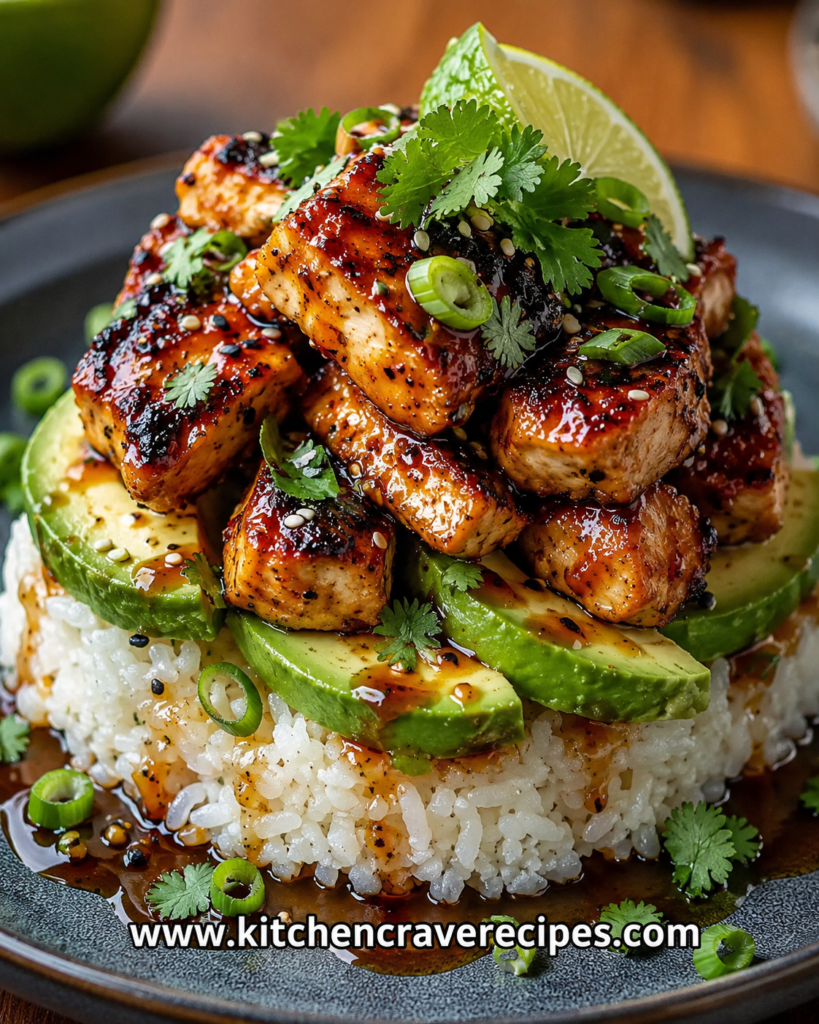
Some dinners are purely functional — fuel, not flavor. This honey garlic chicken avocado rice bowl is neither of those things. It’s deeply caramelized, sticky-sauced chicken piled high over white rice and fanned avocado slices, finished with sliced scallions, sesame seeds, fresh cilantro, and a wedge of lime. Every component in the photo is exactly what you’re building: dark, lacquered chicken bites with real char on the edges, creamy bright-green avocado, and rice that soaks up the glossy honey garlic sauce that runs down the entire stack.
This is a 30-minute meal that tastes like it took an hour. The sauce is three pantry ingredients. The chicken goes in one pan. And the final presentation — that dramatic tower of glazed protein over a bed of rice — is achievable on a Tuesday night without any special equipment or culinary training. Keep reading, because this one earns a permanent spot in your weeknight rotation.
Recipe Quick Info
| Detail | Info |
|---|---|
| Prep Time | 10 minutes |
| Cook Time | 20 minutes |
| Total Time | 30 minutes |
| Servings | 4 |
| Cuisine | Asian-American Fusion |
| Course | Main Dish / Dinner Bowl |
| Estimated Calories | ~560 per serving |
| Difficulty | Easy |
Why You’ll Love This Honey Garlic Chicken Avocado Rice Bowl
- 30 minutes start to finish, no exceptions. If your rice is cooking while the chicken sears, this meal hits the table in exactly half an hour — no waiting, no multitasking disasters.
- That honey garlic glaze is genuinely addictive. Honey, soy sauce, and garlic reduce into a sticky, caramelized coating that chars slightly at the edges of each chicken piece — just like the photo shows.
- Avocado does real work here — it’s not just garnish. The cool, buttery slices cut through the heat of the glaze and balance every bite with richness and creaminess that no other topping delivers.
- Sesame seeds, scallions, cilantro, and lime are all visible in the photo and all essential. Each one adds a specific textural or flavor layer that makes the finished bowl taste restaurant-caliber rather than homemade-average.
- One pan for the chicken, one pot for the rice. The cleanup is minimal, the technique is simple, and the result is a bowl that genuinely impresses.
- High-protein and naturally balanced. Chicken breast or thighs provide lean protein, avocado delivers healthy monounsaturated fats, and white rice provides the energy base to fuel a full evening.
- Scales easily for meal prep. Double the chicken and sauce, cook extra rice, and portion into four containers for a week of grab-and-go lunches that don’t taste like diet food.
Ingredients
For the Chicken
- 1½ lbs boneless, skinless chicken thighs, cut into 1½-inch cubes
- 1 tablespoon olive oil
- ½ teaspoon kosher salt
- ¼ teaspoon black pepper
- ½ teaspoon garlic powder
For the Honey Garlic Glaze
- 3 tablespoons honey
- 3 tablespoons low-sodium soy sauce
- 5 cloves garlic, minced
- 1 tablespoon rice vinegar
- 1 teaspoon sesame oil
- ½ teaspoon cornstarch (mixed with 1 teaspoon cold water to make a slurry)
For the Rice Base
- 2 cups long-grain white rice
- 3 cups water or low-sodium chicken broth
- ½ teaspoon kosher salt
- 1 tablespoon unsalted butter (optional, for richness)
For the Bowl Assembly and Garnish
- 2 ripe Hass avocados, pitted, peeled, and sliced
- 3 scallions, thinly sliced
- 1 tablespoon sesame seeds (white and black mixed, as shown in the photo)
- ¼ cup fresh cilantro leaves
- 1 lime, cut into wedges
Optional Add-Ins
- ½ teaspoon crushed red pepper flakes (stir into the glaze for heat)
- 1 teaspoon freshly grated ginger (add with the garlic in the glaze)
- 1 tablespoon sriracha (drizzled over the finished bowl)
- 1 cup shredded purple cabbage (for added crunch and color at the base)
Substitution Table
| Original Ingredient | Substitution | Notes |
|---|---|---|
| Chicken thighs | Boneless chicken breast | Slightly leaner; watch closely — breast dries out faster than thighs |
| Low-sodium soy sauce | Tamari | Makes the dish fully gluten-free; flavor is nearly identical |
| Honey | Maple syrup | Slightly different sweetness profile; caramelizes well |
| White rice | Jasmine or basmati rice | Both work well; follow package water ratios |
| Rice vinegar | Fresh lime juice | Adds more citrus character; use same amount |
| Sesame oil | Omit or use 1 tsp toasted walnut oil | Sesame oil is strongly flavored — don’t substitute with neutral oil |
Kitchen Tools Needed
- Large skillet or cast-iron pan (12-inch)
- Medium saucepan with lid (for rice)
- Chef’s knife and cutting board
- Mixing bowl or liquid measuring cup (for glaze)
- Microplane or fine grater (if using fresh ginger)
- Tongs
- Measuring cups and spoons
- Serving bowls (wide, shallow bowls work best for presentation)
Step-by-Step Instructions
Step 1: Cook the Rice (20 minutes, runs concurrently)
Combine the rice, water or broth, salt, and butter (if using) in a medium saucepan. Bring to a boil over high heat, then reduce to the lowest possible simmer, cover tightly, and cook for 18 minutes. Remove from heat and let it steam, covered, for 5 minutes before fluffing with a fork. Starting the rice first means it finishes at the same time as the chicken — no cold rice, no waiting.
Embedded Tip: Using chicken broth instead of water adds a background savory flavor to the rice that pairs especially well with the honey garlic glaze. The broth flavor is subtle but noticeable in every bite.
Step 2: Prep and Season the Chicken (5 minutes)
Pat the chicken thigh pieces dry with paper towels — this is the single most important step for getting good color. Moisture on the surface of the chicken steams instead of sears, which prevents the caramelized crust visible in the photo. Season the cubed chicken evenly with salt, pepper, and garlic powder, tossing to coat all sides.
Step 3: Mix the Honey Garlic Glaze (3 minutes)
Whisk together the honey, soy sauce, minced garlic, rice vinegar, sesame oil, and cornstarch slurry in a small bowl or liquid measuring cup. The cornstarch is what makes this glaze cling to the chicken rather than running off — don’t skip it. Set the mixture aside within reach of the stove; once the chicken starts cooking, the glaze goes in quickly.
Step 4: Sear the Chicken (8 minutes)
Heat 1 tablespoon of olive oil in a large skillet over medium-high heat until it shimmers — about 90 seconds. Add the chicken pieces in a single layer without overcrowding the pan. Sear undisturbed for 3–4 minutes until deep golden-brown on the bottom. Flip each piece and cook for another 2–3 minutes.
Food Safety Note: Chicken must reach an internal temperature of 165°F before it is safe to eat. Use an instant-read thermometer to confirm before adding the glaze, per USDA safe minimum internal temperature guidelines. Do not rely on color alone.
Step 5: Add the Glaze and Caramelize (4 minutes)
Reduce the heat to medium. Pour the honey garlic glaze over the cooked chicken and toss to coat every piece. The sauce will bubble vigorously — let it cook, stirring occasionally, for 3–4 minutes until it thickens, darkens, and coats the chicken in a sticky lacquered glaze with slightly charred edges. This is exactly the color and texture you see in the photo. If the glaze reduces too quickly, add 1–2 tablespoons of water and continue.
Embedded Tip: Don’t stir constantly during the glaze step — let the chicken sit briefly in the bubbling sauce so the edges have a chance to caramelize and develop those dark spots that add depth of flavor and visual appeal.
Step 6: Assemble the Bowls
Fluff the cooked rice and divide it between four wide serving bowls, pressing it gently into a mound in the center. Fan the avocado slices around the base of the rice. Spoon the glazed chicken generously over the top of the rice and avocado. Drizzle any remaining sauce from the pan over the entire bowl.
Step 7: Garnish and Serve
Scatter sliced scallions, sesame seeds, and fresh cilantro leaves over each bowl. Add a wedge of lime on the side. Serve immediately — the honey garlic chicken avocado rice bowl is at its best when the chicken is hot and the avocado is cool, and that temperature contrast is part of what makes it so satisfying.
Pro Tips for the Best Result
- Dry the chicken thoroughly before seasoning. Paper towels, pressed firmly, remove surface moisture that would otherwise prevent browning. This single step is responsible for the deep caramelization in the photo.
- Don’t crowd the pan. If your skillet isn’t large enough to fit all the chicken in one layer with space around each piece, work in two batches. Crowding produces steamed, pale chicken instead of seared, golden chicken.
- Slice the avocado right before serving. Avocado oxidizes quickly once cut — slicing it at the last possible moment keeps it green, creamy, and visually striking rather than brown and dull.
- Use the pan drippings in the sauce. All those brown bits left in the skillet after searing the chicken dissolve into the honey garlic glaze and add layers of savory depth that wouldn’t be there otherwise.
- Squeeze the lime over everything, not just the chicken. A squeeze over the rice and avocado brightens the whole bowl and ties every component together with acidity.
Common Mistakes to Avoid
1. Not drying the chicken before searing.
Fix: Surface moisture causes steaming, not browning. Use paper towels and press firmly before seasoning. Dry chicken = better crust, better color, better flavor.
2. Cooking the glaze on too-high heat.
Fix: Honey burns fast at high temperatures and turns bitter. Reduce to medium heat before adding the glaze and watch it closely — 3–4 minutes is all it needs to thicken and lacquer.
3. Cutting the avocado too early.
Fix: Avocado begins oxidizing within minutes of being cut. Slice it in the final 2 minutes before assembly for the bright green color shown in the photo.
4. Skipping the cornstarch slurry in the glaze.
Fix: Without cornstarch, the glaze stays thin and slides off the chicken instead of clinging. The slurry is what creates the thick, sticky coating that defines this dish.
5. Overcrowding the skillet during the sear.
Fix: Cook in two batches if needed, wiping out the pan between rounds. Crowded chicken releases steam and never develops the caramelized crust that makes this bowl visually and texturally distinct.
6. Using cold rice straight from the refrigerator.
Fix: If you’re using leftover rice, warm it in a saucepan with 2 tablespoons of broth or water over medium-low heat before assembling. Cold rice under hot glazed chicken makes the entire bowl fall flat.
7. Over-reducing the glaze until it burns.
Fix: Watch the glaze during those final 3–4 minutes — it should be thick enough to coat a spoon, not sticky like taffy. Add water by the tablespoon if it tightens too much before the chicken is ready.
Variations
Healthy / Lower-Calorie Version
Swap chicken thighs for chicken breast and reduce the honey to 2 tablespoons, compensating with an extra tablespoon of low-sodium soy sauce for depth. Use brown rice in place of white — it adds more fiber and keeps you fuller longer, though it will extend the rice cook time to 40–45 minutes. The glaze still caramelizes beautifully on breast meat if you avoid overcooking.
Vegetarian Version
Replace the chicken with 1½ lbs extra-firm tofu, pressed for 20 minutes and cut into 1½-inch cubes. Sear the tofu in the same hot skillet until golden on two sides — about 4 minutes per side — before adding the honey garlic glaze. Tofu absorbs the sauce deeply and produces a very similar caramelized exterior. Use vegetable broth for the rice to keep the dish fully vegetarian.
Spicy Version
Add 1–2 teaspoons of chili garlic sauce or sambal oelek directly to the honey garlic glaze before cooking. You can also finish the bowl with a drizzle of sriracha and extra crushed red pepper flakes scattered over the top. The heat plays extremely well against the cool avocado and the sweetness of the honey, creating a genuinely balanced spicy bowl.
Gluten-Free Version
The only swap needed here is replacing the soy sauce with certified gluten-free tamari in a 1:1 ratio. Tamari is naturally brewed without wheat, produces an identical flavor, and caramelizes in exactly the same way as standard soy sauce. All other ingredients in the honey garlic chicken avocado rice bowl are naturally gluten-free, making this a seamless one-ingredient adaptation.
Low-Carb / Keto Version
Replace white rice with cauliflower rice — pulse a head of cauliflower in a food processor and sauté in a dry skillet over medium-high heat for 5–6 minutes until tender. Reduce the honey to 1 tablespoon (or replace with a keto-friendly sweetener like allulose) to lower the sugar content further. The glaze still reduces and coats the chicken well with these adjustments. Pair with Mushroom Spinach Scramble: 5-Ingredient Easy Recipe for a fully low-carb meal.
What to Serve With This Honey Garlic Chicken Avocado Rice Bowl
- Miso soup — a light, savory cup of broth before the bowl cleanses the palate and complements the Asian-inspired glaze beautifully.
- Cucumber sesame salad — thin slices of English cucumber tossed with rice vinegar and sesame oil echo the flavors in the glaze without competing.
- Edamame with sea salt — easy to prepare, high in plant protein, and a crowd-pleasing side that requires almost no effort.
- Pickled ginger or kimchi — the acidity and fermented tang cut through the richness of the honey glaze and add a welcome punch of contrast.
- Steamed bok choy with garlic — quick to make alongside the chicken, and the mild bitterness of the greens balances the sweetness of the glaze.
- Sparkling water with lime — mirrors the lime wedge served with the bowl and refreshes the palate between bites of rich, sticky chicken.
For a lighter companion dish, try Mushroom Spinach Scramble: 5-Ingredient Easy Recipe— it’s ready in 10 minutes and pairs perfectly with any glazed chicken bowl.
Storage Instructions
Refrigerator
Store the chicken and rice separately from the avocado whenever possible — avocado does not keep well once sliced. The cooked honey garlic chicken and rice will keep in airtight containers for up to 4 days in the refrigerator. Slice fresh avocado each time you serve rather than storing pre-sliced portions.
Freezer
The glazed chicken freezes well for up to 2 months. Cool completely, portion into freezer-safe containers or zip-lock bags, and lay flat to freeze. White rice also freezes well in portioned servings — press it into a flat layer in a freezer bag and freeze for up to 1 month. Do not freeze avocado. Thaw chicken and rice overnight in the refrigerator before reheating.
Shelf Life Summary
| Component | Refrigerator | Freezer |
|---|---|---|
| Honey garlic chicken | Up to 4 days | Up to 2 months |
| Cooked white rice | Up to 4 days | Up to 1 month |
| Sliced avocado | Same day only | Do not freeze |
| Assembled bowl (no avocado) | Up to 3 days | Not recommended |
Reheating Instructions
Stovetop (Best Method for Chicken)
Add the glazed chicken to a small skillet over medium heat with 1–2 tablespoons of water or chicken broth. Cover and heat for 4–5 minutes, stirring once, until heated through. The broth loosens the glaze without burning it and returns the chicken to close to its original texture.
Microwave (Fastest Method)
Place a single portion of chicken and rice in a microwave-safe bowl, cover with a damp paper towel, and heat on medium power (70%) for 90 seconds. Stir and continue in 30-second intervals until the center is hot throughout. The FDA’s safe food reheating guidelines recommend reaching 165°F at the center for all previously cooked poultry.
Oven
Spread the chicken in an even layer in an oven-safe dish, add 2 tablespoons of water or broth, and cover with foil. Heat at 325°F for 12–15 minutes until hot throughout. This method works well when reheating a larger batch without losing the texture of the glaze. Add the fresh avocado, scallions, and cilantro after reheating — never reheat the garnishes.
Nutrition Facts (Per Serving — Based on 4 Servings)
| Nutrient | Amount |
|---|---|
| Calories | ~560 |
| Total Fat | 22g |
| Saturated Fat | 4g |
| Cholesterol | 115mg |
| Sodium | 740mg |
| Total Carbohydrates | 58g |
| Dietary Fiber | 6g |
| Total Sugars | 12g |
| Protein | 38g |
| Potassium | 720mg |
| Vitamin C | 14mg |
Nutrition Disclaimer: These values are estimated using standard nutrition software based on the recipe as written with 4 servings. Actual values will vary depending on the specific brands, ingredient sizes, and any substitutions you make. For precise dietary tracking, input your exact ingredients into a verified nutrition calculator or speak with a registered dietitian.
Frequently Asked Questions
Can I use chicken breast instead of thighs in this honey garlic chicken avocado rice bowl?
Yes — chicken breast works, but it cooks faster and dries out more easily than thighs. Cut it into the same 1½-inch cubes, reduce the sear time by 1 minute per side, and watch the internal temperature closely. Pull it the moment it hits 165°F.
How do I keep the avocado from turning brown?
Slice the avocado immediately before serving and squeeze a small amount of fresh lime juice over the cut surfaces. The citric acid slows oxidation significantly. Never slice avocado in advance if you want it to look as vibrant as the photo.
Can I make the honey garlic glaze ahead of time?
Yes — whisk all the glaze ingredients together (including the cornstarch slurry) and store in an airtight jar in the refrigerator for up to 3 days. Shake or stir well before using, as the cornstarch will settle.
What rice works best for this bowl?
Long-grain white rice, jasmine rice, and basmati all work well. Jasmine rice has a slightly floral aroma that complements the Asian-inspired glaze particularly nicely. Cook it in chicken broth for extra flavor depth.
Is this recipe good for meal prep?
It’s an excellent meal prep option. Cook the chicken and rice in full batches, divide into four containers, and refrigerate for up to 4 days. Store avocado separately and add fresh slices at serving time for best results.
Why did my glaze turn sticky and hard instead of saucy?
It over-reduced. The cornstarch causes the sauce to thicken quickly, so it only needs 3–4 minutes on medium heat. If it gets too thick, add water by the tablespoon and stir over low heat until it loosens back to a glossy, coating consistency.
Can I grill the chicken instead of pan-searing?
Yes — thread the seasoned chicken cubes onto skewers and grill over medium-high heat for 4–5 minutes per side. Brush the honey garlic glaze on during the final 2 minutes of grilling rather than cooking the chicken in it. The char from the grill adds a smoky layer that’s equally delicious.
What can I use instead of sesame seeds if I have a sesame allergy?
Finely chopped roasted peanuts or sunflower seeds provide a similar crunch and nuttiness without sesame. For a completely nut-free topping, finely chopped fresh scallion tops and extra cilantro work well visually and flavor-wise.
How do I know when the glaze is ready?
The glaze should coat the back of a spoon and leave a clear line when you draw your finger across it. It should look dark, glossy, and sticky — not thin and watery. The chicken pieces should be visibly lacquered, with slightly darkened edges like those in the photo.
Can I use frozen avocado?
Frozen avocado (thawed) works in a pinch but loses its firm, sliceable texture — it becomes too soft to fan into the clean presentation shown in the photo. Use it only if fresh avocados aren’t available, and expect a more mashed consistency when it thaws.
Expert Chef Tips
Sear on a completely preheated pan. Adding chicken to a pan that isn’t fully hot yet means the meat sticks and steams before it can form a crust. Give the oil a full 90 seconds to heat after adding it to the skillet — when it shimmers, the pan is ready. A hot pan is what produces those caramelized edges visible on every piece of chicken in the photo.
Build the bowl in the right order for visual impact. Rice goes down first as the base, pressed gently into shape. Avocado fans around the outside before the chicken goes on top — this is what creates the layered look where each component is visible from above rather than buried. Garnishes always go on last, immediately before serving.
Toast the sesame seeds for deeper flavor. Place them in a dry skillet over medium heat for 60–90 seconds, shaking constantly, until they turn golden and fragrant. The difference between raw and toasted sesame seeds in a finished dish is significant — toasted seeds have a nuttier, richer aroma that pairs more closely with the honey garlic glaze.
Save the pan sauce. After removing the chicken, if there’s any glaze remaining in the pan, add 1 tablespoon of water and scrape up all the caramelized bits. Drizzle this over the assembled bowls — it’s concentrated, sticky, and incredibly flavorful, and it makes the presentation look exactly like restaurant-quality plating.
Recipe Summary
This honey garlic chicken avocado rice bowl is built around three components that each do their own work: sticky, caramelized chicken thighs in a soy-honey glaze, cool creamy avocado slices fanned over white rice, and a garnish of scallions, mixed sesame seeds, fresh cilantro, and lime. The entire dish comes together in 30 minutes using one skillet and one saucepan. With 38 grams of protein per serving and naturally balanced macros, it functions equally well as a weeknight dinner or a five-day meal-prep staple.
Make It Tonight — It’s Earned Its Place in Your Rotation
Some recipes are experiments. Others become permanent fixtures in your weekly cooking — and this honey garlic chicken avocado rice bowl falls firmly into the second category. The glaze comes together in under 5 minutes. The chicken sears in one pan. The whole bowl goes from counter to table in 30 minutes with almost zero cleanup. Make it once, and you’ll understand immediately why it’s the kind of recipe people send to each other without being asked. The sticky glaze, the cool avocado, the cilantro and lime — everything is working together in this one.
Honey Garlic Chicken Avocado Rice — Best 30-Min Bowl
Description
Some dinners are purely functional — fuel, not flavor. This honey garlic chicken avocado rice bowl is neither of those things. It's deeply caramelized, sticky-sauced chicken piled high over white rice and fanned avocado slices, finished with sliced scallions, sesame seeds, fresh cilantro, and a wedge of lime. Every component in the photo is exactly what you're building: dark, lacquered chicken bites with real char on the edges, creamy bright-green avocado, and rice that soaks up the glossy honey garlic sauce that runs down the entire stack.
Ingredients
Instructions
-
Step-by-Step Instructions
-
Step 1: Cook the Rice (20 minutes, runs concurrently)
-
Combine the rice, water or broth, salt, and butter (if using) in a medium saucepan. Bring to a boil over high heat, then reduce to the lowest possible simmer, cover tightly, and cook for 18 minutes. Remove from heat and let it steam, covered, for 5 minutes before fluffing with a fork. Starting the rice first means it finishes at the same time as the chicken — no cold rice, no waiting.
-
Embedded Tip: Using chicken broth instead of water adds a background savory flavor to the rice that pairs especially well with the honey garlic glaze. The broth flavor is subtle but noticeable in every bite.
-
Step 2: Prep and Season the Chicken (5 minutes)
-
Pat the chicken thigh pieces dry with paper towels — this is the single most important step for getting good color. Moisture on the surface of the chicken steams instead of sears, which prevents the caramelized crust visible in the photo. Season the cubed chicken evenly with salt, pepper, and garlic powder, tossing to coat all sides.
-
Step 3: Mix the Honey Garlic Glaze (3 minutes)
-
Whisk together the honey, soy sauce, minced garlic, rice vinegar, sesame oil, and cornstarch slurry in a small bowl or liquid measuring cup. The cornstarch is what makes this glaze cling to the chicken rather than running off — don't skip it. Set the mixture aside within reach of the stove; once the chicken starts cooking, the glaze goes in quickly.
-
Step 4: Sear the Chicken (8 minutes)
-
Heat 1 tablespoon of olive oil in a large skillet over medium-high heat until it shimmers — about 90 seconds. Add the chicken pieces in a single layer without overcrowding the pan. Sear undisturbed for 3–4 minutes until deep golden-brown on the bottom. Flip each piece and cook for another 2–3 minutes.
-
Food Safety Note: Chicken must reach an internal temperature of 165°F before it is safe to eat. Use an instant-read thermometer to confirm before adding the glaze, per USDA safe minimum internal temperature guidelines. Do not rely on color alone.
-
Step 5: Add the Glaze and Caramelize (4 minutes)
-
Reduce the heat to medium. Pour the honey garlic glaze over the cooked chicken and toss to coat every piece. The sauce will bubble vigorously — let it cook, stirring occasionally, for 3–4 minutes until it thickens, darkens, and coats the chicken in a sticky lacquered glaze with slightly charred edges. This is exactly the color and texture you see in the photo. If the glaze reduces too quickly, add 1–2 tablespoons of water and continue.
-
Embedded Tip: Don't stir constantly during the glaze step — let the chicken sit briefly in the bubbling sauce so the edges have a chance to caramelize and develop those dark spots that add depth of flavor and visual appeal.
-
Step 6: Assemble the Bowls
-
Fluff the cooked rice and divide it between four wide serving bowls, pressing it gently into a mound in the center. Fan the avocado slices around the base of the rice. Spoon the glazed chicken generously over the top of the rice and avocado. Drizzle any remaining sauce from the pan over the entire bowl.
-
Step 7: Garnish and Serve
-
Scatter sliced scallions, sesame seeds, and fresh cilantro leaves over each bowl. Add a wedge of lime on the side. Serve immediately — the honey garlic chicken avocado rice bowl is at its best when the chicken is hot and the avocado is cool, and that temperature contrast is part of what makes it so satisfying.
Nutrition Facts
Servings 4
- Amount Per Serving
- Calories 560kcal
- % Daily Value *
- Total Fat 22g34%
- Saturated Fat 4g20%
- Protein 38g76%
* Percent Daily Values are based on a 2,000 calorie diet. Your daily value may be higher or lower depending on your calorie needs.