Easy Garlic Parmesan Chicken Pasta (30-Min Ultimate Dinner)


The Garlic Parmesan Chicken Pasta That Looks Like a Restaurant Dish
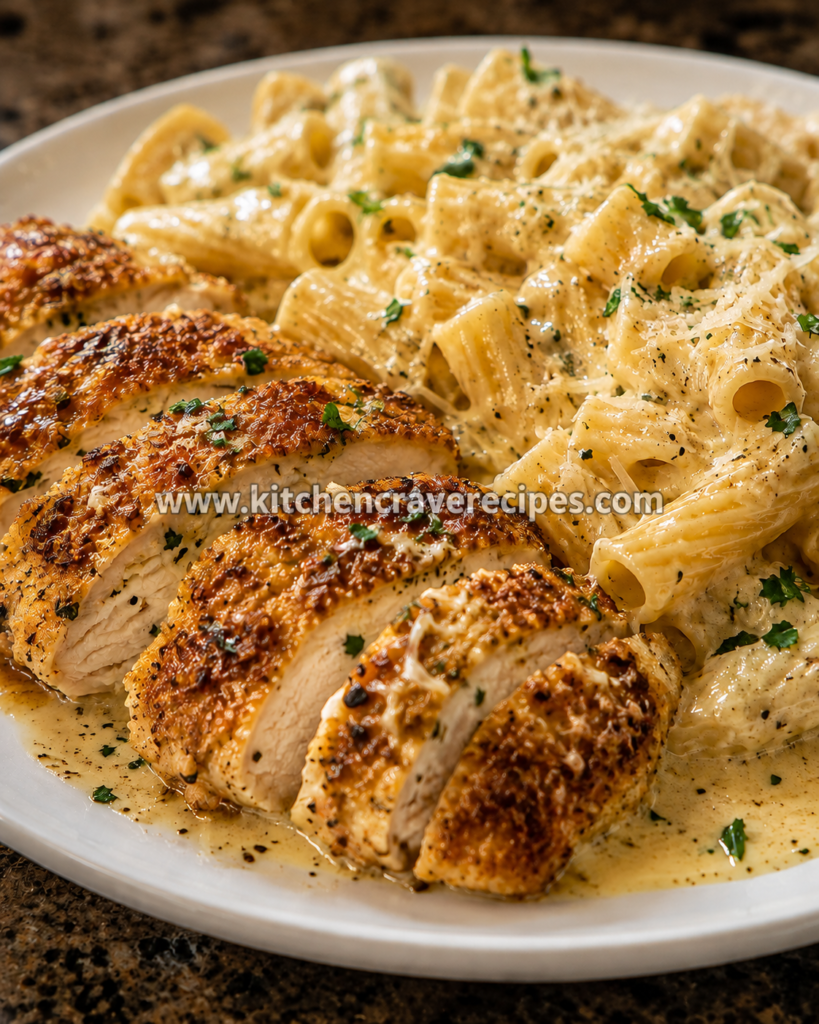
Look at that plate and tell me it doesn’t stop you in your tracks. A deeply golden, herb-crusted chicken breast sliced and fanned across a bed of rigatoni coated in a silky, pale-gold Parmesan cream sauce — fresh parsley scattered over everything — all served on a simple white plate. That is exactly what this garlic parmesan chicken pasta delivers, and it comes together on the stovetop using the sauté method in about 30 minutes.
The chicken is seared in a hot skillet until the crust is deeply bronzed and fragrant, then the same pan builds the sauce — garlic, cream, Parmesan — while the pasta finishes cooking. Everything comes together in one cohesive plate that tastes genuinely rich without requiring a culinary degree or a long ingredient list. High protein, real flavor, weeknight-fast.
Recipe Quick Info
| Detail | Info |
|---|---|
| Prep Time | 10 minutes |
| Cook Time | 20 minutes |
| Total Time | 30 minutes |
| Servings | 4 |
| Cuisine | American / Italian-Inspired |
| Course | Main Dish / Dinner |
| Cooking Method | Sautéing |
| Calories | ~590 per serving |
| Difficulty | Standard |
Why You’ll Love This Garlic Parmesan Chicken Pasta
- One pan builds all the flavor. The same skillet that sears the chicken to a golden crust becomes the foundation for the Parmesan cream sauce — every browned bit on the pan floor goes straight into the sauce.
- Ready in 30 minutes, start to finish. Ten minutes of prep and 20 minutes of active stovetop cooking is all it takes to put this fully plated dinner on the table.
- Impressive without being complicated. The herb-crusted, deep-amber crust on the sliced chicken looks like serious restaurant cooking — and it comes from a hot skillet and the right seasoning blend, nothing more.
- High protein in every serving. Chicken breast plus Parmesan cheese delivers close to 48 grams of protein per serving using whole-food ingredients, no supplements or protein powders involved.
- The sauce coats every piece of rigatoni. Rigatoni’s ridged surface and wide tube openings catch and hold the creamy garlic Parmesan sauce in a way that smooth pasta simply cannot replicate.
- Flexible for different diets. Swap the pasta for a gluten-free variety, lighten the cream, or add vegetables — the sauté technique and the core flavor profile hold up under any of those changes.
- Minimal cleanup for what you get. One skillet, one pasta pot, and two plates to assemble — this is genuinely weeknight-practical without compromising on the kind of dinner worth sitting down for.
Ingredients
For the Garlic Parmesan Chicken
- 2 large boneless, skinless chicken breasts (about 1.5 lbs total), pounded to even ¾-inch thickness
- 2 tablespoons olive oil
- 2 tablespoons unsalted butter, divided
- 1 teaspoon garlic powder
- 1 teaspoon onion powder
- 1 teaspoon smoked paprika
- 1 teaspoon dried parsley (or Italian seasoning)
- ½ teaspoon kosher salt
- ½ teaspoon cracked black pepper
- ¼ cup finely grated Parmesan cheese (pressed into the surface of the chicken as a crust)
For the Creamy Garlic Parmesan Sauce
- 5 cloves garlic, minced
- 1 cup heavy cream
- ½ cup low-sodium chicken broth
- ¾ cup freshly grated Parmesan cheese
- 1 teaspoon Dijon mustard
- ½ teaspoon Italian seasoning
- ¼ teaspoon white pepper
- Salt to taste
For the Pasta
- 12 oz rigatoni pasta
- Salted water for boiling
- ½ cup reserved pasta water
For Garnish
- 2 tablespoons fresh flat-leaf parsley, finely chopped
- Extra grated Parmesan for the table
Optional Add-Ins
- 1 cup baby spinach, wilted into the sauce at the end
- ½ cup sun-dried tomatoes, roughly chopped
- ½ teaspoon crushed red pepper flakes for mild heat
- 1 tablespoon lemon juice, stirred into sauce for brightness
Ingredient Substitutions
| Original Ingredient | Substitution | Notes |
|---|---|---|
| Heavy cream | Half-and-half | Lighter result; avoid skim milk, which breaks in high heat |
| Rigatoni | Penne rigate or ziti | Any short ridged pasta holds the sauce well |
| Chicken breast | Chicken thighs (boneless, skinless) | Richer flavor; slightly longer sauté time — 6–7 min per side |
| Parmesan (block, grated fresh) | Pecorino Romano | Sharper and saltier — reduce added salt by ¼ teaspoon |
| Dijon mustard | Whole-grain mustard | Nearly identical emulsifying function; adds subtle texture |
| Smoked paprika | Regular paprika | Keeps the color; loses the smoky depth on the crust |
| Chicken broth | Dry white wine (like Pinot Grigio) | Adds complexity to the sauce; use same quantity |
Kitchen Tools Needed
- 12-inch stainless steel or cast iron skillet — essential for the sauté method; must be able to get hot enough to properly sear the Parmesan-crusted chicken without steaming it
- Large pot — for boiling the rigatoni in well-salted water
- Colander — for draining pasta; reserve ½ cup pasta water before draining
- Meat mallet or rolling pin — for pounding chicken to even thickness before searing
- Tongs — for flipping the chicken cleanly without breaking the crust
- Whisk — for incorporating Parmesan into the warm cream without lumps
- Microplane or box grater — for freshly grating Parmesan from a block
- Instant-read thermometer — to confirm chicken reaches 165°F internal temperature
- Wooden spoon or silicone spatula — for building the sauce and tossing pasta
How to Sauté Garlic Parmesan Chicken Pasta Perfectly Every Time
Step 1: Prep and Season the Chicken (5 minutes)
Pound each chicken breast between two sheets of plastic wrap to an even ¾-inch thickness using a meat mallet or the bottom of a heavy skillet. Even thickness is not optional for the sauté method — it is what allows the chicken to cook through to the center at exactly the same time the surface reaches a deep golden crust. Uneven chicken means one end overcooked and dry while the other is still pink.
Combine the garlic powder, onion powder, smoked paprika, dried parsley, salt, and pepper in a small bowl and rub the blend all over both sides of each breast. Press the finely grated Parmesan cheese firmly onto the top surface of each piece — it should adhere in a thin, even layer. This Parmesan crust is what creates the deeply bronzed, textured exterior visible on the sliced chicken in the photo.
Step 2: Cook the Pasta (10 minutes, runs alongside Steps 3 and 4)
Bring a large pot of well-salted water to a rolling boil. Add the rigatoni and cook for 1 minute less than the package’s al dente time — the pasta will finish in the sauce and absorb flavor as it rests. Before draining, scoop out ½ cup of the starchy pasta cooking water and set it aside; this is the key to adjusting sauce consistency at the end without thinning the flavor. Drain the pasta and set aside.
Step 3: Sauté the Chicken Until Golden (10 minutes)
Heat the olive oil and 1 tablespoon of butter in a 12-inch skillet over medium-high heat until the butter has melted and the oil begins to shimmer — you should see faint wisps of steam rising from the surface. Add the seasoned chicken breasts Parmesan-side down. Do not move them. The sizzle when they hit the pan should be immediate and aggressive; if it isn’t, the pan isn’t hot enough and the Parmesan crust will steam rather than sear.
Cook undisturbed for 4–5 minutes. Lift one edge gently — the crust should release cleanly from the pan and show a deep amber-brown color with visible golden Parmesan spots. Flip and cook the second side for another 4–5 minutes until the internal temperature reaches 165°F. Per USDA food safety guidelines, chicken must reach 165°F at its thickest point before it is safe to eat. Transfer to a cutting board and rest for 5 minutes — do not slice immediately, as the juices need time to redistribute.
Embedded Tip: Resist the urge to press the chicken down with a spatula while it sears. Pressing squeezes out the moisture you want to keep inside and disrupts the Parmesan crust before it has set. Let the skillet do the work.
Step 4: Build the Creamy Garlic Parmesan Sauce in the Same Pan (8 minutes)
Reduce the heat to medium. Add the remaining tablespoon of butter to the skillet — it should melt immediately in the residual heat. Add the minced garlic and cook, stirring frequently, for 60–90 seconds. You want the garlic fragrant and just beginning to turn golden at the very edges; any darker and it will turn bitter and overwhelm the sauce.
Pour in the chicken broth and use a wooden spoon to scrape up every browned bit from the bottom of the skillet — those caramelized fond bits are concentrated flavor and they dissolve instantly into the liquid. Add the heavy cream, Dijon mustard, Italian seasoning, and white pepper. Bring to a gentle simmer over medium heat, watching for small, lazy bubbles breaking steadily at the surface — not a full boil, which can cause the cream to break.
Whisk in the grated Parmesan a handful at a time, letting each addition melt fully before adding the next. The sauce will thicken visibly as the cheese incorporates, turning from pale cream to a glossy, golden-ivory color that coats the back of a spoon. Add the drained rigatoni directly to the sauce and toss to coat, adding splashes of reserved pasta water as needed to loosen it to a saucy, flowing consistency.
Embedded Tip: Never add all the Parmesan at once. Dumping it in together causes the proteins to clump before they can dissolve into the cream, leaving a grainy rather than silky sauce. Patient, incremental additions make the difference.
Step 5: Slice the Chicken and Plate
Slice the rested chicken breasts on a slight diagonal into ½-inch pieces — this exposes the juicy interior and makes the golden crust visible on each slice, exactly as shown in the photo. Divide the sauced rigatoni between four plates, fan several slices of chicken alongside or over the pasta, and spoon any sauce remaining in the pan over the top. Finish with a generous shower of fresh flat-leaf parsley and extra Parmesan at the table.
For another high-protein chicken dinner built on a single skillet, try Easy Creamy Garlic Salmon Pasta Bake (5-Star Ultimate Dinner).
Pro Tips for Perfect Garlic Parmesan Chicken Pasta
1. Get the pan properly hot before the chicken goes in. This is the single most important rule of the sauté method. A skillet that isn’t hot enough when the chicken lands will cause the Parmesan crust to steam and pale rather than sear and bronze. Heat the oil and butter over medium-high for at least 2 full minutes before adding the chicken — a drop of water should evaporate instantly on contact.
2. Pound the chicken to even thickness — every time. Uneven chicken creates an unavoidable timing problem on the stovetop: thinner areas overcook before thicker areas reach a safe temperature. Two minutes with a meat mallet produces a breast that cooks perfectly flat and evenly from edge to center.
3. Rest the chicken before slicing. Five minutes of resting after searing allows the internal juices to redistribute throughout the meat. Slice too early and the juices pool on the cutting board instead of staying in the chicken — the difference between moist, tender slices and dry ones.
4. Save that pasta water and use it. Starchy pasta water is the most underused tool in home pasta cooking. Adding it to the sauce by the tablespoon lets you adjust consistency precisely without diluting flavor — something cream or broth alone can’t do once the sauce is built.
5. Build flavor in the fond, not from scratch. Don’t wipe the skillet between the chicken and the sauce. Those dark, caramelized bits left on the pan floor after searing the chicken are the foundation of the sauce’s depth. Deglazing with chicken broth lifts them instantly and folds them into every bite of the finished dish.
Common Sautéing Mistakes to Avoid
1. Starting with a cold or underheated pan.
A pan that isn’t properly preheated causes the Parmesan crust to steam and go pale before it can sear. Heat the oil over medium-high for at least 2 full minutes. Test by holding your palm 2 inches above the surface — you should feel significant radiating heat before the chicken goes in.
2. Moving the chicken too soon after it hits the pan.
The Parmesan crust needs undisturbed contact with the hot pan to set and release cleanly. Moving it in the first 2–3 minutes tears the crust off the breast and sticks it to the pan. Leave it alone — it will release naturally when the crust is ready.
3. Overcrowding the skillet with both chicken breasts.
Two large breasts in a small skillet drop the pan temperature and trap steam between them, preventing proper browning. Use a 12-inch skillet and make sure there is at least ½ inch of space around each breast. If your pan is smaller, sear one breast at a time.
4. Boiling the cream sauce instead of simmering it.
A rolling boil breaks the emulsion in a cream sauce — the fat separates from the liquid and the sauce turns greasy and thin. Keep the heat at medium once the cream goes in and look for gentle, small bubbles breaking at the surface, not a vigorous boil.
5. Using pre-grated Parmesan from a canister.
Shelf-stable pre-grated Parmesan contains cellulose and other anti-caking agents that prevent it from melting smoothly into a warm cream sauce. The result is a gritty, clumpy texture instead of the silky, cohesive sauce this dish depends on. Block Parmesan, grated fresh, dissolves in seconds.
6. Skipping the diagonal slice on the chicken.
A straight-across cut gives you a small cross-section of the breast. A slight diagonal cut exposes more surface area, shows the golden crust on every piece, and makes the portion look generous and well-presented — exactly what you see in the photo.
7. Under-seasoning the pasta water.
Bland pasta carries bland flavor into the sauce regardless of how well the sauce itself is seasoned. The water should taste noticeably salty before the pasta goes in — about 1 tablespoon of kosher salt per quart of water is the right starting point.
Variations
Healthy Swap: Lighter Cream Sauce
Replace the heavy cream with half-and-half and reduce the butter to 1 tablespoon total across the whole recipe. Add 2 tablespoons of low-fat cream cheese to the sauce while it simmers — it melts smoothly and adds enough body to compensate for the lower fat content. Use whole-wheat rigatoni for added fiber. The sauté method, temperatures, and timing stay identical.
Vegetarian Version
Omit the chicken entirely and replace it with 2 cups of sliced cremini mushrooms sautéed in the same skillet over medium-high heat for 5–6 minutes until deeply browned and all their moisture has evaporated. Season the mushrooms with the same spice blend used on the chicken. Build the Parmesan cream sauce in the same pan as written and toss with the pasta. The sauté technique and all timing remains the same — no method change required.
Spicy Version
Add 1 teaspoon of crushed red pepper flakes to the garlic while it cooks in the butter and stir ½ teaspoon of cayenne into the chicken spice rub before searing. The heat from the flakes blooms in the butter and distributes through the cream sauce evenly. Finish with a drizzle of hot honey over the sliced chicken for a sweet-heat contrast that plays well against the richness of the Parmesan sauce.
Gluten-Free Version
Substitute your preferred certified gluten-free pasta — brown rice rigatoni or chickpea penne both hold up well to the sauté-sauce method. Confirm that your chicken broth and Dijon mustard are labeled gluten-free. Every other ingredient in this recipe is naturally gluten-free. Cook the gluten-free pasta 1–2 minutes shorter than the package time since it can soften faster than wheat pasta and continue cooking in the warm sauce.
Low-Carb / Keto Variation
Skip the pasta entirely and serve the sliced Parmesan-crusted chicken over a bed of sautéed zucchini noodles (zoodles) or steamed cauliflower florets. Prepare the Parmesan cream sauce exactly as written and spoon it generously over the chicken and vegetables. The zoodles don’t need more than 2 minutes in the hot skillet after the sauce is built — just toss them in the residual heat until barely tender. Net carbs drop from roughly 45g to under 10g per serving.
What to Serve With Garlic Parmesan Chicken Pasta
This is a rich, satisfying main that pairs best with sides that add freshness or acidity:
- Simple arugula salad with lemon vinaigrette — the peppery bitterness cuts through the cream sauce and resets the palate between bites.
- Garlic bread or toasted sourdough — for mopping up every last bit of Parmesan sauce left on the plate.
- Steamed broccolini or roasted broccoli — a quick green side that balances the richness of the dish without competing with it.
- Roasted asparagus with lemon zest — bright, tender, and ready in under 15 minutes at 425°F.
- Tomato and cucumber salad with red wine vinaigrette — cool, crisp, and acidic against the warm, creamy pasta.
- Sparkling water with lemon or a dry white wine — a crisp Pinot Grigio or unoaked Chardonnay complements garlic Parmesan flavors particularly well.
- A warm Caesar salad — the anchovy and lemon in Caesar dressing are a natural bridge to garlic Parmesan flavors. Pair it withEasy Creamy Garlic Salmon Pasta Bake (5-Star Ultimate Dinner) for a restaurant-quality dinner spread.
Storage Instructions
Refrigerator
Store leftover garlic parmesan chicken pasta in an airtight container for up to 3 days. Keep the sliced chicken and sauced pasta stored together — the chicken rehydrates slightly in the sauce as it sits, which actually improves the texture when reheated the next day. Store any fresh parsley garnish separately and add it fresh after reheating.
Freezer
The Parmesan cream sauce does not freeze well — dairy-based cream sauces tend to separate when thawed, turning grainy. However, the seasoned and seared chicken freezes very well on its own for up to 2 months. Freeze individual portions of chicken tightly wrapped in plastic wrap, then foil. Make the sauce fresh when ready to serve the thawed chicken.
Shelf Life Summary
| Component | Refrigerator | Freezer |
|---|---|---|
| Assembled pasta and chicken | Up to 3 days | Not recommended |
| Seared chicken (alone) | Up to 4 days | Up to 2 months |
| Parmesan cream sauce (alone) | Up to 3 days | Not recommended |
| Cooked rigatoni (plain) | Up to 5 days | Up to 2 months |
Reheating Instructions
Cream sauces require gentle reheating to prevent separation. As confirmed by USDA food safety guidelines, all reheated leftovers must reach an internal temperature of 165°F before eating.
Stovetop (Best Method): Transfer the pasta and chicken to a skillet over medium-low heat. Add 2–3 tablespoons of whole milk or chicken broth and stir gently as it heats — this reloosens the sauce without breaking it. Heat for 4–6 minutes, stirring occasionally, until warmed through and the sauce is fluid again.
Microwave (Fastest Option): Place a single portion in a microwave-safe bowl, add a splash of milk, and cover loosely with a damp paper towel. Heat on medium power (60%) in 90-second intervals, stirring between each, until hot throughout. Medium power prevents the cream from separating under rapid heat. Total time is typically 3–4 minutes.
Oven (For Larger Portions): Place the pasta in an oven-safe dish, add 3 tablespoons of milk or broth, cover tightly with foil, and heat at 325°F for 15–18 minutes until warmed through. Remove foil for the last 3 minutes to allow any exposed chicken to crisp slightly.
Nutrition Facts (Per Serving)
| Nutrient | Amount |
|---|---|
| Calories | ~590 |
| Total Fat | 26g |
| Saturated Fat | 13g |
| Cholesterol | 135mg |
| Sodium | 640mg |
| Total Carbohydrates | 44g |
| Dietary Fiber | 2g |
| Sugars | 3g |
| Protein | 48g |
Nutrition Disclaimer: All nutritional values are estimates calculated using standard ingredient databases and will vary depending on the specific brands used, portion sizes, and any substitutions or optional add-ins. These figures are provided as general guidance only and do not constitute medical or dietary advice. For precise tracking, use a verified nutrition calculator with your exact measured ingredients.
Frequently Asked Questions
1. Can I use chicken thighs instead of chicken breasts for this recipe?
Boneless, skinless chicken thighs work very well and stay slightly more moist than breasts through the sauté process. They take 6–7 minutes per side at medium-high heat rather than 4–5, and their internal temperature must still reach 165°F. The Parmesan crust adheres just as well to thighs.
2. Why does my Parmesan sauce turn grainy?
Grainy Parmesan sauce almost always has one of two causes: adding cheese to cream that is too hot, which seizes the protein, or using pre-grated Parmesan with anti-caking agents. Keep the heat at a gentle simmer before adding the cheese, add it in small handfuls, and whisk continuously. Block Parmesan grated fresh melts smoothly every time.
3. What pasta shape works best with this sauce?
Rigatoni is ideal because its ridged exterior and hollow tube interior hold the Parmesan cream sauce in multiple ways simultaneously. Penne rigate and ziti are equally good substitutes. Smooth pasta shapes like elbow or farfalle work but hold noticeably less sauce per piece.
4. Can I make this recipe without the sauté method — baking instead?
You can bake the chicken separately at 400°F for 20–22 minutes, but you lose the Parmesan crust that the skillet’s direct contact heat creates, and you also lose the ability to build the sauce in the same pan using the chicken’s fond. The sauté method is genuinely what produces the flavors this dish is built around. If you prefer baking, use the recipe as a casserole with the pasta and sauce assembled in a baking dish.
5. How do I keep the chicken moist after searing?
Two steps matter most: pounding the chicken to even thickness before searing (so it doesn’t overcook at the thin end), and resting it for 5 full minutes after cooking before slicing. Both steps are about moisture retention — even thickness means even cooking, and resting allows the proteins to relax and hold their juices rather than releasing them the moment the knife goes in.
6. Can I make the sauce ahead and reheat it?
The sauce can be made up to 2 hours ahead and kept warm over the lowest possible heat setting, stirring occasionally and adding a tablespoon of broth if it thickens too much. For longer make-ahead, the sauce is best made fresh — it takes less than 10 minutes and behaves better immediately after building than after sitting in the refrigerator.
7. Is this recipe actually high in protein?
Yes. A single 6-oz chicken breast contains approximately 40–42g of protein on its own. Combined with the Parmesan cheese in the sauce and crust (roughly 5–7g per serving), each plate delivers close to 48g of protein before any add-ins. The pasta contributes a modest additional 7–8g of plant-based protein per serving.
8. What does pounding the chicken to even thickness actually do?
Pounding eliminates the thick center-to-thin-edge taper that naturally occurs in a chicken breast. In a sauté, that taper means the thin end reaches 165°F and begins drying out before the thick center is safe to eat. An even ¾-inch thickness allows the entire breast to reach the correct internal temperature at the same time, producing uniformly moist, juicy meat.
9. Can I add vegetables directly into the sauce?
Baby spinach wilts beautifully into the finished sauce in about 60 seconds — just fold it in right before adding the pasta. Sun-dried tomatoes can go in with the garlic. Avoid adding raw high-moisture vegetables like zucchini or fresh tomatoes directly into the cream sauce, as they release water and thin it significantly. Sauté them separately first until dry before adding.
10. Why use both olive oil and butter to sear the chicken?
Olive oil raises the smoke point of the fat in the pan, preventing the butter from burning at the high heat needed for a proper sear. Butter contributes flavor and promotes browning through its milk solids. Together they produce a sear that is both high-heat-stable and rich in flavor — neither alone does both jobs as well.
11. Can I substitute the heavy cream with something lower in fat?
Half-and-half is the most reliable lower-fat substitute — it contains enough fat to stay stable at medium heat without breaking. Whole milk works in a pinch but produces a noticeably thinner sauce. Skim milk and plant-based milks are not recommended; they break under the heat of an active simmer and the sauce becomes watery and separated.
Expert Chef Tips
1. Season from the very beginning, not just at the end. The spice rub goes on the raw chicken, not after cooking. Seasoning before searing allows the flavors to penetrate the outer layer of the meat and become part of the crust as it sears — not just a surface coating that can be wiped off. The Parmesan pressed onto the surface adds a second flavor layer that browns and concentrates as it sears.
2. Use the right skillet material. Stainless steel and cast iron are the best choices for searing Parmesan-crusted chicken. Non-stick pans don’t generate enough surface heat at medium-high to properly sear — they cook, but they don’t develop the deep amber crust this recipe is built around. The fond from stainless or cast iron also releases more cleanly into the sauce than non-stick coatings allow.
3. Control the garlic carefully in the sauce. Garlic goes from perfectly golden to acrid and bitter in under 30 seconds at medium heat in butter. Have your cream and broth measured and ready to pour the moment the garlic reaches the right color — pale gold at the very edges, fragrant, and not yet darkening in the center. Speed and readiness are the difference between great garlic flavor and a sauce that tastes slightly off.
4. Taste and adjust the sauce before the pasta goes in. Once the rigatoni is in the sauce, adjusting seasoning becomes harder because the pasta absorbs salt quickly. Taste the sauce at the spoon-coating stage — before the pasta joins — and adjust salt, pepper, or a squeeze of lemon right there. It takes 10 seconds and saves the dish from landing on the table underdeveloped.
5. Slice against the grain for the most tender result. Look at the direction of the muscle fibers running through the rested chicken breast and cut perpendicular to them, not parallel. Cutting against the grain shortens the muscle fibers in each bite, which is what makes the chicken feel tender and easy to chew rather than stringy and tough even when it is perfectly cooked.
Recipe Summary
This garlic parmesan chicken pasta is built around the sauté method — a hot skillet that sears a Parmesan-herb crust onto the chicken while simultaneously building the foundation for a silky garlic Parmesan cream sauce in the same pan. Rigatoni finishes in the sauce, absorbing every drop of flavor, while the rested chicken is sliced and fanned alongside. The whole meal is on the table in 30 minutes from first knife stroke to plated dinner, delivering close to 48 grams of protein per serving.
The Only Pasta Night You’ll Want on Repeat
There is a specific kind of satisfaction that comes from pulling a genuinely restaurant-quality plate together in your own kitchen in half an hour — and this garlic parmesan chicken pasta delivers it reliably. The golden crust, the silky sauce, the rigatoni coated in Parmesan cream — it’s the kind of dinner that makes a Wednesday feel like an occasion without any of the weeknight effort you’d expect it to cost. Make it once this week and it will be back on the menu before the week is out. Hungry for more high-protein stovetop dinners with big flavor?
Easy Garlic Parmesan Chicken Pasta (30-Min Ultimate Dinner)
Description
Look at that plate and tell me it doesn't stop you in your tracks. A deeply golden, herb-crusted chicken breast sliced and fanned across a bed of rigatoni coated in a silky, pale-gold Parmesan cream sauce — fresh parsley scattered over everything — all served on a simple white plate. That is exactly what this garlic parmesan chicken pasta delivers, and it comes together on the stovetop using the sauté method in about 30 minutes.
Ingredients
Instructions
-
How to Sauté Garlic Parmesan Chicken Pasta Perfectly Every Time
-
Step 1: Prep and Season the Chicken (5 minutes)
-
Pound each chicken breast between two sheets of plastic wrap to an even ¾-inch thickness using a meat mallet or the bottom of a heavy skillet. Even thickness is not optional for the sauté method — it is what allows the chicken to cook through to the center at exactly the same time the surface reaches a deep golden crust. Uneven chicken means one end overcooked and dry while the other is still pink.
-
Combine the garlic powder, onion powder, smoked paprika, dried parsley, salt, and pepper in a small bowl and rub the blend all over both sides of each breast. Press the finely grated Parmesan cheese firmly onto the top surface of each piece — it should adhere in a thin, even layer. This Parmesan crust is what creates the deeply bronzed, textured exterior visible on the sliced chicken in the photo.
-
Step 2: Cook the Pasta (10 minutes, runs alongside Steps 3 and 4)
-
Bring a large pot of well-salted water to a rolling boil. Add the rigatoni and cook for 1 minute less than the package's al dente time — the pasta will finish in the sauce and absorb flavor as it rests. Before draining, scoop out ½ cup of the starchy pasta cooking water and set it aside; this is the key to adjusting sauce consistency at the end without thinning the flavor. Drain the pasta and set aside.
-
Step 3: Sauté the Chicken Until Golden (10 minutes)
-
Heat the olive oil and 1 tablespoon of butter in a 12-inch skillet over medium-high heat until the butter has melted and the oil begins to shimmer — you should see faint wisps of steam rising from the surface. Add the seasoned chicken breasts Parmesan-side down. Do not move them. The sizzle when they hit the pan should be immediate and aggressive; if it isn't, the pan isn't hot enough and the Parmesan crust will steam rather than sear.
-
Cook undisturbed for 4–5 minutes. Lift one edge gently — the crust should release cleanly from the pan and show a deep amber-brown color with visible golden Parmesan spots. Flip and cook the second side for another 4–5 minutes until the internal temperature reaches 165°F. Per USDA food safety guidelines, chicken must reach 165°F at its thickest point before it is safe to eat. Transfer to a cutting board and rest for 5 minutes — do not slice immediately, as the juices need time to redistribute.
-
Embedded Tip: Resist the urge to press the chicken down with a spatula while it sears. Pressing squeezes out the moisture you want to keep inside and disrupts the Parmesan crust before it has set. Let the skillet do the work.
-
Step 4: Build the Creamy Garlic Parmesan Sauce in the Same Pan (8 minutes)
-
Reduce the heat to medium. Add the remaining tablespoon of butter to the skillet — it should melt immediately in the residual heat. Add the minced garlic and cook, stirring frequently, for 60–90 seconds. You want the garlic fragrant and just beginning to turn golden at the very edges; any darker and it will turn bitter and overwhelm the sauce.
-
Pour in the chicken broth and use a wooden spoon to scrape up every browned bit from the bottom of the skillet — those caramelized fond bits are concentrated flavor and they dissolve instantly into the liquid. Add the heavy cream, Dijon mustard, Italian seasoning, and white pepper. Bring to a gentle simmer over medium heat, watching for small, lazy bubbles breaking steadily at the surface — not a full boil, which can cause the cream to break.
-
Whisk in the grated Parmesan a handful at a time, letting each addition melt fully before adding the next. The sauce will thicken visibly as the cheese incorporates, turning from pale cream to a glossy, golden-ivory color that coats the back of a spoon. Add the drained rigatoni directly to the sauce and toss to coat, adding splashes of reserved pasta water as needed to loosen it to a saucy, flowing consistency.
-
Embedded Tip: Never add all the Parmesan at once. Dumping it in together causes the proteins to clump before they can dissolve into the cream, leaving a grainy rather than silky sauce. Patient, incremental additions make the difference.
-
Step 5: Slice the Chicken and Plate
-
Slice the rested chicken breasts on a slight diagonal into ½-inch pieces — this exposes the juicy interior and makes the golden crust visible on each slice, exactly as shown in the photo. Divide the sauced rigatoni between four plates, fan several slices of chicken alongside or over the pasta, and spoon any sauce remaining in the pan over the top. Finish with a generous shower of fresh flat-leaf parsley and extra Parmesan at the table.
Nutrition Facts
Servings 4
- Amount Per Serving
- Calories 590kcal
- % Daily Value *
- Total Fat 26g40%
- Saturated Fat 13g65%
- Protein 48g96%
* Percent Daily Values are based on a 2,000 calorie diet. Your daily value may be higher or lower depending on your calorie needs.