
The One-Pan Dinner That Tastes Like It Took All Day
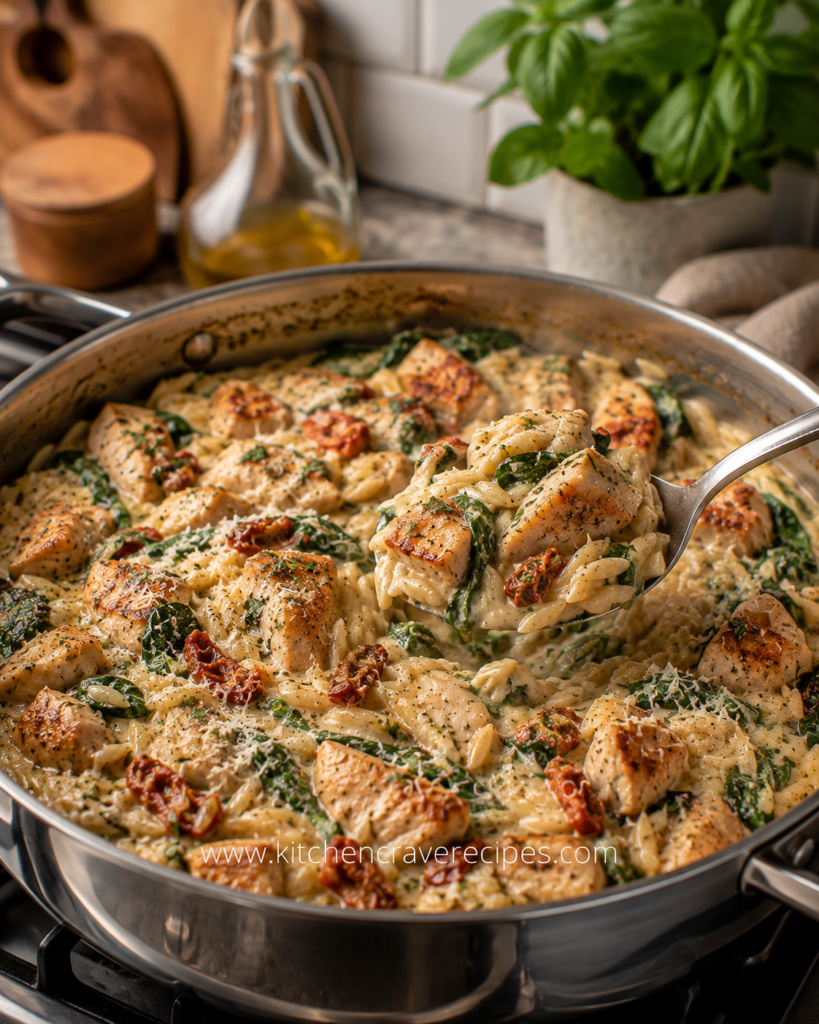
Pull this skillet off the burner and the whole table leans in — that’s the effect a creamy Tuscan chicken orzo skillet has. Golden-seared chicken pieces nestle into a silky Parmesan cream sauce with orzo cooked right in the pan, wilted spinach woven throughout, and jammy sun-dried tomatoes tucked into every corner. The stainless steel skillet goes straight from stovetop to table, and the dish looks like something from a very good restaurant that you somehow made in 30 minutes on a weeknight.
This isn’t a complicated recipe dressed up to look impressive. The orzo cooks directly in the cream broth, absorbing flavor as it goes — no separate pot needed. Each serving delivers roughly 46 grams of protein from real chicken breast and Parmesan, making this one of the most satisfying high-protein one-pan dinners you can put in your regular weeknight rotation.
Recipe Quick Info
| Prep Time | 10 minutes |
| Cook Time | 20 minutes |
| Total Time | 30 minutes |
| Servings | 4 |
| Cuisine | Italian-American |
| Course | Main Dish / Dinner |
| Calories | ~510 per serving |
| Difficulty | Standard |
Why You’ll Love This Recipe
- One pan, zero wasted dishes. The chicken sears, the orzo cooks, and the Parmesan cream sauce comes together all in the same stainless skillet — cleanup takes minutes, not a full sink.
- The orzo absorbs the sauce as it cooks. Unlike pasta boiled separately, orzo cooked directly in the cream broth soaks up every bit of garlic, Parmesan, and sun-dried tomato flavor from the first minute.
- Sun-dried tomatoes are the secret ingredient. Their concentrated, jammy sweetness cuts through the richness of the cream sauce in a way that fresh tomatoes simply can’t replicate — don’t substitute them out.
- 46 grams of protein per serving, no shortcuts. Chicken breast and freshly grated Parmesan do all the heavy lifting here — no protein powder, no beans added as filler, just real whole ingredients.
- Spinach wilts in at the very end. This keeps it bright green and tender rather than gray and overcooked, and it integrates into the sauce without adding any bitterness.
- Built for meal prep. The creamy Tuscan chicken orzo skillet reheats beautifully with a splash of broth, making it one of the most reliable high-protein lunch options for the week ahead.
- Ready in exactly 30 minutes. There’s no marinating, no resting, and no hidden steps — the total time stated is the actual time from cold ingredients to served plate.
Ingredients
For the Chicken
- 1½ lbs boneless, skinless chicken breasts, cut into 1½-inch pieces (as shown — chunky, not strips)
- 1 tablespoon olive oil
- 1 teaspoon Italian seasoning
- ½ teaspoon smoked paprika
- ½ teaspoon garlic powder
- ½ teaspoon kosher salt
- ¼ teaspoon black pepper
For the Orzo and Sauce
- 1½ cups dry orzo pasta (uncooked)
- 4 cloves garlic, minced
- 1 tablespoon olive oil (or use oil from the sun-dried tomato jar for extra flavor)
- 2 cups low-sodium chicken broth
- 1 cup heavy cream
- 1 cup freshly grated Parmesan cheese, plus more for finishing
- ½ cup oil-packed sun-dried tomatoes, drained and roughly chopped (as visible throughout the dish)
- 2 cups fresh baby spinach, loosely packed
- ½ teaspoon Italian seasoning
- ¼ teaspoon black pepper
- ¼ teaspoon ground nutmeg
- Salt to taste
For Garnish
- Extra freshly grated Parmesan (dusted over the top, as shown)
- Fresh basil leaves (visible in the background of the finished dish — add a few torn leaves just before serving)
- Freshly cracked black pepper
Optional Add-Ins
- ¼ teaspoon red pepper flakes (into the sauce for subtle heat)
- 1 tablespoon fresh lemon juice (stirred in at the very end for brightness)
- 2 tablespoons capers (adds a briny, savory note alongside the sun-dried tomatoes)
Ingredient Substitutions
| Original Ingredient | Substitution | Notes |
|---|---|---|
| Chicken breast pieces | Chicken thighs, boneless, cubed | Juicier and more forgiving at high heat; same cook time |
| Heavy cream | Half-and-half | Sauce will be slightly thinner; still cohesive |
| Parmesan (block, freshly grated) | Pecorino Romano | Saltier — reduce added salt by ¼ teaspoon |
| Orzo | Ditalini or acini de pepe | Similar small pasta; absorbs liquid at the same rate |
| Baby spinach | Chopped kale or Swiss chard | Add 2 minutes earlier since these take longer to wilt |
| Oil-packed sun-dried tomatoes | Dry-packed, rehydrated in warm water | Drain thoroughly; pat dry before adding |
| Olive oil | Avocado oil | Higher smoke point; no flavor difference for searing |
Kitchen Tools Needed
- Large stainless steel skillet (12-inch, as shown — stainless creates the best fond for flavor building; a large nonstick works too)
- Tongs
- Wooden spoon or silicone spatula
- Box grater (for Parmesan — never pre-shredded)
- Instant-read thermometer
- Liquid measuring cup
- Sharp chef’s knife and cutting board
Step-by-Step Instructions
Step 1: Season and Sear the Chicken
Pat the chicken pieces completely dry with paper towels — this is non-negotiable for getting the golden-brown crust visible in the finished dish. Toss them in a bowl with Italian seasoning, smoked paprika, garlic powder, salt, and black pepper. Heat 1 tablespoon olive oil in a large 12-inch stainless skillet over medium-high heat until shimmering. Add the chicken in a single layer and cook undisturbed for 3–4 minutes until deeply golden on the bottom. Flip and cook another 2–3 minutes. Use an instant-read thermometer to confirm the internal temperature reaches 165°F — per the USDA guidelines for poultry safety, this is the minimum safe internal temperature for chicken. Transfer to a plate and set aside; the chicken will finish warming through when it returns to the skillet later.
Step 2: Sauté the Garlic and Sun-Dried Tomatoes
Reduce the heat to medium. Add the remaining 1 tablespoon of olive oil (or the oil from the sun-dried tomato jar — it carries enormous flavor) to the same skillet without wiping it out. Add the minced garlic and cook, stirring constantly, for 60–90 seconds until fragrant. Add the chopped sun-dried tomatoes and stir to coat them in the garlicky oil. Let them sizzle for 1 minute — you want them to deepen in color slightly and release their concentrated flavor into the pan base. Tip: The brown bits from the chicken searing are flavor; the oil and garlic will lift them from the pan as you stir, integrating everything into the sauce foundation.
Step 3: Add the Orzo, Broth, and Cream
Pour in the chicken broth and heavy cream. Stir to deglaze any remaining bits from the pan bottom. Add the dry orzo, Italian seasoning, black pepper, and nutmeg. Increase the heat to medium-high and bring the liquid to a gentle boil, stirring frequently. Once boiling, reduce to a steady simmer and cook the orzo for 8–10 minutes, stirring every 2 minutes to prevent sticking. The orzo will absorb most of the liquid and the sauce will thicken naturally — this is exactly what you want. If the mixture looks too thick before the orzo is tender, add ¼ cup of warm chicken broth to loosen it.
Step 4: Stir in the Parmesan
Remove the skillet from the heat before adding the Parmesan. Stir it in gradually — about ⅓ cup at a time — allowing each addition to melt fully before adding the next. Adding cheese off the heat prevents the proteins from seizing and keeps the sauce smooth and glossy. If the sauce has tightened too much, a splash of warm broth stirred in at this stage brings it back to the perfect consistency.
Step 5: Wilt the Spinach
Return the skillet to low heat. Add the baby spinach in one or two handfuls and stir gently. The spinach will wilt into the orzo within 60–90 seconds — you’re looking for it to turn a deep, vivid green and just collapse into the sauce, not cook down completely. As visible in the finished dish, the spinach should be fully wilted but still identifiable, woven throughout the orzo rather than dissolved into it.
Step 6: Return the Chicken and Finish
Nestle the seared chicken pieces back into the skillet, pressing them gently down into the orzo and sauce. Let everything rest together over low heat for 2 minutes so the chicken warms through and picks up the flavor of the Parmesan cream broth. Dust generously with freshly grated Parmesan, crack black pepper over the top, and tear a few fresh basil leaves across the surface just before serving. Serve directly from the stainless skillet for maximum visual impact.
Pro Tips
-
Use the oil from the sun-dried tomato jar instead of plain olive oil for sautéing. It’s infused with garlic, herbs, and tomato flavor and costs nothing extra — it makes the sauce taste significantly more complex from the very first step.
-
Stir the orzo every two minutes while it simmers. Orzo has a tendency to clump and stick to the pan bottom if left unattended. Frequent stirring keeps it moving and ensures even cooking throughout the sauce.
-
Never add cold Parmesan to a boiling liquid. The temperature shock causes the cheese proteins to seize and clump. Always pull the pan off the heat first, then stir in the Parmesan in thirds for a silky, unbroken sauce.
-
Cut chicken pieces uniformly. All pieces should be roughly 1½ inches — same-size chunks cook in the same time. Uneven pieces mean some will be overcooked while others are still underdone when you pull the pan.
-
Taste and adjust salt only after the Parmesan is fully incorporated. Parmesan is naturally quite salty, and the chicken broth adds additional sodium. Season to taste at the end rather than building in extra salt during cooking.
Common Mistakes to Avoid
1. Crowding the chicken in the pan.
Pieces touching in the skillet create steam rather than a sear, producing pale, soft chicken instead of the golden-crusted pieces visible in the finished dish. Work in two batches if your skillet is smaller than 12 inches.
2. Using pre-shredded Parmesan from a bag.
Bagged Parmesan contains cellulose anti-caking powder that prevents clean melting and creates a grainy, clumpy sauce. Always grate from a block and always add it off the heat.
3. Not stirring the orzo frequently enough.
Unlike pasta in a large pot of water, orzo cooking in a small amount of liquid sticks quickly. Stir every 2 minutes from the moment it goes in — it takes just seconds each time and makes a significant difference.
4. Adding the spinach too early.
Spinach added at the start of the orzo cook time turns gray and loses all visual appeal. Add it in the final 90 seconds of cooking so it wilts just enough to integrate while staying bright green.
5. Letting the sauce boil after adding cream.
A rolling boil after cream is added can cause the fat to separate and the sauce to turn oily. Keep the heat at a steady simmer — active but gentle — once the cream goes into the pan.
6. Skipping the rest after returning the chicken.
Nestling the chicken back into the pan and giving it 2 minutes on low heat to absorb the Parmesan broth is what makes the finished dish taste cohesive. Rushing this step means the chicken tastes separate from the sauce.
7. Under-seasoning the chicken before searing.
The chicken seasoning is the foundation of the whole dish’s flavor. A well-seasoned crust on the chicken adds depth to the pan drippings, which in turn builds the sauce. Don’t cut the seasoning in half to play it safe.
Variations
Lighter Version
Swap heavy cream for 1 cup of half-and-half and reduce Parmesan to ¾ cup. To compensate for the thinner consistency, let the orzo simmer 1–2 extra minutes and add 2 tablespoons of pasta-style starch (or a teaspoon of cornstarch whisked into the broth before adding) to help the sauce cling. Saves approximately 80–90 calories per serving without significantly affecting the Tuscan flavor profile.
Vegetarian Version
Omit the chicken and replace it with 1½ cups of drained, rinsed white cannellini beans. Add the beans directly to the pan with the sun-dried tomatoes in Step 2 and let them warm through for 2 minutes before adding the orzo and liquids. Cannellini beans provide a creamy texture and absorb the garlic-Parmesan sauce beautifully while boosting fiber and plant-based protein.
Spicy Calabrian Version
Add 1 tablespoon of Calabrian chili paste to the garlic-tomato mixture in Step 2, and increase smoked paprika on the chicken to 1 teaspoon. The chili paste integrates directly into the cream sauce, creating a warm, persistent heat that builds through the dish without overpowering the Parmesan or the sun-dried tomato sweetness.
Gluten-Free Version
Replace orzo with certified gluten-free orzo or a comparable small gluten-free pasta shape. Every other component in this recipe is naturally gluten-free — verify your chicken broth label as some brands add wheat-based flavor enhancers. No other adjustments are needed; the technique and timing remain identical.
Low-Carb Version
Substitute cauliflower rice (fresh or thawed from frozen, very well dried) for the orzo. Add it in Step 3 with only the cream (no broth needed, as cauliflower doesn’t absorb liquid like pasta) and cook for 4–5 minutes rather than 10. The sauce will be thicker and richer; stir in 2–3 tablespoons of broth at the end if needed to loosen.
What to Serve With This Recipe
- Crusty sourdough or garlic bread — essential for scooping up the Parmesan cream sauce left in the skillet after serving.
- Simple arugula salad with lemon vinaigrette — the peppery bite and acid cut directly through the richness of the cream sauce.
- Roasted asparagus with sea salt — 12 minutes at 425°F on a sheet pan while the skillet finishes on the stovetop; no extra effort.
- Caesar salad — a natural companion to Tuscan-style chicken; tryBest High-Protein Chicken Alfredo Stuffed Shells (35-Minute Easy Bake) for a from-scratch pairing.
- Steamed green beans with olive oil and garlic — light and simple, letting the skillet dinner remain the clear centerpiece.
- A dry Italian white wine — Verdicchio or Pinot Grigio works beautifully alongside cream and sun-dried tomato flavors.
- Sparkling water with lemon — a clean, palate-refreshing non-alcoholic option between bites of the rich cream sauce.
Storage Instructions
Refrigerator
Allow the skillet to cool completely before transferring leftovers to airtight containers. The orzo will continue absorbing the cream sauce as it sits, making the texture noticeably thicker when cold — this is expected and reverses with a small amount of broth added during reheating. Refrigerate for up to 4 days.
Freezer
Cream-based sauces with pasta cooked inside them do not freeze cleanly — the cream tends to separate and the orzo becomes mushy upon thawing. If you want to batch-prep, freeze only the seared chicken separately for up to 2 months. Make the orzo and sauce fresh when ready to serve.
Shelf Life Summary
| Storage Method | Duration |
|---|---|
| Refrigerator (airtight) | Up to 4 days |
| Freezer (chicken only) | Up to 2 months |
| Freezer (full dish) | Not recommended |
| Room temperature | Do not exceed 2 hours |
Reheating Instructions
Stovetop (Best Method)
Transfer desired portion to a skillet over medium-low heat. Add 3–4 tablespoons of chicken broth or a small splash of cream to loosen the sauce. Stir gently and heat for 5–7 minutes until the orzo is warmed through and the sauce has returned to its original silky consistency. This method best preserves both the texture of the orzo and the integrity of the cream sauce.
Microwave (Quickest Method)
Place a portion in a microwave-safe bowl. Add 2 tablespoons of chicken broth over the top and cover loosely with a damp paper towel. Heat on medium power (70%) in 90-second intervals, stirring between each, until steaming throughout. Per the USDA Food Safety guidelines for leftovers, reheated chicken must reach an internal temperature of 165°F before eating.
Oven
Spread leftovers in an oven-safe dish, add 3 tablespoons of broth, and cover tightly with foil. Heat at 325°F for 15–18 minutes, stirring once at the halfway mark. This method works best for reheating larger portions without drying out the orzo.
Nutrition Facts
Per serving (based on 4 servings):
| Nutrient | Amount |
|---|---|
| Calories | ~510 |
| Total Fat | 20g |
| Saturated Fat | 11g |
| Cholesterol | 142mg |
| Sodium | 660mg |
| Total Carbohydrates | 38g |
| Dietary Fiber | 3g |
| Total Sugars | 4g |
| Protein | 46g |
| Calcium | 28% DV |
| Vitamin A | 45% DV |
Disclaimer: Nutrition values are estimates calculated using standard ingredient databases and will vary based on the specific brands used, exact portion sizes, and any ingredient substitutions. For precise dietary tracking, enter your specific ingredients into a verified nutritional calculator. These figures are for general informational reference and are not a substitute for professional dietary guidance.
Frequently Asked Questions
1. Can I use chicken thighs instead of chicken breasts?
Boneless, skinless chicken thighs work very well here and are actually more forgiving — they stay juicy even if slightly overcooked. Cut them into the same 1½-inch pieces as the breast and cook to the same 165°F internal temperature. The flavor is richer and slightly fattier.
2. Does the orzo really cook inside the sauce, or do I need to boil it separately?
It cooks entirely inside the sauce — that’s what makes this a true one-pan dinner. The combination of chicken broth and heavy cream provides enough liquid for the orzo to cook through in 8–10 minutes while simultaneously absorbing the Parmesan and garlic flavors directly.
3. Can I make this creamy Tuscan chicken orzo skillet ahead of time?
You can prep the components — sear the chicken, grate the Parmesan, chop the sun-dried tomatoes — up to 24 hours ahead and refrigerate. Cook the orzo in the sauce fresh when ready to serve, as orzo sitting in cream sauce for extended periods becomes dense and over-absorbed.
4. What can I use instead of sun-dried tomatoes?
Roasted red peppers (jarred, drained) are the closest substitute — they provide similar sweetness and a slightly smoky depth. Fresh cherry tomatoes halved and briefly sautéed can also work but won’t deliver the same concentrated intensity. The sun-dried tomatoes are genuinely worth keeping if possible.
5. Why is my sauce too thick?
Orzo absorbs liquid aggressively, and the sauce can tighten quickly if the heat is slightly too high or if the orzo cooked a minute or two longer than needed. Fix it instantly by stirring in warm chicken broth, 2–3 tablespoons at a time, over low heat until you reach the consistency you want.
6. Can I add mushrooms to this recipe?
Yes — sliced cremini mushrooms added to the skillet after the chicken is removed (before the garlic step) and cooked until browned add earthy depth that complements the Tuscan flavor profile well. Use about 1 cup, sliced, and cook over medium-high until all moisture has evaporated before adding the garlic.
7. Is this recipe kid-friendly?
Very much so. The Parmesan cream sauce is mild and familiar, and the orzo has a rice-like texture that younger eaters tend to enjoy. Omit the red pepper flakes if adding, and reduce the garlic to 2–3 cloves if you’re cooking for sensitive palates.
8. How do I keep the spinach from turning gray?
Add the spinach only in the final 60–90 seconds of cooking — not earlier. Spinach wilts within a minute of hitting a hot sauce. Adding it too early subjects it to extended heat that destroys the chlorophyll and turns it an unappetizing gray-green.
9. Can I use dried basil instead of fresh for garnish?
Dried basil won’t deliver the same aromatic finish — the fresh leaves visible in the dish are there for fragrance and visual brightness, not just flavor. If fresh basil isn’t available, a small handful of fresh flat-leaf parsley is a better substitute than dried basil.
10. Can I double this recipe?
Yes, but you’ll need a very large skillet (at least 14 inches) or a Dutch oven to accommodate double the orzo and liquid. The technique stays identical — just ensure the liquid level covers the orzo before simmering and stir more frequently since a larger volume of pasta sticks more easily.
11. Why does my sauce taste flat even though I followed the recipe?
Three possible fixes: more salt added gradually after the Parmesan is fully incorporated, a small squeeze of fresh lemon juice stirred in at the end, or a pinch of red pepper flakes to sharpen the background flavor. Also confirm you used freshly grated Parmesan — pre-shredded doesn’t melt properly and contributes less actual cheese flavor.
Expert Chef Tips
1. Toast the dry orzo in the pan before adding liquid. After removing the chicken and before sautéing the garlic, add the dry orzo to the hot pan for 60–90 seconds, stirring constantly, until it turns lightly golden. This optional step adds a nutty, toasted depth to the orzo’s flavor that makes the finished dish taste noticeably more complex.
2. Use the skillet’s fond — not a clean pan. Every brown bit left on the stainless steel after searing the chicken carries concentrated flavor. The chicken broth you pour in at Step 3 will lift all of it off the pan bottom and dissolve it into the sauce. A clean pan throws away free flavor.
3. Pull the orzo off the heat while it still looks slightly underdone. Orzo continues cooking from residual heat even after the burner is off, and it tightens further as the Parmesan goes in. If it looks perfectly cooked in the pan, it will be overcooked by the time it hits the bowl. Pull it 1 minute early.
4. Finish with a few drops of good olive oil just before serving. A very light drizzle of high-quality extra-virgin olive oil over the finished skillet adds a grassy, peppery note that brightens the cream sauce and makes the whole dish taste fresher and more alive.
5. Rest the finished skillet for 2 minutes before serving. Cream-based pasta dishes tighten and become creamier as they settle slightly off the heat. Two minutes of rest transforms the consistency from just-saucy to properly clinging and cohesive — it’s a small pause that pays off visibly on the plate.
Recipe Summary
This creamy Tuscan chicken orzo skillet is a 30-minute one-pan dinner built around golden-seared chicken pieces, orzo cooked directly in a Parmesan cream sauce with garlic and chicken broth, oil-packed sun-dried tomatoes, and wilted baby spinach — all finished with a generous dusting of freshly grated Parmesan. It delivers approximately 46 grams of protein per serving from whole ingredients and requires a single 12-inch skillet from start to finish. The orzo absorbs the sauce as it cooks, eliminating the need for a separate pot and making this genuinely one of the fastest, most flavorful weeknight pasta dinners you can make.
A Skillet Worth Making Again Tomorrow
Once you’ve made this creamy Tuscan chicken orzo skillet once, you’ll understand why it becomes a weeknight default. It’s fast, it’s filling, it photographs beautifully, and every component — the jammy sun-dried tomatoes, the silky Parmesan broth, the perfectly seared chicken — works together without any one element overshadowing the others. If you love this style of high-protein skillet cooking, also check out Creamy Garlic Chicken Broccoli Penne – Easy 30-Minute and Best High-Protein Chicken Alfredo Stuffed Shells (35-Minute Easy Bake) for two more weeknight favorites worth bookmarking. Make this on a Tuesday, and it’ll still be the thing you’re thinking about on Friday.
✅ Quick Tips: Read the recipe in its entirety before you start cooking. This will help you understand the ingredients, steps, and timing involved, and allow you to prepare any necessary equipment or ingredients beforehand.
Creamy Tuscan Chicken Orzo Skillet – Easy 30-Minute
Description
This creamy Tuscan chicken orzo skillet is a high-protein one-pan dinner with golden chicken, sun-dried tomatoes, spinach, and Parmesan cream sauce. Ready in 30 minutes.
Ingredients
Instructions
-
Step-by-Step Instructions
-
Step 1: Season and Sear the Chicken
-
Pat the chicken pieces completely dry with paper towels — this is non-negotiable for getting the golden-brown crust visible in the finished dish. Toss them in a bowl with Italian seasoning, smoked paprika, garlic powder, salt, and black pepper. Heat 1 tablespoon olive oil in a large 12-inch stainless skillet over medium-high heat until shimmering. Add the chicken in a single layer and cook undisturbed for 3–4 minutes until deeply golden on the bottom. Flip and cook another 2–3 minutes. Use an instant-read thermometer to confirm the internal temperature reaches 165°F — per the USDA guidelines for poultry safety, this is the minimum safe internal temperature for chicken. Transfer to a plate and set aside; the chicken will finish warming through when it returns to the skillet later.
-
Step 2: Sauté the Garlic and Sun-Dried Tomatoes
-
Reduce the heat to medium. Add the remaining 1 tablespoon of olive oil (or the oil from the sun-dried tomato jar — it carries enormous flavor) to the same skillet without wiping it out. Add the minced garlic and cook, stirring constantly, for 60–90 seconds until fragrant. Add the chopped sun-dried tomatoes and stir to coat them in the garlicky oil. Let them sizzle for 1 minute — you want them to deepen in color slightly and release their concentrated flavor into the pan base. Tip: The brown bits from the chicken searing are flavor; the oil and garlic will lift them from the pan as you stir, integrating everything into the sauce foundation.
-
Step 3: Add the Orzo, Broth, and Cream
-
Pour in the chicken broth and heavy cream. Stir to deglaze any remaining bits from the pan bottom. Add the dry orzo, Italian seasoning, black pepper, and nutmeg. Increase the heat to medium-high and bring the liquid to a gentle boil, stirring frequently. Once boiling, reduce to a steady simmer and cook the orzo for 8–10 minutes, stirring every 2 minutes to prevent sticking. The orzo will absorb most of the liquid and the sauce will thicken naturally — this is exactly what you want. If the mixture looks too thick before the orzo is tender, add ¼ cup of warm chicken broth to loosen it.
-
Step 4: Stir in the Parmesan
-
Remove the skillet from the heat before adding the Parmesan. Stir it in gradually — about ⅓ cup at a time — allowing each addition to melt fully before adding the next. Adding cheese off the heat prevents the proteins from seizing and keeps the sauce smooth and glossy. If the sauce has tightened too much, a splash of warm broth stirred in at this stage brings it back to the perfect consistency.
-
Step 5: Wilt the Spinach
-
Return the skillet to low heat. Add the baby spinach in one or two handfuls and stir gently. The spinach will wilt into the orzo within 60–90 seconds — you're looking for it to turn a deep, vivid green and just collapse into the sauce, not cook down completely. As visible in the finished dish, the spinach should be fully wilted but still identifiable, woven throughout the orzo rather than dissolved into it.
-
Step 6: Return the Chicken and Finish
-
Nestle the seared chicken pieces back into the skillet, pressing them gently down into the orzo and sauce. Let everything rest together over low heat for 2 minutes so the chicken warms through and picks up the flavor of the Parmesan cream broth. Dust generously with freshly grated Parmesan, crack black pepper over the top, and tear a few fresh basil leaves across the surface just before serving. Serve directly from the stainless skillet for maximum visual impact.
Nutrition Facts
Servings 4
- Amount Per Serving
- Calories 510kcal
- % Daily Value *
- Total Fat 20g31%
- Saturated Fat 10g50%
- Cholesterol 142mg48%
- Total Carbohydrate 56.5g19%
- Sugars 4g
- Protein 45g90%
- Vitamin A 302 IU
- Vitamin C 12 mg
- Calcium 135 mg
- Iron 7 mg
* Percent Daily Values are based on a 2,000 calorie diet. Your daily value may be higher or lower depending on your calorie needs.