Cheesy Ground Beef Potato Casserole (Best 1-Pan Bake)

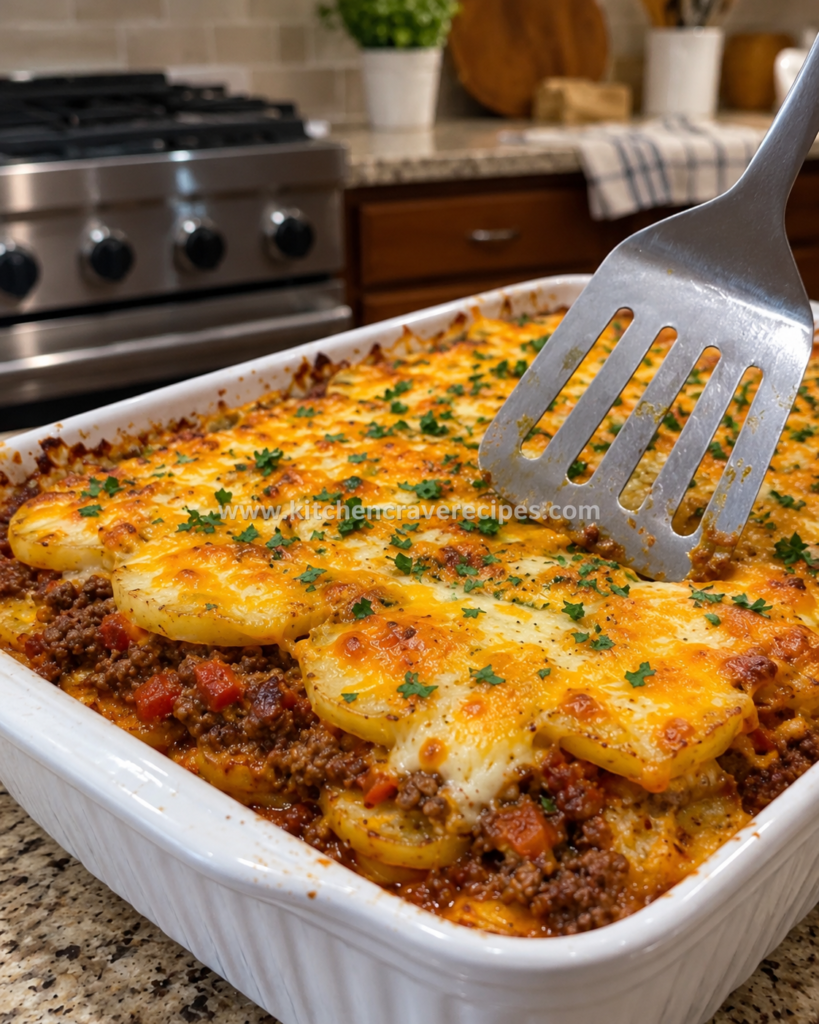

If a single dish could define what weeknight comfort food is supposed to feel like, this cheesy ground beef potato casserole would be it. Layers of seasoned ground beef and tomato-rich sauce sit beneath overlapping rounds of tender sliced potato, all covered by a golden, bubbling blanket of melted cheddar and finished with fresh herbs. The photo says everything: a deep white ceramic baking dish being served by a wide spatula, with that impossibly golden cheese crust and visible tomato-red beef layer peeking through beneath the potato rounds.
This is a baked casserole built for real life — one pan, straightforward ingredients, and a result that looks like you spent far more time on it than you did. Whether you’re feeding a family of five on a Tuesday or bringing something hearty to a potluck, this recipe delivers every single time.
Recipe Quick Info
| Detail | Info |
|---|---|
| Prep Time | 20 minutes |
| Cook Time | 50 minutes |
| Total Time | 1 hour 10 minutes |
| Servings | 6 |
| Cuisine | American |
| Course | Main Dish |
| Cooking Method | Baking |
| Calories | ~510 per serving |
| Difficulty | Easy |
Why You’ll Love This Recipe
- One pan, complete meal. Protein, starch, and vegetables bake together in a single ceramic dish — no side dishes required unless you want them.
- That cheese crust is the whole point. A full layer of shredded cheddar melts directly over the potato rounds and turns deeply golden and spotted during the final bake — exactly as shown in the reference photo.
- Sliced potato topping beats mashed every time. Thin rounds of potato laid in overlapping layers absorb the savory beef sauce from below while crisping slightly at the edges from the oven’s dry heat.
- Pantry-friendly and budget-conscious. Ground beef, russet potatoes, canned tomatoes, and a handful of aromatics — most of this is already in your kitchen right now.
- Impressive enough for company. The white ceramic baking dish presentation and fresh herb garnish make this look far more effortful than it actually is.
- Reheats without losing its character. Unlike many casseroles, the potato layer holds its structure even after a day in the fridge, making this a genuinely reliable make-ahead dinner.
- Endlessly customizable. Swap the protein, change the cheese, add a vegetable layer — the structure of this baked casserole welcomes variations without breaking.
Ingredients
For the Ground Beef Layer
- 1½ lbs ground beef (80/20 for the best flavor and moisture balance)
- 1 medium yellow onion, finely diced
- 1 medium carrot, finely diced
- 3 cloves garlic, minced
- 1 can (14.5 oz) diced tomatoes, undrained
- 3 tbsp tomato paste
- ½ cup low-sodium beef broth
- 1½ tsp smoked paprika
- 1 tsp dried oregano
- 1 tsp garlic powder
- ½ tsp onion powder
- ½ tsp salt
- ¼ tsp black pepper
- 1 tbsp olive oil
For the Potato Topping
- 2 lbs russet potatoes (about 4 medium), peeled and sliced into ¼-inch rounds
- 1 tbsp olive oil
- ½ tsp salt
- ¼ tsp black pepper
For the Cheese Layer
- 2 cups shredded sharp cheddar cheese (freshly grated recommended)
- ½ cup shredded mozzarella (for stretch and melt coverage)
For Garnish
- 2 tbsp fresh thyme or flat-leaf parsley, finely chopped (as visible in the reference photo)
Optional Add-Ins
- ½ cup diced red bell pepper (stir into the beef layer with the carrot)
- 1 tsp Worcestershire sauce (add to the beef sauce for depth)
- Pinch of red pepper flakes (stir into the sauce for gentle heat)
Ingredient Substitutions
| Original Ingredient | Substitution | Notes |
|---|---|---|
| Ground beef (80/20) | Ground turkey or ground lamb | Turkey is leaner; lamb adds a richer, earthier flavor profile |
| Russet potatoes | Yukon Gold potatoes | Yukon Golds are waxier and hold their shape even more cleanly after baking |
| Sharp cheddar | Colby-Jack or Gruyère | Gruyère melts beautifully and adds a nutty complexity |
| Mozzarella | Provolone or Monterey Jack | Both melt smoothly and contribute good stretch |
| Diced tomatoes | Crushed tomatoes | Use the same volume; crushed creates a slightly smoother sauce |
| Beef broth | Chicken broth or vegetable broth | Either works without noticeably changing the finished flavor |
Kitchen Tools Needed
This is a baked casserole, so every tool listed here is built around safe, effective oven use at 375°F.
- 9×13-inch ceramic or glass baking dish (the white ceramic dish visible in the reference photo works perfectly — ceramic retains heat evenly and looks great going straight from oven to table)
- Large skillet (12-inch, for browning the ground beef and building the sauce on the stovetop before baking)
- Sharp mandoline or chef’s knife (for slicing potatoes into uniform ¼-inch rounds — even thickness is critical for consistent baking)
- Large mixing bowl (for tossing the potato slices with oil and seasoning)
- Wooden spoon or silicone spatula (for breaking up the beef and stirring the sauce)
- Oven mitts (the ceramic dish holds heat aggressively — always use both hands)
- Wide flat spatula (for serving clean portions, as shown in the photo)
- Instant-read thermometer (optional but recommended — ground beef should reach 160°F before going into the dish)
- Box grater (for freshly grating the cheddar — pre-shredded cheese contains anti-caking agents that resist smooth melting)
Step-by-Step Instructions: How to Bake Cheesy Ground Beef Potato Casserole
Step 1: Preheat the Oven and Prep the Dish
Preheat your oven to 375°F and allow a full 10–15 minutes for it to reach temperature — don’t rush this step. Lightly grease the inside of a 9×13-inch ceramic baking dish with cooking spray or a thin film of olive oil. A properly preheated oven ensures the potato rounds bake through evenly and the cheese crust develops that signature golden color rather than just melting without browning.
Step 2: Build the Beef Sauce on the Stovetop
Heat 1 tablespoon of olive oil in a large skillet over medium-high heat until it shimmers. Add the diced onion and carrot and cook, stirring frequently, for 4–5 minutes until softened and the onion turns translucent. Add the garlic and stir for 30 seconds — the kitchen will smell immediately fragrant, which is your cue to add the beef right away before the garlic burns.
Add the ground beef to the skillet, breaking it apart with a wooden spoon. Cook for 7–8 minutes until deeply browned and no pink remains. According to the USDA safe minimum internal temperature guidelines, ground beef must reach 160°F — use an instant-read thermometer if you want to be certain.
Step 3: Finish the Sauce
Drain any excess fat from the skillet, leaving a thin film. Stir in the tomato paste and cook for 1 minute, stirring constantly — the paste will darken slightly and coat the beef, adding concentrated savory depth. Add the diced tomatoes (undrained), beef broth, smoked paprika, oregano, garlic powder, onion powder, salt, and pepper. Stir everything together and let the mixture simmer gently for 5 minutes until the sauce thickens and the liquid reduces slightly. The sauce should look glossy and rich, not watery — if it’s still thin, let it go another 2 minutes.
Embedded Tip: Don’t skip the tomato paste step. That one minute of cooking the paste directly in the skillet — called “blooming” — transforms it from raw and sharp to deeply savory. It’s what gives the beef layer that restaurant-quality depth of flavor.
Step 4: Transfer the Beef Layer
Pour the finished beef sauce into your prepared baking dish and spread it into an even, flat layer using the back of a spoon. The sauce should come roughly halfway up the sides of the dish. Let it sit for 2–3 minutes while you prep the potato topping — allowing the sauce to cool slightly prevents the potato slices from steaming on contact when you lay them on top.
Step 5: Prep and Layer the Potatoes
In a large mixing bowl, toss the peeled, sliced potato rounds with 1 tablespoon of olive oil, ½ teaspoon of salt, and ¼ teaspoon of black pepper until evenly coated. Arrange the potato rounds in overlapping concentric layers directly on top of the beef sauce, starting at one end of the baking dish and working across — just like the visible layering pattern in the reference photo. Slightly overlapping each round ensures full coverage and gives every serving a consistent potato-to-beef ratio.
Embedded Tip: For the most even bake, try to keep all your potato slices as close to ¼ inch thick as possible. Inconsistent slices mean some rounds overcook while others stay underdone. A mandoline is the fastest and most reliable way to get there.
Step 6: Bake Covered, Then Uncovered
Cover the baking dish tightly with aluminum foil. Slide it into your preheated 375°F oven and bake for 30 minutes covered. The foil traps steam, which cooks the potato rounds through without drying them out. After 30 minutes, remove the foil — the potatoes should look slightly tender and the sauce should be bubbling visibly around the edges of the dish. If the potatoes still feel firm when you test with a fork, return the foil and bake for another 5 minutes before proceeding.
Step 7: Add the Cheese and Finish Baking
Remove the dish from the oven and scatter the shredded cheddar and mozzarella evenly over the entire potato surface. Return the dish to the oven, uncovered, and bake for an additional 18–20 minutes until the cheese is fully melted, bubbling, and developing golden-brown patches across the top — exactly the result visible in the reference photo. The edges will be slightly more caramelized and crisp, which is the best part of every serving.
Step 8: Garnish and Rest Before Serving
Remove the finished cheesy ground beef potato casserole from the oven and immediately scatter the chopped fresh thyme or parsley across the entire cheese surface. Let the casserole rest, uncovered, for 8–10 minutes before cutting and serving. This rest time allows the beef sauce to firm up slightly so each portion holds its distinct layers when lifted with a wide spatula.
Pro Tips for a Perfect Baked Casserole
- Fully preheat — don’t guess. A 375°F oven that hasn’t fully reached temperature bakes unevenly: the bottom of the potato layer overcooks while the top stays pale and flabby. Use an inexpensive oven thermometer to verify your oven’s actual temperature before the dish goes in. (Method-specific Pro Tip for Baking.)
- Grate your own cheese for that seamless golden crust. Pre-shredded cheddar contains cellulose starch that actively resists melting into a smooth layer. Freshly grated cheese melts into that flowing, golden sheet you see in the photo.
- Slice potatoes last. Cut potatoes oxidize and turn grayish-brown if they sit too long before going into the dish. Prep your beef sauce first, then slice and layer the potatoes immediately before they go in — they’ll stay bright white and visually appealing.
- Press the potato layer gently before adding cheese. After the covered bake, use the back of a spatula to press the potato rounds very lightly — this flattens any pieces that have curled up and creates a flat, even surface for the cheese to melt across uniformly.
- Let the sauce thicken before layering. A sauce that’s too thin will bubble up through the potato layers during baking and make the bottom of the cheese layer greasy. That 5-minute stovetop simmer in Step 3 is the insurance policy.
Common Mistakes to Avoid
1. Skipping the foil cover for the first bake. (Method-specific Baking mistake)
Baking the casserole uncovered from the start exposes the potato rounds to dry oven heat for too long, leaving them dehydrated and leathery on top before they’ve cooked through below. Fix: Always bake covered for the first 30 minutes to steam the potatoes through, then remove the foil to build the cheese crust.
2. Using watery beef sauce.
Excess liquid in the sauce turns the finished casserole soupy — the potato layer floats rather than rests, and the cheese can’t develop a proper crust on top of wet steam. Fix: Simmer the sauce for a full 5 minutes after adding tomatoes and broth, stirring occasionally, until it visibly thickens.
3. Slicing the potatoes too thick.
Rounds thicker than ¼ inch won’t cook through in the time the cheese needs to bake, leaving you with crunchy, underdone potato beneath a perfectly golden top. Fix: Use a mandoline set to ¼ inch, or slice carefully by hand and do a quick eyeball check for consistency.
4. Adding cheese before the potatoes are fully tender.
If the potatoes still have resistance when you pierce them with a fork at the end of the covered bake, the cheese will finish before the potatoes do. Fix: Test with a fork at the 30-minute mark and add an extra 5–8 minutes covered if needed before adding the cheese.
5. Packing the potato layer in a single flat pile instead of overlapping rounds.
A random pile of potato slices creates uneven thickness and guarantees some pieces overcook while others undercook. Fix: Overlap each slice by about one-third, like shingles on a roof, working methodically from one end of the dish to the other.
6. Skipping the resting period.
Cutting into the casserole immediately after pulling it from the oven causes the beef sauce to run out of the dish rather than stay put in each serving. Fix: Rest the casserole uncovered for a minimum of 8 minutes — the sauce will firm up noticeably and each serving will hold its layers cleanly.
7. Under-seasoning the potato layer.
Plain unseasoned potato rounds taste flat next to the boldly seasoned beef sauce, creating a one-dimensional finished dish. Fix: Toss the potato slices with olive oil, salt, and pepper before layering — those few seconds of seasoning make a meaningful difference in every bite.
Variations
Healthy Version
Use 93% lean ground turkey in place of beef and reduce the olive oil to ½ tablespoon for the sauce. Swap half the cheddar for part-skim mozzarella to lower the saturated fat without losing melt coverage. Add an extra diced carrot and a handful of baby spinach stirred into the sauce just before transferring it to the baking dish — the spinach wilts into the sauce and adds nutrients invisibly. All baking temperatures and times remain the same.
Vegetarian Version
Replace the ground beef with 2 cans (15 oz each) of brown or green lentils, drained and rinsed, plus 1 cup of diced cremini mushrooms. Sauté the mushrooms with the onion and carrot until they release their liquid and start to brown — this creates the savory, meaty base the beef would otherwise provide. Use vegetable broth in place of beef broth. The baking method and timing remain identical.
Spicy Version
Add 1 tsp chipotle chili powder and ½ tsp cayenne pepper to the beef sauce along with the other spices. Stir 1–2 finely diced jalapeños into the sauce with the aromatics. Use Pepper Jack cheese in place of sharp cheddar for the full top layer — the heat shows up at every level. This version pairs especially well with a cooling dollop of sour cream at the table.
Gluten-Free Version
Every ingredient in the base recipe is naturally gluten-free, but verify that your canned tomatoes, tomato paste, beef broth, and Worcestershire sauce (if using) carry a certified gluten-free label — these are the most common hidden sources of gluten in casserole recipes. No other substitutions are required. The baking method and timing are unchanged.
Low-Carb / Keto Version
This variation genuinely changes one component: replace the russet potato rounds with thinly sliced turnips or celery root (celeriac), both of which hold up well to baking and absorb the beef sauce in a similar way to potatoes. Slice them to the same ¼-inch thickness and follow the identical layering and baking steps. Note that the texture will be slightly firmer than potato — that’s normal and expected for these substitutes.
What to Serve With This Recipe
This cheesy ground beef potato casserole is a complete meal on its own, but these pairings complement it well:
- Simple arugula salad with lemon vinaigrette — the peppery greens and bright acid cut cleanly through the rich cheese and beef
- Steamed or roasted green beans — a clean, unadorned vegetable side lets the casserole stay the star
- Crusty sourdough bread for scooping up the tomato-rich beef sauce from the edges of the pan
- Sour cream or Greek yogurt served tableside — a cool, tangy contrast to the deep, savory layers
- Pickled cucumber slices — their sharpness is a natural foil for the richness of the melted cheese
- A simple tomato and cucumber salad dressed with red wine vinegar and olive oil — easy, fresh, and ready in minutes; try Grilled Chicken Tomato Cucumber Salad – Best 30-Min Meal for a great pairing
- A glass of medium-bodied red wine (Zinfandel or Côtes du Rhône) — the fruit-forward earthiness complements the smoked paprika and beef beautifully
Storage Instructions
Refrigerator
Cool the casserole completely before covering. Store leftovers tightly covered — either in the baking dish with a fitted lid or transferred to an airtight container — in the refrigerator for up to 4 days. The potato layer will soften slightly as it absorbs the beef sauce overnight, but the flavor actually deepens.
Freezer
Portion the casserole into individual servings and freeze in airtight freezer-safe containers for up to 3 months. For best results, freeze before adding the cheese layer, then top with fresh cheese when reheating from frozen. If freezing the fully assembled casserole, wrap the entire baking dish in plastic wrap and then aluminum foil. Thaw overnight in the refrigerator before reheating.
Shelf Life Summary
| Storage Method | Duration |
|---|---|
| Room temperature | 2 hours maximum |
| Refrigerator (covered) | Up to 4 days |
| Freezer (tightly wrapped) | Up to 3 months |
Reheating Instructions
Always reheat casserole portions to an internal temperature of 165°F before serving. See FDA guidance on safe reheating temperatures for full reference.
Oven (Best Method)
Preheat to 350°F. Place the desired portion or the full dish in an oven-safe container, cover with foil, and heat for 20–25 minutes until warmed through. Remove the foil for the final 5 minutes to re-melt the cheese surface and restore some of the golden color.
Microwave (Fastest Method)
Place a single serving on a microwave-safe plate and cover loosely with a damp paper towel to prevent the potato layer from drying out. Microwave at 70% power for 2½–3 minutes, pausing halfway to check the temperature and rotate the plate.
Stovetop
For the beef layer only (separated from the potato and cheese), reheat in a small saucepan over low-medium heat with a splash of broth, stirring gently every minute, for about 5–6 minutes. Reheat the potato and cheese portion separately under the broiler for 3–4 minutes to restore the crisp cheese edge.
Nutrition Facts
| Nutrient | Per Serving (approx.) |
|---|---|
| Calories | ~510 |
| Total Fat | 26g |
| Saturated Fat | 12g |
| Cholesterol | 105mg |
| Sodium | 680mg |
| Total Carbohydrates | 38g |
| Dietary Fiber | 4g |
| Total Sugars | 5g |
| Protein | 32g |
Nutrition Disclaimer: All nutrition values are estimates calculated using standard ingredient databases and will vary depending on specific brands, portion sizes, and any substitutions made. This information is intended as a general reference only and is not a substitute for guidance from a registered dietitian or licensed healthcare professional.
Frequently Asked Questions
Can I assemble the cheesy ground beef potato casserole ahead of time?
Yes. Build the casserole through Step 5 (beef layer + potato topping, no cheese yet), cover tightly with plastic wrap, and refrigerate for up to 24 hours. When ready to bake, remove from the fridge 20 minutes before going into the oven and add 5–8 extra minutes to the covered bake time since the dish will start cold.
What’s the best potato variety for this baked casserole?
Russet potatoes are ideal for this recipe because their starchier flesh absorbs the beef sauce from below while developing slightly crisp edges on top from the dry oven heat. Yukon Golds work well too and hold their shape a little more firmly — both produce excellent results.
Do I need to par-cook the potato slices before baking?
No — that’s what the covered bake in Step 6 is for. The foil traps steam from the sauce below and cooks the potato rounds through from the bottom up. If you skip the foil entirely, you’d need to par-boil the slices first.
Why does my cheese look pale instead of golden?
Two likely causes: the oven wasn’t fully preheated before the dish went in, or the cheese layer went on before the potatoes were completely tender. Both slow down the crust development. If the cheese looks pale at the 20-minute mark, increase the oven to 400°F for the final 3–4 minutes and watch closely.
Can I use a different baking dish size?
A 9×13-inch dish is specifically sized for this recipe’s ingredient quantities. An 8×8-inch dish would create layers that are too deep and require significantly longer bake time — not ideal. If using an 8×8, halve all ingredients and reduce the covered bake to 22 minutes.
How do I keep the potato rounds from turning gray before I layer them?
Slice and layer the potato rounds immediately — don’t prep them far in advance and let them sit. If you need a head start, submerge the sliced rounds in cold water for up to 30 minutes, then pat them completely dry with paper towels before tossing with olive oil and salt.
Can I add a cream-based layer like scalloped potatoes?
You can, but it changes the structure of the dish. If you want a creamier potato layer, toss the sliced rounds with 3–4 tablespoons of heavy cream in addition to the olive oil before layering. Be aware this adds moisture that may require an extra 5 minutes of uncovered bake time to set properly.
Is there a way to make this casserole faster on a busy weeknight?
The biggest time-saver is using pre-cooked or leftover ground beef from a previous meal — skip Steps 2 and 3 and simply season and warm the meat before layering. You can also use a mandoline to slice potatoes in under 3 minutes instead of knife-slicing. Together, these shortcuts can cut prep time nearly in half.
Can I add a vegetable layer between the beef and the potatoes?
Absolutely. A layer of thinly sliced zucchini, baby spinach, or roasted red bell pepper works beautifully between the beef sauce and potato rounds. Layer the vegetables directly on top of the beef sauce and proceed with the potato layer on top of that. No baking time adjustment is needed for thin vegetables.
What does the fresh herb garnish add — is it necessary?
The chopped fresh thyme visible in the reference photo isn’t just decorative. Thyme adds a subtle herbal brightness that lifts the richness of the cheese and beef, making each bite feel fresher. Flat-leaf parsley does the same job with a more neutral flavor. It’s a small finishing touch with a meaningful payoff — don’t skip it if you have either herb on hand.
How do I get clean slices when serving?
Rest the casserole fully (8–10 minutes) before cutting, use a wide flat metal spatula, and cut all the way through the potato and beef layers with a sharp knife first before lifting each portion. This way the spatula just needs to support the serving rather than cut through it.
Can I make this cheesy ground beef potato casserole in a slow cooker?
This is a genuinely different cooking method from baking, and the results differ meaningfully. In a slow cooker on LOW for 6–7 hours, the dish will be fully cooked but the potato and cheese top won’t develop the golden crust that defines this recipe. If you make it in a slow cooker, finish under the broiler for 4–5 minutes at the end to achieve some surface browning on the cheese.
Expert Chef Tips
1. Use 80/20 ground beef, not leaner. The fat in 80/20 beef renders into the tomato sauce during browning, giving the finished beef layer a richness and depth that 93% lean simply can’t replicate. If you want to cut fat, drain well after browning rather than starting with leaner beef — you get more flavor and still control the grease.
2. Bloom your spices in the tomato paste. Stirring smoked paprika, oregano, and garlic powder into the tomato paste for 30 seconds before adding the canned tomatoes and broth “wakes up” the fat-soluble flavor compounds in those spices. It’s a small step that creates a noticeably deeper, more complex-tasting sauce.
3. A ceramic dish bakes more evenly than glass for this recipe. Ceramic retains heat at a more consistent rate than glass and distributes it more gently across the bottom of the casserole, which means the beef sauce is less likely to scorch at the edges. If glass is all you have, reduce the oven temperature by 10°F and check the potato doneness 3–4 minutes early.
4. Mix cheddar and mozzarella deliberately. Sharp cheddar delivers flavor and that golden-brown color, but it can be a bit stiff when melted alone. Mozzarella brings stretch and flow. The combination in this recipe — 2 parts cheddar to 1 part mozzarella — gives you both the visual drama and the creamy melt. Don’t skip the mozzarella in favor of all cheddar. Check out Easy Cheesy Chili Cornbread Casserole (Best 1-Pan Bake) for more on this.
5. Always taste the beef sauce before layering. The potatoes don’t get much direct seasoning, so if the sauce is underseasoned at Step 3, the whole dish will taste flat. Add salt conservatively during cooking, taste before transferring to the baking dish, and adjust. A well-seasoned sauce makes every layer taste better.
Recipe Summary
This cheesy ground beef potato casserole starts with a deeply seasoned tomato-rich beef sauce built on the stovetop, then gets topped with overlapping rounds of seasoned russet potato and a two-cheese blend of sharp cheddar and mozzarella before going into a 375°F oven. A covered bake steams the potato layer through, and a final uncovered bake melts the cheese into that signature golden crust. From prep to table in about 1 hour and 10 minutes, this is an easy baked dinner that looks and tastes far more impressive than its simple ingredient list suggests.
Make It Tonight and Make It Yours
Every family has that one recipe that becomes the default answer to “what should I make tonight?” — and this cheesy ground beef potato casserole has a strong case for that spot in your rotation. The layers are satisfying, the cheese crust is genuinely beautiful, and the whole thing comes together in one pan with ingredients you probably have on hand. Make it as written the first time to get a feel for the structure, then start riffing — change the cheese, swap the protein, add a vegetable layer. This baked casserole has a lot of room for you to make it your own.
Cheesy Ground Beef Potato Casserole (Best 1-Pan Bake)
Description
If a single dish could define what weeknight comfort food is supposed to feel like, this cheesy ground beef potato casserole would be it. Layers of seasoned ground beef and tomato-rich sauce sit beneath overlapping rounds of tender sliced potato, all covered by a golden, bubbling blanket of melted cheddar and finished with fresh herbs. The photo says everything: a deep white ceramic baking dish being served by a wide spatula, with that impossibly golden cheese crust and visible tomato-red beef layer peeking through beneath the potato rounds.
Ingredients
Instructions
-
Step 1: Preheat the Oven and Prep the Dish
-
Preheat your oven to 375°F and allow a full 10–15 minutes for it to reach temperature — don't rush this step. Lightly grease the inside of a 9×13-inch ceramic baking dish with cooking spray or a thin film of olive oil. A properly preheated oven ensures the potato rounds bake through evenly and the cheese crust develops that signature golden color rather than just melting without browning.
-
Step 2: Build the Beef Sauce on the Stovetop
-
Heat 1 tablespoon of olive oil in a large skillet over medium-high heat until it shimmers. Add the diced onion and carrot and cook, stirring frequently, for 4–5 minutes until softened and the onion turns translucent. Add the garlic and stir for 30 seconds — the kitchen will smell immediately fragrant, which is your cue to add the beef right away before the garlic burns.
-
Add the ground beef to the skillet, breaking it apart with a wooden spoon. Cook for 7–8 minutes until deeply browned and no pink remains. According to the USDA safe minimum internal temperature guidelines, ground beef must reach 160°F — use an instant-read thermometer if you want to be certain.
-
Step 3: Finish the Sauce
-
Drain any excess fat from the skillet, leaving a thin film. Stir in the tomato paste and cook for 1 minute, stirring constantly — the paste will darken slightly and coat the beef, adding concentrated savory depth. Add the diced tomatoes (undrained), beef broth, smoked paprika, oregano, garlic powder, onion powder, salt, and pepper. Stir everything together and let the mixture simmer gently for 5 minutes until the sauce thickens and the liquid reduces slightly. The sauce should look glossy and rich, not watery — if it's still thin, let it go another 2 minutes.
-
Embedded Tip: Don't skip the tomato paste step. That one minute of cooking the paste directly in the skillet — called "blooming" — transforms it from raw and sharp to deeply savory. It's what gives the beef layer that restaurant-quality depth of flavor.
-
Step 4: Transfer the Beef Layer
-
Pour the finished beef sauce into your prepared baking dish and spread it into an even, flat layer using the back of a spoon. The sauce should come roughly halfway up the sides of the dish. Let it sit for 2–3 minutes while you prep the potato topping — allowing the sauce to cool slightly prevents the potato slices from steaming on contact when you lay them on top.
-
Step 5: Prep and Layer the Potatoes
-
In a large mixing bowl, toss the peeled, sliced potato rounds with 1 tablespoon of olive oil, ½ teaspoon of salt, and ¼ teaspoon of black pepper until evenly coated. Arrange the potato rounds in overlapping concentric layers directly on top of the beef sauce, starting at one end of the baking dish and working across — just like the visible layering pattern in the reference photo. Slightly overlapping each round ensures full coverage and gives every serving a consistent potato-to-beef ratio.
-
Embedded Tip: For the most even bake, try to keep all your potato slices as close to ¼ inch thick as possible. Inconsistent slices mean some rounds overcook while others stay underdone. A mandoline is the fastest and most reliable way to get there.
-
Step 6: Bake Covered, Then Uncovered
-
Cover the baking dish tightly with aluminum foil. Slide it into your preheated 375°F oven and bake for 30 minutes covered. The foil traps steam, which cooks the potato rounds through without drying them out. After 30 minutes, remove the foil — the potatoes should look slightly tender and the sauce should be bubbling visibly around the edges of the dish. If the potatoes still feel firm when you test with a fork, return the foil and bake for another 5 minutes before proceeding.
-
Step 7: Add the Cheese and Finish Baking
-
Remove the dish from the oven and scatter the shredded cheddar and mozzarella evenly over the entire potato surface. Return the dish to the oven, uncovered, and bake for an additional 18–20 minutes until the cheese is fully melted, bubbling, and developing golden-brown patches across the top — exactly the result visible in the reference photo. The edges will be slightly more caramelized and crisp, which is the best part of every serving.
-
Step 8: Garnish and Rest Before Serving
-
Remove the finished cheesy ground beef potato casserole from the oven and immediately scatter the chopped fresh thyme or parsley across the entire cheese surface. Let the casserole rest, uncovered, for 8–10 minutes before cutting and serving. This rest time allows the beef sauce to firm up slightly so each portion holds its distinct layers when lifted with a wide spatula.
Nutrition Facts
Servings 6
- Amount Per Serving
- Calories 510kcal
- % Daily Value *
- Total Fat 26g40%
- Saturated Fat 12g60%
- Protein 32g64%
* Percent Daily Values are based on a 2,000 calorie diet. Your daily value may be higher or lower depending on your calorie needs.